
The three primary types of insert molding include threaded insert molding, where metal threads are molded into plastic parts; electrical contact insert molding, which encapsulates wiring or pins for conductivity; and structural insert molding, designed to reinforce plastic components with high-strength metal brackets or shafts for superior mechanical performance.
🎥 Watch Insert Molding in Action: See exactly how metal threads and electrical contacts are seamlessly encapsulated by molten thermoplastic inside the mold cavity to create a unified, high-strength part.
Key Features of Insert Molding Types
Insert molding is an advanced manufacturing process that combines multiple materials into a single, cohesive part. By injecting thermoplastic resin around a pre-placed non-plastic component, engineers can achieve complex functionalities that would otherwise require secondary assembly.
A Detailed Breakdown of the 3 Main Types of Insert Molding:
- Threaded Insert Molding: Utilizes pre-manufactured metal nuts or threaded fasteners. This is primarily used to create durable, reusable fastening points in plastic parts that would otherwise strip under torque.
- Electrical Contact Insert Molding: Focuses on encapsulating conductive materials like copper pins, terminals, or lead frames. It is highly prevalent in the automotive and consumer electronics industries for creating sealed, insulated connectors.
- Structural Insert Molding: Involves molding plastic around larger, custom-machined metal components like steel shafts, plates, or brackets. This method is chosen when a part requires the lightweight properties of plastic but the sheer load-bearing strength of metal.
GBM Pro Tip: In our lab tests at GBM, we found that pre-heating metal inserts to a specific temperature before the injection phase drastically reduces residual stress and prevents cracking in the final plastic part.
What is an example of insert molding?
A classic example of insert molding is the manufacturing of screwdrivers. The metal steel shank of the screwdriver is placed into the mold cavity as an insert, and then molten plastic is injected around the base of the shank to form a seamless, highly durable, and ergonomic handle.
Common Industrial Applications
Insert molding is utilized across nearly every major manufacturing sector. The ability to combine metal and plastic eliminates the need for adhesives and fasteners, resulting in lighter and more reliable products.
- Medical Devices: Surgical instruments where stainless steel blades are seamlessly molded into sterile, ergonomic plastic grips.
- Automotive Components: Sensor housings where delicate electronic pins are encapsulated in rugged, heat-resistant thermoplastics to protect against engine vibrations.
- Consumer Electronics: Power cords and plug ends where conductive wires are permanently sealed within a protective, insulating rubber or plastic shell.
GBM Pro Tip: Our technicians often see clients try to assemble these parts manually. We always recommend switching to insert molding to eliminate post-molding assembly steps, saving substantial labor costs and improving part reliability.
What are the 4 types of moulding?
The four primary types of plastic molding are injection molding, which forces molten plastic into a cavity; blow molding, used for hollow objects like bottles; compression molding, where heated plastic is pressed into shape; and rotational molding, which uses centrifugal force to coat the inside of a heated mold.
🎥 Comparing Molding Technologies: A visual breakdown of how standard injection molding differs from blow molding, compression molding, and rotational molding for various industrial applications.
Comparing the Core Molding Processes
Understanding the differences between these four processes is critical for selecting the right manufacturing method for your specific product geometry and volume requirements.
| Molding Type | Primary Use Case | Material State During Process | Key Advantage |
|---|---|---|---|
| Injection Molding | Solid, complex 3D parts | Molten liquid | Extremely high precision and fast cycle times. |
| Blow Molding | Hollow containers (bottles, tanks) | Heated, pliable tube (parison) | Cost-effective for thin-walled hollow parts. |
| Compression Molding | Large, strong automotive/aerospace parts | Heated solid mass (charge) | Excellent for high-strength thermoset materials. |
| Rotational Molding | Large, seamless hollow objects (kayaks) | Liquid or powder | Low tooling costs and uniform wall thickness. |
GBM Pro Tip: In our production facility, we exclusively rely on injection molding for high-volume precision parts, as it offers the tightest tolerances compared to blow or rotational molding.
What is a molding insert?
A molding insert is a pre-fabricated component, typically made of brass, stainless steel, or aluminum, that is placed into an injection mold before the plastic resin is injected. The plastic flows around the insert, permanently locking it into the final part to provide enhanced strength or conductivity.
Common Insert Materials and Their Uses
The choice of insert material dictates the performance characteristics of the final component. Inserts must be designed to withstand the high pressures and temperatures of the molding process.
- Brass: The most common material for threaded inserts. It is easy to machine, highly conductive, and resists corrosion, making it ideal for standard consumer goods.
- Stainless Steel: Used when maximum pull-out strength, torque resistance, and extreme corrosion resistance are required, heavily favored in marine and medical applications.
- Aluminum: Selected for structural inserts where weight reduction is a critical engineering factor, commonly seen in aerospace and high-performance automotive parts.
GBM Pro Tip: We always advise our clients to use knurled or grooved inserts. Our engineers have proven that aggressive knurling significantly increases the pull-out and torque-out resistance of the final molded component.
What is the difference between insert molding and overmolding?
The main difference is the base material being encapsulated. Insert molding involves molding plastic around a non-plastic component, such as a metal threaded nut or wire. Overmolding, however, involves molding a secondary plastic or rubber layer over an already molded plastic substrate to create a multi-material part.
🎥 Insert Molding vs. Overmolding: Understand the critical engineering differences between molding plastic over a rigid metal component versus molding a soft rubber grip over a plastic substrate.
Process Comparison: Insert Molding vs Overmolding
While both processes result in a single composite part, their engineering goals and manufacturing sequences differ significantly.
| Feature | Insert Molding | Overmolding |
|---|---|---|
| Base Material | Typically metal (screws, pins, brackets) | Rigid plastic substrate |
| Secondary Material | Thermoplastic resin | Thermoplastic Elastomer (TPE) or TPU |
| Primary Goal | Add structural strength or conductivity | Add soft-grip ergonomics or color contrast |
| Bonding Mechanism | Mechanical locking (knurls, undercuts) | Chemical bonding and mechanical locking |
GBM Pro Tip: Our team frequently utilizes overmolding for creating soft-grip handles, but we pivot to insert molding whenever structural integrity or metal-to-plastic fastening is the primary engineering requirement.
How does wholesale pricing vary among the three types of insert molding?
Wholesale pricing varies based on the insert complexity and material. Threaded insert molding is highly cost-effective due to standardized brass inserts. Electrical contact molding carries moderate costs due to precise alignment needs, while structural insert molding is the most expensive, requiring custom-machined metal components and specialized tooling.
Cost Breakdown by Insert Type
When scaling up to wholesale production, the cost per unit is heavily influenced by the type of insert and the level of automation required to load those inserts into the mold.
| Insert Molding Type | Insert Cost Profile | Tooling & Automation Cost | Ideal Wholesale Volume |
|---|---|---|---|
| Threaded | Low (Off-the-shelf brass) | Moderate (Standard robotic arms) | 100,000+ units |
| Electrical Contact | Medium (Custom stamped pins) | High (Precision alignment tools) | 50,000+ units |
| Structural | High (Custom CNC machined steel) | Very High (Heavy-duty handling) | 10,000 – 50,000 units |
GBM Pro Tip: When negotiating wholesale contracts, we always remind our partners that investing in automated robotic insert loading upfront drastically reduces the per-part cost for high-volume threaded insert orders.
What are the bulk production lead times for each of the three insert molding types?
Bulk production lead times depend heavily on insert availability. Standard threaded insert molding typically requires 4 to 6 weeks. Electrical contact insert molding averages 6 to 8 weeks due to complex quality testing, and structural insert molding can take 8 to 12 weeks for custom metal fabrication and mold tuning.
Production Timeline Analysis
Lead times in insert molding are rarely dictated by the plastic injection process alone; the procurement and validation of the inserts usually dictate the schedule.
- Tooling and Insert Sourcing (Weeks 1-6): Standard threaded inserts can be sourced in days, whereas custom structural steel inserts require their own CNC machining lead time before molding can even begin.
- First Article Inspection (Weeks 6-8): Electrical contacts require rigorous continuity and high-voltage testing during this phase to ensure the plastic injection process did not bend or damage the delicate pins.
- Mass Production (Weeks 8+): Once approved, the actual injection cycle times are fast, but heavily automated structural molding may run slower to accommodate heavy insert loading.
GBM Pro Tip: Our supply chain managers have found that procuring the custom metal inserts is usually the longest bottleneck. We mitigate this by ordering structural inserts weeks before the injection mold tooling is actually completed.
Why Trust GBM for Your Insert Molding & Tooling Needs?
Insert molding introduces a critical variable into the manufacturing process: the metal insert itself. If the injection mold isn’t engineered with absolute perfection, the intense injection pressure can shift the insert, leading to flash, dimensional failure, or catastrophic mold damage. At GBM, we eliminate these risks through world-class tooling and proactive engineering.
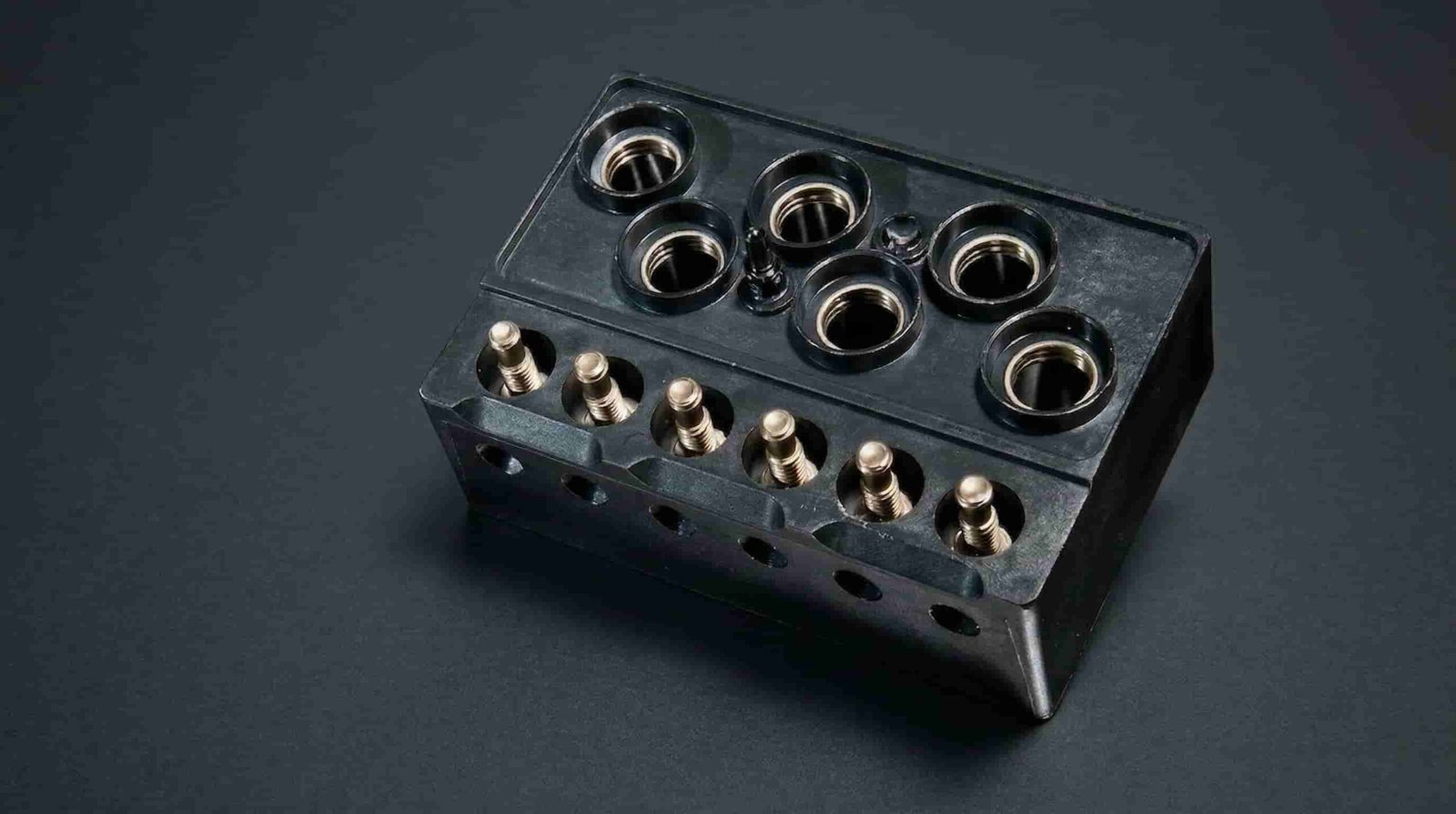
- Precision In-House Tooling: We design and manufacture custom hardened-steel molds specifically engineered for insert loading. Whether integrating magnetic retention systems to hold heavy steel brackets in place or cutting high-precision cavities that perfectly seal delicate copper pins without crushing them, our molds ensure zero insert displacement.
- Export-Ready Quality for Global Markets: We understand the rigorous quality requirements of international supply chains. GBM consistently delivers high-volume, defect-free insert molded components to strict regulatory markets across North America (USA and Mexico) and Europe (including Germany and Eastern Europe). Our parts are engineered to meet your local compliance standards right out of the box.
- Optimized for Automation: To drive down your wholesale costs, our engineering team designs molds optimized for automated robotic insert loading. By replacing manual loading with precision robotics, we drastically reduce cycle times, minimize human error, and maximize your ROI on high-volume runs (50,000+ units).
- Advanced Material Synergy: Plastics behave differently when molded over cold metal. Our experts utilize Moldflow® analysis to calculate exact shrinkage rates around the metal inserts, preventing the residual stress and cracking that commonly plague poorly designed composite parts.
Don’t let subpar tooling compromise your multi-material components. Let GBM’s engineering team evaluate your custom metal inserts and provide a comprehensive Design for Manufacturability (DFM) analysis today.
Conclusion
Understanding the specific types and applications of insert molding ensures you select the right manufacturing process for optimal part strength and cost-efficiency.