
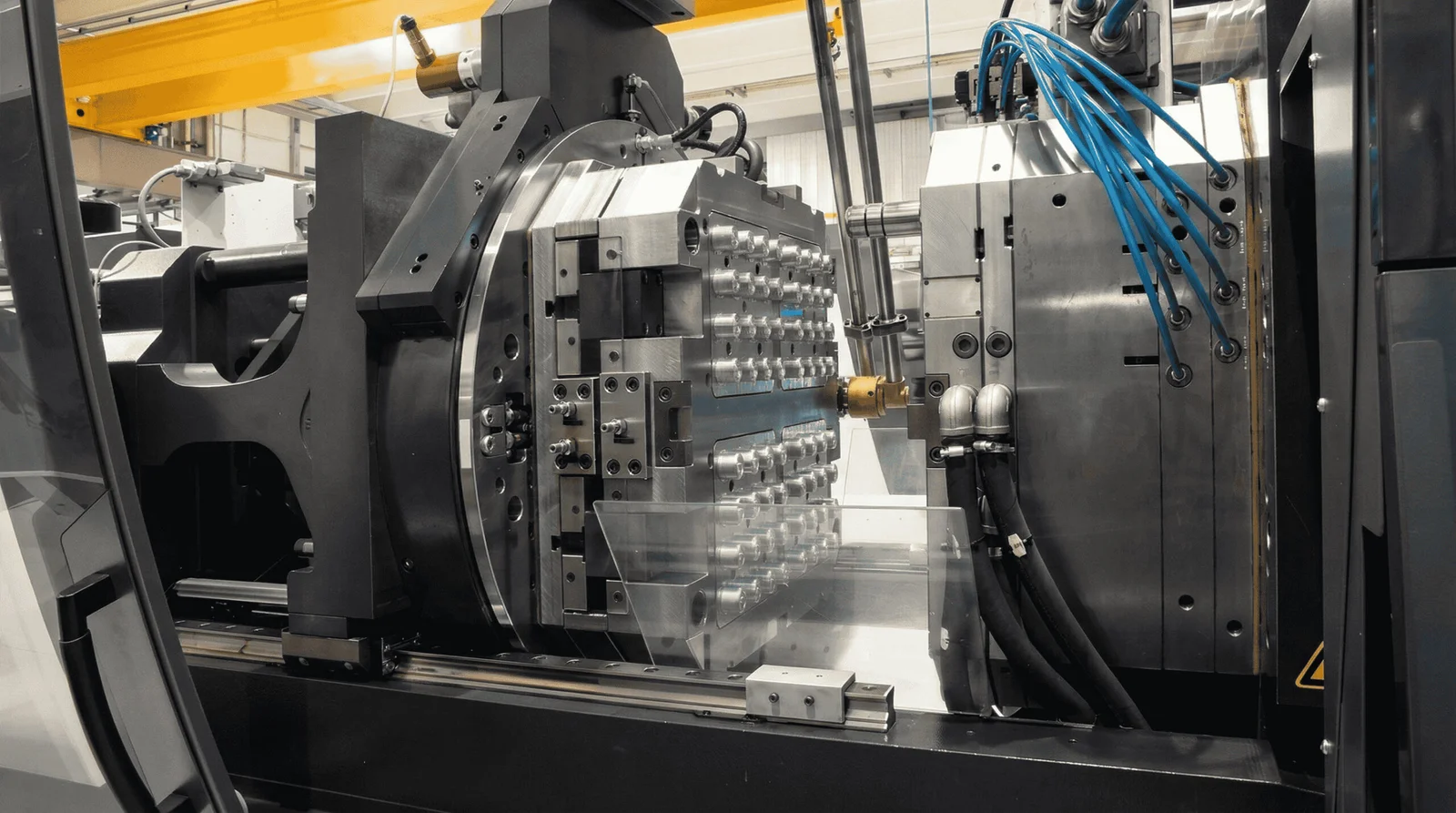
Back injection molding is an advanced manufacturing technique where molten plastic is injected directly onto the back of a decorative or functional material, such as fabric, film, or foil, already placed inside the mold cavity. This process eliminates the need for secondary adhesive applications, permanently bonding the substrate to the rigid plastic carrier. It is widely used in automotive interiors, consumer electronics, and appliance manufacturing to create premium, multi-layered components in a single step.
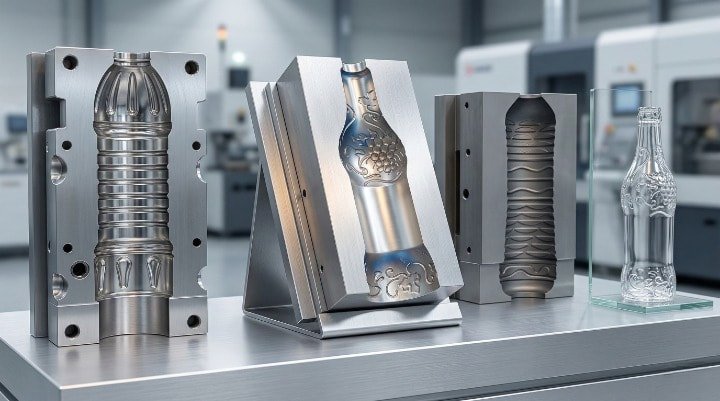
What is back injection molding?
Back injection molding, also known as in-mold decoration (IMD) or low-pressure molding, is a specialized process that fuses a decorative surface material with a molten thermoplastic carrier. By placing a pre-formed film or fabric into the mold before injection, the heat and pressure create an inseparable bond.
Video Guide: Watch a demonstration of hybrid back-injection technology creating complex, multi-material parts.
Core Mechanics of the Back Injection Process
- Substrate Placement: A decorative layer (textile, foil, or TPE) is robotically or manually inserted into the open mold cavity.
- Mold Closure: The mold closes, firmly clamping the material in place to prevent wrinkling or shifting.
- Low-Pressure Injection: Molten resin is injected behind the decorative layer at carefully controlled, lower pressures to avoid damaging the delicate surface material.
- Cooling and Ejection: The combined part cools, solidifying the mechanical and chemical bond before being ejected as a finished, ready-to-use component.
GBM Pro Tip: Always ensure your decorative insert material has a compatible melt temperature with your chosen injection resin to guarantee a permanent, peel-resistant bond without thermal degradation.
How Does back injection molding Work?
The process works by utilizing precise mold gating and low-pressure injection profiles to flow molten plastic behind a pre-positioned insert. The heat of the plastic slightly melts the back of the insert, while the injection pressure forces the materials together, resulting in a single, unified composite structure.
Video Guide: A comprehensive visual breakdown of how injection molding mechanics function under pressure.
Essential Tooling and Flow Dynamics
- Sequential Valve Gating: Controls the flow front of the molten plastic to prevent washing out or wrinkling the decorative insert.
- Thermal Management: Specialized cooling channels ensure the plastic cools evenly without warping the multi-layered part.
- Low-Shear Flow: The machine settings are optimized to reduce shear stress, protecting the aesthetic qualities of the front-facing material.
GBM Pro Tip: When designing molds for back injection, place your gate locations strategically to ensure the flow front pushes the fabric or film outward against the cavity walls, preventing creases.
What is the process of back injection moulding?
The back injection molding process involves material preparation, insert placement, mold clamping, low-pressure resin injection, holding pressure, cooling, and automated ejection. This sequence transforms raw plastic pellets and a decorative surface into a fully finished, integrated component without post-processing.
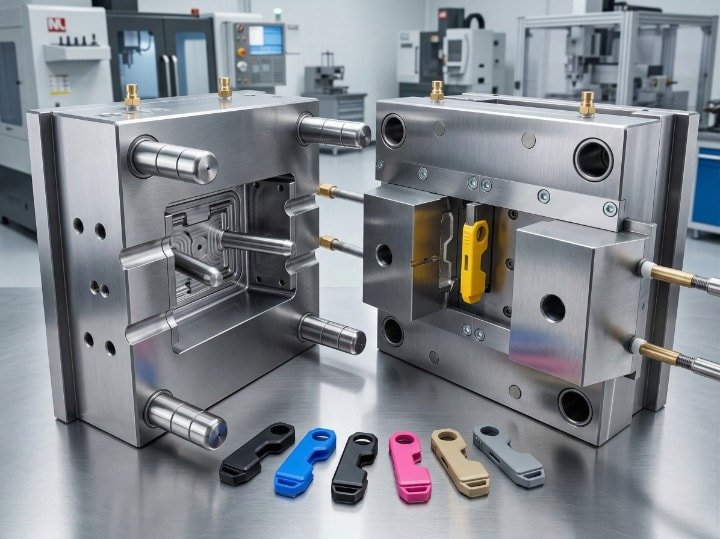
Step-by-Step Production Cycle
- Preparation: The film or textile is cut to size and pre-formed if dealing with deep-draw geometries.
- Positioning: The insert is secured in the mold using electrostatic charges, vacuum pins, or mechanical clamps.
- Injecton: The plastic is introduced using a specialized low-pressure profile to protect the insert.
- Curing: The part is held under pressure to compensate for shrinkage, then cooled rapidly to lock in the final shape.
GBM Pro Tip: Utilize vacuum assist in your mold cavities to hold flexible textiles perfectly flat against the mold wall during the high-velocity injection phase.
What are the two types of injection molding?
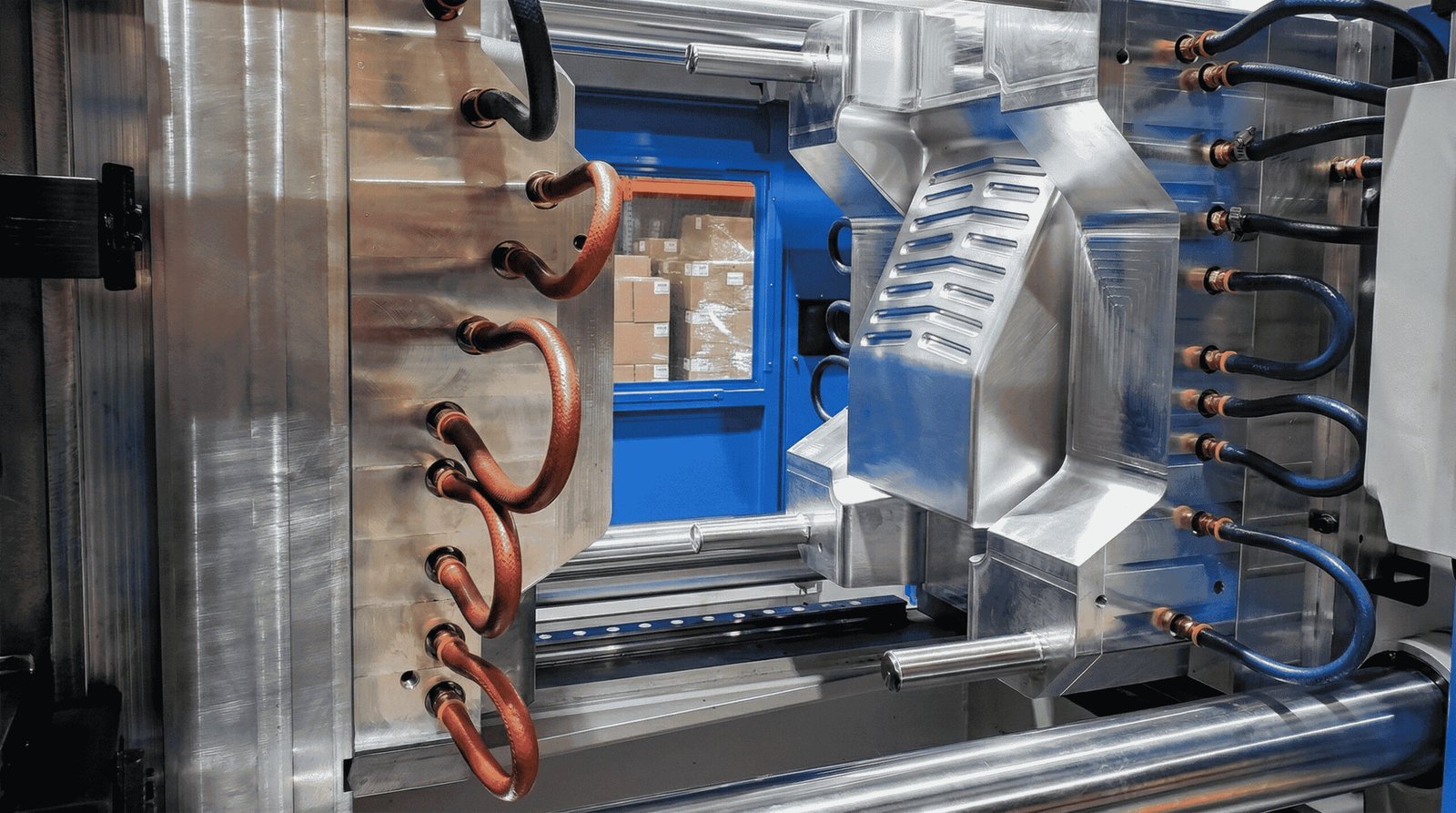
While there are many variations, the two primary categories of injection molding are standard high-pressure thermoplastic injection molding and specialized low-pressure molding. Back injection molding falls under the low-pressure category, specifically designed to accommodate delicate inserts like electronics, films, and fabrics.
High-Pressure vs. Low-Pressure Molding
- Standard High-Pressure Molding: Best for solid, single-material plastic parts requiring high structural integrity and tight dimensional tolerances. It uses extreme clamping forces and fast injection speeds.
- Low-Pressure (Back Injection) Molding: Ideal for overmolding delicate substrates. It uses reduced injection speeds and lower clamping forces to prevent crushing or burning the inserted decorative or electronic materials.
GBM Pro Tip: If you are transitioning from standard molding to back injection, you must recalibrate your machine’s injection speed and holding pressure; standard settings will instantly destroy delicate foils.
What is the back pressure in injection molding?
Back pressure in injection molding is the hydraulic resistance applied to the back of the screw as it recovers and rotates to prepare the next shot of plastic. This pressure ensures the molten resin is tightly packed, uniformly heated, and free of trapped air bubbles.
Video Guide: An expert explanation of back pressure and its critical role in melt consistency.
The Role of Back Pressure in Melt Quality
- Melt Homogeneity: High back pressure forces the screw to work harder, increasing shear heat and ensuring colorants and additives are perfectly mixed.
- Density Control: It compresses the melt pool, driving out trapped volatile gases and air that cause splay or voids in the final part.
- Shot Consistency: By maintaining a constant resistance, back pressure ensures the exact same volume of plastic is prepared for every single cycle.
GBM Pro Tip: For back injection molding with delicate fabrics, maintain a moderate back pressure to ensure excellent melt temperature uniformity without risking thermal degradation of the resin, which could bleed through the fabric.
Key Features & Comparison
Based on our internal data and market analysis, here is the breakdown:
| Feature | Traditional Assembly (Glue/Snap) | Back Injection Molding |
|---|---|---|
| Production Steps | Multiple (Mold, Apply Glue, Press) | Single-Step (In-Mold) |
| Bond Strength | Moderate (Prone to peeling) | Excellent (Chemical/Thermal fusion) |
| Cycle Time | High (Due to secondary operations) | Low (Finished part upon ejection) |
| Tooling Cost | Lower (Standard molds) | Higher (Requires specialized gating/clamping) |
| Environmental Impact | Higher (Adhesives/VOCs used) | Lower (No adhesives required) |
Cost & Buying Factors
When evaluating back injection molding for your production line, the initial tooling investment is generally 20% to 40% higher than standard injection molds due to the complex gating systems, vacuum assist mechanisms, and precise thermal controls required. However, this upfront cost is rapidly offset by the elimination of secondary assembly lines, adhesive purchases, and reduced manual labor costs.
Key buying factors include the compatibility of your selected resin with the insert material, the need for automated robotic handling systems to place inserts accurately, and the overall volume of production. For high-volume automotive and consumer goods, the return on investment is exceptionally fast.
Why Trust GBM for Your Back Injection & IMD Tooling?
Back injection molding leaves zero room for error. If the mold design is off by a fraction of a millimeter, high-pressure plastic will crush, wrinkle, or melt your delicate decorative insert. At GBM, we bring decades of specialized expertise to custom mold making, ensuring your multi-layer components come out flawless on the first shot.
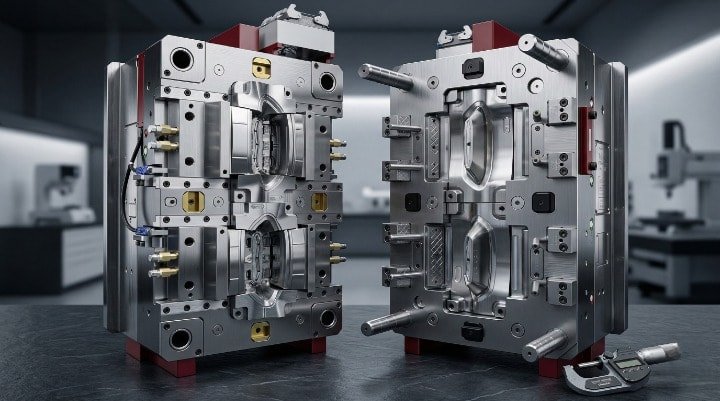
- Precision In-House Tooling: We design and manufacture all our injection molds in-house using advanced CNC and EDM machinery. For back injection, we engineer exact clearance tolerances to accommodate your specific textile, foil, or TPE insert perfectly without pinching or flashing.
- Advanced Flow Control: Standard molds will destroy delicate films. GBM’s engineering team utilizes Moldflow® analysis to design customized sequential valve gating systems. This ensures a low-shear, uniform flow front that gently presses the decorative layer against the cavity wall, eliminating creases and “washout” effects.
- Insert Fixation Technologies: Keeping the insert flat under extreme pressure is the hardest part of the process. We integrate advanced electrostatic pinning, vacuum channels, and robotic indexing directly into our mold designs. This guarantees your insert stays perfectly aligned during the high-velocity injection phase.
- Proven Industry Experience: From premium automotive interior panels with soft-touch fabrics to sleek consumer electronics with scratch-resistant IMD displays, GBM has successfully delivered complex back injection tooling for strict-tolerance industries worldwide.
Don’t risk your premium materials on standard tooling. Partner with GBM to engineer a mold built specifically for the demands of low-pressure back injection.
Conclusion
Back injection molding represents a significant leap forward in manufacturing efficiency, allowing for the seamless integration of decorative and functional surfaces with rigid plastic backings in a single cycle. By mastering the low-pressure techniques and understanding the critical role of material compatibility, manufacturers can produce highly durable, aesthetically pleasing components while reducing overall production steps.
If you are ready to elevate your product design and streamline your manufacturing process, consult with the experts at GBM. Our advanced molding solutions and custom tooling designs will ensure your next back injection project is a complete success.