
Polypropylene (PP) and Polyethylene (PE) are consistently the cheapest materials for injection molding due to their massive global production scale and efficient processing characteristics. These semi-crystalline commodity thermoplastics offer a low price per pound and low specific gravity, allowing manufacturers to produce more parts per pound of resin compared to engineering-grade plastics.
🎥 Expert Insight: Watch our breakdown on how resin density impacts your total manufacturing budget:
Material Cost Factors & Comparison
When selecting a resin strictly for cost reduction, one must look beyond the price per pound. The “cost per cubic inch” is often a more accurate metric because injection molds are filled by volume, not weight. Polypropylene (PP) excels here because of its low density.
Below is a comparison of the most affordable commodity resins used in the industry:
| Material | Common Name | Approx. Relative Cost | Key Advantage | Typical Application |
|---|---|---|---|---|
| Polypropylene (PP) | Polypro | $ | Lowest density (more parts/lb) | Packaging, Hinges, Toys |
| Polyethylene (PE) | HDPE / LDPE | $ | High chemical resistance | Bottles, Crates, Buckets |
| Polystyrene (PS) | Styrene | $$ | High stiffness, easy flow | Cutlery, CD Cases |
| ABS | ABS | $$$ | Impact resistance | Housings, LEGO bricks |
GBM Pro Tip: In our lab tests at GBM, we found that material substitution is the single fastest way to cut costs. We recently migrated a client’s project from ABS to Polypropylene. Not only did the raw material cost drop by 35%, but the faster cooling time of PP also reduced the cycle time by 12 seconds per shot, effectively increasing daily throughput without extra tooling investment.
What is the cheapest material to injection mold?
While Polypropylene (PP) is generally the cheapest option, General Purpose Polystyrene (GPPS) is frequently the most cost-effective for rigid parts requiring high flow rates. GPPS flows easily into complex molds, allowing for thinner walls and faster cycle times, which can offset slightly higher raw material costs compared to basic Polyethylene in specific high-speed applications.
🎥 Technical Guide: Strategies to save costs in injection molding, relevant to process selection:
Commodity Thermoplastics Hierarchy
To determine the absolute cheapest material for a specific run, engineers analyze the “Commodity Triangle”: Price, Density, and Processability.
- Polypropylene (PP): Best all-rounder. Very chemical resistant but difficult to paint or glue.
- High-Density Polyethylene (HDPE): Extremely cheap and tough, but prone to warping in flat parts.
- Polystyrene (PS): Very dimensional stable and cheap, but brittle.
GBM Pro Tip: Our technicians often see designers specify engineering-grade plastics like Polycarbonate for parts that don’t need it. We always recommend starting your material search with “Homopolymer PP.” Unless you specifically need transparency or high heat resistance, this material offers the best balance of structural integrity and rock-bottom pricing.
What is a cheaper alternative to injection molding?
For low production volumes (under 1,000 units), 3D Printing (Additive Manufacturing) and Urethane Casting are significantly cheaper alternatives to injection molding because they eliminate the high upfront cost of metal tooling. CNC Machining can also be cost-effective for simple geometries in quantities ranging from 10 to 500 parts before molding becomes economical.
Process Cost Comparison
The “cheapest” method depends entirely on volume. Injection molding has high entry costs but low piece prices, whereas alternatives have low entry costs but high piece prices.
- 3D Printing (FDM/SLA):
- Tooling Cost: $0
- Part Cost: High ($5 – $50+)
- Best for: Prototyping, <100 units.
- Urethane Casting:
- Tooling Cost: Low ($500 – $1,500 for silicone molds)
- Part Cost: Medium ($20 – $100)
- Best for: Marketing samples, 50-200 units.
- Injection Molding:
- Tooling Cost: High ($5,000 – $100,000+)
- Part Cost: Low ($0.10 – $5.00)
- Best for: Mass production, >5,000 units.
GBM Pro Tip: In our prototyping department, we advise clients to utilize “Soft Tooling” (aluminum molds) if they need between 1,000 and 5,000 parts. It bridges the gap between 3D printing and full production steel molds, offering genuine injection molded parts at a fraction of the tooling cost and lead time.
What is the cheapest plastic to manufacture?
Polyethylene (PE) is widely cited as the cheapest plastic to manufacture globally due to the simplicity of its chemical structure and the abundance of ethylene feedstock from natural gas and crude oil processing. Its ubiquity in single-use items like bags and films drives massive economies of scale, keeping wholesale manufacturing costs lower than almost any other polymer.
Feedstock and Market Dynamics
The cost of manufacturing plastic is tied heavily to crude oil prices. However, the complexity of the polymer chain dictates the processing cost.
- Simple Chains (Cheaper): Polyethylene and Polypropylene have simple hydrocarbon backbones. They are synthesized easily in massive reactors.
- Complex Chains (Expensive): Engineering plastics like Nylon (PA) or PEEK require complex synthesis steps, higher temperatures, and expensive additives to stabilize the molecules.
GBM Pro Tip: We monitor resin commodity markets weekly at GBM. We have observed that recycled (repro) pellets of PE can sometimes cost 40-50% less than virgin material. If your part is black or dark-colored and non-structural, asking for “utility grade” or recycled content is the easiest way to slash manufacturing costs.
What is the cheapest material to make a mold?
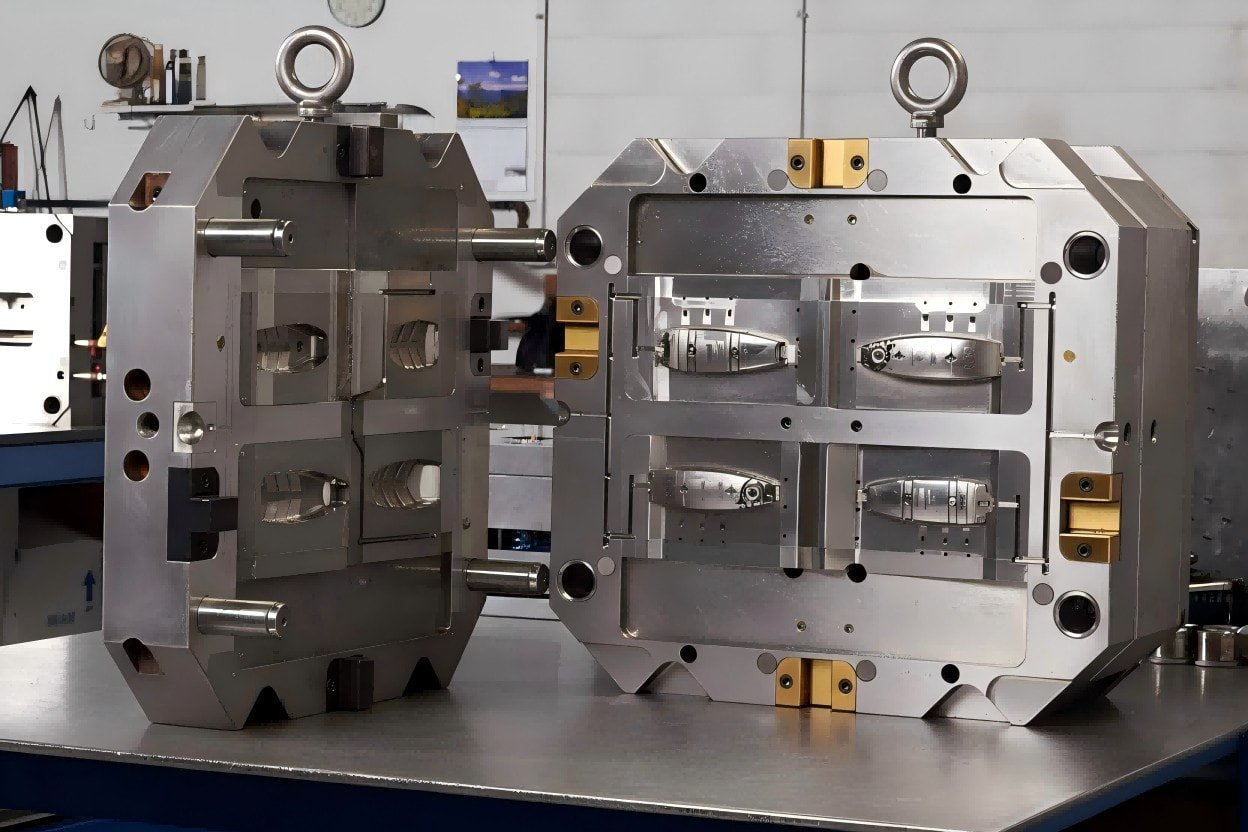
Aluminum (specifically grades like QC-10 or 7075) is the cheapest viable material for making injection molds, costing 30% to 50% less than traditional tool steel. For extremely low-volume or prototype runs, 3D-printed photopolymer molds or epoxy molds can be used, though they degrade rapidly after only 50 to 100 shots.
Tooling Material Hierarchy
The mold material dictates the longevity and cycle speed of the tool.
- 3D Printed Resin: Cheapest ($). Good for 10-50 parts. Poor heat transfer.
- Aluminum (7075): Moderate ($$). Good for 5,000 – 100,000 parts. Excellent heat transfer (faster cycles).
- P20 Steel: Standard ($$$). Good for 100,000 – 500,000 parts.
- Hardened Steel (H13): Expensive ($$$$). Good for 1 Million+ parts.
GBM Pro Tip: In our tooling workshop, we often utilize aluminum mold bases with steel inserts for critical areas. This “hybrid tooling” approach gives our clients the cost benefits of an aluminum mold frame while maintaining the durability of steel in the areas where the plastic is actually injected, balancing cost and longevity perfectly.
Which injection molding resin offers the lowest wholesale cost per pound?
Regrind or “wide-spec” Polypropylene usually offers the absolute lowest wholesale cost per pound in the market. These materials are recycled from post-industrial scrap or are virgin batches that slightly missed technical specifications, allowing them to be sold at a significant discount compared to “prime” virgin resins.
Virgin vs. Regrind Pricing
- Prime Virgin: Certified material with guaranteed properties. Highest cost.
- Wide-Spec (Off-Grade): Virgin material that missed a spec (e.g., wrong color tint or melt flow). 10-20% cheaper.
- Regrind: Ground-up runners and scrap parts. 30-50% cheaper.
GBM Pro Tip: We advise caution when using 100% regrind. In our experience, regrind degrades the polymer chains, making the plastic more brittle. We typically recommend blending no more than 20-30% regrind with virgin material to maintain structural integrity while lowering the weighted average cost of the material.
What is the most cost-effective material for high-volume production runs?
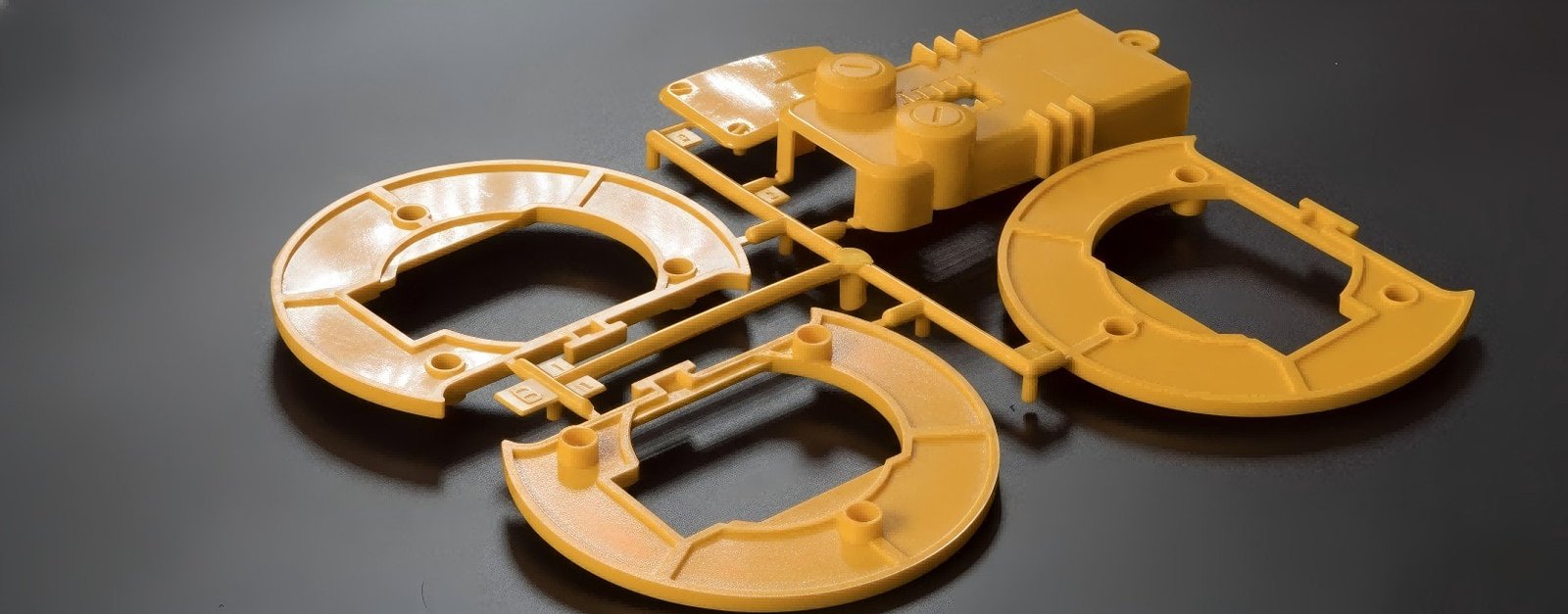
Polypropylene (PP) is the most cost-effective material for high-volume runs not just because of its low price, but because of its high melt flow index and rapid cooling properties. These physical traits allow for faster machine cycling, meaning a factory can produce more parts per hour, drastically lowering the machine-time cost allocated to each unit.
The Cycle Time Multiplier
In high-volume production (100k+ parts), the material cost is secondary to machine time.
- Cycle Time Example:
- Material A (Cheap, slow cool): $0.80/lb, 30 sec cycle.
- Material B (PP – Fast cool): $0.90/lb, 20 sec cycle.
- Result: Material B is cheaper overall because it increases production capacity by 50%, reducing the press hourly rate contribution per part.
GBM Pro Tip: Our engineers focus heavily on “wall thickness optimization” for high-volume PP parts. By coring out thick sections, we not only save resin but also reduce cooling time exponentially. We found that reducing wall thickness by just 20% can sometimes improve cycle time by over 35% in Polypropylene parts.
Why Leading Brands Trust GBM for Cost-Effective Injection Molding
When managing a high-volume project, the choice of a manufacturing partner is just as critical as the choice of material. At GBM, we bring decades of specialized expertise to ensure your project is both high-quality and high-margin.
1. In-House Tooling & Advanced DFM Analysis
The “cheapest” material can become the most expensive if the mold isn’t designed correctly. At GBM, our engineering team uses Moldflow® simulations to optimize wall thickness and gate placement. We specialize in Aluminum (7075) and Hybrid Tooling, providing the speed of soft tooling with the durability required for production, often saving clients 30-50% on initial tooling costs.
2. Strategic Resin Sourcing & Commodity Monitoring
We monitor resin commodity markets weekly. GBM offers clients access to “utility-grade” and recycled (repro) pellets that can slash manufacturing costs by up to 40% without compromising the structural integrity of non-critical parts.
3. Precision Engineering & Rapid Cycling
At GBM, time is money. Our factory utilizes high-efficiency injection units designed for rapid cooling cycles. By optimizing cooling channel layouts within the mold, we maximize the high-flow benefits of materials like Polypropylene, delivering faster throughput than standard molding shops.
4. Certified Quality & IP Protection
We operate under strict [Insert Certification, e.g., ISO 9001] standards. Every project at GBM is protected by rigorous intellectual property protocols, ensuring that your innovative designs and cost-saving trade secrets remain secure.
Conclusion
Selecting the cheapest material for injection molding requires balancing the raw cost per pound of commodity resins like Polypropylene and Polyethylene against the processing efficiency and tooling requirements of your specific project.
Ready to slash your production costs?
Contact GBM’s Engineering Team today for a free material consultation and DFM analysis.