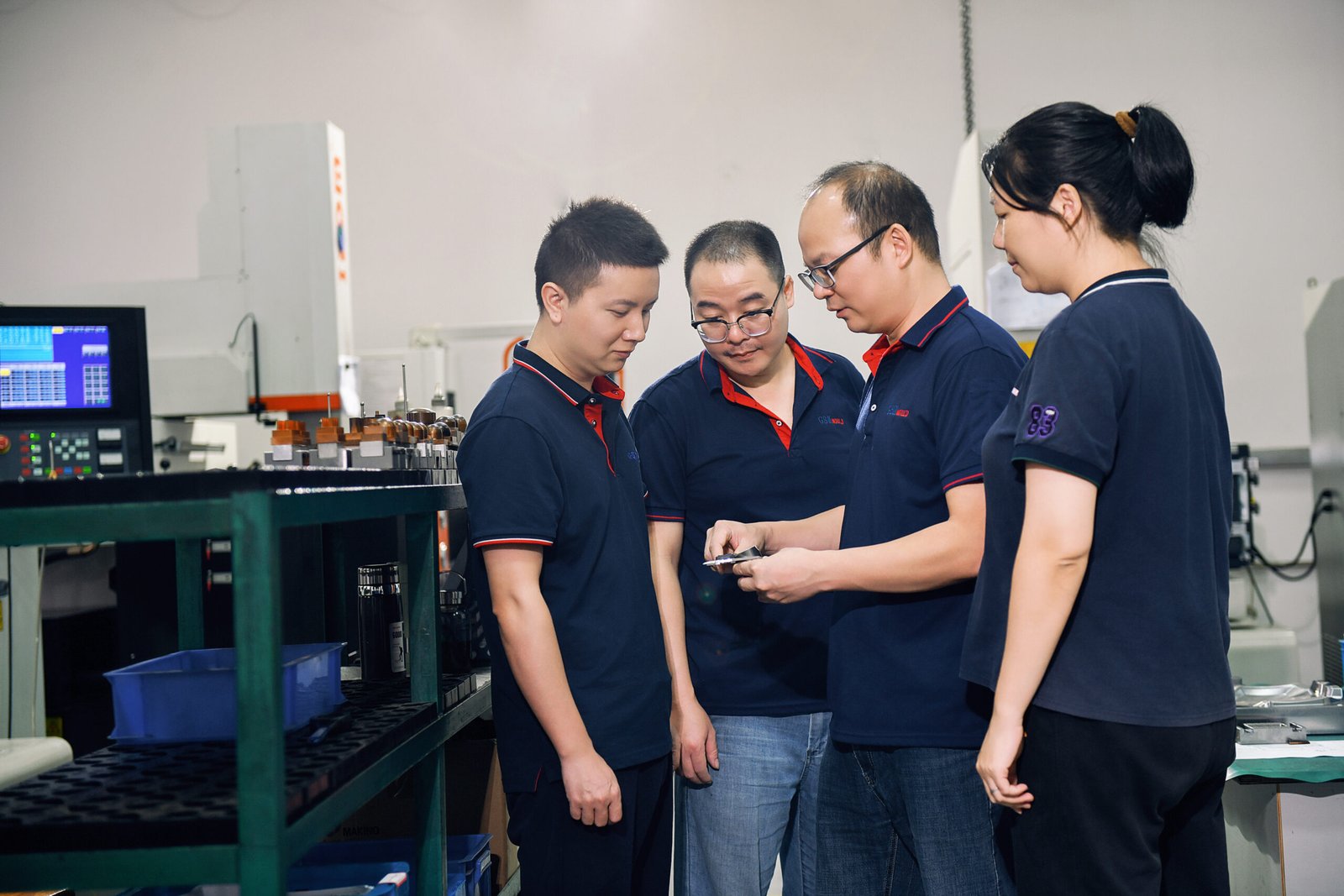

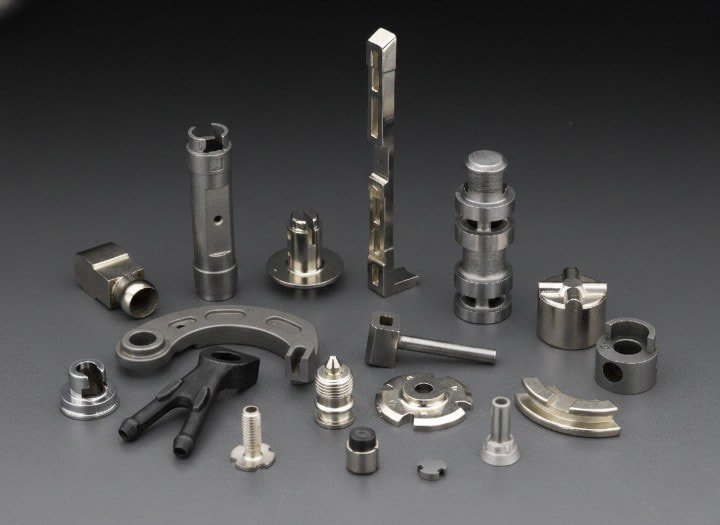
To make an injection mold, engineers first create a 3D CAD design that accounts for shrinkage and draft angles. The mold core and cavity are then machined from aluminum or hardened steel using CNC milling and Electrical Discharge Machining (EDM). Finally, the tool is polished, assembled with ejection pins, and tested in a press to verify part quality.
The Manufacturing Workflow
The creation of an injection mold is a precision engineering process that transforms a digital design into a physical steel tool capable of withstanding high pressure. The process is generally divided into three critical phases: Design, Machining, and Assembly.
| Phase | Key Activities | Machinery Used |
|---|---|---|
| 1. Design (DFM) | Part analysis, draft angle application, runner/gate placement. | CAD Software (SolidWorks, NX) |
| 2. Machining | Roughing out material, finishing cavities, drilling cooling lines. | 3-Axis/5-Axis CNC, Gun Drills |
| 3. EDM & Finishing | Creating sharp corners/ribs, texturing surfaces, polishing. | Sinker EDM, Wire EDM, Polishing Stones |
GBM Pro Tip: In our lab tests at GBM, we found that spending an extra 20% of project time on the initial Design for Manufacturability (DFM) analysis reduces tooling errors by nearly 40%. We always simulate mold flow analysis before cutting a single piece of steel to predict air traps and weld lines.
How to make injection molding at home?
Making injection molding setups at home requires a desktop manual injection machine or a drill-press modification. For the mold itself, hobbyists often use epoxy resin or machined aluminum blocks for lower temperatures. The plastic pellets are heated in a barrel and manually plunged into the mold cavity to form the part.
DIY Setup Requirements
Home injection molding is significantly different from industrial processes. It is limited by clamping force (keeping the mold closed) and injection pressure.
- The Machine: Usually a lever-operated vertical press.
- The Mold Material:
- High-Temp Epoxy: Good for 10-50 parts.
- Aluminum (6061): Good for 1,000+ parts, requires CNC or manual milling.
- Plastic Stock: Polypropylene (PP) and Low-Density Polyethylene (LDPE) are best for home use due to lower melting points and better flow.
GBM Pro Tip: Our technicians often see hobbyists struggle with “short shots” (incomplete parts). At home, you lack the high pressure of industrial machines. We recommend pre-heating your aluminum mold to approximately 50°C before injecting to ensure the plastic flows to the edges before solidifying.
How are injection molds made?
Injection molds are made by removing material from a metal block to create a negative impression of the final part. This involves rough CNC milling to remove the bulk of the steel, followed by heat treatment for hardening. Precision features are then finished using EDM (spark erosion) to achieve tight tolerances that milling cutters cannot reach.
Industrial Fabrication Techniques
The fabrication process relies heavily on subtractive manufacturing.
- CNC Milling: High-speed cutters remove steel to form the general shape.
- EDM (Electrical Discharge Machining): A copper electrode is shaped like the part and used to burn away steel. This is essential for deep ribs or square corners where a round drill bit cannot fit.
- Grinding: Used to ensure the parting lines (where the two halves meet) are perfectly flat to prevent plastic from leaking (flashing).
GBM Pro Tip: We prioritize “venting” during the fabrication stage. If air cannot escape the mold as plastic enters, the compressed air will burn the plastic (diesel effect). We utilize distinct venting channels ground to a depth of 0.0005 to 0.001 inches on the parting line.
What is the cheapest material for injection molding?
The cheapest material for injection molding tooling is aluminum, specifically grades like QC-10 or 7075. For extremely low-volume prototyping, 3D-printed photopolymer molds or epoxy molds are the absolute lowest cost options, though they have very poor durability and thermal conductivity compared to metal tools.
Cost-Effective Material Options
When budget is the primary constraint, material selection dictates the longevity of the tool.
| Material | Cost Level | Estimated Cycle Life | Best Use Case |
|---|---|---|---|
| 3D Printed Resin | $ | 10 – 50 shots | Fit checks, visual prototypes |
| Aluminum (7075) | $$ | 5,000 – 100,000 shots | Bridge tooling, low volume production |
| P20 Steel | $$$ | 100,000+ shots | Standard production |
GBM Pro Tip: In our cost-analysis reviews, we advise clients that while aluminum is cheaper to machine (machining 3x faster than steel), it cannot be easily welded or repaired if damaged. If your design is not finalized, the “cheapest” option might actually be soft steel (P20) because it allows for engineering changes.
What is the best material for injection molding?
The best material for high-volume injection molding is hardened tool steel, such as H13 or S7. These materials offer superior wear resistance, excellent thermal conductivity for cooling, and the ability to withstand millions of cycles without degrading, ensuring consistent part dimensions over years of production.
High-Performance Steel Grades
“Best” depends on the application, but for longevity and performance:
- H13 (Hot Work Tool Steel): The industry gold standard. It can be hardened to 48-52 RC. It handles thermal shock well.
- Stainless Steel (420): Best for PVC or corrosive plastics that release acidic gases, or for medical parts requiring cleanroom environments.
- S7: Known for high impact resistance, used in molds that have moving slides or lifters prone to mechanical stress.
GBM Pro Tip: Our engineering team almost exclusively specifies H13 steel for glass-filled nylon parts. Glass fibers are abrasive and will scour aluminum or soft steel molds quickly, ruining the surface finish. Hardened steel is mandatory for abrasive polymers.
What is the estimated cost for multi-cavity tooling?
Multi-cavity tooling typically costs between $15,000 and $100,000+, depending heavily on part complexity and size. While the initial investment is high, multi-cavity molds (e.g., 4, 8, or 16 cavities) reduce the unit price significantly by producing multiple parts per cycle, amortizing the tool cost over high volumes.
Cost Drivers in Tooling
The price tag is not just about the metal; it is about the complexity.
- Cavity Count: Going from 1 cavity to 4 cavities does not quadruple the cost, but usually doubles it.
- Action Mechanisms: Side-actions, sliders, or unscrewing cores for threaded parts add $2,000-$5,000 per feature.
- Surface Finish: High-gloss SPI-A1 diamond polishes require manual labor, driving up costs compared to standard EDM finishes.
GBM Pro Tip: We often advise customers to start with a “1+1” family mold or a single cavity tool to validate the market. Jumping straight to a 32-cavity production mold is a financial risk unless you have guaranteed orders for 500,000+ units annually.
What is the standard lead time for production molds?
The standard lead time for manufacturing a production injection mold is 4 to 8 weeks. Simple, single-cavity aluminum molds can be completed in 10-15 days, while complex, multi-cavity hardened steel molds with intricate side actions may require 10 to 12 weeks to design, machine, and test.
Production Timeline Phases
The “lead time” usually refers to the time from “Design Freeze” to “T1 Samples” (first test shots).
- Design & Approval (1-2 Weeks): Finalizing CAD and cooling layouts.
- Ordering Steel Base (1 Week): Sourcing the raw mold base.
- Rough Machining & Heat Treat (2-3 Weeks): Cutting the shape and hardening the steel.
- Finish Machining & Assembly (2-3 Weeks): EDM, polishing, and fitting components.
- T1 Trials (3 Days): First shots in the press.
GBM Pro Tip: Our project managers always buffer the timeline for “T1 to T2” corrections. It is rare for a mold to be perfect on the very first shot. We usually budget an additional 2 weeks after the initial lead time for texture adjustments and dimensional tuning.
Why Global Leaders Partner with GBM for Precision Tooling
When precision is the only option, manufacturers turn to GBM. With decades of experience in the injection molding industry, we have evolved from a standard mold shop into a high-end engineering partner specializing in complex, tight-tolerance tooling solutions.
Our expertise goes beyond standard P20 molds. We are industry leaders in:
- Advanced Mold Mechanisms: Our engineers specialize in high-cavitation Unscrewing Molds for threaded parts and sophisticated Stack Molds to double production output without increasing machine size.
- Complex Material Integration: We provide world-class solutions for 2-Shot (Multi-Shot) Molding and Insert Molding, allowing for seamless material bonding in a single cycle.
- Precision Engineering: From high-precision Connector Molds for the electronics sector to ISO-compliant Medical Device Tooling, we maintain dimensional stability within microns.
- Digital-First DFM: Every GBM project begins with an exhaustive Mold Flow Simulation, identifying potential sink marks, air traps, and structural weaknesses before the first cut of steel.
Conclusion
Creating a high-performance injection mold requires a delicate balance of material science, mechanical engineering, and cost management. Whether you are developing a low-volume aluminum prototype or a million-cycle Class 101 production tool, the initial engineering decisions dictate your long-term Total Cost of Ownership (TCO).
Ready to optimize your next project for mass production? Don’t leave your tooling to chance. Partner with the experts who prioritize precision and efficiency. Contact GBM today for a comprehensive DFM review and a technical consultation for your injection molding needs.