
Injection Molding is the superior choice for mass production, offering extremely low unit costs after high initial tooling expenses are covered. Conversely, CNC Machining is better for prototyping and low-volume runs, providing high precision and quick turnaround times without upfront mold costs. Your decision depends entirely on production volume and budget.
What is Injection Molding?
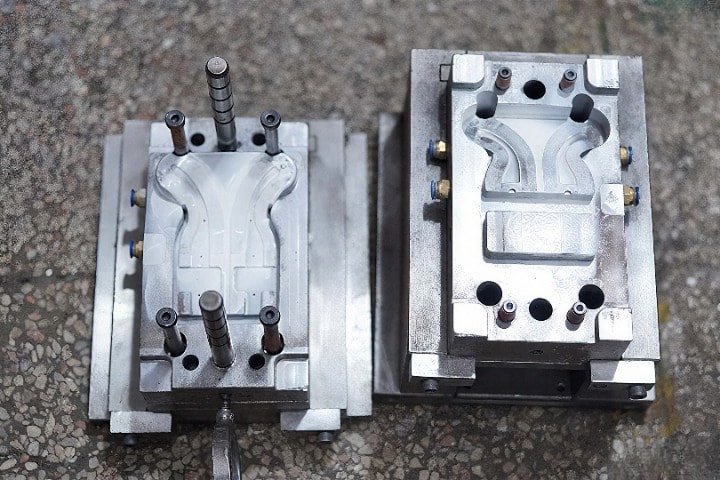
Injection Molding is a formative manufacturing process where molten material is injected under high pressure into a custom-made metal mold. It is the industry standard for mass-producing identical plastic parts with high efficiency and repeatability. This method requires a significant initial investment in tooling but offers incredibly low per-unit costs once production scales up.
Core Technology: Melting and injecting thermoplastic or thermosetting polymers into a cavity.
Best Application: High-volume production runs (1,000 to 1,000,000+ units) requiring consistent tolerances.
Cost Structure: High upfront cost (molds can cost $5,000–$100,000+), but very low piece price.
🎥 Watch Video: Understanding the Cost Structure of High-Volume Injection Molding
What is CNC Machining?
CNC Machining is a subtractive manufacturing process that utilizes computer-controlled cutting tools to remove material from a solid block to shape the final part. It delivers exceptional precision and allows for the creation of complex geometries with tight tolerances without the need for molds. This method is perfect for functional prototypes and low-volume production runs where speed and design flexibility are paramount.
Core Technology: Computer Numerical Control (CNC) mills and lathes cut away material from a solid workpiece.
Best Application: Prototyping, custom tooling, and low-volume manufacturing (1 to 1,000 units).
Cost Structure: Low upfront cost (no tooling required), but higher price per unit due to cycle time and material waste.
🎥 Watch Video: CNC Machining Explained – Precision Prototyping Without Molds
Key Differences: Injection Molding vs. CNC Machining
When deciding between these two technologies, the primary factors are volume, cost, and material properties. CNC machining offers speed and precision for small batches, while injection molding dominates large-scale manufacturing.
| Feature | Injection Molding | CNC Machining |
|---|---|---|
| Process Type | Formative (Liquid to Solid) | Subtractive (Solid to Part) |
| Ideal Volume | High (1,000+ parts) | Low (1–1,000 parts) |
| Upfront Cost | Very High (Tooling/Molds) | Low (Programming/Setup) |
| Unit Cost | Low (Decreases with volume) | High (Remains constant) |
| Surface Finish | Smooth (defined by mold) | Machined (visible tool marks) |
| Waste | Low (Sprues can be recycled) | High (Chips/Shavings) |
ClearFilter Pro Tip: We always recommend starting with CNC Machining to validate your design and fit. Once the design is locked in and you are ready to produce over 500 units, transition to Injection Molding to drastically reduce your unit costs.
Pros & Cons Comparison
| Feature | Injection Molding | CNC Machining |
|---|---|---|
| Speed | Slow startup (weeks/months for molds), fast production. | Fast startup (days), slower production per part. |
| Material Choice | Limited to moldable plastics/rubbers. | Vast (Metals, Plastics, Wood, Foam). |
| Design Freedom | Restricted by draft angles and undercuts. | High freedom, handles complex geometry easily. |
| Consistency | Identical parts every shot. | High precision, but depends on tool wear. |
| Strength | Uniform strength, but potential knit lines. | Structural integrity of the original block. |
The GBM Advantage: Seamlessly Scaling from Prototype to Production
Knowing when to transition from CNC machining to injection molding is critical, but executing that transition requires deep engineering expertise. At GBM, we don’t just manufacture parts; we guide our clients through the entire scaling process.
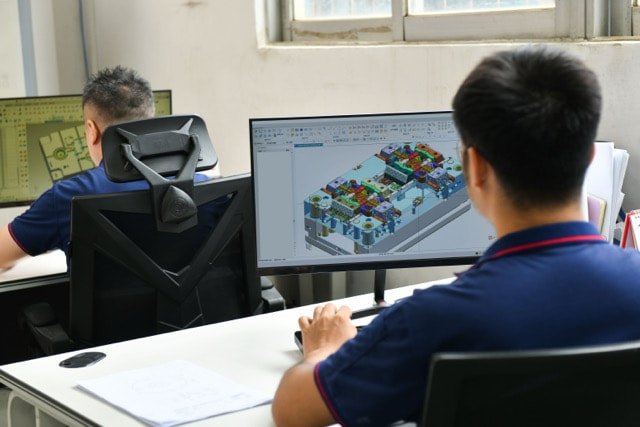
If you have validated your CNC prototype and are ready for mass production, our tooling engineers step in to provide a comprehensive DFM (Design for Manufacturability) analysis. We specialize in optimizing your original machined designs—adding necessary draft angles, managing uniform wall thicknesses, and eliminating undercuts—to ensure they are perfectly suited for high-volume injection molding.
By partnering with GBM, you gain access to precision toolmaking and advanced injection molding capabilities under one roof, ensuring your unit costs plummet without sacrificing the tight tolerances you achieved during prototyping.
Conclusion
If you are in the prototyping phase or need less than 500 parts, CNC Machining is the clear winner due to its speed and lack of tooling costs. However, if you are launching a consumer product and anticipate sales in the thousands, Injection Molding is the only economically viable option to achieve a competitive price per unit.
Ready to scale your production? Transitioning from a machined prototype to a molded product doesn’t have to be complicated. Contact the engineering team at GBM today to submit your CAD files. We will provide a free DFM review and a competitive tooling quote to help you achieve the lowest possible cost per part.
FAQ
1. Is CNC machining stronger than injection molding?
Generally, yes. CNC parts retain the structural integrity of the solid block of material (whether plastic or metal), whereas injection molded parts can have internal stresses or weak points where the material flow meets (knit lines).
2. Can I use the same design for both processes?
Not exactly. Injection molding requires specific design features like draft angles (tapered walls) to eject the part from the mold, which are not necessary for CNC machining.
3. At what quantity does injection molding become cheaper?
Typically, the break-even point is between 500 and 1,000 units. Below this, the cost of the mold makes the per-part price too high compared to machining.