

To avoid flow marks in injection molding, you must optimize the injection speed, increase the nozzle and barrel temperatures, and ensure adequate venting in the mold cavity. Flow marks often result from the molten plastic cooling too quickly as it flows over the mold surface, so maintaining a higher melt temperature and consistent injection pressure helps the material fill the cavity smoothly without creating wavy patterns.
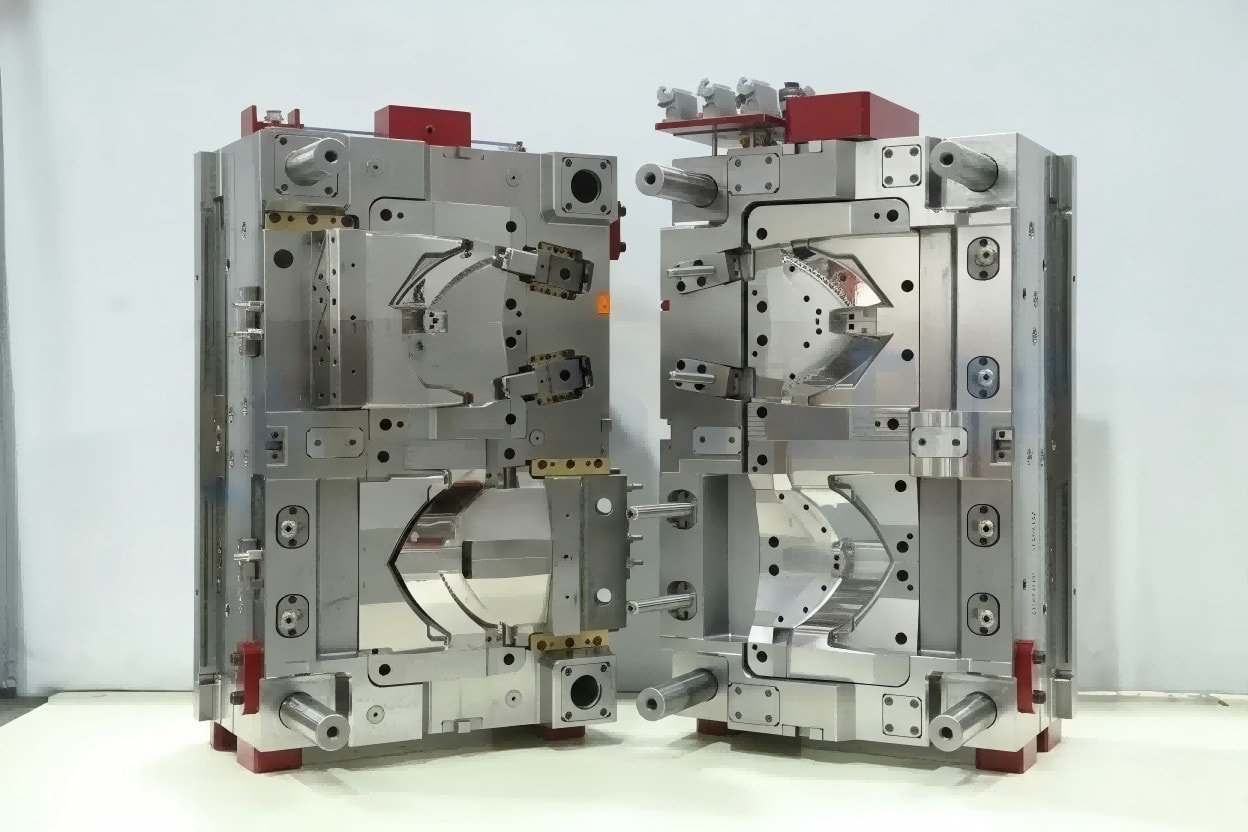
Optimization Parameters
Flow marks, also known as flow lines, appear as off-tone wavy lines or patterns on the surface of the molded part. They are primarily caused by a variation in the cooling speed of the material as it flows through the mold. To eliminate them, we focus on stabilizing the flow front.
Key Parameter Adjustments:
| Parameter | Action | Effect on Flow Marks |
|---|---|---|
| Injection Speed | Increase | Pushes material faster to prevent premature cooling at the flow front. |
| Melt Temperature | Increase | Lowers viscosity, allowing the plastic to flow more easily over mold surfaces. |
| Nozzle Diameter | Enlarge | Reduces shear stress and prevents temperature drops before the material enters the mold. |
| Mold Temperature | Increase | Keeps the material molten longer, allowing it to replicate the mold surface texture accurately. |
GBM Pro Tip: In our lab tests at GBM, we found that simply increasing the injection speed solves nearly 60% of flow mark issues on the first try. However, we always monitor for flash or burn marks when doing this, as high speeds can introduce new defects if the venting isn’t adequate.
How to get rid of flow lines?
To get rid of flow lines on existing parts, you can use post-processing methods like sanding, painting, or texturing the surface to hide the visual defect. However, to permanently eliminate them in production, you must modify the process by enlarging the gate size or relocating the gate to a thicker section of the part to ensure a uniform flow path.
🎥 Watch the Flow Line Fix: See how adjusting gate depth and injection velocity can instantly smooth out surface ripples.
Process and Design Remediation
If adjusting machine settings does not resolve the issue, physical modifications to the mold or the part design are required.
- Gate Modification:
- Enlarge the Gate: Small gates cause high shear and temperature loss. Increasing the gate depth allows for smoother flow.
- Relocate the Gate: Move the gate to a position that allows the flow length to be minimized or directed away from aesthetic surfaces.
- Cold Slug Wells:
- Add or enlarge cold slug wells at the runner system’s end. This captures the initial, cooler front of the molten plastic so it doesn’t enter the mold cavity and cause marks.
- Surface Finish:
- Applying a matte texture (EDM finish) to the mold cavity can effectively camouflage minor flow lines that are difficult to process out completely.
GBM Pro Tip: Our technicians often see designers place gates in thin sections to make trimming easier, but this is a major cause of flow lines. We always recommend gating into the thickest section of the part to allow the material to flow from thick to thin, maintaining pressure and temperature.
What is the root cause of flow marks?
The root cause of flow marks is the variation in the cooling rate of the molten plastic as it moves across the mold surface. When the melt temperature is too low or the injection speed is too slow, the leading edge of the flow front solidifies and then is pushed forward by hot material behind it, creating the characteristic wavy pattern.
🎥 The Physics of Cooling: A visual breakdown of why temperature differentials at the flow front create wavy ‘stutter’ marks.
The Physics of Flow
Understanding the rheology (flow behavior) of the polymer is essential for diagnosing the root cause.
- High Viscosity: Materials with high viscosity (stiff flow) resist movement. If the machine cannot apply enough pressure, the flow “stutters,” causing ridges.
- Wall Thickness Variations: Moving from a thick section to a thin section can cause the flow to accelerate and decelerate unpredictably.
- Low Mold Temperature: If the steel is too cold, the plastic freezes instantly upon contact. The subsequent flow rolls over this frozen layer, creating a visible seam or mark.
GBM Pro Tip: We frequently trace root causes back to the nozzle heater bands. Even if the controller says the temperature is correct, a faulty heater band can cause cold spots in the melt stream. We use thermal imaging to verify actual nozzle temperatures before tearing down a mold.
What causes flow lines in injection molding?
Flow lines in injection molding are caused by physical obstructions or design flaws that interrupt the laminar flow of the plastic. Common culprits include sharp corners, inconsistent wall thickness, and poor gate placement, which force the plastic to change direction or velocity abruptly, resulting in visible striations on the finished part.
🎥 Design for Laminar Flow: Learn how to avoid ‘racetracking’ by optimizing wall thickness in your 3D model.
Design vs. Manufacturing Causes
While similar to the root cause, “what causes” them often points to the specific interaction between the machine and the mold geometry.
- Design Factors:
- Ribs and Bosses: Flow lines often appear opposite ribs because the material flows into the rib and cools differently than the surrounding wall.
- Sharp Corners: Plastic prefers smooth curves. Sharp 90-degree turns induce shear heat and flow turbulence.
- Material Factors:
- Lubricants: Excessive external lubricants in the resin mix can cause slippage against the mold wall, creating streaks.
- Pigment Issues: Poorly dispersed colorants can appear as flow lines, technically called “streaks,” though they look similar.
GBM Pro Tip: In our design reviews, we look for “racetracking.” This happens when thick sections allow the plastic to race ahead of the flow in thinner sections, encircling air and creating weld lines and flow marks. We fix this by coring out thick sections to maintain uniform wall thickness.
Mold flow analysis service cost
The cost for a professional mold flow analysis typically ranges from $500 to $3,000 per part, depending on the complexity of the geometry and the depth of the simulation required. A basic fill-and-pack analysis is cheaper, while a full warpage, cooling, and fiber orientation analysis commands the higher end of the price spectrum.
Service Tiers
Investing in simulation before cutting steel saves thousands in rework.
- Basic Analysis ($500 – $1,000): Covers filling patterns, gate location optimization, and identification of air traps and weld lines.
- Advanced Analysis ($1,500 – $3,000+): Includes cooling circuit analysis, cycle time optimization, warpage prediction, and shrinkage calculations.
- Consulting Bundles: Many firms offer this as part of a DFM (Design for Manufacturing) package.
GBM Pro Tip: We advise our clients that the cost of analysis is usually less than 5% of the cost of a mold modification. We never launch a high-volume tool without running a full fill-pack-warp analysis first to predict flow mark locations.
Injection molding consultant rates
Injection molding consultant rates generally fall between $150 and $300 per hour for specialized engineering support. For longer-term projects or on-site troubleshooting, day rates can range from $1,200 to $2,500 per day, plus travel expenses. Rates vary based on the consultant’s expertise in specific materials or industry certifications.
Hiring Considerations
When hiring a consultant to fix flow mark issues, clarity on the scope is vital.
- Hourly Support: Best for reviewing DFM reports or troubleshooting specific defects via video call.
- Project-Based: Best for “turnkey” mold validation where the consultant manages the sampling process until the part is approved.
- Retainer: Useful for ongoing quality control and process optimization across multiple production lines.
GBM Pro Tip: We recommend hiring a consultant who brings their own instrumentation. When we send our team out, we bring portable data acquisition systems to read cavity pressure sensors. A consultant who only looks at the machine screen is often guessing; data drives the solution.
Why Trust GBM to Solve Your Surface Defect Challenges? (Our EEAT Commitment)
At GBM, we don’t just troubleshoot defects; we engineer them out of existence. Achieving a Class-A surface finish requires a deep understanding of polymer rheology and precision tooling.
- Decades of Troubleshooting Experience: Our senior engineers have spent over 12 years on the factory floor. We’ve resolved flow mark issues across diverse industries, from high-gloss automotive interiors to transparent medical housings where even a microscopic streak is a cause for rejection.
- Data-Driven Solutions (Not Guesswork): While many shops use trial-and-error, GBM utilizes advanced scientific molding principles. We use high-speed data acquisition to monitor cavity pressure and melt temperature in real-time, ensuring that every adjustment is backed by physics, not intuition.
- In-House Mold Flow Authority: We don’t outsource our simulations. GBM’s in-house Moldflow® Certified team runs comprehensive fill, pack, and cool analyses on every complex project. This allows us to predict potential flow marks and optimize gate placement before the first piece of steel is machined.
- The “Zero-Defect” Tooling Standard: Our tooling shop specializes in high-precision finishes. By implementing our proprietary venting standards and utilizing specialized mold steels with superior thermal conductivity, we ensure consistent cooling rates that prevent flow lines from forming at the source.
Stop fighting flow marks. Start engineering perfection. Contact GBM’s technical team today for a comprehensive DFM review and let us optimize your production for a flawless finish.
Conclusion
Eliminating flow marks requires a balance of higher heat, faster injection speeds, and uniform wall thickness design.