The main difference between injection molding and extrusion is the final form of the product. Injection molding creates discrete, three-dimensional parts with complex shapes by injecting material into a closed mold, whereas extrusion produces continuous, two-dimensional profiles like pipes or tubing by forcing material through a die.
What is Injection Molding?
Injection molding is a cyclical manufacturing process used to produce identical parts in high volumes by injecting molten material into a mold. It is the standard method for creating discrete, solid objects with complex geometries, ranging from small bottle caps to large automotive dashboards.
Core Mechanism: The process involves melting plastic pellets in a heated barrel and using a reciprocating screw to force the material into a metal mold. Once the plastic cools and solidifies, the mold opens to eject the finished part.
Typical Applications: This method is essential for products requiring high precision and detail, such as electronic housings, toys (like LEGO bricks), surgical devices, and open containers.
🎥 Video Guide: Core Mechanisms of Custom Injection Molding
What is Extrusion?
Extrusion is a high-volume manufacturing process that creates objects of a fixed cross-sectional profile by pushing material through a die. Unlike injection molding, which makes individual parts, extrusion produces continuous lengths of material that are subsequently cooled and cut to size.
Core Mechanism: Raw thermoplastic material is melted and homogenized by a rotating screw. It is then forced through a specific die shape (like a cookie cutter) to create a continuous stream of plastic, which is pulled through a water bath for cooling.
Typical Applications: Extrusion is the go-to method for linear products, including PVC piping, window frames, weatherstripping, wire insulation, and adhesive tape backing.
🎥 Visual Guide: Understanding Plastic Extrusion and Continuous Profiles
Key Differences: Injection Molding vs. Extrusion
While both processes utilize similar raw materials and heating mechanisms, the tooling and output differ significantly.
| Feature | Injection Molding | Extrusion |
|---|---|---|
| Output Format | Discrete, 3D individual parts | Continuous, 2D linear profiles |
| Tooling | Closed 3D Molds (Expensive) | 2D Dies (Moderate Cost) |
| Complexity | High (intricate details, variable walls) | Low (constant cross-section) |
| Post-Processing | Minimal (gate trimming) | Cutting, coiling, or secondary bending |
GBM Pro Tip: When we design for manufacturing, we always look at the geometry first. If your part has a consistent cross-section throughout its entire length—like a straw or a rail—we advise using extrusion to drastically reduce tooling costs. However, if the part requires screw bosses, ribs, or closed ends, injection molding is the required path.
Pros & Cons Comparison
| Feature | Injection Molding | Extrusion |
|---|---|---|
| Design Freedom | High: Can create complex 3D shapes. | Limited: Restricted to 2D profiles. |
| Production Speed | Fast: Cycle times in seconds per part. | Continuous: Extremely high output rates. |
| Tooling Cost | High: Molds are complex to machine. | Lower: Dies are simpler to fabricate. |
| Surface Finish | Excellent: Mirrors the mold texture. | Good: Smooth, but linear lines may appear. |
| Material Waste | Low: Runners can often be reground. | Moderate: Start-up and shut-down waste. |
The GBM Advantage: Precision Injection Molding Expertise
Understanding the theoretical difference between extrusion and injection molding is just the first step. When it comes to executing complex, 3D-part manufacturing at scale, theoretical knowledge cannot replace floor experience.
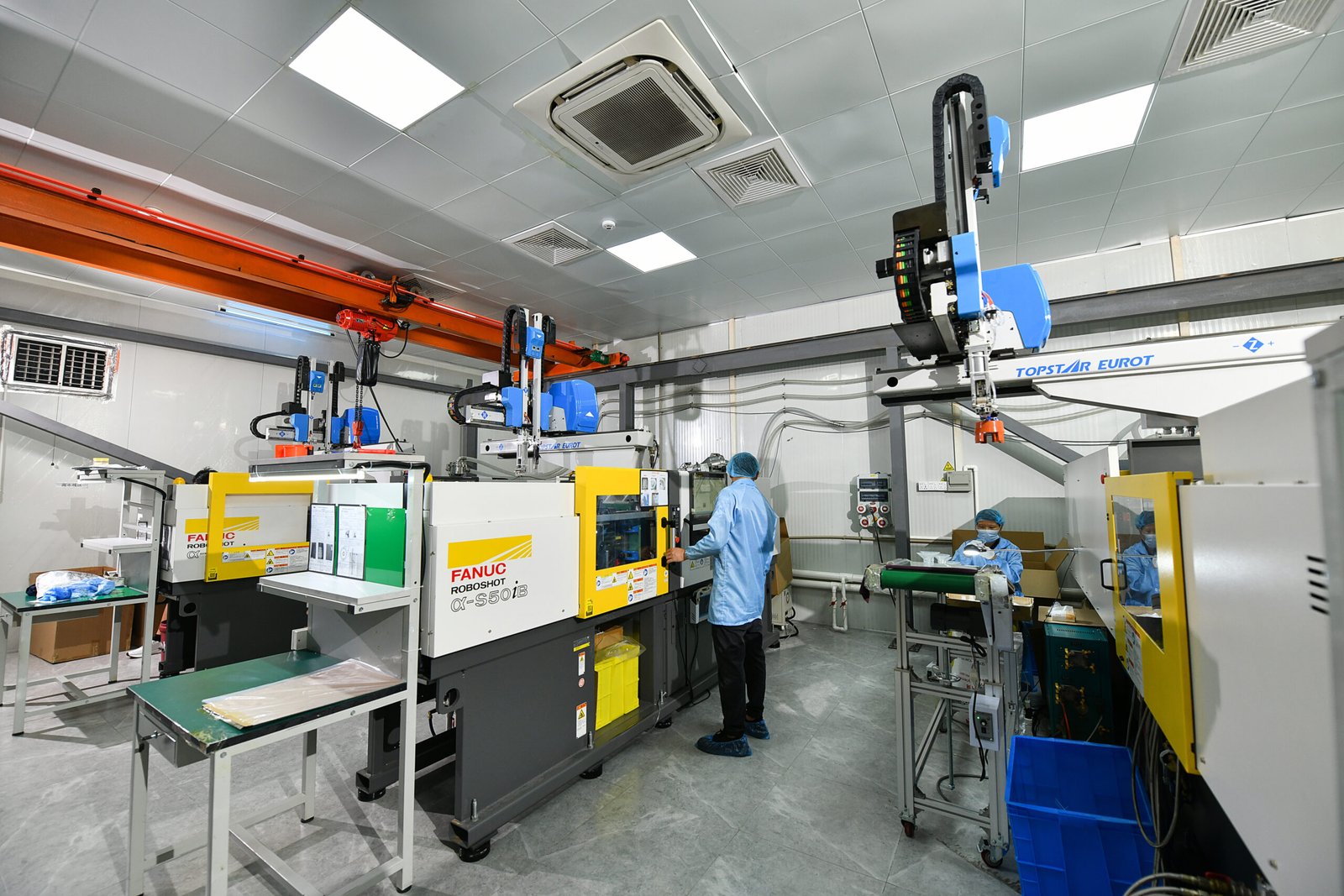
At GBM, we specialize in transforming intricate product designs into high-performance injection molded realities. While extrusion handles the simple continuous profiles, our engineering team thrives on the geometric challenges of custom injection molding.
We engineer and fabricate advanced tooling systems to optimize your production, including:
- Complex Geometries: Precision Unscrewing Molds for flawless internal and external threads.
- Multi-Material Integration: Advanced Insert Molding techniques that seamlessly encapsulate metal components within the plastic matrix, reducing secondary assembly steps.
- High-Volume Scalability: Designing efficient Stack Molds to double your production output without increasing the machine footprint or cycle time.
Our commitment to rigorous DFM (Design for Manufacturability) ensures that we don’t just build a mold; we engineer a long-term, cost-effective manufacturing solution tailored to your exact specifications.
Conclusion
Choosing between injection molding and extrusion ultimately depends on the geometry of your final product. If you need continuous lengths of material like tubing, seals, or sheets, extrusion is the efficient choice. However, for standalone parts with intricate details, varying wall thicknesses, or specific 3D shapes, injection molding is the only viable solution.
Ready to start your injection molding project? Whether you are developing a new prototype or looking to scale up to millions of parts, having the right tooling partner is critical. Contact the engineering experts at GBM today for a comprehensive DFM review and a competitive quote for your custom injection molding needs.
FAQ
1. Can extrusion be used to make complex 3D shapes? No, extrusion is strictly for products with a continuous cross-section. To add 3D features to an extruded part, secondary operations like drilling or punching are required after the extrusion process.
2. Which process is cheaper for prototyping? Extrusion dies are generally cheaper than injection molds. However, for true prototyping of complex parts, 3D printing is often used before committing to the high cost of an injection mold.
3. Do both processes use the same plastic materials? Yes, both processes commonly use thermoplastics like ABS, Polyethylene, Polystyrene, and PVC, though the specific grade and melt flow index of the material will differ to suit the processing method.