
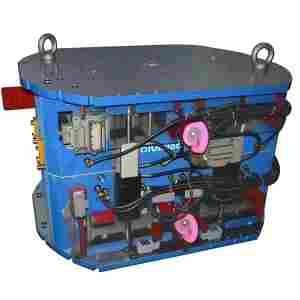
Two-shot injection molding (2K molding) is a specialized manufacturing process where two different plastic resins are injected into a single mold during one machine cycle. It is primarily used to produce complex parts requiring multi-material properties, such as rigid substrates with soft-touch grips, integrated seals, or dual-color aesthetics, without the need for post-production assembly.
The Dual-Injection Mechanism
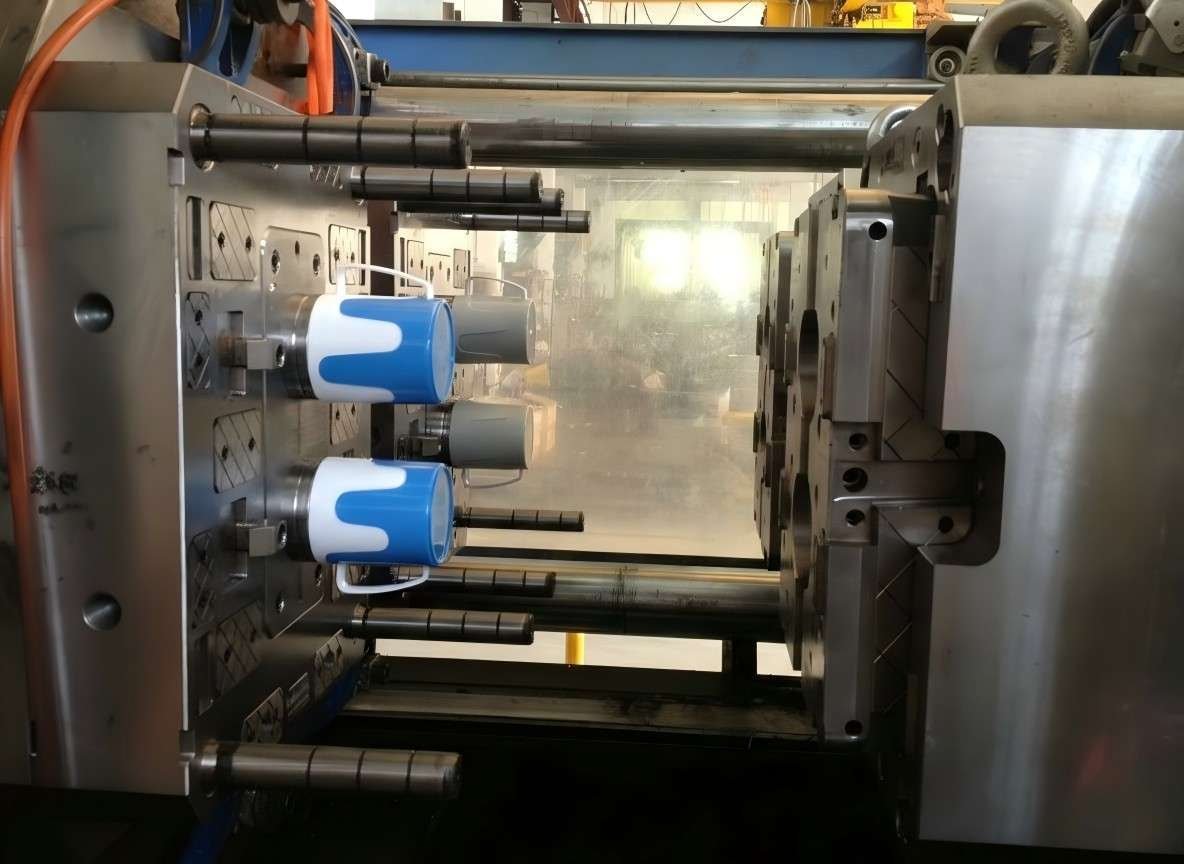
In standard injection molding, one material fills a mold. In two-shot molding, the machine utilizes two separate injection units. The process relies heavily on a rotating mold mechanism. After the first material (the substrate) is injected, the mold opens, rotates 180 degrees (or utilizes a core-toggle), and aligns the substrate with the second injection unit. The second material is then injected, chemically or mechanically bonding to the first.
This capability allows engineers to combine materials with different characteristics, such as:
| Material Combination | Common Application | Benefit |
|---|---|---|
| Hard Plastic + TPE | Power tool handles | Structural integrity with ergonomic grip |
| Clear + Opaque | Automotive dashboards | Backlit buttons and displays |
| Rigid + Rigid (Colors) | Toothbrushes | Aesthetic appeal without painting |
| Rigid + Silicone | Medical devices | Integrated watertight sealing |
GBM Pro Tip: In our lab tests at GBM, we found that chemical compatibility between the two materials is the single most critical factor for success. If the melt temperatures and chemical structures don’t align, delamination occurs. We always recommend consulting a bonding compatibility chart before cutting steel for the mold.
What is 2 shot molding?
Two-shot molding, frequently referred to as double-shot, multi-shot, or 2K molding, is an automated polymer processing technique that molds two distinct thermoplastic materials into one permanent component. Unlike simple assembly, this process creates a molecular bond between the layers within the mold tool itself, resulting in superior durability and precision.
🎥 Watch Video: An Inside Look at the Two-Shot (2K) Injection Molding Process
Technical Specifications
While standard molding focuses on a single shot, 2K molding requires specialized equipment. The machine must have two barrels and two nozzles, often controlled independently. The complexity lies in the tool design, which must accommodate two cavities and a transfer mechanism.
- Shot 1 (Substrate): Provides the structural skeleton.
- Shot 2 (Overmold): Provides the tactile feel, color contrast, or seal.
GBM Pro Tip: Our technicians often see designers confuse “bi-injection” with “two-shot.” Bi-injection mixes plastics through a single nozzle, creating a swirl. Two-shot is precise and distinct. We strictly maintain separate injection paths to ensure crisp, defined boundaries between materials.
What is the purpose of a two shot?
The primary purpose of two-shot molding is to enhance product functionality and aesthetics while eliminating secondary assembly labor. It allows manufacturers to combine disparate material properties—such as hardness and softness—into a single, seamless part, improving ergonomics, vibration dampening, and water resistance while ensuring high repeatability.
🎥 Watch Video: The Functional and Aesthetic Advantages of 2K Molding
Functional Advantages
Beyond simple looks, the engineering purpose of utilizing a 2K process includes:
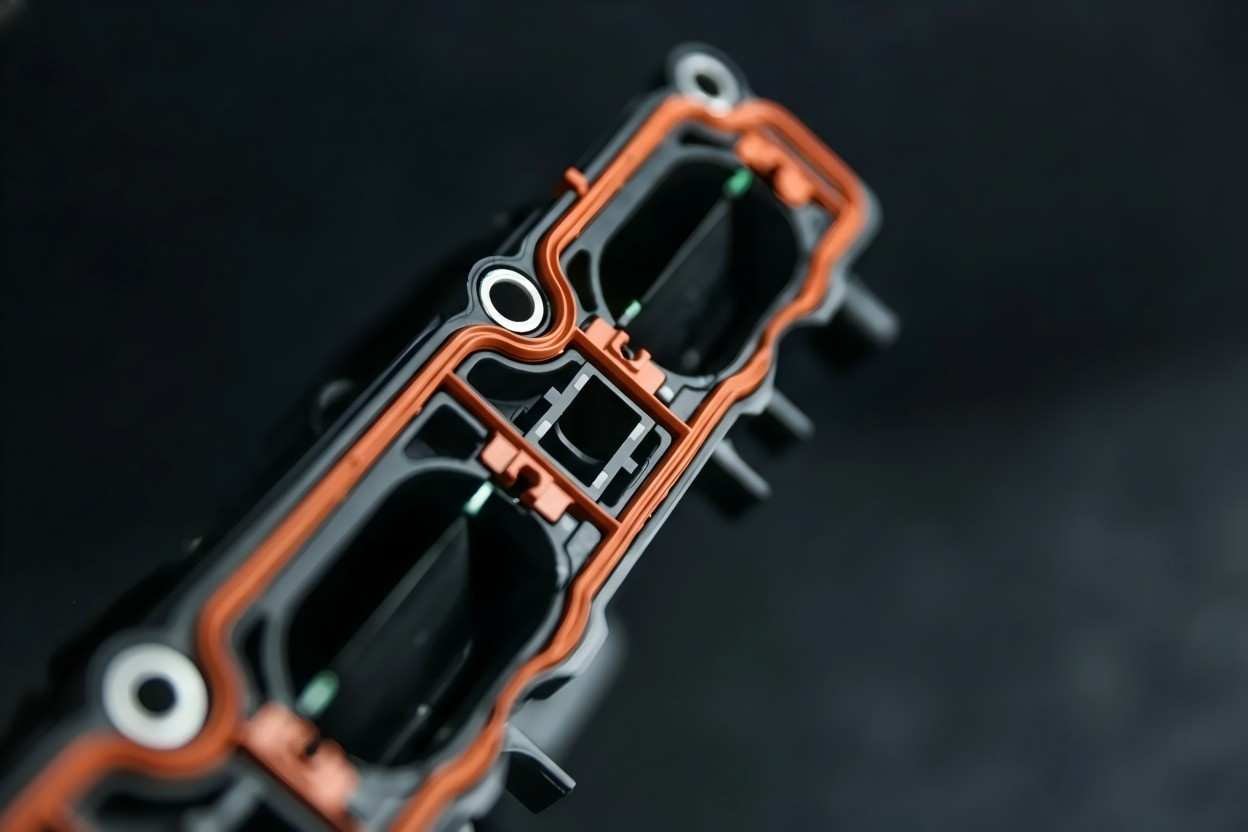
- Integrated Sealing: Gaskets are molded directly onto the part, preventing leakage paths that occur with loose O-rings.
- Sound Dampening: Soft elastomers absorb vibration in automotive clips.
- Ergonomics: Soft-touch surfaces on handles prevent user fatigue and slipping.
- Longevity: Unlike painted markings which wear off, two-shot molded text goes all the way through the part.
GBM Pro Tip: We often advise clients to use two-shot molding for “captive” seals. In our experience, manually installed O-rings are the leading cause of assembly line failures. By molding the seal directly onto the housing, we eliminate that failure mode entirely.
What is the difference between overmolding and 2K?
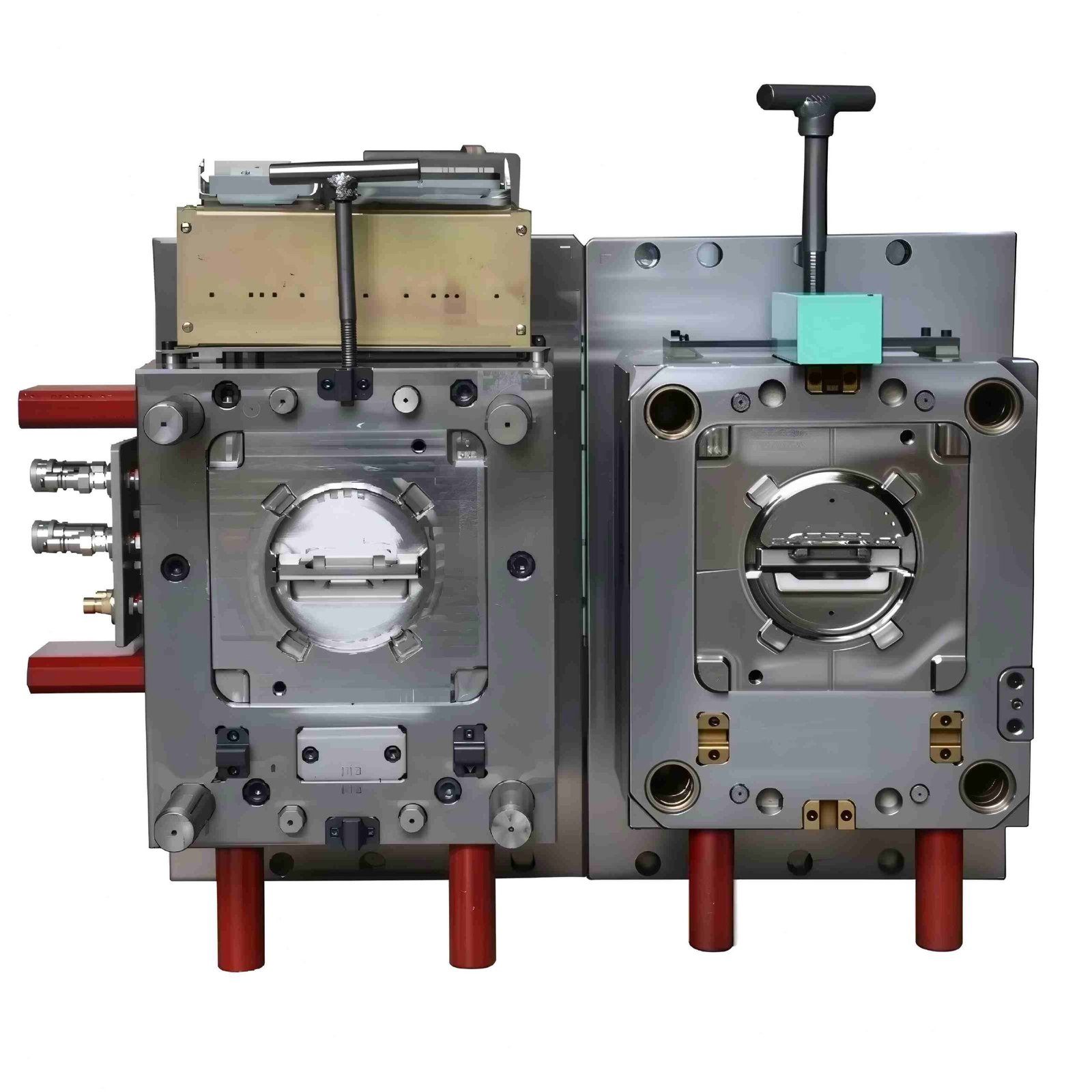
The main difference lies in the process continuity and equipment. 2K molding is a continuous, automated process performed in a single machine cycle with a rotating mold. Overmolding typically involves two separate steps: molding a substrate, ejecting it, and then physically transferring it (often manually) to a second mold for the final layer, which introduces higher labor costs and tolerance risks.
Process Comparison Matrix
| Feature | Two-Shot (2K) | Standard Overmolding (Pick-and-Place) |
|---|---|---|
| Equipment | Specialized 2-barrel machine | Standard machine (x2) or 1 machine with pauses |
| Cycle Time | Very Fast (Concurrent) | Slow (Requires handling) |
| Precision | High (Part stays in mold) | Lower (Re-alignment required) |
| Tooling Cost | High (Complex rotary tool) | Moderate (Two simple tools) |
GBM Pro Tip: We usually steer low-volume projects toward standard overmolding. However, for high-precision electronics, we insist on 2K. Once you remove the part from the mold in standard overmolding, the plastic shrinks. Putting it back into a second mold creates alignment gaps. With 2K, we keep the part constrained in the steel, ensuring perfect registration.
How does 2K molding work?
2K molding works by injecting the first material into a primary cavity to form the base shape. Once the material solidifies sufficiently, the mold opens and the core plate rotates 180 degrees to the second position. The mold closes again, and the second material is injected into the remaining cavity space, bonding to the first shot before the finished part is ejected.
🎥 Watch Video: Understanding the Rotary Process Sequence in Two-Shot Molding
The Rotary Process Sequence
- Injection A: The hard plastic (e.g., ABS) is injected into cavity A.
- Cooling Phase: The part is cooled just enough to hold shape but remain hot enough for bonding.
- Rotation: The mold opens; the platen rotates the part to position B.
- Injection B: The soft plastic (e.g., TPE) is injected into cavity B, filling the gaps around the substrate.
- Ejection: The final dual-material part is ejected from the machine.
GBM Pro Tip: In our facility, we carefully monitor the “transfer temperature.” If the first shot cools down too much during rotation, the second shot won’t bond chemically. We optimize our cooling channels to keep the interface surface hot while cooling the rest of the part to reduce cycle time.
Does two-shot molding reduce total assembly costs?
Yes, two-shot molding significantly reduces total assembly costs for high-volume production runs. By consolidating multiple components into a single molded part, it eliminates the need for adhesives, fasteners, and manual labor stations. Additionally, it reduces inventory complexity and quality control overhead associated with checking the fit of separate parts.
Cost Benefit Analysis
While the upfront investment is higher, the operational savings are substantial:
- Labor Elimination: No staff needed to glue or snap parts together.
- Throughput: One cycle produces a finished part, rather than three steps (Mold A -> Mold B -> Assemble).
- Scrap Reduction: Eliminates assembly errors like misalignment or messy glue application.
GBM Pro Tip: We calculate ROI for our clients based on “Total Landed Cost.” Even if the 2K mold costs $50,000 more than two single molds, we often see that cost recovered in under 6 months if the production volume is high enough, simply by deleting the assembly line personnel expenses.
What is the minimum volume for cost-effective two-shot molding?
Generally, two-shot molding becomes cost-effective at production volumes exceeding 15,000 to 25,000 units per year. Due to the high cost of rotary tooling and specialized machinery, lower volumes are usually better suited for insert molding or manual assembly, where the amortization of the expensive 2K tool would make the per-part price prohibitively high.
Volume vs. Tooling Investment
| Annual Volume | Recommended Process | Reason |
|---|---|---|
| < 5,000 | Manual Assembly / Overmolding | Tooling cost is too high to justify 2K. |
| 5,000 – 15,000 | Gray Area | Depends on labor costs and part complexity. |
| > 25,000 | Two-Shot (2K) | Labor savings rapidly outweigh tooling costs. |
GBM Pro Tip: Our rule of thumb is to look at the product lifecycle, not just annual volume. If a client plans to make 10,000 parts a year but for 5 years, we recommend 2K. The consistency and quality over 50,000 total parts justify the initial investment compared to the variance seen in manual assembly.
The GBM Advantage: Mastering High-Precision 2K Tooling
While the theory of two-shot molding is straightforward, executing it with zero-defect consistency requires world-class engineering. At GBM, we specialize in the complex tooling and precise process control required to make 2K molding successful and profitable for our clients.
Our engineering team brings decades of experience to overcome the most common multi-shot challenges. We deliver excellence through:
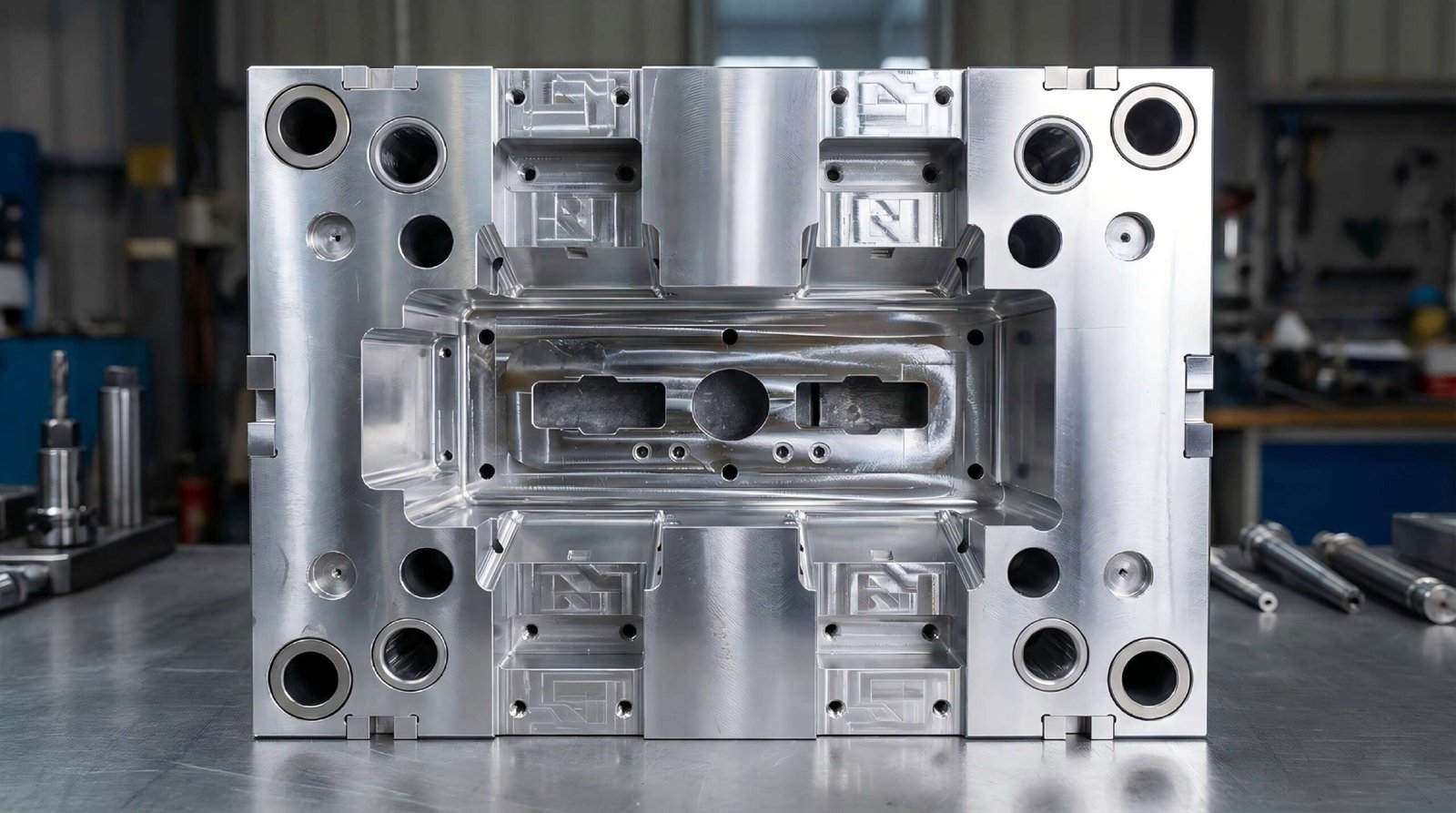
- Advanced Rotary Tooling: We engineer ultra-precise rotary platens and core-toggle mechanisms that ensure perfect registration between the first and second shots, eliminating flash and misalignment.
- Material Science Expertise: Delamination is the enemy of 2K molding. Our team conducts rigorous material compatibility analysis to guarantee chemical bonding at the molecular level, whether pairing rigid ABS with soft TPE or integrating watertight silicone seals.
- Process Simulation: Before cutting any steel, we run advanced Moldflow simulations for both injection stages simultaneously. This prevents substrate deformation and optimizes cooling channels for the fastest possible cycle times.
- Total Cost Optimization: We don’t just quote parts; we analyze your Total Landed Cost to ensure your multi-shot solution drastically improves your long-term ROI by eliminating secondary assembly.
Conclusion
Two-shot injection molding is the superior choice for high-volume manufacturing requiring multi-material integration. While the initial tooling investment is higher, the unmatched precision, enhanced product functionality, and long-term elimination of assembly costs make it a highly profitable manufacturing strategy.
Ready to eliminate assembly costs and elevate your product design?
The success of a 2K project relies entirely on the expertise of your tooling partner. Contact the engineering team at GBM today for a comprehensive DFM (Design for Manufacturability) review. Let us show you how our advanced two-shot solutions can streamline your production and improve your bottom line.