

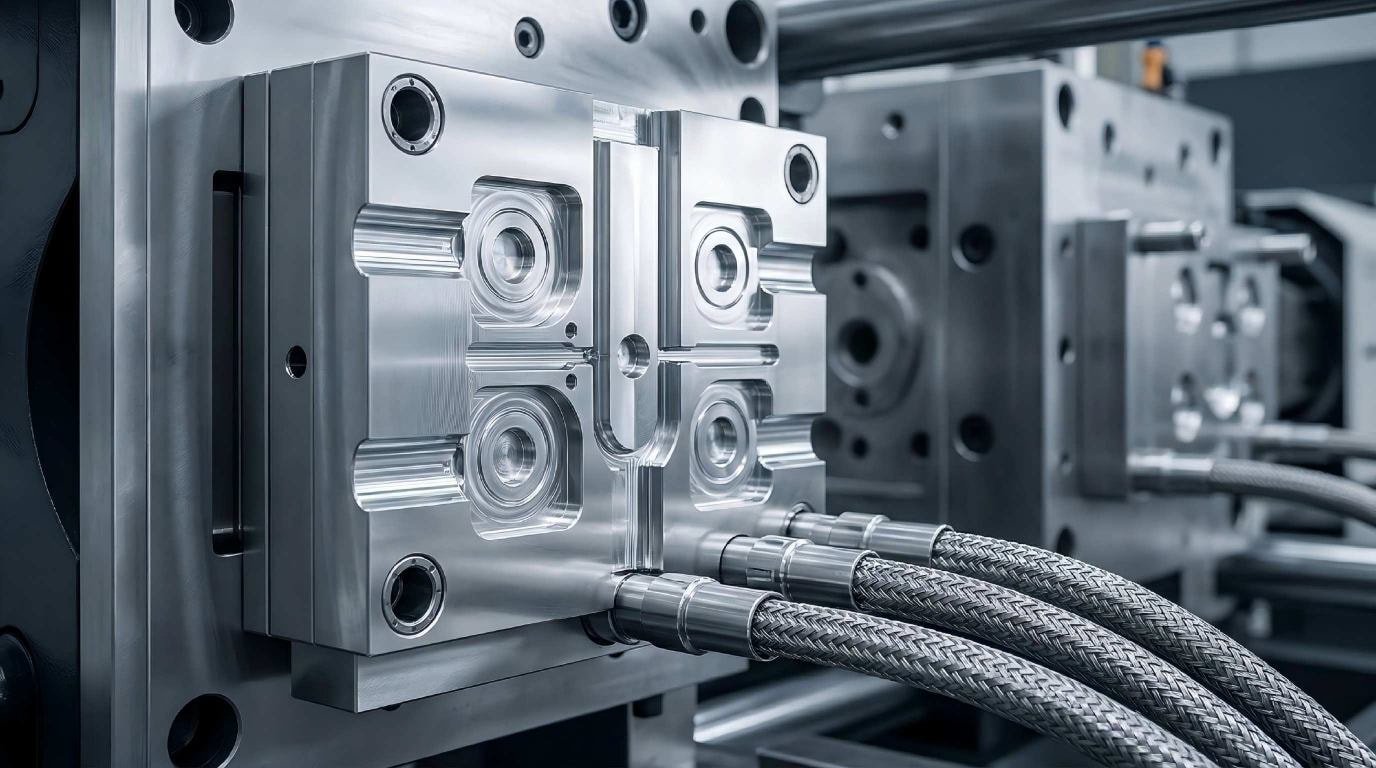
The Basics Of the Stack Mold In Hot Runner System

GBM Insights GBM Insights
| | Material Applications
Featured Article Image

Maximizing production efficiency without increasing the footprint of your injection molding machine is a critical challenge in modern manufacturing. Implementing a stack mold within a hot runner system offers a powerful solution by essentially doubling output capacity. By utilizing multiple parting lines, these advanced systems optimize clamp tonnage and reduce part costs, making them indispensable for high-volume production environments.

Video Guide: A comprehensive visual overview explaining the fundamental mechanics and advantages of a stack mold.

What is Stack Mold?

A stack mold is an advanced injection molding tool that features two or more molding surfaces, or parting lines, stacked parallel to each other. Instead of requiring a larger machine to increase output, a stack mold doubles or triples the production capacity within the exact same machine tonnage and footprint.

Video Guide: An industry demonstration showcasing how stack molding technology dramatically increases production volume.

Structural Anatomy of a Stack Mold

To understand why stack molds are so effective, it is essential to look at how they are built. Unlike a traditional single-face mold, a stack mold introduces additional layers of complexity to manage multiple molding faces simultaneously.

  • Center Block: This is the middle section of the mold that houses the hot runner manifold and provides mounting surfaces for cavities or cores on both sides.
  • Hot Runner Manifold: A specialized heated system designed to route molten plastic from the machine nozzle through the center block and into the multiple parting lines evenly.
  • Mechanical Linkage: A rack-and-pinion or harmonic linkage system that physically connects the mold halves, ensuring both parting lines open at the exact same time and distance.
  • Parting Lines: The distinct planes where the mold separates to eject the finished parts, essentially operating as two molds running in parallel.

GBM Pro Tip: When upgrading to a stack mold, always verify that your injection molding machine has sufficient daylight opening and injection volume, as the physical stroke required is significantly longer than a standard single-face mold.

How Does Stack Mold Work?

The stack mold operates by utilizing a specialized mechanical linkage that opens all parting lines simultaneously. Melted plastic is injected through a central hot runner manifold, which distributes the material equally into the cavities of each stacked level, ensuring balanced filling and synchronized part ejection.

https://www.youtube.com/watch?v=vqUw8coUse8

Video Guide: An inside look at the mechanical linkages and synchronized opening sequences of a stack mold system.

The Operational Sequence

The operation of a stack mold relies heavily on perfect synchronization. If one parting line fills faster or opens slower than the other, the entire process can fail, resulting in defective parts or machine damage.

  1. Injection Phase: The machine barrel injects molten resin into the sprue. The central hot runner manifold splits this flow, directing it outward to the front and rear parting lines simultaneously.
  2. Cooling Phase: Water channels integrated into the stationary, moving, and center blocks rapidly cool the plastic. The center block requires highly efficient cooling since it generates heat from the hot runner manifold but lacks direct contact with the machine platens.
  3. Synchronized Opening: The machine clamp opens. The mechanical linkage forces the center block to move exactly half the distance of the moving platen, opening both parting lines equally.
  4. Ejection: Ejector pins on both sides of the mold fire simultaneously, dropping double the amount of parts onto the conveyor below before the mold clamps shut to repeat the cycle.

GBM Pro Tip: Achieving perfect thermal balance in the central hot runner manifold is non-negotiable. If the center block runs too hot or too cold, you will experience severe part weight variations between the front and rear parting lines.

What is the hot runner molding process?

The hot runner molding process uses a heated manifold and nozzle system to keep plastic in a molten state as it travels from the machine barrel directly into the mold cavities. This eliminates the need for cold runners, reducing material waste and significantly decreasing overall cycle times.

Video Guide: A deep dive into the basics of hot runner technology and how it optimizes material flow.

Hot Runner Process Mechanics

Integrating a hot runner system is what makes modern stack molding viable. Without it, feeding molten plastic through a center block to multiple parting lines would be nearly impossible due to premature freezing of the material.

  • Temperature Control: Strategically placed thermocouples and heaters maintain the resin at an exact melting point from the barrel to the gate.
  • Scrap Reduction: Because the plastic in the runner system never solidifies, there is no solid runner or sprue to discard or regrind after each cycle.
  • Pressure Optimization: Hot runners maintain injection pressure more effectively than cold runners, allowing for the filling of complex, multi-cavity stack molds without short shots.

GBM Pro Tip: For stack molds, valve gate hot runners are highly recommended over thermal sprue gates. Valve gating provides precise, mechanical control over the injection flow, which is critical for balancing the pressure across multiple parting lines.

What is a molding stack?

A molding stack refers to the complete assembly of individual mold components—such as the core, cavity, inserts, and gate—that form a single distinct part. In a stack mold system, multiple molding stacks are arranged symmetrically across different parting lines to multiply the total cavity count.

Video Guide: A detailed explanation of how individual molding components and runner systems interact during production.

Components of a Single Stack

When engineers design a stack mold, they are essentially duplicating a single, highly optimized molding stack across multiple faces. Each individual stack must function flawlessly to ensure the entire system operates efficiently.

  • Cavity Block: The concave half of the stack that forms the exterior surface and cosmetic finish of the plastic part.
  • Core Block: The convex half of the stack that forms the internal geometry and hollow sections of the part.
  • Ejector Mechanism: The specific pins, sleeves, or stripper plates dedicated to pushing the finished part off the core once the mold opens.
  • Gate Insert: The precise entry point where the hot runner nozzle interfaces with the cavity to deliver the molten plastic.

GBM Pro Tip: Ensure that every individual molding stack is machined to identical tolerances. Even a microscopic variance in a single stack can cause flashing or short shots, disrupting the harmony of the entire multi-level system.

What are the 4 stages of injection molding?

The four primary stages of injection molding are clamping, injection, cooling, and ejection. In a stack mold setup, these stages operate identically to standard molding but require precise synchronization so that plastic flows evenly and parts are ejected simultaneously from all active parting lines.

Video Guide: A step-by-step tutorial on setting up a hot runner system for the various stages of injection molding.

The Four Critical Phases

Understanding how these four standard stages adapt to a stack mold environment is crucial for troubleshooting and process optimization.

  1. Clamping: The machine applies immense tonnage to keep both parting lines tightly closed against the high pressure of the incoming plastic.
  2. Injection: The hot runner manifold injects the melt. In a stack mold, the pressure must be perfectly balanced so that the front and rear cavities fill at the exact same rate.
  3. Cooling: The plastic solidifies. Stack molds require complex, independent water circuits for the center block to prevent heat soak from the hot runner system.
  4. Ejection: The mold opens via the linkage system, and synchronized ejector plates knock the parts out simultaneously from both levels.

GBM Pro Tip: Pay close attention to the cooling stage. Because the center section of a stack mold lacks direct contact with the machine platens, it requires highly efficient, independent water circuits to prevent thermal buildup and warped parts.

Key Features & Comparison

Stack molds drastically outperform traditional single-face molds in high-volume scenarios. By leveraging the same machine tonnage to produce twice the parts, manufacturers achieve unparalleled efficiency, lower overhead costs, and a significantly higher return on investment for large continuous production runs.

Video Guide: Expert strategies for balancing hot runner systems to maximize efficiency and part quality.

Single-Face Mold vs. Stack Mold Analysis

Based on our internal data and market analysis, here is the breakdown:

FeatureSingle-Face MoldStack Mold (2-Level)
Output CapacityBaseline (1x)Double (2x)
Machine Tonnage RequiredStandardStandard (No increase needed)
Machine Daylight RequiredStandardIncreased (Requires longer stroke)
Initial Tooling CostLower50% – 80% Higher
Part Cost (High Volume)StandardSignificantly Lower
Hot Runner ComplexityModerateHigh (Requires central manifold)

GBM Pro Tip: Don’t just look at the initial tooling cost. While a stack mold is more expensive upfront, the cost-per-part reduction usually pays for the mold upgrade within the first 6 to 8 months of continuous production.

Cost & Buying Factors

Investing in a stack mold requires evaluating upfront tooling costs, hot runner complexity, and machine compatibility. While initial expenses are 50% to 80% higher than single-face molds, the long-term savings in machine time and labor make it a highly profitable investment for mass production.

Video Guide: Practical advice on optimizing your hot runner system to reduce costs and improve cycle times.

Primary Cost Drivers

When budgeting for a stack mold project, several unique factors will influence the final price tag. Understanding these drivers ensures you specify the right tool for your production needs without overspending.

  • Hot Runner System: The central manifold is custom-engineered to balance flow in opposite directions, making it significantly more expensive than standard manifolds.
  • Mechanical Linkages: High-quality rack-and-pinion or helical gear systems are required to ensure smooth, synchronized opening over millions of cycles.
  • Machining Precision: Because the mold relies on perfect balance, the CNC machining tolerances for the plates and cavities must be exceptionally tight.
  • Maintenance Overhead: Stack molds have more moving parts and seals. Budgeting for regular preventative maintenance is essential to prevent costly downtime.

GBM Pro Tip: When sourcing a stack mold, partner with a manufacturer who specializes in custom hot runner manifolds. The central manifold is the heart of the system, and off-the-shelf solutions rarely provide the thermal balancing required for flawless execution.

Conclusion

Mastering the basics of stack molds within a hot runner system unlocks immense manufacturing potential. By doubling output without increasing machine size, you can scale operations efficiently. Partnering with experienced tooling experts ensures your system is perfectly balanced for optimal performance and profitability.

Next Steps for Implementation

If you are considering upgrading your production line to utilize stack mold technology, follow a structured approach to ensure success.

  1. Evaluate Part Volume: Confirm that your annual production volume justifies the higher initial tooling investment.
  2. Assess Machine Specs: Audit your current injection molding machines to ensure they have the required injection capacity, daylight opening, and clamp stroke.
  3. Consult Experts: Work with specialized tooling engineers to design a thermally balanced hot runner manifold tailored specifically to your resin and part geometry.
  4. Plan for Maintenance: Establish a rigorous preventative maintenance schedule to manage the increased complexity of the mechanical linkages and center block cooling channels.

GBM Pro Tip: Start your transition to stack molding with symmetrical, relatively flat parts like caps or lids before attempting complex, deep-draw geometries that complicate ejection and cooling.

Precision Engineering High-Alloy Foil Manufacturing
Share:

Read Next

Related Article
Case Study

Advanced 2-Shot Molding Techniques for Automotive Connectors

October 12, 2023

Related Article
Industry News

How DFM Accelerates T1 Delivery to 15 Days

September 28, 2023

Leave a Comment

Maximizing production efficiency without increasing the footprint of your injection molding machine is a critical challenge in modern manufacturing. Implementing a stack mold within a hot runner system offers a powerful solution by essentially doubling output capacity. By utilizing multiple parting lines, these advanced systems optimize clamp tonnage and reduce part costs, making them indispensable for high-volume production environments.

Video Guide: A comprehensive visual overview explaining the fundamental mechanics and advantages of a stack mold.

What is Stack Mold?

A stack mold is an advanced injection molding tool that features two or more molding surfaces, or parting lines, stacked parallel to each other. Instead of requiring a larger machine to increase output, a stack mold doubles or triples the production capacity within the exact same machine tonnage and footprint.

Video Guide: An industry demonstration showcasing how stack molding technology dramatically increases production volume.

Structural Anatomy of a Stack Mold

To understand why stack molds are so effective, it is essential to look at how they are built. Unlike a traditional single-face mold, a stack mold introduces additional layers of complexity to manage multiple molding faces simultaneously.

  • Center Block: This is the middle section of the mold that houses the hot runner manifold and provides mounting surfaces for cavities or cores on both sides.
  • Hot Runner Manifold: A specialized heated system designed to route molten plastic from the machine nozzle through the center block and into the multiple parting lines evenly.
  • Mechanical Linkage: A rack-and-pinion or harmonic linkage system that physically connects the mold halves, ensuring both parting lines open at the exact same time and distance.
  • Parting Lines: The distinct planes where the mold separates to eject the finished parts, essentially operating as two molds running in parallel.

GBM Pro Tip: When upgrading to a stack mold, always verify that your injection molding machine has sufficient daylight opening and injection volume, as the physical stroke required is significantly longer than a standard single-face mold.

How Does Stack Mold Work?

The stack mold operates by utilizing a specialized mechanical linkage that opens all parting lines simultaneously. Melted plastic is injected through a central hot runner manifold, which distributes the material equally into the cavities of each stacked level, ensuring balanced filling and synchronized part ejection.

https://www.youtube.com/watch?v=vqUw8coUse8

Video Guide: An inside look at the mechanical linkages and synchronized opening sequences of a stack mold system.

The Operational Sequence

The operation of a stack mold relies heavily on perfect synchronization. If one parting line fills faster or opens slower than the other, the entire process can fail, resulting in defective parts or machine damage.

  1. Injection Phase: The machine barrel injects molten resin into the sprue. The central hot runner manifold splits this flow, directing it outward to the front and rear parting lines simultaneously.
  2. Cooling Phase: Water channels integrated into the stationary, moving, and center blocks rapidly cool the plastic. The center block requires highly efficient cooling since it generates heat from the hot runner manifold but lacks direct contact with the machine platens.
  3. Synchronized Opening: The machine clamp opens. The mechanical linkage forces the center block to move exactly half the distance of the moving platen, opening both parting lines equally.
  4. Ejection: Ejector pins on both sides of the mold fire simultaneously, dropping double the amount of parts onto the conveyor below before the mold clamps shut to repeat the cycle.

GBM Pro Tip: Achieving perfect thermal balance in the central hot runner manifold is non-negotiable. If the center block runs too hot or too cold, you will experience severe part weight variations between the front and rear parting lines.

What is the hot runner molding process?

The hot runner molding process uses a heated manifold and nozzle system to keep plastic in a molten state as it travels from the machine barrel directly into the mold cavities. This eliminates the need for cold runners, reducing material waste and significantly decreasing overall cycle times.

Video Guide: A deep dive into the basics of hot runner technology and how it optimizes material flow.

Hot Runner Process Mechanics

Integrating a hot runner system is what makes modern stack molding viable. Without it, feeding molten plastic through a center block to multiple parting lines would be nearly impossible due to premature freezing of the material.

  • Temperature Control: Strategically placed thermocouples and heaters maintain the resin at an exact melting point from the barrel to the gate.
  • Scrap Reduction: Because the plastic in the runner system never solidifies, there is no solid runner or sprue to discard or regrind after each cycle.
  • Pressure Optimization: Hot runners maintain injection pressure more effectively than cold runners, allowing for the filling of complex, multi-cavity stack molds without short shots.

GBM Pro Tip: For stack molds, valve gate hot runners are highly recommended over thermal sprue gates. Valve gating provides precise, mechanical control over the injection flow, which is critical for balancing the pressure across multiple parting lines.

What is a molding stack?

A molding stack refers to the complete assembly of individual mold components—such as the core, cavity, inserts, and gate—that form a single distinct part. In a stack mold system, multiple molding stacks are arranged symmetrically across different parting lines to multiply the total cavity count.

Video Guide: A detailed explanation of how individual molding components and runner systems interact during production.

Components of a Single Stack

When engineers design a stack mold, they are essentially duplicating a single, highly optimized molding stack across multiple faces. Each individual stack must function flawlessly to ensure the entire system operates efficiently.

  • Cavity Block: The concave half of the stack that forms the exterior surface and cosmetic finish of the plastic part.
  • Core Block: The convex half of the stack that forms the internal geometry and hollow sections of the part.
  • Ejector Mechanism: The specific pins, sleeves, or stripper plates dedicated to pushing the finished part off the core once the mold opens.
  • Gate Insert: The precise entry point where the hot runner nozzle interfaces with the cavity to deliver the molten plastic.

GBM Pro Tip: Ensure that every individual molding stack is machined to identical tolerances. Even a microscopic variance in a single stack can cause flashing or short shots, disrupting the harmony of the entire multi-level system.

What are the 4 stages of injection molding?

The four primary stages of injection molding are clamping, injection, cooling, and ejection. In a stack mold setup, these stages operate identically to standard molding but require precise synchronization so that plastic flows evenly and parts are ejected simultaneously from all active parting lines.

Video Guide: A step-by-step tutorial on setting up a hot runner system for the various stages of injection molding.

The Four Critical Phases

Understanding how these four standard stages adapt to a stack mold environment is crucial for troubleshooting and process optimization.

  1. Clamping: The machine applies immense tonnage to keep both parting lines tightly closed against the high pressure of the incoming plastic.
  2. Injection: The hot runner manifold injects the melt. In a stack mold, the pressure must be perfectly balanced so that the front and rear cavities fill at the exact same rate.
  3. Cooling: The plastic solidifies. Stack molds require complex, independent water circuits for the center block to prevent heat soak from the hot runner system.
  4. Ejection: The mold opens via the linkage system, and synchronized ejector plates knock the parts out simultaneously from both levels.

GBM Pro Tip: Pay close attention to the cooling stage. Because the center section of a stack mold lacks direct contact with the machine platens, it requires highly efficient, independent water circuits to prevent thermal buildup and warped parts.

Key Features & Comparison

Stack molds drastically outperform traditional single-face molds in high-volume scenarios. By leveraging the same machine tonnage to produce twice the parts, manufacturers achieve unparalleled efficiency, lower overhead costs, and a significantly higher return on investment for large continuous production runs.

Video Guide: Expert strategies for balancing hot runner systems to maximize efficiency and part quality.

Single-Face Mold vs. Stack Mold Analysis

Based on our internal data and market analysis, here is the breakdown:

FeatureSingle-Face MoldStack Mold (2-Level)
Output CapacityBaseline (1x)Double (2x)
Machine Tonnage RequiredStandardStandard (No increase needed)
Machine Daylight RequiredStandardIncreased (Requires longer stroke)
Initial Tooling CostLower50% – 80% Higher
Part Cost (High Volume)StandardSignificantly Lower
Hot Runner ComplexityModerateHigh (Requires central manifold)

GBM Pro Tip: Don’t just look at the initial tooling cost. While a stack mold is more expensive upfront, the cost-per-part reduction usually pays for the mold upgrade within the first 6 to 8 months of continuous production.

Cost & Buying Factors

Investing in a stack mold requires evaluating upfront tooling costs, hot runner complexity, and machine compatibility. While initial expenses are 50% to 80% higher than single-face molds, the long-term savings in machine time and labor make it a highly profitable investment for mass production.

Video Guide: Practical advice on optimizing your hot runner system to reduce costs and improve cycle times.

Primary Cost Drivers

When budgeting for a stack mold project, several unique factors will influence the final price tag. Understanding these drivers ensures you specify the right tool for your production needs without overspending.

  • Hot Runner System: The central manifold is custom-engineered to balance flow in opposite directions, making it significantly more expensive than standard manifolds.
  • Mechanical Linkages: High-quality rack-and-pinion or helical gear systems are required to ensure smooth, synchronized opening over millions of cycles.
  • Machining Precision: Because the mold relies on perfect balance, the CNC machining tolerances for the plates and cavities must be exceptionally tight.
  • Maintenance Overhead: Stack molds have more moving parts and seals. Budgeting for regular preventative maintenance is essential to prevent costly downtime.

GBM Pro Tip: When sourcing a stack mold, partner with a manufacturer who specializes in custom hot runner manifolds. The central manifold is the heart of the system, and off-the-shelf solutions rarely provide the thermal balancing required for flawless execution.

Conclusion

Mastering the basics of stack molds within a hot runner system unlocks immense manufacturing potential. By doubling output without increasing machine size, you can scale operations efficiently. Partnering with experienced tooling experts ensures your system is perfectly balanced for optimal performance and profitability.

Next Steps for Implementation

If you are considering upgrading your production line to utilize stack mold technology, follow a structured approach to ensure success.

  1. Evaluate Part Volume: Confirm that your annual production volume justifies the higher initial tooling investment.
  2. Assess Machine Specs: Audit your current injection molding machines to ensure they have the required injection capacity, daylight opening, and clamp stroke.
  3. Consult Experts: Work with specialized tooling engineers to design a thermally balanced hot runner manifold tailored specifically to your resin and part geometry.
  4. Plan for Maintenance: Establish a rigorous preventative maintenance schedule to manage the increased complexity of the mechanical linkages and center block cooling channels.

GBM Pro Tip: Start your transition to stack molding with symmetrical, relatively flat parts like caps or lids before attempting complex, deep-draw geometries that complicate ejection and cooling.

Maximizing production efficiency without increasing the footprint of your injection molding machine is a critical challenge in modern manufacturing. Implementing a stack mold within a hot runner system offers a powerful solution by essentially doubling output capacity. By utilizing multiple parting lines, these advanced systems optimize clamp tonnage and reduce part costs, making them indispensable for high-volume production environments.

Video Guide: A comprehensive visual overview explaining the fundamental mechanics and advantages of a stack mold.

What is Stack Mold?

A stack mold is an advanced injection molding tool that features two or more molding surfaces, or parting lines, stacked parallel to each other. Instead of requiring a larger machine to increase output, a stack mold doubles or triples the production capacity within the exact same machine tonnage and footprint.

Video Guide: An industry demonstration showcasing how stack molding technology dramatically increases production volume.

Structural Anatomy of a Stack Mold

To understand why stack molds are so effective, it is essential to look at how they are built. Unlike a traditional single-face mold, a stack mold introduces additional layers of complexity to manage multiple molding faces simultaneously.

  • Center Block: This is the middle section of the mold that houses the hot runner manifold and provides mounting surfaces for cavities or cores on both sides.
  • Hot Runner Manifold: A specialized heated system designed to route molten plastic from the machine nozzle through the center block and into the multiple parting lines evenly.
  • Mechanical Linkage: A rack-and-pinion or harmonic linkage system that physically connects the mold halves, ensuring both parting lines open at the exact same time and distance.
  • Parting Lines: The distinct planes where the mold separates to eject the finished parts, essentially operating as two molds running in parallel.

GBM Pro Tip: When upgrading to a stack mold, always verify that your injection molding machine has sufficient daylight opening and injection volume, as the physical stroke required is significantly longer than a standard single-face mold.

How Does Stack Mold Work?

The stack mold operates by utilizing a specialized mechanical linkage that opens all parting lines simultaneously. Melted plastic is injected through a central hot runner manifold, which distributes the material equally into the cavities of each stacked level, ensuring balanced filling and synchronized part ejection.

https://www.youtube.com/watch?v=vqUw8coUse8

Video Guide: An inside look at the mechanical linkages and synchronized opening sequences of a stack mold system.

The Operational Sequence

The operation of a stack mold relies heavily on perfect synchronization. If one parting line fills faster or opens slower than the other, the entire process can fail, resulting in defective parts or machine damage.

  1. Injection Phase: The machine barrel injects molten resin into the sprue. The central hot runner manifold splits this flow, directing it outward to the front and rear parting lines simultaneously.
  2. Cooling Phase: Water channels integrated into the stationary, moving, and center blocks rapidly cool the plastic. The center block requires highly efficient cooling since it generates heat from the hot runner manifold but lacks direct contact with the machine platens.
  3. Synchronized Opening: The machine clamp opens. The mechanical linkage forces the center block to move exactly half the distance of the moving platen, opening both parting lines equally.
  4. Ejection: Ejector pins on both sides of the mold fire simultaneously, dropping double the amount of parts onto the conveyor below before the mold clamps shut to repeat the cycle.

GBM Pro Tip: Achieving perfect thermal balance in the central hot runner manifold is non-negotiable. If the center block runs too hot or too cold, you will experience severe part weight variations between the front and rear parting lines.

What is the hot runner molding process?

The hot runner molding process uses a heated manifold and nozzle system to keep plastic in a molten state as it travels from the machine barrel directly into the mold cavities. This eliminates the need for cold runners, reducing material waste and significantly decreasing overall cycle times.

Video Guide: A deep dive into the basics of hot runner technology and how it optimizes material flow.

Hot Runner Process Mechanics

Integrating a hot runner system is what makes modern stack molding viable. Without it, feeding molten plastic through a center block to multiple parting lines would be nearly impossible due to premature freezing of the material.

  • Temperature Control: Strategically placed thermocouples and heaters maintain the resin at an exact melting point from the barrel to the gate.
  • Scrap Reduction: Because the plastic in the runner system never solidifies, there is no solid runner or sprue to discard or regrind after each cycle.
  • Pressure Optimization: Hot runners maintain injection pressure more effectively than cold runners, allowing for the filling of complex, multi-cavity stack molds without short shots.

GBM Pro Tip: For stack molds, valve gate hot runners are highly recommended over thermal sprue gates. Valve gating provides precise, mechanical control over the injection flow, which is critical for balancing the pressure across multiple parting lines.

What is a molding stack?

A molding stack refers to the complete assembly of individual mold components—such as the core, cavity, inserts, and gate—that form a single distinct part. In a stack mold system, multiple molding stacks are arranged symmetrically across different parting lines to multiply the total cavity count.

Video Guide: A detailed explanation of how individual molding components and runner systems interact during production.

Components of a Single Stack

When engineers design a stack mold, they are essentially duplicating a single, highly optimized molding stack across multiple faces. Each individual stack must function flawlessly to ensure the entire system operates efficiently.

  • Cavity Block: The concave half of the stack that forms the exterior surface and cosmetic finish of the plastic part.
  • Core Block: The convex half of the stack that forms the internal geometry and hollow sections of the part.
  • Ejector Mechanism: The specific pins, sleeves, or stripper plates dedicated to pushing the finished part off the core once the mold opens.
  • Gate Insert: The precise entry point where the hot runner nozzle interfaces with the cavity to deliver the molten plastic.

GBM Pro Tip: Ensure that every individual molding stack is machined to identical tolerances. Even a microscopic variance in a single stack can cause flashing or short shots, disrupting the harmony of the entire multi-level system.

What are the 4 stages of injection molding?

The four primary stages of injection molding are clamping, injection, cooling, and ejection. In a stack mold setup, these stages operate identically to standard molding but require precise synchronization so that plastic flows evenly and parts are ejected simultaneously from all active parting lines.

Video Guide: A step-by-step tutorial on setting up a hot runner system for the various stages of injection molding.

The Four Critical Phases

Understanding how these four standard stages adapt to a stack mold environment is crucial for troubleshooting and process optimization.

  1. Clamping: The machine applies immense tonnage to keep both parting lines tightly closed against the high pressure of the incoming plastic.
  2. Injection: The hot runner manifold injects the melt. In a stack mold, the pressure must be perfectly balanced so that the front and rear cavities fill at the exact same rate.
  3. Cooling: The plastic solidifies. Stack molds require complex, independent water circuits for the center block to prevent heat soak from the hot runner system.
  4. Ejection: The mold opens via the linkage system, and synchronized ejector plates knock the parts out simultaneously from both levels.

GBM Pro Tip: Pay close attention to the cooling stage. Because the center section of a stack mold lacks direct contact with the machine platens, it requires highly efficient, independent water circuits to prevent thermal buildup and warped parts.

Key Features & Comparison

Stack molds drastically outperform traditional single-face molds in high-volume scenarios. By leveraging the same machine tonnage to produce twice the parts, manufacturers achieve unparalleled efficiency, lower overhead costs, and a significantly higher return on investment for large continuous production runs.

Video Guide: Expert strategies for balancing hot runner systems to maximize efficiency and part quality.

Single-Face Mold vs. Stack Mold Analysis

Based on our internal data and market analysis, here is the breakdown:

FeatureSingle-Face MoldStack Mold (2-Level)
Output CapacityBaseline (1x)Double (2x)
Machine Tonnage RequiredStandardStandard (No increase needed)
Machine Daylight RequiredStandardIncreased (Requires longer stroke)
Initial Tooling CostLower50% – 80% Higher
Part Cost (High Volume)StandardSignificantly Lower
Hot Runner ComplexityModerateHigh (Requires central manifold)

GBM Pro Tip: Don’t just look at the initial tooling cost. While a stack mold is more expensive upfront, the cost-per-part reduction usually pays for the mold upgrade within the first 6 to 8 months of continuous production.

Cost & Buying Factors

Investing in a stack mold requires evaluating upfront tooling costs, hot runner complexity, and machine compatibility. While initial expenses are 50% to 80% higher than single-face molds, the long-term savings in machine time and labor make it a highly profitable investment for mass production.

Video Guide: Practical advice on optimizing your hot runner system to reduce costs and improve cycle times.

Primary Cost Drivers

When budgeting for a stack mold project, several unique factors will influence the final price tag. Understanding these drivers ensures you specify the right tool for your production needs without overspending.

  • Hot Runner System: The central manifold is custom-engineered to balance flow in opposite directions, making it significantly more expensive than standard manifolds.
  • Mechanical Linkages: High-quality rack-and-pinion or helical gear systems are required to ensure smooth, synchronized opening over millions of cycles.
  • Machining Precision: Because the mold relies on perfect balance, the CNC machining tolerances for the plates and cavities must be exceptionally tight.
  • Maintenance Overhead: Stack molds have more moving parts and seals. Budgeting for regular preventative maintenance is essential to prevent costly downtime.

GBM Pro Tip: When sourcing a stack mold, partner with a manufacturer who specializes in custom hot runner manifolds. The central manifold is the heart of the system, and off-the-shelf solutions rarely provide the thermal balancing required for flawless execution.

Conclusion

Mastering the basics of stack molds within a hot runner system unlocks immense manufacturing potential. By doubling output without increasing machine size, you can scale operations efficiently. Partnering with experienced tooling experts ensures your system is perfectly balanced for optimal performance and profitability.

Next Steps for Implementation

If you are considering upgrading your production line to utilize stack mold technology, follow a structured approach to ensure success.

  1. Evaluate Part Volume: Confirm that your annual production volume justifies the higher initial tooling investment.
  2. Assess Machine Specs: Audit your current injection molding machines to ensure they have the required injection capacity, daylight opening, and clamp stroke.
  3. Consult Experts: Work with specialized tooling engineers to design a thermally balanced hot runner manifold tailored specifically to your resin and part geometry.
  4. Plan for Maintenance: Establish a rigorous preventative maintenance schedule to manage the increased complexity of the mechanical linkages and center block cooling channels.

GBM Pro Tip: Start your transition to stack molding with symmetrical, relatively flat parts like caps or lids before attempting complex, deep-draw geometries that complicate ejection and cooling.

Maximizing production efficiency without increasing the footprint of your injection molding machine is a critical challenge in modern manufacturing. Implementing a stack mold within a hot runner system offers a powerful solution by essentially doubling output capacity. By utilizing multiple parting lines, these advanced systems optimize clamp tonnage and reduce part costs, making them indispensable for high-volume production environments.

Video Guide: A comprehensive visual overview explaining the fundamental mechanics and advantages of a stack mold.

What is Stack Mold?

A stack mold is an advanced injection molding tool that features two or more molding surfaces, or parting lines, stacked parallel to each other. Instead of requiring a larger machine to increase output, a stack mold doubles or triples the production capacity within the exact same machine tonnage and footprint.

Video Guide: An industry demonstration showcasing how stack molding technology dramatically increases production volume.

Structural Anatomy of a Stack Mold

To understand why stack molds are so effective, it is essential to look at how they are built. Unlike a traditional single-face mold, a stack mold introduces additional layers of complexity to manage multiple molding faces simultaneously.

  • Center Block: This is the middle section of the mold that houses the hot runner manifold and provides mounting surfaces for cavities or cores on both sides.
  • Hot Runner Manifold: A specialized heated system designed to route molten plastic from the machine nozzle through the center block and into the multiple parting lines evenly.
  • Mechanical Linkage: A rack-and-pinion or harmonic linkage system that physically connects the mold halves, ensuring both parting lines open at the exact same time and distance.
  • Parting Lines: The distinct planes where the mold separates to eject the finished parts, essentially operating as two molds running in parallel.

GBM Pro Tip: When upgrading to a stack mold, always verify that your injection molding machine has sufficient daylight opening and injection volume, as the physical stroke required is significantly longer than a standard single-face mold.

How Does Stack Mold Work?

The stack mold operates by utilizing a specialized mechanical linkage that opens all parting lines simultaneously. Melted plastic is injected through a central hot runner manifold, which distributes the material equally into the cavities of each stacked level, ensuring balanced filling and synchronized part ejection.

https://www.youtube.com/watch?v=vqUw8coUse8

Video Guide: An inside look at the mechanical linkages and synchronized opening sequences of a stack mold system.

The Operational Sequence

The operation of a stack mold relies heavily on perfect synchronization. If one parting line fills faster or opens slower than the other, the entire process can fail, resulting in defective parts or machine damage.

  1. Injection Phase: The machine barrel injects molten resin into the sprue. The central hot runner manifold splits this flow, directing it outward to the front and rear parting lines simultaneously.
  2. Cooling Phase: Water channels integrated into the stationary, moving, and center blocks rapidly cool the plastic. The center block requires highly efficient cooling since it generates heat from the hot runner manifold but lacks direct contact with the machine platens.
  3. Synchronized Opening: The machine clamp opens. The mechanical linkage forces the center block to move exactly half the distance of the moving platen, opening both parting lines equally.
  4. Ejection: Ejector pins on both sides of the mold fire simultaneously, dropping double the amount of parts onto the conveyor below before the mold clamps shut to repeat the cycle.

GBM Pro Tip: Achieving perfect thermal balance in the central hot runner manifold is non-negotiable. If the center block runs too hot or too cold, you will experience severe part weight variations between the front and rear parting lines.

What is the hot runner molding process?

The hot runner molding process uses a heated manifold and nozzle system to keep plastic in a molten state as it travels from the machine barrel directly into the mold cavities. This eliminates the need for cold runners, reducing material waste and significantly decreasing overall cycle times.

Video Guide: A deep dive into the basics of hot runner technology and how it optimizes material flow.

Hot Runner Process Mechanics

Integrating a hot runner system is what makes modern stack molding viable. Without it, feeding molten plastic through a center block to multiple parting lines would be nearly impossible due to premature freezing of the material.

  • Temperature Control: Strategically placed thermocouples and heaters maintain the resin at an exact melting point from the barrel to the gate.
  • Scrap Reduction: Because the plastic in the runner system never solidifies, there is no solid runner or sprue to discard or regrind after each cycle.
  • Pressure Optimization: Hot runners maintain injection pressure more effectively than cold runners, allowing for the filling of complex, multi-cavity stack molds without short shots.

GBM Pro Tip: For stack molds, valve gate hot runners are highly recommended over thermal sprue gates. Valve gating provides precise, mechanical control over the injection flow, which is critical for balancing the pressure across multiple parting lines.

What is a molding stack?

A molding stack refers to the complete assembly of individual mold components—such as the core, cavity, inserts, and gate—that form a single distinct part. In a stack mold system, multiple molding stacks are arranged symmetrically across different parting lines to multiply the total cavity count.

Video Guide: A detailed explanation of how individual molding components and runner systems interact during production.

Components of a Single Stack

When engineers design a stack mold, they are essentially duplicating a single, highly optimized molding stack across multiple faces. Each individual stack must function flawlessly to ensure the entire system operates efficiently.

  • Cavity Block: The concave half of the stack that forms the exterior surface and cosmetic finish of the plastic part.
  • Core Block: The convex half of the stack that forms the internal geometry and hollow sections of the part.
  • Ejector Mechanism: The specific pins, sleeves, or stripper plates dedicated to pushing the finished part off the core once the mold opens.
  • Gate Insert: The precise entry point where the hot runner nozzle interfaces with the cavity to deliver the molten plastic.

GBM Pro Tip: Ensure that every individual molding stack is machined to identical tolerances. Even a microscopic variance in a single stack can cause flashing or short shots, disrupting the harmony of the entire multi-level system.

What are the 4 stages of injection molding?

The four primary stages of injection molding are clamping, injection, cooling, and ejection. In a stack mold setup, these stages operate identically to standard molding but require precise synchronization so that plastic flows evenly and parts are ejected simultaneously from all active parting lines.

Video Guide: A step-by-step tutorial on setting up a hot runner system for the various stages of injection molding.

The Four Critical Phases

Understanding how these four standard stages adapt to a stack mold environment is crucial for troubleshooting and process optimization.

  1. Clamping: The machine applies immense tonnage to keep both parting lines tightly closed against the high pressure of the incoming plastic.
  2. Injection: The hot runner manifold injects the melt. In a stack mold, the pressure must be perfectly balanced so that the front and rear cavities fill at the exact same rate.
  3. Cooling: The plastic solidifies. Stack molds require complex, independent water circuits for the center block to prevent heat soak from the hot runner system.
  4. Ejection: The mold opens via the linkage system, and synchronized ejector plates knock the parts out simultaneously from both levels.

GBM Pro Tip: Pay close attention to the cooling stage. Because the center section of a stack mold lacks direct contact with the machine platens, it requires highly efficient, independent water circuits to prevent thermal buildup and warped parts.

Key Features & Comparison

Stack molds drastically outperform traditional single-face molds in high-volume scenarios. By leveraging the same machine tonnage to produce twice the parts, manufacturers achieve unparalleled efficiency, lower overhead costs, and a significantly higher return on investment for large continuous production runs.

Video Guide: Expert strategies for balancing hot runner systems to maximize efficiency and part quality.

Single-Face Mold vs. Stack Mold Analysis

Based on our internal data and market analysis, here is the breakdown:

FeatureSingle-Face MoldStack Mold (2-Level)
Output CapacityBaseline (1x)Double (2x)
Machine Tonnage RequiredStandardStandard (No increase needed)
Machine Daylight RequiredStandardIncreased (Requires longer stroke)
Initial Tooling CostLower50% – 80% Higher
Part Cost (High Volume)StandardSignificantly Lower
Hot Runner ComplexityModerateHigh (Requires central manifold)

GBM Pro Tip: Don’t just look at the initial tooling cost. While a stack mold is more expensive upfront, the cost-per-part reduction usually pays for the mold upgrade within the first 6 to 8 months of continuous production.

Cost & Buying Factors

Investing in a stack mold requires evaluating upfront tooling costs, hot runner complexity, and machine compatibility. While initial expenses are 50% to 80% higher than single-face molds, the long-term savings in machine time and labor make it a highly profitable investment for mass production.

Video Guide: Practical advice on optimizing your hot runner system to reduce costs and improve cycle times.

Primary Cost Drivers

When budgeting for a stack mold project, several unique factors will influence the final price tag. Understanding these drivers ensures you specify the right tool for your production needs without overspending.

  • Hot Runner System: The central manifold is custom-engineered to balance flow in opposite directions, making it significantly more expensive than standard manifolds.
  • Mechanical Linkages: High-quality rack-and-pinion or helical gear systems are required to ensure smooth, synchronized opening over millions of cycles.
  • Machining Precision: Because the mold relies on perfect balance, the CNC machining tolerances for the plates and cavities must be exceptionally tight.
  • Maintenance Overhead: Stack molds have more moving parts and seals. Budgeting for regular preventative maintenance is essential to prevent costly downtime.

GBM Pro Tip: When sourcing a stack mold, partner with a manufacturer who specializes in custom hot runner manifolds. The central manifold is the heart of the system, and off-the-shelf solutions rarely provide the thermal balancing required for flawless execution.

Conclusion

Mastering the basics of stack molds within a hot runner system unlocks immense manufacturing potential. By doubling output without increasing machine size, you can scale operations efficiently. Partnering with experienced tooling experts ensures your system is perfectly balanced for optimal performance and profitability.

Next Steps for Implementation

If you are considering upgrading your production line to utilize stack mold technology, follow a structured approach to ensure success.

  1. Evaluate Part Volume: Confirm that your annual production volume justifies the higher initial tooling investment.
  2. Assess Machine Specs: Audit your current injection molding machines to ensure they have the required injection capacity, daylight opening, and clamp stroke.
  3. Consult Experts: Work with specialized tooling engineers to design a thermally balanced hot runner manifold tailored specifically to your resin and part geometry.
  4. Plan for Maintenance: Establish a rigorous preventative maintenance schedule to manage the increased complexity of the mechanical linkages and center block cooling channels.

GBM Pro Tip: Start your transition to stack molding with symmetrical, relatively flat parts like caps or lids before attempting complex, deep-draw geometries that complicate ejection and cooling.