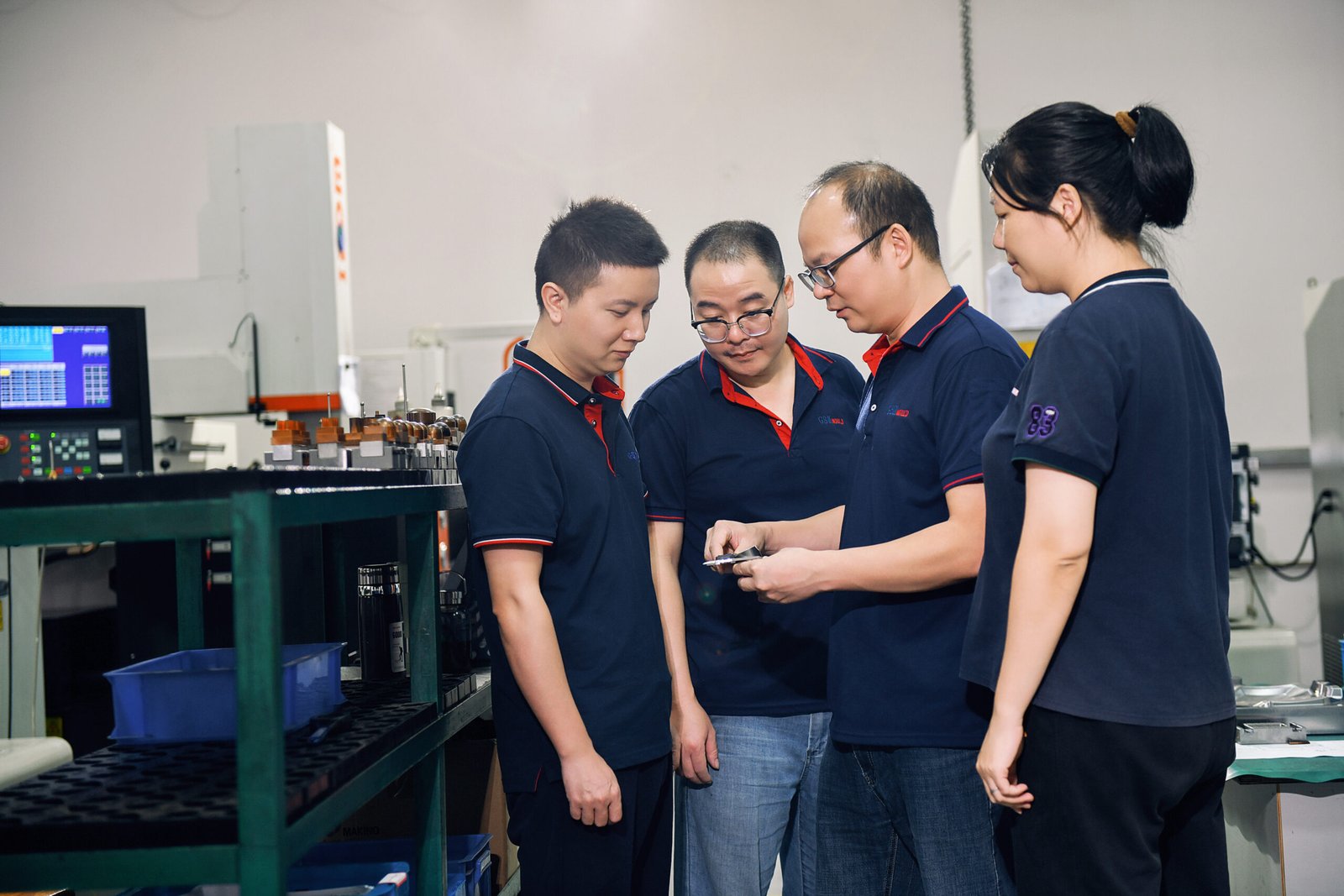

Insert molding works by placing a pre-formed component, typically made of metal, into a mold cavity before closing it. Molten plastic is then injected into the mold, encapsulating the insert. Once the plastic cools and solidifies, the mold opens, ejecting a single, integrated part with enhanced mechanical properties.
🎥 Watch the Process: See the exact cycle of insert molding in action—from securing the threaded metal insert inside the cavity to the high-pressure injection and final part ejection.
The Insert Molding Process
To fully understand how insert molding works, it is helpful to look at the step-by-step manufacturing cycle. This process requires high precision to ensure the injected plastic does not dislodge the insert from its designated position.
- Insert Loading: A robotic arm or a human operator places the custom insert (usually metal, like a threaded nut or electrical contact) into a specifically designed pocket within the open mold.
- Mold Clamping: The two halves of the injection mold close tightly, securing the insert in place to withstand the high pressures of the incoming plastic.
- Resin Injection: Molten thermoplastic is injected into the cavity under high pressure, flowing around the knurled or undercut features of the insert to create a mechanical bond.
- Cooling and Solidification: Water channels within the mold cool the plastic rapidly, causing it to shrink slightly and grip the metal insert tightly.
- Ejection: The mold opens, and ejector pins push the finalized, multi-material component out of the machine.
GBM Pro Tip: In our lab tests at GBM, we found that pre-heating metal inserts to a specific temperature before placing them into the mold significantly reduces internal stress and prevents the plastic from cracking as it cools around the rigid metal.
What is the difference between over molding and insert molding?
The primary difference between overmolding and insert molding lies in the substrate material. Insert molding encapsulates a rigid, non-plastic part—like a metal threaded nut—with plastic. Overmolding, however, involves injecting a second layer of plastic or elastomer over a previously molded plastic part to create a multi-material component.
🎥 Insert Molding vs. Overmolding: A clear visual breakdown explaining when to encapsulate rigid metal hardware versus when to mold a soft elastomer grip over a plastic base.
Comparing Insert Molding and Overmolding
While both processes result in a single, unified part, their engineering applications are vastly different.
| Feature | Insert Molding | Overmolding |
|---|---|---|
| Base Material | Usually metal (brass, steel, aluminum) or ceramics. | Usually a rigid thermoplastic. |
| Secondary Material | Rigid or semi-rigid thermoplastics. | Often a soft-touch elastomer (TPE/TPU). |
| Primary Purpose | Adding structural strength, threads, or conductivity. | Improving grip, aesthetics, or sealing. |
| Bonding Mechanism | Primarily mechanical (knurling, undercuts). | Chemical bonding and mechanical interlocking. |
GBM Pro Tip: Our technicians often see clients confuse these two processes. We always advise using insert molding for structural reinforcement and overmolding when you need to add soft-touch grips or color contrast to an existing plastic base.
What is an example of insert molding?
A classic example of insert molding is a screwdriver handle, where the steel tool shaft is placed into the mold, and the plastic handle is injected around it. Other common examples include threaded metal brass inserts in plastic housings, electrical pins in connectors, and medical devices with embedded surgical steel.
🎥 Real-World Applications: Explore how various industries—from automotive sensor housings to consumer electronics—utilize insert molding to create inseparable, high-strength components.
Common Industrial Applications
Insert molding is utilized across nearly every major manufacturing sector to reduce assembly time and improve part reliability.
- Automotive: Sensor housings with embedded electrical pins, dashboard knobs with metal shafts, and structural brackets.
- Consumer Electronics: Laptop casings with threaded brass inserts for assembly screws, and power cord plugs with encapsulated prongs.
- Medical Devices: Scalpels with molded plastic grips, syringes with embedded metal needles, and pacemakers.
- Aerospace: Lightweight interior cabin components with high-strength metal mounting points.
GBM Pro Tip: In our facility, we frequently manufacture complex automotive sensors using insert molding. We’ve found that using knurled or grooved metal inserts provides the best mechanical interlock with the injected polymer, ensuring the part never fails under torque.
How much does it cost to have something injection-molded?
The cost to have a part injection-molded ranges from a few thousand dollars for simple aluminum prototype molds to over $100,000 for complex, multi-cavity steel production molds. The final price depends heavily on part complexity, material selection, mold longevity requirements, and the total production volume.
Breakdown of Injection Molding Costs
Understanding the cost structure is critical for planning a manufacturing budget. The costs are generally divided into two main categories: tooling and production.
| Cost Factor | Estimated Range | Description |
|---|---|---|
| Prototype Tooling (Aluminum) | $1,500 – $5,000 | Good for 100 to 10,000 parts. Faster to machine but wears out quickly. |
| Production Tooling (Steel) | $10,000 – $100,000+ | Hardened steel molds designed for millions of cycles. High upfront cost. |
| Material Costs | $1 – $5 per pound | Varies based on resin type (e.g., standard ABS vs. medical-grade PEEK). |
| Piece-Part Price | $0.05 – $5.00+ per unit | Drops significantly as production volume increases due to economies of scale. |
GBM Pro Tip: When quoting projects for our clients, we always emphasize that while upfront tooling costs are steep, the piece-part price drops drastically at scale. We recommend investing in hardened steel molds if your projected volume exceeds 100,000 units to avoid costly tool repairs later.
What is a disadvantage of injection molding?
The most significant disadvantage of injection molding is the exceptionally high initial tooling cost and the long lead times required to design and machine the molds. Additionally, making design changes after the mold is cut is extremely difficult and expensive, requiring meticulous upfront engineering and prototyping.
Key Limitations to Consider
While highly efficient for mass production, injection molding is not the right choice for every project.
- High Setup Costs: The financial barrier to entry is substantial due to the cost of CNC machining the metal molds.
- Design Inflexibility: Once a steel mold is created, you cannot easily add material back to it. Moving a hole or changing a dimension often requires a completely new tool.
- Long Lead Times: Designing, machining, testing, and refining a mold (the T1 sampling phase) can take anywhere from 4 to 12 weeks before mass production can begin.
- Part Design Restrictions: Parts must be designed with strict rules regarding uniform wall thickness, draft angles, and undercut limitations to ensure they can be successfully ejected from the mold.
GBM Pro Tip: Our engineers always require a finalized 3D printed prototype before we cut any steel. We’ve seen projects delayed by months because a client wanted to move a mounting hole by two millimeters after the injection mold was already hardened.
How does insert molding affect the wholesale price per unit at high production volumes?
At high production volumes, insert molding significantly reduces the wholesale price per unit by eliminating post-molding assembly steps. Instead of paying for manual labor or secondary machines to install fasteners, the part comes out of the press fully assembled, drastically lowering overall manufacturing time and labor costs.
Volume Pricing Dynamics
The economic benefits of insert molding become highly apparent when scaling up to tens of thousands of units.
- Labor Reduction: Eliminates the need for assembly line workers to manually glue, screw, or press-fit metal components into plastic housings.
- Scrap Reduction: Secondary installation processes (like ultrasonic welding or heat staking) often crack plastic parts. Insert molding eliminates this secondary step, improving yield rates.
- Consolidated Supply Chain: Managing one completed part rather than sourcing, inventorying, and assembling two separate parts reduces administrative and warehousing overhead.
- Faster Cycle Times: Although the individual molding cycle might be slightly longer to accommodate insert loading, the total dock-to-stock time for a finished, multi-material part is vastly reduced.
GBM Pro Tip: We regularly audit our high-volume production lines and have documented that transitioning from ultrasonic welding of inserts to in-mold insert molding can reduce per-unit assembly costs by up to 30%, easily offsetting the slightly higher initial mold complexity.
What are the typical tooling costs and MOQs for custom insert molding runs?
Typical tooling costs for custom insert molding range from $5,000 to $50,000, depending on the need for robotic automation or manual insert loading. Minimum Order Quantities (MOQs) usually start between 1,000 and 5,000 units, as the setup time required to calibrate the press and heat the mold is substantial.
Tooling Investment and Order Minimums
Insert molding tools are generally more expensive than standard injection molds because they require specialized mechanisms to hold the metal inserts securely against the immense pressure of the injected plastic.
| Production Scale | Tooling Cost Estimate | Typical MOQ | Best For |
|---|---|---|---|
| Low-Volume / Prototype | $3,000 – $8,000 | 500 – 1,000 units | Market testing, manual hand-loading of inserts. |
| Mid-Volume | $10,000 – $25,000 | 5,000 – 10,000 units | Established products, semi-automated loading. |
| High-Volume | $30,000 – $75,000+ | 50,000+ units | Mass market, fully robotic pick-and-place automation. |
GBM Pro Tip: For startups working with us, we often suggest starting with a single-cavity mold with manual hand-loaded inserts to keep initial tooling costs under $10,000. Once the product is validated in the market, we scale them up to automated, multi-cavity tooling.
Why Trust GBM for Your Insert Molding & Tooling Projects?
Insert molding is unforgiving. A fraction of a millimeter of misalignment can cause plastic to flash over threaded inserts or cause catastrophic damage to the mold itself. At GBM, we mitigate these risks through world-class in-house tooling and stringent quality controls.
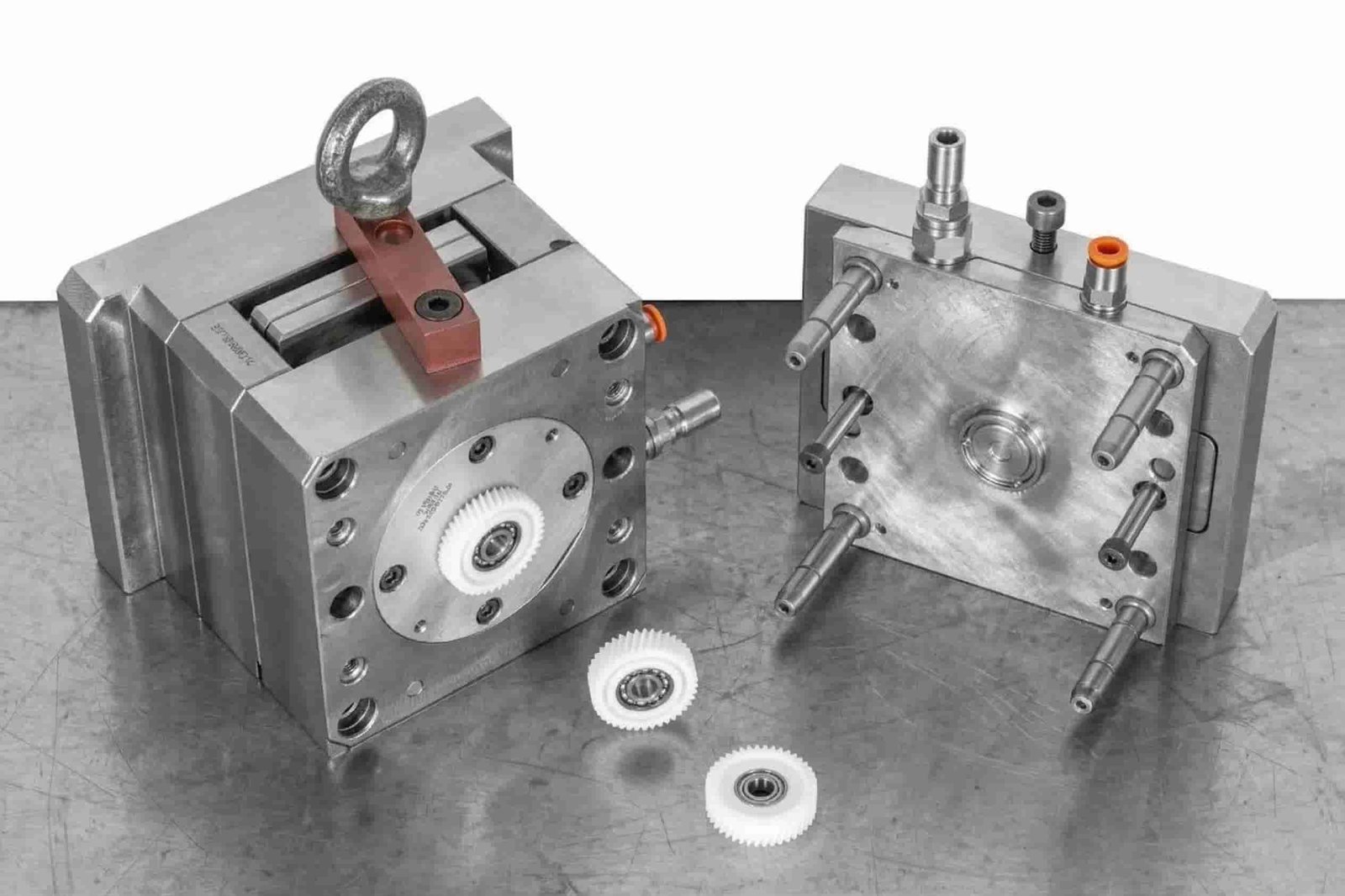
- Advanced Tooling Capabilities: We design and manufacture robust, precision steel molds specifically engineered to withstand the unique challenges of insert molding. Whether you need a simple hand-loaded mold for rapid prototyping or a fully automated, multi-cavity tool with robotic pick-and-place integration, our molds ensure your metal inserts remain perfectly stationary under extreme injection pressures.
- Proactive DFM Engineering: Metal and plastic shrink at completely different rates during the cooling phase. Our engineering team utilizes advanced Moldflow® simulations to optimize wall thicknesses and cooling channels before cutting steel. This prevents the residual stress and radial cracking commonly seen around metal inserts.
- Export-Ready Quality Standards: Quality isn’t just a metric; it’s a structural requirement for global supply chains. GBM consistently manufactures insert-molded components and precision tooling that meet the rigorous manufacturing tolerances demanded by OEM partners across North America (including the USA and Mexico) and major European industrial hubs (such as Germany and Eastern Europe).
- Turnkey Assembly Elimination: Our goal is to lower your Total Cost of Ownership (TCO). By expertly transitioning your designs from manual post-molding assembly (like ultrasonic welding) to true in-mold encapsulation, we help you eliminate secondary labor steps, reduce scrap rates, and accelerate your time-to-market.
Great integrated parts start with superior mold design. Contact the engineering team at GBM today for a comprehensive DFM analysis and tooling quote for your next insert molding project.
Ultimately, insert molding is a highly efficient manufacturing process that combines the strength of metal with the versatility of plastics to create robust, integrated components.