
Stack mold technology represents a significant leap forward in high-volume plastic injection molding, allowing manufacturers to double their production output without increasing machine size or clamp tonnage. By stacking multiple parting lines sequentially, these advanced tooling systems optimize efficiency, reduce part costs, and maximize facility footprint. Understanding how and why stack molds work is essential for scaling production profitably.
Video Guide: An introductory visual overview of what a stack mold is and how it functions within an injection molding machine.
What is Stack Mold?
A stack mold is a specialized injection molding tool featuring two or more mold parting lines arranged in a parallel, stacked configuration. Unlike standard single-face molds, stack molds effectively double the number of cavities producing parts during a single machine cycle without requiring a larger injection molding press.
Video Guide: A comprehensive look at stack molding capabilities and how they maximize production efficiency.
Core Architecture of Stacked Tooling
To understand a stack mold, you must look at its unique structural components that differentiate it from traditional single-face molds. The architecture is designed to balance pressure and flow across multiple levels.
- Center Block (Carrier): The middle section of the mold that holds cavities or cores on both sides and houses the central hot runner manifold.
- Sprue Bar: A specialized heated tube that transfers molten plastic from the machine nozzle, through the first parting line, and into the center block manifold.
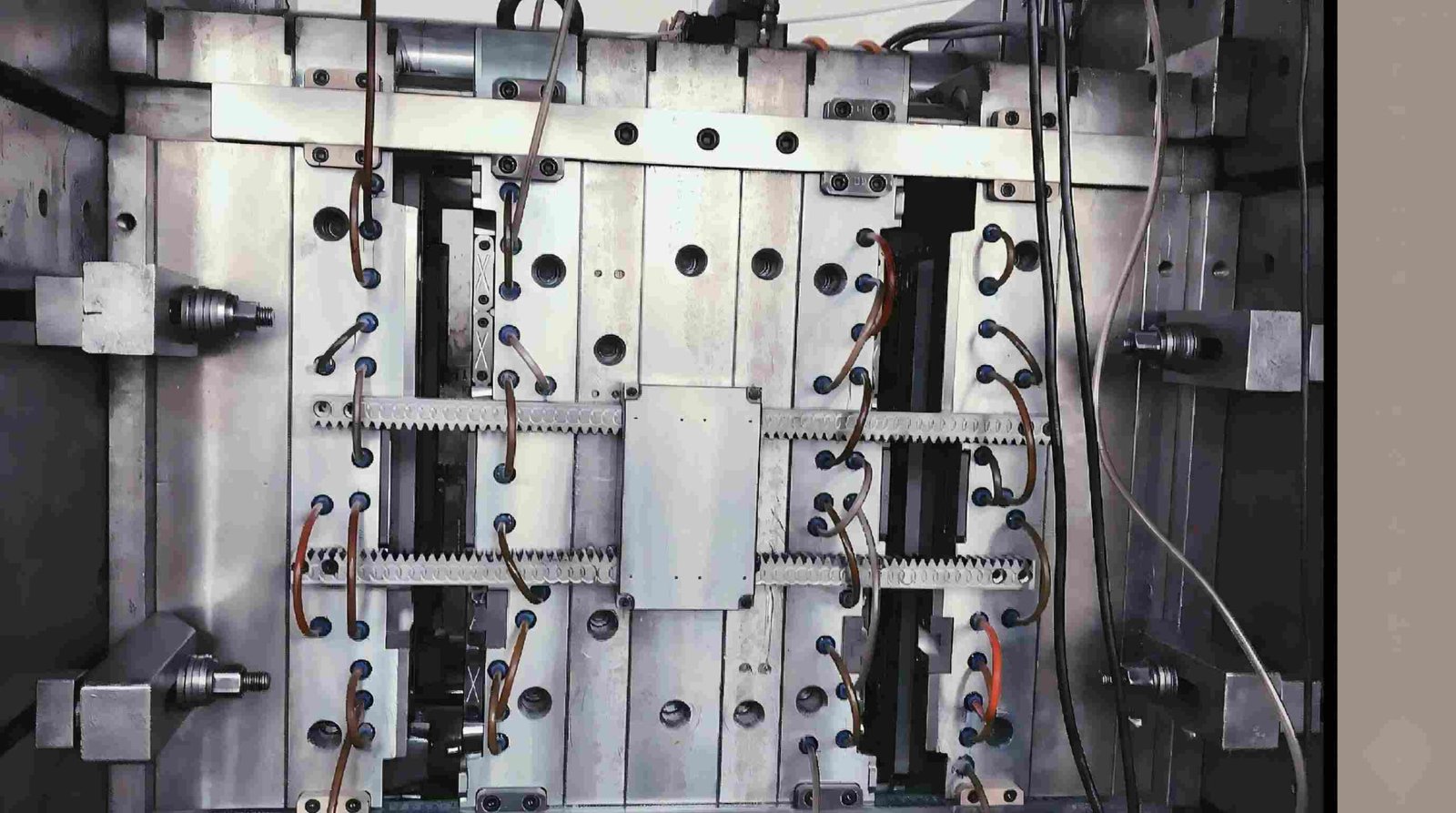
- Centering Mechanism: Mechanical linkages (like rack and pinion or harmonic levers) that ensure both parting lines open simultaneously and equally to allow for part ejection.
- Hot Runner System: A highly balanced thermal system designed to deliver melt simultaneously to all cavities across all stacked levels.
GBM Pro Tip: Always ensure your injection molding machine has sufficient shot capacity and plasticizing rate, as a stack mold demands double the material volume per cycle compared to a standard mold.
How Does Stack Mold Work?
Stack molds work by utilizing a central manifold system and specialized mechanical linkages to open and close multiple parting lines simultaneously. During the injection phase, molten plastic is delivered through a heated sprue bar into the center block, distributing material equally to all cavities across the stacked faces.
Video Guide: A detailed animation demonstrating the internal mechanics and melt flow of stack mould technology.
The Sequential Molding Process
The operation of a stack mold relies on precise mechanical and thermal synchronization. The process follows a strict sequence to ensure part quality and mold safety.
- Injection and Packing: Molten plastic is injected through the machine nozzle, travels down the sprue bar, enters the center block manifold, and fills cavities on both parting lines simultaneously.
- Cooling Phase: Water circuits in both the stationary/moving halves and the center block cool the plastic rapidly.
- Synchronized Opening: The machine clamp opens. The mechanical linkages force the center block to move exactly half the distance of the moving platen, opening both parting lines equally.
- Ejection: Ejector pins on both levels actuate simultaneously, dropping twice the number of parts as a standard mold.
- Closing: The mold closes, the sprue bar reconnects with the machine nozzle, and the cycle repeats.
GBM Pro Tip: Pay close attention to the centering mechanism; rack and pinion systems are highly recommended for heavier molds to ensure perfectly synchronized opening and closing of the parting lines.
How much does it cost to have an injection mold made?
The cost of manufacturing an injection mold ranges from $3,000 for simple, single-cavity prototype tools to well over $100,000 for complex, multi-cavity stack molds. The final price is heavily dictated by the mold’s size, the number of cavities, the steel quality, and the complexity of the hot runner system.
Video Guide: A demonstration of a modular stack mold system and its operational components.
Cost Breakdown by Tooling Complexity
Based on our internal data and market analysis, here is the breakdown:
| Mold Type | Estimated Cost Range | Best Use Case | Production Volume |
|---|---|---|---|
| Prototype/Aluminum | $3,000 – $10,000 | Testing designs, low volume | 100 – 10,000 parts |
| Single-Face (Standard) | $15,000 – $50,000 | Standard consumer goods | 10,000 – 1 Million parts |
| Multi-Cavity (High-End) | $50,000 – $100,000 | Small, high-precision parts | 1 Million – 5 Million parts |
| Stack Mold (2-Level) | $100,000 – $250,000+ | High-volume packaging, caps | 5 Million+ parts |
GBM Pro Tip: When calculating ROI, do not just look at the upfront tooling cost. A stack mold may cost 60% more than a standard tool, but it cuts your machine hourly rate per part in half.
What are the 4 types of moulding?
The four primary types of plastic molding are injection molding, blow molding, compression molding, and extrusion molding. Each process serves distinct manufacturing needs, with injection molding—particularly advanced techniques like stack molding—being the most efficient method for producing high-volume, dimensionally precise solid plastic components.
Video Guide: A clear visual breakdown of the stack molding process in action.
Primary Plastic Molding Processes
Understanding the different molding methods helps clarify why injection molding (and stack molding) is chosen for specific applications.
- Injection Molding: Molten plastic is forced into a closed metal cavity under high pressure. Ideal for high-precision, solid 3D parts like gears, lids, and medical devices.
- Blow Molding: Air is blown into a heated plastic tube (parison) to inflate it against mold walls. Used exclusively for hollow objects like bottles and containers.
- Compression Molding: Heated plastic material is placed into an open heated mold cavity, which is then closed under pressure. Common for thermoset plastics and large automotive panels.
- Extrusion Molding: Plastic is pushed through a die to create continuous shapes. Used for pipes, tubing, weather stripping, and window frames.
GBM Pro Tip: If your product requires complex geometries and tight tolerances in the millions of units, injection molding with a stack mold configuration will consistently outperform the other three methods in both speed and unit cost.
What is a molding stack?
A molding stack, often referred to as the stack assembly, is the specific combination of internal tooling components that form the actual part cavity and core. In stack molds, these individual molding stacks are duplicated across multiple parting surfaces to multiply the production yield per cycle.
Video Guide: An advanced look at helical gear production utilizing a complex stack mold system.
Anatomy of a Stack Assembly
A molding stack is not a single piece of metal; it is an engineered assembly of precision components designed to shape and cool the plastic part.
- Core Insert: The male portion of the mold that forms the internal geometry of the plastic part.
- Cavity Insert: The female portion of the mold that forms the external cosmetic geometry of the plastic part.
- Gate Insert: The specific focal point where the molten plastic enters the cavity from the hot runner system.
- Cooling Channels: Conformal or straight-drilled water lines integrated directly into the core and cavity inserts to rapidly freeze the plastic.
- Stripper Ring / Ejector Sleeve: The mechanism built into the stack assembly that pushes the finished part off the core.
GBM Pro Tip: Standardizing your molding stacks allows for rapid interchangeability. If one cavity gets damaged, you can quickly swap out the individual stack without pulling the entire multi-ton mold from the press.
Key Features & Comparison
Stack molds are defined by their multi-level parting lines, synchronized mechanical linkages, and central hot runner systems. Compared to conventional single-face molds, they offer superior production density, making them the ultimate solution for high-volume packaging, caps, closures, and medical consumables.
Video Guide: A high-speed demonstration of a 2×24 cavity injection stack mold producing round lids.
Single-Face vs. Stack Mold Performance
Based on our internal data and market analysis, here is the breakdown:
| Feature | Single-Face Mold | 2-Level Stack Mold |
|---|---|---|
| Output per Cycle | 1x (Base) | 2x (Double) |
| Machine Tonnage Required | 100% | ~110% (Minimal increase) |
| Shot Size Required | 1x | 2x (Requires larger barrel) |
| Tooling Cost | Base Cost | Base Cost + 60% to 80% |
| Part Cost (Long Term) | Standard | Significantly Reduced |
| Space Efficiency | Standard | Excellent (Double output per sq. ft.) |
GBM Pro Tip: Upgrade your chiller capacity when switching to stack molds. Double the plastic means double the heat load, and inadequate cooling will negate the cycle time advantages of the stacked configuration.
Cost & Buying Factors
Purchasing a stack mold requires evaluating upfront tooling capital against long-term production savings. Key buying factors include the required clamp tonnage, shot size capacity of your existing machines, hot runner complexity, and the anticipated annual production volume needed to justify the investment.
Video Guide: Exploring how stack molds integrate with In-Mold Labeling (IML) applications for packaging.
Strategic Investment Criteria
Before committing to a stack mold, manufacturers must evaluate their current infrastructure and production goals.
- Machine Compatibility: Ensure your injection molding machine has enough daylight (opening stroke) to accommodate the extra thickness and opening distance of a stack mold.
- Annual Volume: Stack molds are generally only cost-effective if your annual production volume exceeds 4 to 5 million parts.
- Hot Runner Design: The manifold must be perfectly balanced. Invest in premium hot runner systems to prevent uneven filling between the front and back parting lines.
- Maintenance Capabilities: Stack molds require rigorous maintenance schedules. Your facility must have the overhead crane capacity and skilled technicians to service complex multi-level tools.
GBM Pro Tip: Partner with a toolmaker experienced specifically in stack molds. The thermal expansion calculations for the center manifold are highly complex, and standard mold-making experience often does not translate to successful stack mold execution.
Conclusion
Stack mold technology is a transformative approach to high-volume injection molding. By effectively doubling output without requiring a larger machine footprint, it offers unparalleled manufacturing efficiency and cost reduction per part. Whether you are producing packaging lids, consumer closures, or medical devices, investing in a properly engineered stack mold system from a trusted partner like GBM ensures scalable, profitable, and reliable production for years to come.