The stack mold effect represents a transformative approach in high-volume injection molding, allowing manufacturers to double or even quadruple production output without increasing the machine footprint or clamp tonnage. By utilizing multiple parting lines within a single mold base, this technology significantly enhances manufacturing efficiency, reduces part costs, and optimizes facility space for large-scale production runs.
Video Guide: A comprehensive visual introduction to the core concepts and mechanical operations of stack molding technology.
What is Stack Mold?
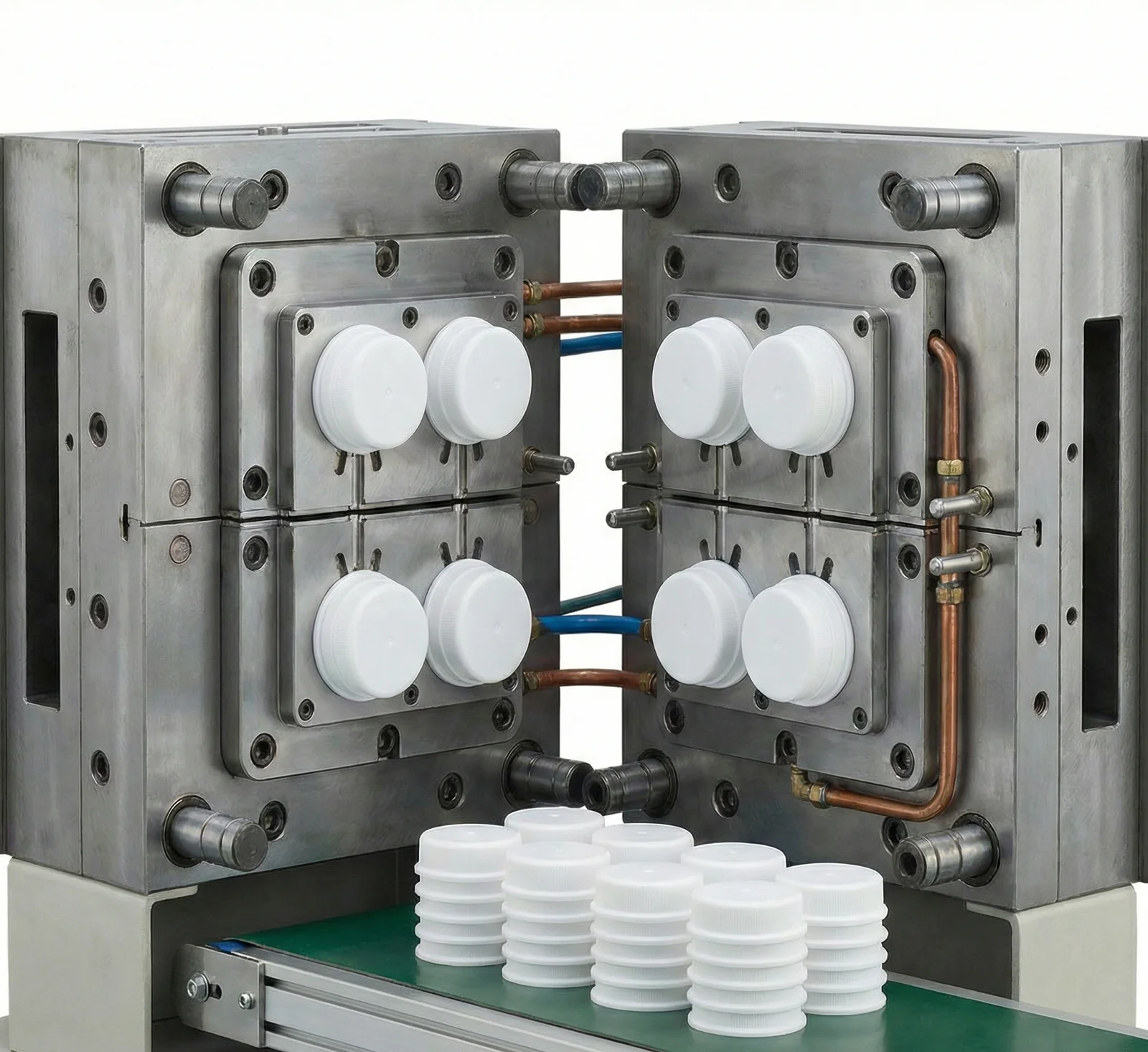
A stack mold is an advanced injection molding tool that features two or more molding surfaces, or parting lines, stacked parallel to each other. Unlike standard single-face molds, stack molds allow plastic parts to be formed on multiple levels simultaneously, effectively multiplying production capacity without requiring larger molding machines.
Video Guide: An industrial demonstration showcasing a stack mold in action within a high-volume manufacturing environment.
Architecture of a Stack Mold System
The physical structure of these molds is highly specialized to accommodate multiple cavities and ensure precise alignment during the molding cycle.
- Stationary Platen: The fixed side of the mold where the primary sprue connects directly to the machine’s injection unit.
- Center Section (Carrier): A movable middle block containing cavities on both sides, which requires a specialized hot runner system to transfer molten resin across parting lines.
- Moving Platen: The closing side of the mold that completes the secondary parting line.
- Harmonic Linkage: A mechanical system, typically utilizing racks and pinions, that ensures both parting lines open simultaneously and equally for proper part ejection.
GBM Pro Tip: Always ensure your injection molding machine has sufficient shot capacity and plasticizing rate to handle the increased volume demanded by the multiple parting lines of a stack mold.
How Does Stack Mold Work?
Stack molds operate by utilizing a central carrier block and a harmonic linkage system that opens multiple parting lines simultaneously. Molten plastic is injected through a central sprue into a specialized hot runner system, which then distributes the material evenly to cavities on multiple levels during a single cycle.
Video Guide: A detailed look at the mechanical linkages and hot runner systems that make stack molding possible.
The Molding Cycle Process
Understanding the operational sequence is crucial for optimizing cycle times, maintaining part quality, and preventing mechanical wear.
- Injection Phase: Melted resin flows from the machine nozzle through the main sprue into the center section’s hot runner manifold.
- Distribution: The hot runner channels the plastic into both the front and rear parting lines simultaneously, requiring exact thermal balancing.
- Cooling: Water circuits intricately designed within all mold plates cool the parts uniformly across all levels.
- Ejection: The harmonic linkage opens the mold faces equally, and synchronized ejector pins release the finished parts from all levels at the exact same time.
GBM Pro Tip: Fine-tuning the hot runner system’s thermal profile is critical in this process to prevent unequal filling between the primary and secondary parting lines.
What are the benefits of the stack effect?
The primary benefit of the stack effect in molding is the dramatic increase in production efficiency, doubling output while utilizing the exact same clamp tonnage and machine footprint. This leads to lower overhead costs, reduced energy consumption per part, and significantly faster time-to-market for high-volume manufacturing projects.
Video Guide: A real-world example of a 2×24 cavity injection stack mold producing round lids at high speeds.
Key Manufacturing Advantages
The economic and operational advantages make this technology ideal for packaging, medical disposables, and consumer goods.
Based on our internal data and market analysis, here is the breakdown:
| Benefit Category | Standard Mold | Stack Mold | Impact |
|---|---|---|---|
| Production Output | 1x Capacity | 2x – 4x Capacity | Massive volume increase |
| Machine Size Required | Matches cavity count | Half the expected size | Saves factory floor space |
| Energy Efficiency | Baseline | Up to 40% savings per part | Lowers utility costs |
| Labor Costs | Standard | Reduced per part | Improves overall profit margins |
GBM Pro Tip: While the initial tooling cost is higher, the Return on Investment (ROI) is exceptionally fast for production runs exceeding 2 million parts annually due to the doubled output.
What is the stack effect of mold?
The stack effect of a mold refers to the architectural principle of layering molding cavities in parallel planes rather than spreading them out horizontally. This vertical integration of cavities maximizes the use of the injection molding machine’s existing clamping force, distributing it across multiple faces simultaneously.
Clamping Force Distribution
The genius of the stack effect lies in physics and force distribution. Because the cavities are stacked directly opposite each other, the injection pressure on the first parting line is effectively canceled out by the injection pressure on the second parting line.
- Projected Area: The required clamp tonnage is calculated based solely on the projected area of one parting line, not the combined total of all parting lines.
- Force Cancellation: Opposing injection forces stabilize the center carrier block, reducing the strain on the machine’s tie bars.
- Tonnage Efficiency: A 500-ton machine can successfully run a stack mold that would otherwise require a 1000-ton machine if built horizontally.
GBM Pro Tip: Ensure your machine’s daylight opening (maximum mold height capacity) is sufficient, as the stack effect requires molds that are nearly twice as thick as standard single-face molds.
Is the stack effect good or bad?
The stack effect is overwhelmingly positive for high-volume production, offering unmatched efficiency and cost savings. However, it can be a disadvantage for low-volume runs due to the high initial tooling costs, complex maintenance requirements, and the need for specialized hot runner systems.
Assessing the Pros and Cons
Deciding whether to implement this technology requires a careful evaluation of your specific manufacturing goals and facility capabilities.
Based on our internal data and market analysis, here is the breakdown:
| Aspect | The “Good” (Advantages) | The “Bad” (Disadvantages) |
|---|---|---|
| Financial | Lower cost-per-part at scale | 30-50% higher initial mold cost |
| Operational | Doubles output on the same machine | Requires specialized maintenance |
| Technical | Highly efficient use of clamp force | Complex hot runner thermal balancing |
| Suitability | Ideal for flat, shallow parts (lids) | Poor fit for deep-draw parts |
GBM Pro Tip: We recommend conducting a thorough break-even analysis before committing; typically, the stack effect becomes “good” (profitable) only when your production demands exceed the capacity of a standard mold.
Key Features & Comparison
When evaluating injection molding strategies, understanding how stack molds compare to traditional single-face molds is essential for making informed capital equipment decisions. The structural differences dictate both the capabilities and the limitations of the tooling.
Based on our internal data and market analysis, here is the breakdown:
| Feature | Single-Face Mold | Stack Mold System |
|---|---|---|
| Parting Lines | One | Two, Three, or Four |
| Clamp Tonnage Required | 100% of total projected area | 100% of one parting line’s area |
| Mold Height (Thickness) | Standard | Approx. 1.5x to 2x thicker |
| Ejection System | Standard machine ejectors | Harmonic linkage / center ejection |
| Hot Runner Complexity | Standard manifold | Sprue bar / valve gate transfers |
Cost & Buying Factors
Investing in stack mold technology requires careful financial and operational planning. The initial capital expenditure is notably higher than traditional tooling, often costing 40% to 60% more due to the secondary parting lines, complex harmonic linkages, and specialized hot runner systems required to move plastic through the center carrier.
Before purchasing, manufacturers must evaluate several crucial factors:
- Production Volume: High volumes (typically millions of parts per year) are mandatory to justify the initial tooling expense and achieve a rapid ROI.
- Machine Compatibility: Verify that your existing injection molding machines have adequate tie-bar spacing, maximum daylight opening, and sufficient shot size to accommodate the thicker mold and increased material volume.
- Maintenance Capabilities: Ensure your in-house tooling department is equipped and trained to handle the rigorous preventative maintenance required for multi-level molds and complex hot runner systems.
Conclusion
The stack mold effect provides a revolutionary advantage for manufacturers seeking to maximize their output without expanding their facility footprint. By utilizing parallel parting lines, these molds effectively double production capacity, optimize clamp tonnage, and significantly reduce the long-term cost per part. If you are ready to scale your high-volume manufacturing operations and improve your bottom line, contact the experts at GBM to discuss how a custom stack mold solution can transform your production line.