While stack molding is celebrated for its ability to double production output without increasing machine size, it is essential to understand the potential drawbacks before investing in this technology. Evaluating the disadvantages of stack molds—such as higher upfront costs, increased tooling complexity, and demanding maintenance requirements—ensures that manufacturers make informed decisions. This guide explores both the mechanics of stack molding and the critical challenges associated with its implementation.
Video Guide: A clear visual introduction to the basic concepts and applications of stack molding in the manufacturing industry.
What is Stack Mold?
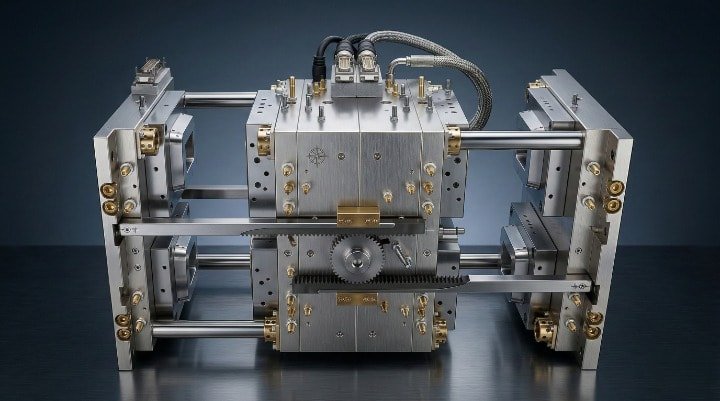
A stack mold is a specialized injection molding tool featuring two or more parting lines, effectively stacking multiple mold faces together. This innovative design allows manufacturers to double or triple their production output using the same clamping force and machine size as a standard single-face mold.
Video Guide: Watch a high-volume stack molding operation in action, demonstrating the synchronized opening of multiple parting lines.
Core Structural Components
A stack mold is fundamentally different from a standard mold due to its multi-layered architecture. Rather than a single cavity and core, it utilizes a central block that acts as a dual-sided molding surface. Understanding its anatomy is crucial for grasping both its benefits and its disadvantages.
- Center Block: The heavy middle section that holds cavities or cores on both sides.
- Harmonic Linkage System: Mechanical arms or gear mechanisms that ensure both parting lines open simultaneously and equally.
- Specialized Hot Runner: A complex manifold system that routes molten plastic through the center block to feed all cavities evenly.
- Support Pillars: Additional structural supports required to bear the weight of the center block and prevent sagging during the molding cycle.
GBM Pro Tip: When designing a stack mold, always over-engineer the center block support system; a sagging center block is the leading cause of premature wear on guide pins and parting line flash.
How Does Stack Mold Work?
Stack molds operate by opening multiple parting lines simultaneously during the molding cycle. A specialized mechanical linkage ensures that both mold faces open at the exact same time and distance, allowing plastic to be injected into multiple cavities concurrently through a centered hot runner system.
The Synchronized Injection Cycle
The efficiency of a stack mold relies entirely on perfect synchronization. If the mechanical linkages fail to open the mold faces equally, part ejection becomes inconsistent, and the tool can suffer catastrophic damage. The process follows a strict sequence:
- Clamping: The injection molding machine applies tonnage, sealing all parting lines tightly.
- Injection: The machine’s nozzle feeds molten resin into the primary sprue, which travels through the hot runner manifold into the center block, filling all cavities on both sides simultaneously.
- Cooling: Water channels routed through the fixed halves and the moving center block cool the parts.
- Opening & Ejection: The harmonic linkage forces both parting lines to open at the exact same rate. Ejector pins on both sides actuate simultaneously to drop the finished parts.
GBM Pro Tip: Ensure your injection molding machine has sufficient shot capacity; while clamping force remains the same, the volume of plastic required per cycle is doubled compared to a standard mold.
How many times can you use an injection mold?
The lifespan of an injection mold typically ranges from 100,000 to over 1,000,000 cycles, depending heavily on the mold’s material, complexity, and maintenance. High-quality hardened steel molds used in stack molding often reach the upper end of this spectrum when properly maintained.
Mold Longevity Classifications
The Society of the Plastics Industry (SPI) classifies molds based on their expected lifecycle and build quality. Because stack molds represent a significant investment, they are almost exclusively built to the highest standard (Class 101).
Based on our internal data and market analysis, here is the breakdown:
| SPI Classification | Expected Cycles | Material Used | Best Application |
|---|---|---|---|
| Class 101 | 1,000,000+ | Hardened Tool Steel (H13, S7) | High-volume stack molds, continuous production. |
| Class 102 | Up to 1,000,000 | Pre-hardened Steel (P20) | Medium-to-high volume standard molds. |
| Class 103 | Under 500,000 | Standard Steel / Aluminum | Low volume production, simpler geometries. |
| Class 104 | Under 100,000 | Aluminum / Mild Steel | Prototyping and limited runs. |
GBM Pro Tip: To maximize the lifespan of a Class 101 stack mold, implement a strict preventative maintenance schedule that includes ultrasonic cleaning of the hot runner manifold every 100,000 cycles.
What are the disadvantages of stack?
The primary disadvantages of stack molds include significantly higher initial tooling costs, complex engineering requirements, and extended lead times. Additionally, they demand highly precise maintenance, specialized hot runner systems, and operators with advanced technical expertise to prevent costly downtime and part defects.
Analyzing the Drawbacks
While the output benefits are undeniable, the barriers to entry for stack molding are substantial. Manufacturers must weigh these disadvantages heavily before committing to a stack mold program.
- Exorbitant Upfront Costs: A stack mold can cost 50% to 100% more than a standard single-face mold due to the extra steel, complex hot runners, and harmonic linkages.
- Increased Maintenance Complexity: The center block and linkage mechanisms require frequent lubrication, alignment checks, and specialized servicing.
- Longer Lead Times: Designing, machining, and assembling the synchronized components typically adds weeks or months to the tool-building process.
- Machine Compatibility Issues: Although they do not require more clamping force, stack molds require a longer daylight opening (the maximum distance the machine platens can open) to accommodate the extra parting line.
GBM Pro Tip: Never attempt to run a stack mold on an older machine with worn tie bars; the slightest platen deflection will cause the center block to misalign, destroying the tool.
Which company is best for an injection molding machine?
Choosing the best injection molding machine company depends on your specific production needs, but industry leaders generally include KraussMaffei, Engel, Husky, and Arburg. These manufacturers are renowned for their high-precision equipment, robust clamping mechanisms, and excellent compatibility with complex stack mold setups.
Top Machine Manufacturers for Stack Molding
Running a stack mold requires an injection molding machine with exceptional platen parallelism, extended daylight, and highly responsive injection controls. Certain brands specialize in these high-end requirements.
- Husky Injection Molding Systems: The undisputed leader in high-speed, high-cavitation packaging and PET preform molding. Their machines are tailor-made for heavy stack molds.
- Engel: Known for their tie-bar-less technology and highly advanced two-platen machines, which offer excellent accessibility for large stack molds.
- KraussMaffei: Offers incredibly robust hydraulic and hybrid machines that provide the precise tonnage control necessary for multi-parting line tools.
- Arburg: Excellent for highly technical, precision-driven stack molding applications, particularly in the medical and automotive sectors.
GBM Pro Tip: When purchasing a machine specifically for stack molding, prioritize the “maximum daylight opening” specification over raw tonnage to ensure your parts can successfully drop free during ejection.
Key Features & Comparison
Comparing stack molds to standard single-face molds reveals significant differences in output capacity, cost, and machine requirements. While standard molds are simpler and cheaper to produce, stack molds offer unmatched high-volume production efficiency by maximizing the output per clamping cycle.
Single-Face vs. Stack Mold Comparison
Understanding the exact operational differences helps justify the higher costs associated with stack molding technology.
Based on our internal data and market analysis, here is the breakdown:
| Feature | Single-Face Mold | Stack Mold |
|---|---|---|
| Parting Lines | One | Two, Three, or Four |
| Output per Cycle | 1x (Standard) | 2x to 4x (Multiplied) |
| Initial Tooling Cost | Baseline | 50% – 100% Higher |
| Machine Tonnage Needed | Standard | Same as Single-Face |
| Daylight Opening Required | Standard | Significantly Larger |
| Maintenance Complexity | Low to Medium | Very High |
GBM Pro Tip: If your production volume forecast does not exceed 2 million parts annually, a high-cavitation single-face mold is often a more cost-effective choice than jumping straight into a stack mold.
Cost & Buying Factors
Investing in a stack mold requires evaluating not just the initial tooling price, which can be 50% to 100% higher than standard molds, but also the long-term ROI. Buyers must consider production volume, hot runner system costs, and ongoing maintenance expenses.
Investment Breakdown
Procuring a stack mold is a major capital expenditure. To ensure a profitable return on investment (ROI), buyers must scrutinize several financial and operational factors before issuing a purchase order.
- Hot Runner Expenses: The specialized valve-gated hot runner systems required to feed a center block are significantly more expensive than standard manifolds.
- Tooling Material: Because stack molds run in high-volume environments, they require premium hardened steel, driving up raw material costs.
- Downtime Risk: If a stack mold breaks, you lose double the production capacity compared to a standard mold. Factoring in the cost of backup plans or spare parts is essential.
- Operator Training: You must budget for training technicians to handle the complex setup, teardown, and maintenance of the harmonic linkage systems.
GBM Pro Tip: Always request a spare parts package (including extra linkage arms, valve pins, and center block support guides) at the time of the initial mold purchase to minimize future downtime.
Conclusion
While stack molds present distinct disadvantages such as higher upfront costs, extended lead times, and increased mechanical complexity, their ability to drastically increase production efficiency makes them invaluable for high-volume manufacturing. Proper maintenance and partnering with experienced toolmakers are key to mitigating these challenges.
Final Recommendations
Success with stack molding requires a strategic approach. The disadvantages can be managed effectively if the project is planned with precision.
- Conduct a rigorous ROI analysis: Ensure your production volumes justify the 50-100% premium on tooling costs.
- Verify machine specifications: Double-check that your existing injection machines have the required daylight opening and shot capacity.
- Partner with specialists: Only work with mold builders who have a proven track record specifically in stack mold engineering.
- Implement strict maintenance: Treat the mold’s linkage and center block support systems with the utmost care to prevent catastrophic failure.
GBM Pro Tip: Treat your stack mold as a long-term asset; investing 10% more upfront for premium hot runners and hardened steel will easily save you 30% in maintenance costs over the tool’s lifetime.