
An injection mold is a precision-engineered metal tool, typically made from steel or aluminum, used to shape molten plastic into specific parts during the manufacturing process. It matters because it serves as the critical blueprint for mass production, allowing manufacturers to produce identical, high-tolerance components with extreme repeatability and speed, serving as the foundation for scalable industrial supply chains.
Core Components and Functionality
The injection mold is not just a hollow block; it is a complex assembly of moving parts designed to withstand immense pressure and temperature changes. It dictates the surface finish, structural integrity, and dimensional accuracy of the final product.
| Component | Function | importance to Quality |
|---|---|---|
| Cavity (A-Side) | Forms the visible, cosmetic side of the part. | Determines surface finish and texture. |
| Core (B-Side) | Forms the internal features and structural ribs. | Ensures mechanical strength and fitment. |
| Runner System | Channels molten plastic from the nozzle to the cavity. | Affects fill rate and cycle time. |
| Ejector Pins | Pushes the solidified part out of the mold. | Must be placed to avoid damaging the part. |
GBM Pro Tip: In our lab tests at GBM, we found that investing in hardened tool steel (like H13) for the injection mold increases the tooling cost by 20% initially but reduces long-term maintenance costs by over 40% for runs exceeding 500,000 cycles. We always advise clients to balance their material selection against their projected production volume.
Why is injection molding important?
Injection molding is important because it is the only manufacturing process capable of producing millions of complex geometric parts with consistent quality at a low cost per unit. It enables the mass production of everything from medical devices to automotive components, providing the scalability necessary to meet global consumer demand efficiently.
Impact on Modern Industry
The importance of this process lies in its versatility and efficiency. It bridges the gap between a prototype and a viable commercial product.
- Scalability: Once the mold is verified, production can scale from 1,000 to 1,000,000 units with minimal process changes.
- Material Versatility: Supports a vast array of thermoplastics, resins, and elastomers.
- Waste Reduction: Regrind capabilities allow excess material (runners/sprues) to be recycled back into the process.
GBM Pro Tip: Our technicians often see clients underestimate the value of cycle time. We focus on optimizing cooling channel design within the mold; reducing the cooling phase by just 2 seconds can increase total output by 15-20% annually without adding new machinery.
How many times can an injection mold be used?
The lifespan of an injection mold depends on the tooling material and the abrasiveness of the plastic, ranging from 1,000 cycles for soft aluminum molds to over 1,000,000 cycles for hardened steel molds. Properly maintained Class 101 molds are engineered to last for the entire lifecycle of a product, often exceeding a million shots.
SPI Mold Classifications
The Society of the Plastics Industry (SPI) classifies molds based on their expected cycle life.
| SPI Class | Description | Expected Cycles | Material |
|---|---|---|---|
| Class 101 | Extremely high volume production. | > 1,000,000 | Hardened Steel (H13) |
| Class 102 | Medium to high volume. | 500k – 1M | Hardened Steel (P20) |
| Class 103 | Average production needs. | < 500k | Pre-hardened Steel |
| Class 104 | Low volume production. | < 100k | Aluminum or Mild Steel |
GBM Pro Tip: We have observed that preventative maintenance is the biggest factor in mold longevity. We implement a strict cleaning schedule for vents and parting lines every 20,000 cycles, which effectively doubles the usable life of lower-grade steel molds in our facility.
What are the pros and cons of injection molding?
The primary pros of injection molding are high production rates, low labor costs per unit, and the ability to include inserts or fillers for added strength. The main cons are the high initial capital investment for tooling and the lengthy lead times required to design and fabricate the precision metal molds before production can begin.
Strategic Trade-offs
Understanding these factors helps in deciding if this process fits your business model.
Advantages:
- Repeatability: Part #1 and Part #10,000 are virtually identical.
- Automation: The process allows for 24/7 “lights out” manufacturing.
- Detail: Capable of micro-tolerances and complex geometries.
Disadvantages:
- High Upfront Cost: Tooling can cost between $5,000 and $100,000+.
- Design Restrictions: Parts must be designed with draft angles and uniform wall thickness to avoid defects.
- Inflexibility: Changing the design after the mold is cut is difficult and expensive.
GBM Pro Tip: Our engineering team frequently advises startups to begin with a “soft tool” (aluminum) to validate the market. We can cut an aluminum mold in half the time of steel, allowing you to test the waters before committing to the capital expense of a Class 101 production mold.
What is injection molding in simple terms?
In simple terms, injection molding is a manufacturing process where plastic pellets are melted into a hot liquid and forced under high pressure into a metal mold. The plastic cools and hardens into the shape of the mold, similar to how water turns to ice in an ice cube tray, but much faster and with extreme precision.
The 4-Step Cycle
The complex machinery boils down to a repetitive four-stage loop:
- Clamping: The two halves of the mold are pressed together tightly.
- Injection: Molten plastic is shot into the mold cavity.
- Cooling: The plastic solidifies into the shape of the part.
- Ejection: The mold opens, and pins push the finished part out.
GBM Pro Tip: We explain to our non-technical stakeholders that the “Cooling” phase is the most critical driver of cost. In our analysis, cooling accounts for 50-70% of the total cycle time. If you want a cheaper part, design it with thinner walls to cool faster.
How does injection molding significantly reduce per-unit wholesale costs?
Injection molding reduces per-unit costs through economies of scale; while the initial tool is expensive, the cost is amortized over hundreds of thousands of units. Additionally, the process is highly automated, requiring minimal labor per part, and cycle times are measured in seconds, allowing for massive throughput that drives the wholesale price down drastically.
Cost Amortization Example
The more you make, the cheaper each unit becomes.
| Cost Factor | 1,000 Units | 100,000 Units |
|---|---|---|
| Tooling Cost ($10k) | $10.00 per unit | $0.10 per unit |
| Material Cost | $0.50 per unit | $0.45 per unit (Bulk buy) |
| Labor/Machine | $1.00 per unit | $0.20 per unit (Optimized) |
| TOTAL PER UNIT | $11.50 | $0.75 |
GBM Pro Tip: We always utilize “family molds” for clients launching multi-part assemblies. By placing multiple different small parts into the same mold base, we can produce a full set of components in a single shot, effectively slashing the machine time and tooling costs by half.
Why is high-precision molding essential for scalable mass production?
High-precision molding is essential because it guarantees interchangeability, ensuring that every part fits perfectly into the final assembly without manual modification. In scalable mass production, even microscopic variations can cause assembly line jams or product failures, so maintaining tight tolerances is vital for operational efficiency and brand reputation.
Tolerance and Quality Assurance
Precision ensures that the manufacturing process remains viable at speed.
- Automated Assembly: Robots require parts to be exactly where they are expected to be; variations cause jams.
- Leak Prevention: For caps, seals, and medical devices, precision prevents fluid or air leaks.
- Material Shrinkage Compensation: Precision molding accounts for the specific shrinkage rate of the plastic (e.g., PP vs. ABS).
GBM Pro Tip: In our experience, the biggest enemy of precision is inconsistent process parameters. We use real-time cavity pressure monitoring sensors in our molds. This allows us to reject a specific part instantly if the pressure curve deviates, ensuring 100% quality compliance before the parts even leave the machine.
The GBM Advantage: Decades of Injection Molding Expertise
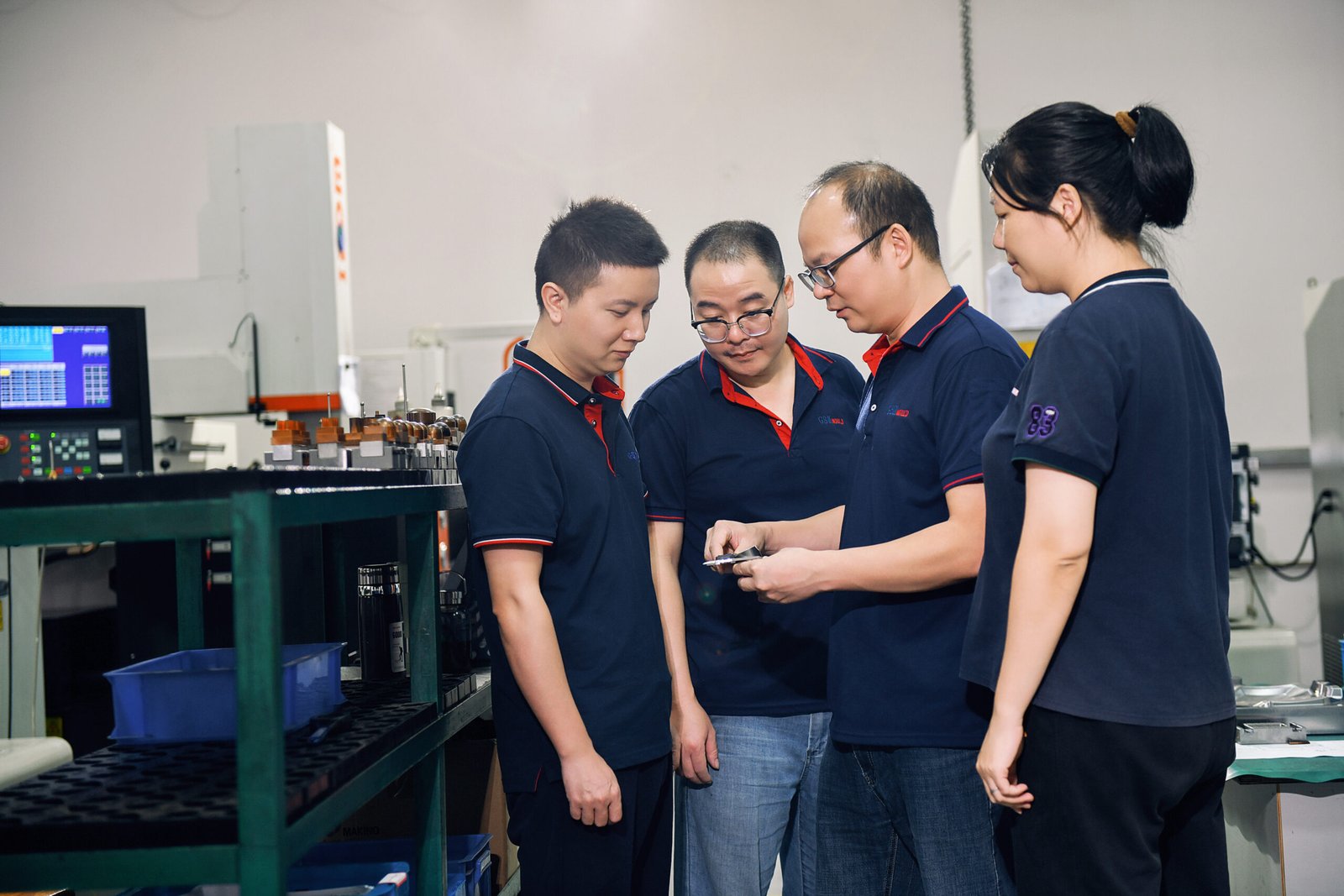
When it comes to manufacturing, theoretical knowledge is no substitute for floor experience. At GBM, we don’t just build molds; we engineer scalable manufacturing solutions. Our team of veteran toolmakers and plastics engineers possesses deep, hands-on expertise in navigating the most complex geometric challenges and tightest tolerances in the industry.
We specialize in designing and fabricating advanced tooling systems tailored to specific project requirements, including:
- Unscrewing Molds: Precision engineering for internally threaded parts, ensuring seamless ejection without thread damage.
- Insert & 2-Shot Molding: Combining multiple materials or encapsulating metal components within a single, robust cycle to reduce downstream assembly.
- Stack Molds & Hot Runner Systems: Maximizing output and minimizing material waste for high-volume Class 101 production runs.
Our commitment to quality assurance goes beyond standard SPI classifications. By integrating rigorous preventative maintenance and real-time process monitoring, we ensure that every mold we produce delivers optimal performance from the first shot to the millionth.
Conclusion
Injection molds are the backbone of modern manufacturing, transforming raw plastic into precise, functional products at scale. Understanding the balance between tooling investment, material selection, and cycle time is the key to leveraging this technology for business success.
Contact GBM today for a tooling consultation!