
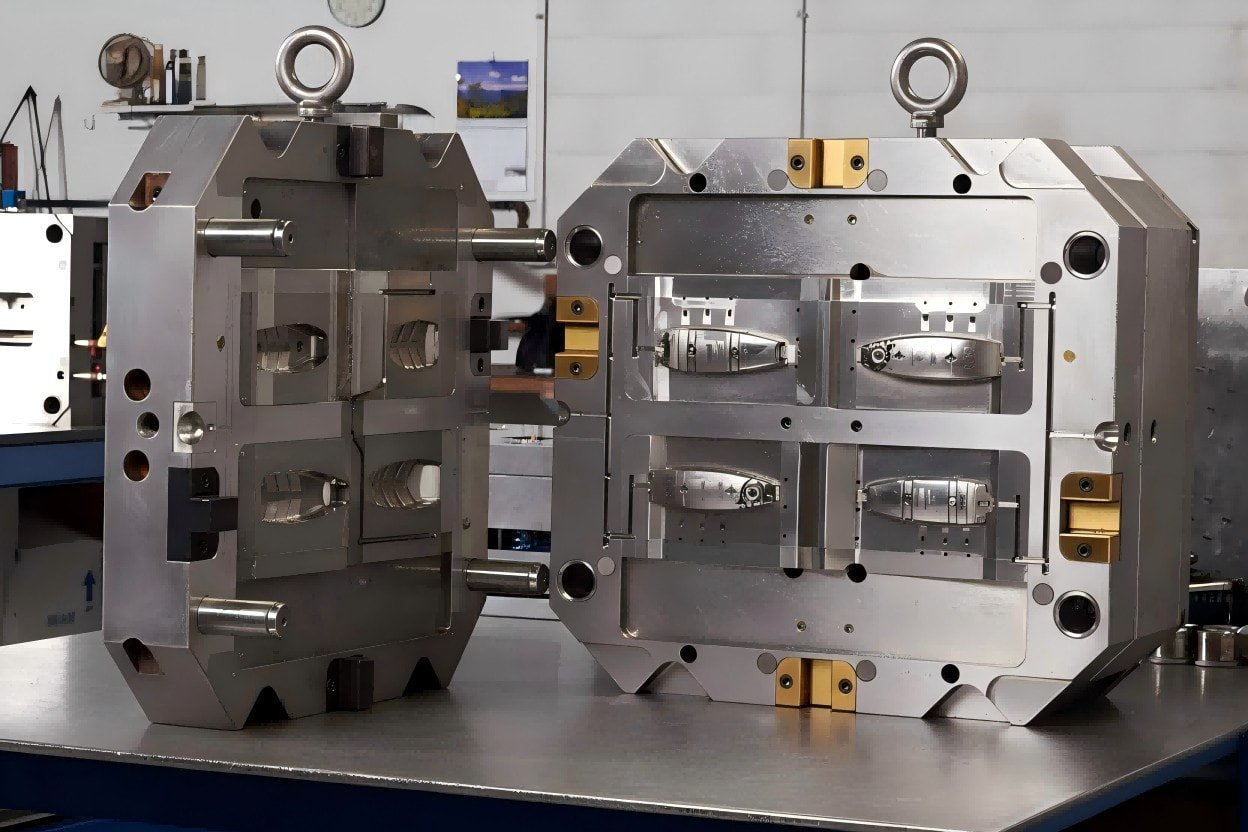
Injection molding is a premier manufacturing process used to produce parts in large volumes by injecting molten material into a mold. It is most typically used with mass-production processes where the same part is being created thousands or even millions of times in succession. This technology is the backbone of the plastic industry, creating everything from automotive components and medical devices to everyday household items like bottle caps and toys.
Video Guide: A comprehensive visual introduction to the fundamental concepts of the injection molding process.
What is injection molding?
Injection molding is a manufacturing technique for producing parts by injecting molten material into a mould. It is performed with a host of materials mainly including metals (for which the process is called die-casting), glasses, elastomers, confections, and most commonly thermoplastic and thermosetting polymers. Material for the part is fed into a heated barrel, mixed, and forced into a mould cavity, where it cools and hardens to the configuration of the cavity.
Video Guide: Essentra Components explains the specific definitions and mechanics behind injection moulding.
Core Definition and Scope
The essence of injection molding lies in its ability to replicate complex shapes with high precision and speed. The process begins with raw material, usually in the form of pellets, which is melted and then injected under high pressure into a custom-designed mold. Once the material cools and solidifies, the mold opens to eject the finished part.
To understand the scope of this technology, consider the following primary applications:
- Consumer Goods: Toothbrushes, plastic containers, and toys.
- Automotive: Dashboards, bumpers, and electrical connectors.
- Medical: Syringes, valves, and surgical implements.
- Electronics: Housings for computers, televisions, and smartphones.
- Packaging: Bottle caps, closures, and crates.
GBM Pro Tip: When defining your project scope, remember that the “mold” (or tool) is the most expensive upfront cost. Injection molding is most cost-effective when you plan to produce at least 1,000 to 10,000 units to amortize the cost of the tooling.
How Does injection molding Work?
The injection molding process works through a cyclical sequence: clamping, injection, dwelling, cooling, and ejection. Plastic pellets are fed into a heated barrel where a reciprocating screw melts and mixes the material. This molten plastic is then shot into a closed metal mold under high pressure. After the part cools and solidifies, the mold opens, and ejector pins push the finished product out, resetting the machine for the next cycle.
Video Guide: A detailed step-by-step walkthrough of how plastic products are created using this cycle.
The Process Cycle
The working principle of an injection molding machine is a feat of engineering that balances temperature, pressure, and time. The machine consists of three main parts: the injection unit, the mold, and the clamping unit.
Based on our internal data and market analysis, here is the breakdown of the operational cycle:
- Clamping: The two halves of the mold are securely closed by the clamping unit. Sufficient force must be applied to keep the mold closed during the injection step.
- Injection: Raw plastic material, usually in the form of pellets, is fed into the injection molding machine, and advanced towards the mold by the injection unit. During this process, the material is melted by heat and pressure.
- Dwelling (Holding): Once the molten plastic is injected, pressure is maintained to ensure all cavities are filled and to compensate for material shrinkage during cooling.
- Cooling: The molten plastic that is inside the mold begins to cool as it makes contact with the interior mold surfaces. As the plastic cools, it will solidify into the shape of the desired part.
- Ejection: After sufficient time has passed, the cooled part may be ejected from the mold by the ejection system, which is attached to the rear half of the mold.
GBM Pro Tip: Cycle time is money. We recommend optimizing the cooling phase, which often takes up 50-70% of the total cycle time. Using conformal cooling channels in your mold design can significantly reduce this time and increase production output.
Can I do injection molding at home?
While industrial-grade injection molding requires massive, high-pressure machinery that is unsuitable for home use, it is possible to perform small-scale injection molding at home using desktop manual machines or hobbyist kits. These smaller setups operate at much lower pressures and volumes, allowing DIY enthusiasts to create small plastic parts, though they lack the speed, automation, and precision of professional industrial equipment.
Video Guide: This process explanation highlights the complexity of the machinery, illustrating why simplified versions are needed for home use.
DIY vs. Industrial Constraints
Home injection molding is a growing hobby, particularly for makers who want to produce small batches of parts that are stronger than 3D printed alternatives. However, the capabilities are vastly different from a factory floor.
If you are considering a home setup, you must evaluate the following requirements:
- Equipment: You need a benchtop injection molder (often manually lever-operated).
- Molds: You will need to machine your own molds out of aluminum or high-temperature epoxy.
- Material: You must source thermoplastic pellets (PLA, ABS, or Polypropylene).
- Ventilation: Melting plastic releases fumes; a well-ventilated workspace is non-negotiable.
- Safety: Molten plastic can reach temperatures over 200°C (392°F). Heat-resistant gloves and face shields are mandatory.
GBM Pro Tip: For home users, we advise starting with aluminum molds rather than steel. Aluminum is softer, easier to machine with standard CNC routers or mills, and conducts heat well, which is sufficient for low-volume runs typical of a home workshop.
What are the benefits of injection molding?
The primary benefits of injection molding include high production efficiency, repeatability, and the ability to produce complex geometries with tight tolerances. It allows for the use of a vast array of materials and colors, minimizes waste through scrap recycling, and offers a low cost per unit once the initial tooling investment is covered, making it ideal for mass production.
Video Guide: An overview of the advantages that make injection molding the dominant choice for manufacturing.
Advantages Breakdown
Injection molding remains the gold standard for manufacturing for several strategic reasons. It bridges the gap between design flexibility and structural integrity.
a list of the specific advantages:
- Scalability: Once the mold is made, the price per unit drops drastically as volume increases.
- Material Versatility: You can use multiple types of plastic simultaneously (co-injection molding) or insert metal parts into the plastic (insert molding).
- Low Waste: Unlike subtractive manufacturing (CNC machining), injection molding produces little waste, and runners/sprues can often be reground and reused.
- High Strength: The process allows for the use of fillers in the plastic to increase density and strength.
- Surface Finish: Parts come out of the mold with a finished look, often requiring little to no post-processing.
GBM Pro Tip: To maximize benefits, design your parts with uniform wall thickness. This prevents defects like sink marks and warping, ensuring that the high repeatability of the process is maintained throughout the production run.
How to maintain a injection molding?
Maintaining an injection molding machine involves a strict schedule of inspecting hydraulic systems, lubricating moving parts, and cleaning the barrel and screw to prevent material carbonization. Regular maintenance also includes checking the mold for wear, ensuring heater bands are functional, and verifying that safety gates and sensors are operating correctly to prevent downtime and accidents.
Video Guide: An explanation of the machine’s complexity, underscoring the importance of regular maintenance.
Maintenance Schedule
Preventive maintenance is critical to the longevity of your GBM injection molding equipment. Neglect can lead to expensive repairs and halted production lines.
Based on our internal data and market analysis, here is the breakdown of a standard maintenance protocol:
- Daily Checks:
- Check oil levels and temperature.
- Inspect safety devices and emergency stops.
- Check for water or oil leaks.
- Clean the hopper and magnet.
- Weekly Checks:
- Inspect the toggle mechanism and lubricate if necessary.
- Check heater bands for proper operation.
- Tighten loose bolts on the clamping unit.
- Monthly/Quarterly Checks:
- Check the screw and barrel for wear.
- Inspect hydraulic hoses for cracking or bulging.
- Calibrate the injection pressure and speed settings.
- Clean the heat exchanger.
GBM Pro Tip: Keep a “Maintenance Log” attached to every machine. Documenting every fluid change, filter replacement, and screw inspection helps diagnose future issues faster and preserves the resale value of your machinery.
Key Features & Comparison
When deciding on a manufacturing process, it is essential to compare injection molding against other popular methods like 3D Printing and CNC Machining.
Based on our internal data and market analysis, here is the breakdown:
| Feature | Injection Molding | 3D Printing (Additive) | CNC Machining (Subtractive) |
|---|---|---|---|
| Volume Suitability | High (1,000+ units) | Low (1-100 units) | Low to Medium (1-500 units) |
| Initial Cost (Tooling) | High (Molds are expensive) | Low (No tooling required) | Low (Setup only) |
| Cost Per Unit | Very Low | High | Medium to High |
| Speed | Fast (Seconds per part) | Slow (Hours per part) | Medium (Minutes to hours) |
| Material Properties | Excellent (Isotropic strength) | Good (Anisotropic strength) | Excellent (Original material) |
| Design Complexity | High (with side actions) | Very High (supports needed) | Medium (tool access limits) |
Cost & Buying Factors
Investing in injection molding involves understanding three main cost centers: the machine, the mold, and the material.
1. The Machine: Entry-level industrial machines can start from $30,000, while high-speed, all-electric GBM machines can range significantly higher depending on tonnage (clamping force). Tonnage is calculated based on the projected surface area of your part.
2. The Mold (Tooling): This is the most significant barrier to entry. A simple single-cavity mold might cost $3,000, while a complex multi-cavity hardened steel mold can exceed $50,000. However, this mold can produce hundreds of thousands of parts.
3. Material & Running Costs: Thermoplastic pellets are generally cheap (often $1-$5 per kg). The real running cost comes from electricity (heating and hydraulics) and cycle time. Reducing cycle time by even one second can save thousands of dollars in high-volume runs.
Conclusion
Injection molding is the dominant manufacturing process for producing plastic parts at scale. By understanding how the injection, cooling, and ejection cycles work, manufacturers can optimize their production for speed and quality. While the upfront costs for tooling and machinery are significant, the low cost per unit and high repeatability make it an unbeatable solution for mass production. Whether you are running a large industrial facility or exploring desktop options, success lies in proper machine maintenance, smart mold design, and selecting the right material for your application.
At GBM, we are dedicated to providing the technology and expertise you need to succeed in the molding industry.