

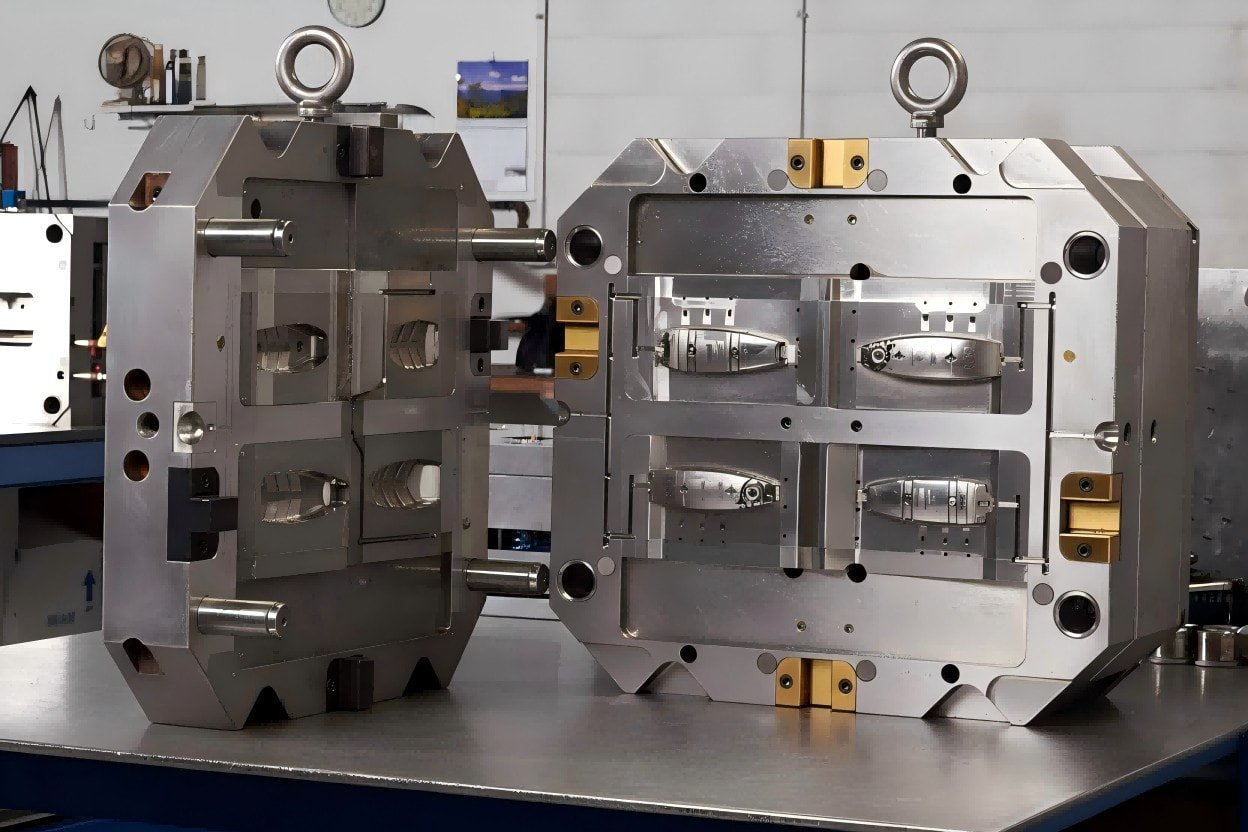
The primary difference between blow molding and injection molding is the type of product they create. Injection molding is used to manufacture solid parts by injecting molten plastic into a mold, making it ideal for high-precision components. Conversely, blow molding is designed to create hollow parts, like bottles, by inflating a heated plastic tube inside a mold cavity.
What is Blow Molding?
Blow molding is a specific manufacturing process designed to create hollow plastic parts by inflating a heated plastic tube within a mold. This method functions similarly to blowing glass, where air pressure forces soft plastic against the mold walls to define the object’s shape and wall thickness.
Core Mechanism: The process begins with a “parison” (a heated tube of plastic). The mold closes around the parison, and air is blown into it, expanding the material to match the mold’s cavity.
Best Applications: This technique is the industry standard for producing hollow objects such as water bottles, fuel tanks, stadium seats, and large plastic drums.
What is Injection Molding?
Injection molding is the most common method for mass-producing solid plastic parts requiring high precision and complex geometries. In this process, molten plastic is injected under extremely high pressure into a metal mold, where it cools and solidifies into the final component.
Core Mechanism: Plastic pellets are melted in a barrel and injected via a screw or ram into a clamped mold. The high pressure ensures the plastic fills every crevice, resulting in tight tolerances.
Best Applications: It is used for solid items like LEGO bricks, automotive dashboards, smartphone cases, and medical devices where precise dimensions are critical.
Key Differences: Blow Molding vs. Injection Molding
The choice between these two methods depends largely on whether your final product needs to be hollow or solid.
| Feature | Blow Molding | Injection Molding |
|---|---|---|
| Product Structure | Hollow parts (bottles, tanks). | Solid parts (housings, gears). |
| Material Distribution | Wall thickness can vary slightly. | Precise, uniform wall thickness. |
| Air Requirement | Requires air to inflate the plastic. | Requires air to be vented out of the mold. |
| Cost | Generally lower tooling costs. | Higher tooling costs due to complexity. |
ClearFilter Pro Tip: In our manufacturing experience, we often see confusion regarding containers. If you need a bottle with a highly precise neck finish (like a screw cap), we recommend Injection Blow Molding. This hybrid process injects the neck for precision first, then blows the body for volume.
Pros & Cons Comparison
| Feature | Blow Molding | Injection Molding |
|---|---|---|
| Production Speed | Fast for large hollow items. | Extremely fast for small solid parts. |
| Precision | Lower tolerance control. | High tolerance and detail. |
| Design Freedom | Limited to hollow shapes. | Can create complex internal ribs/bosses. |
| Waste | Often produces flash (scrap). | Minimal waste (sprue/runners can be reground). |
Conclusion
To summarize, use blow molding if you are manufacturing a hollow container designed to hold liquid or air. Choose injection molding if you need solid, durable parts with complex details and high precision. Understanding the structural requirement of your part is the first step in selecting the right machinery.
FAQ
1. Can injection molding make hollow parts? Generally no. While gas-assisted injection molding exists, standard injection molding creates solid parts. To make a hollow object via injection molding, you would typically mold two halves and weld them together.
2. Which process is cheaper? Blow molding molds are typically cheaper to manufacture than injection molds because they do not require the same level of pressure resistance or internal complexity. However, per-unit costs depend heavily on volume.
3. What materials are used? Both processes use thermoplastics. Blow molding often uses HDPE, PET, and PP. Injection molding uses a wider variety, including ABS, Nylon, Polycarbonate, and TPE.