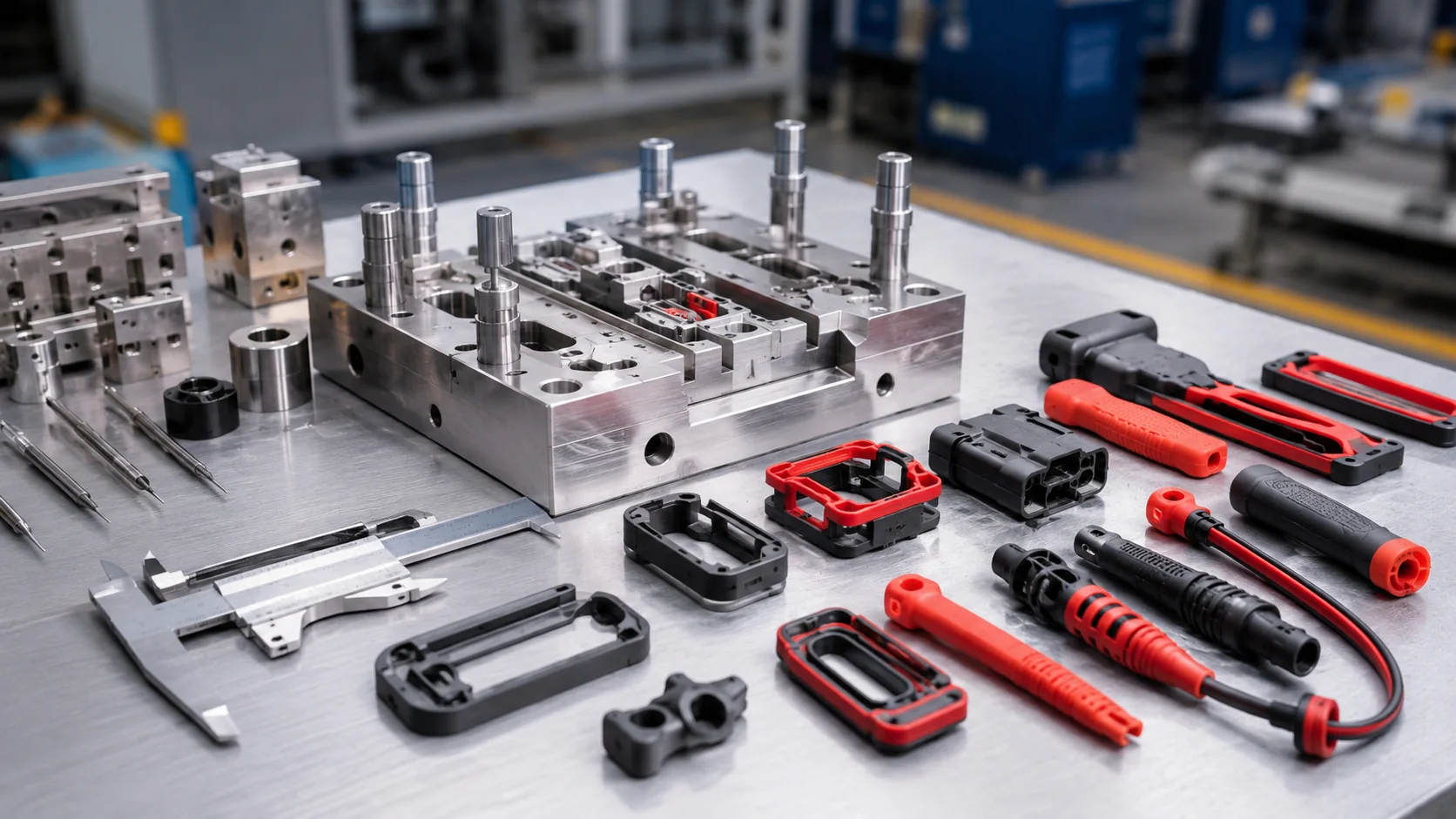
Custom Overmolding Mold Manufacturer for TPE & TPU Parts
Custom overmolding mold design and manufacturing for TPE, TPU, TPV, PC, ABS, PP, PA and insert-based plastic parts. GBM reviews bonding area, substrate positioning, flash control, shrinkage difference, gate location and T1 validation before mold approval.
- Custom TPE / TPU overmolding molds for soft-touch, sealing and protective parts
- DFM review for material compatibility, bonding structure, substrate positioning and flash risk
- T1 samples, CMM reports, trial videos and export mold packing for overseas buyers
Project Quick Facts
-
Mold TypeTwo-step overmolding mold, insert loading mold, TPE / TPU soft-touch mold, connector overmolding mold
-
Material PairTPE / TPU / TPV with ABS, PC, PP, PA, PC/ABS or metal inserts
-
Main Risk ReviewBonding, substrate movement, flash, shrinkage difference, gate mark, ejection deformation
-
GBM SupportDFM, mold design, T1 samples, CMM report, trial video, export packing
-
Quote Needs2D / 3D drawings, material, Shore hardness, annual quantity, application, export requirement
Custom Overmolding Mold Solutions by Buyer Need
TPE Overmolding Mold Manufacturer
For soft-touch grips, sealing edges, ergonomic handles and consumer housings. GBM reviews TPE grade, Shore hardness, substrate material, bonding area, shut-off line and flash risk before mold cutting.
Discuss My TPE Overmolding MoldTPU Overmolding Mold Manufacturer
For protective covers, cable strain relief, wearable parts and durable soft layers. GBM checks TPU flow, ejection, adhesion, shrinkage, gate location and T1 trial risk before production approval.
Review My TPU Overmolding ProjectSmall Batch Overmolding Mold Supplier
For prototype and low-volume projects, GBM supports two-step overmolding, manual substrate loading, T1 samples and mold adjustment before scaling to higher volume.
Ask for Small Batch Mold PlanExport Overmolding Tooling for US / EU Buyers
For overseas buyers, GBM supports export mold packing, mold drawings, spare parts list, trial videos, CMM reports and packing photos.
Get Export Mold QuoteOvermolding Mold at a Glance
Quick understanding of overmolding technology and GBM's capabilities.
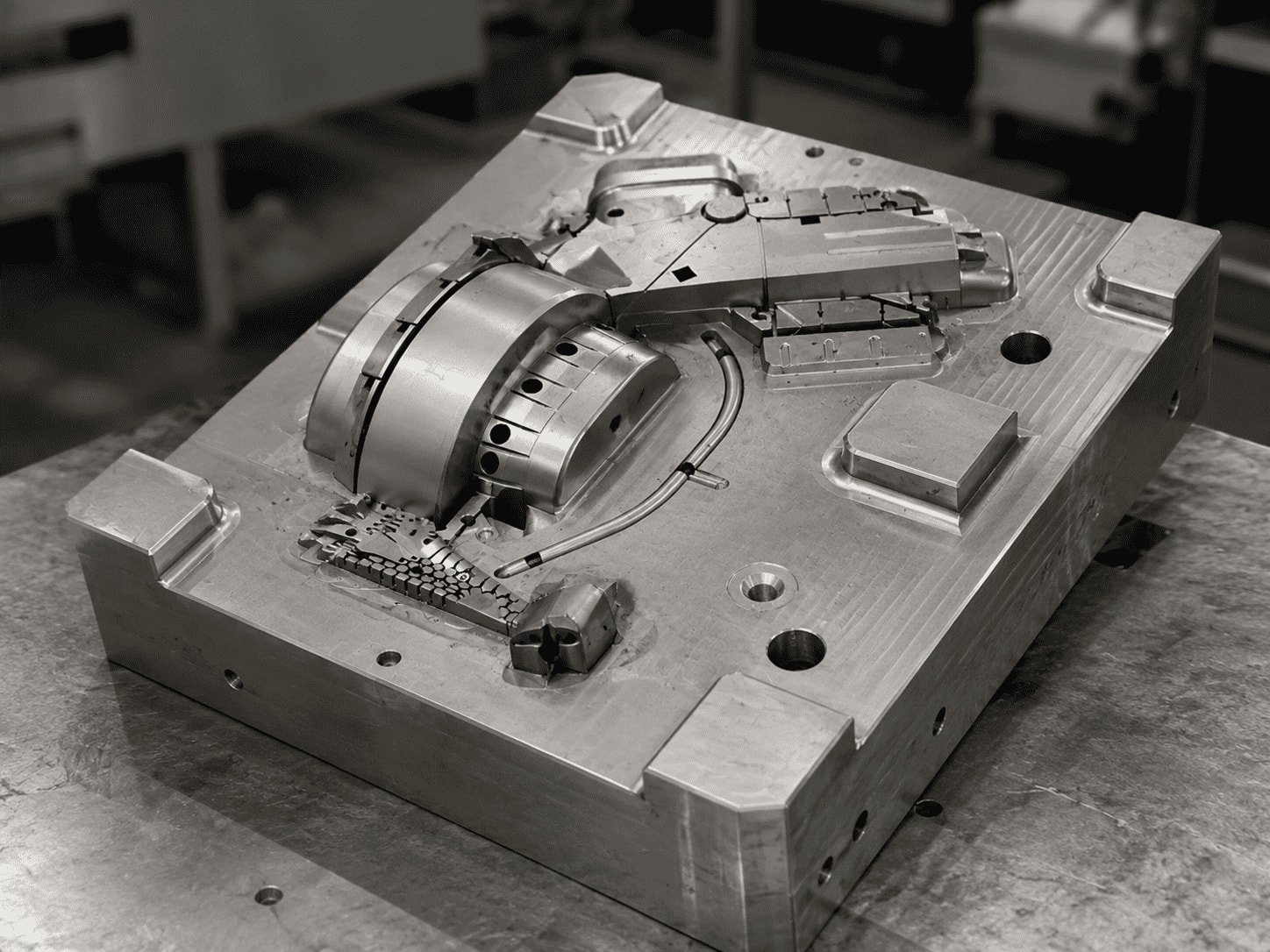
What It Is
A mold that injects TPE, TPU, TPV or another material over a plastic or metal substrate.
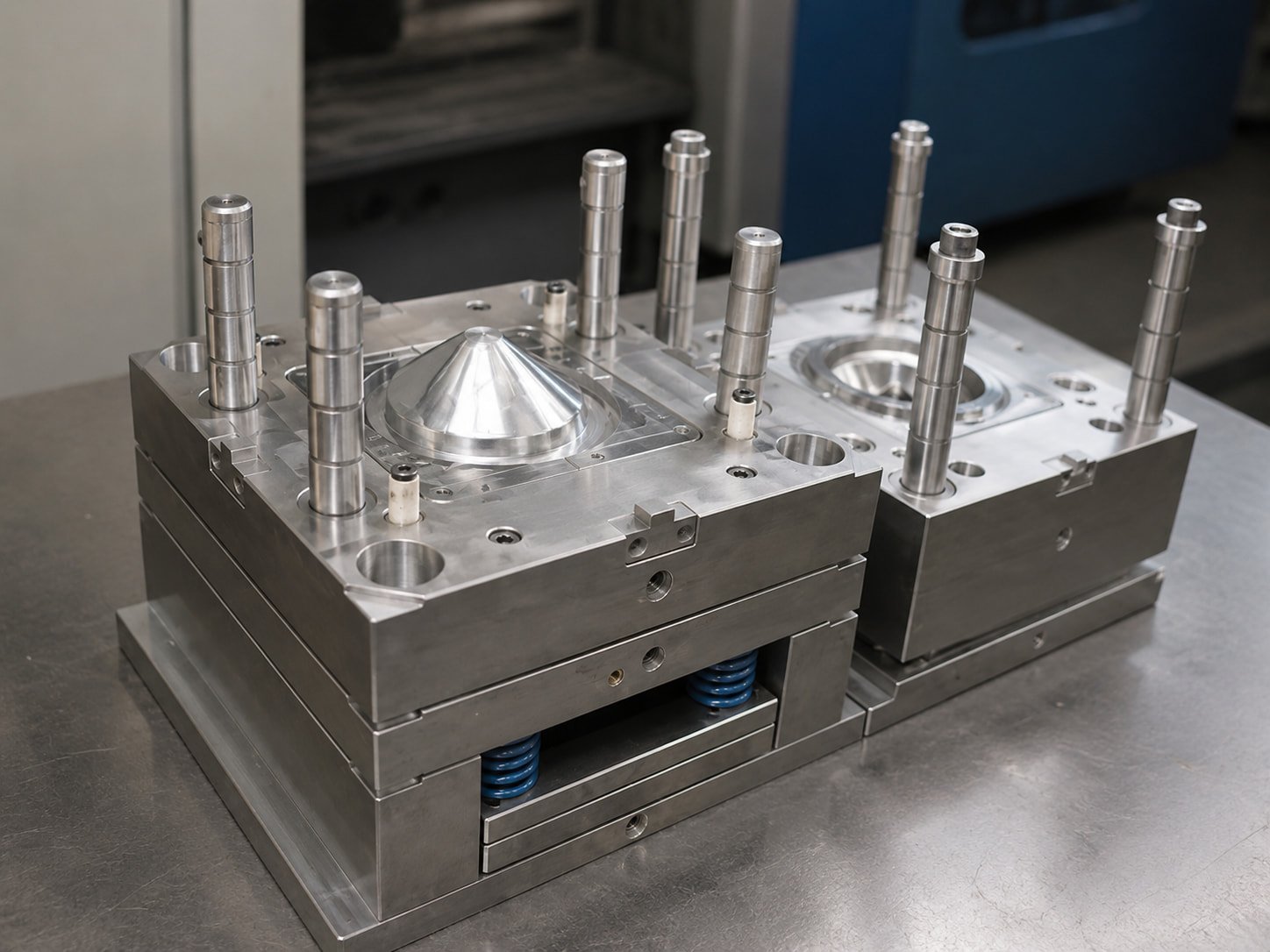
Why Buyers Use It
Improve grip, sealing, protection, comfort, impact resistance and part integration.
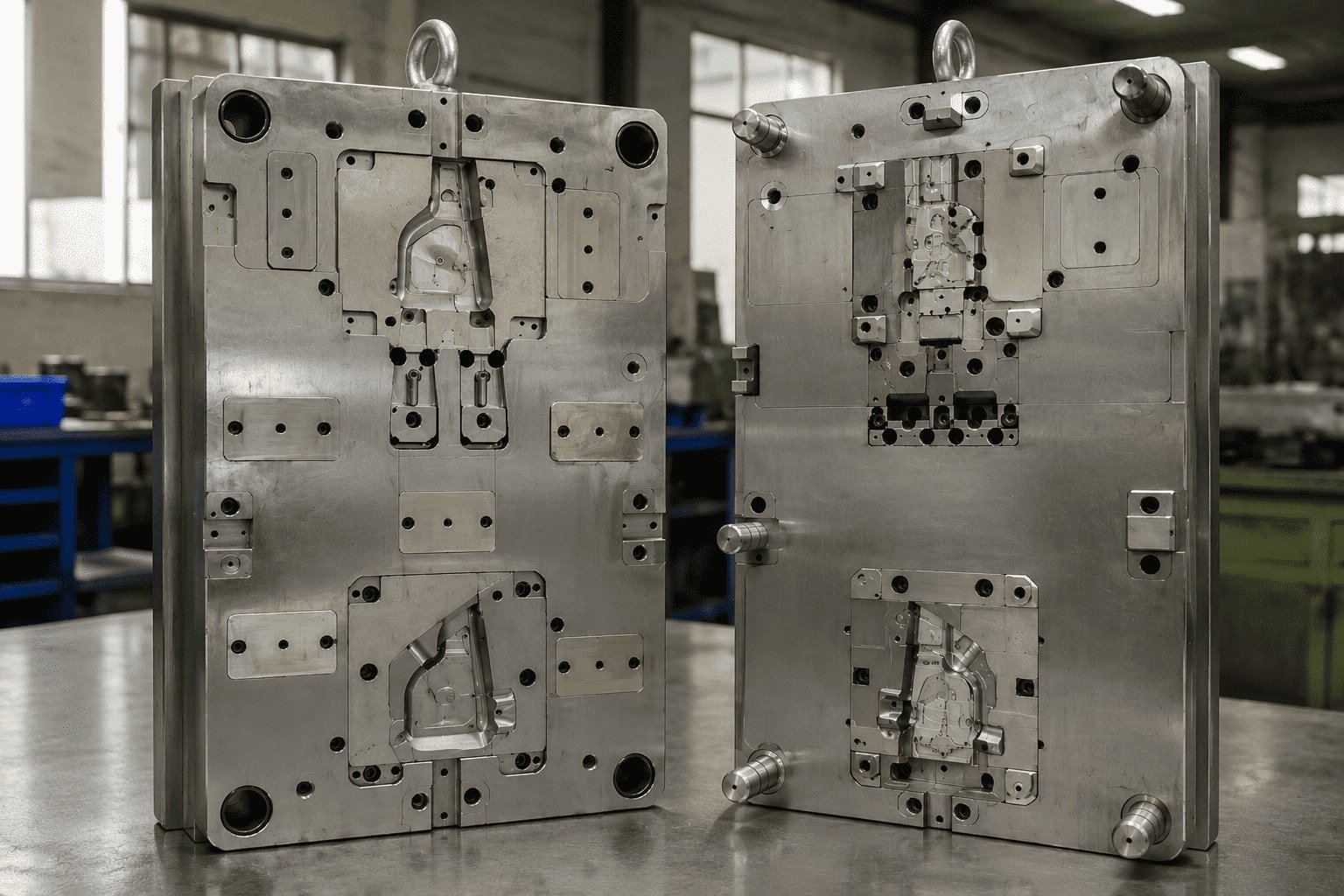
What GBM Checks
Material pair, bonding area, substrate location, shut-off line, gate position and ejection.
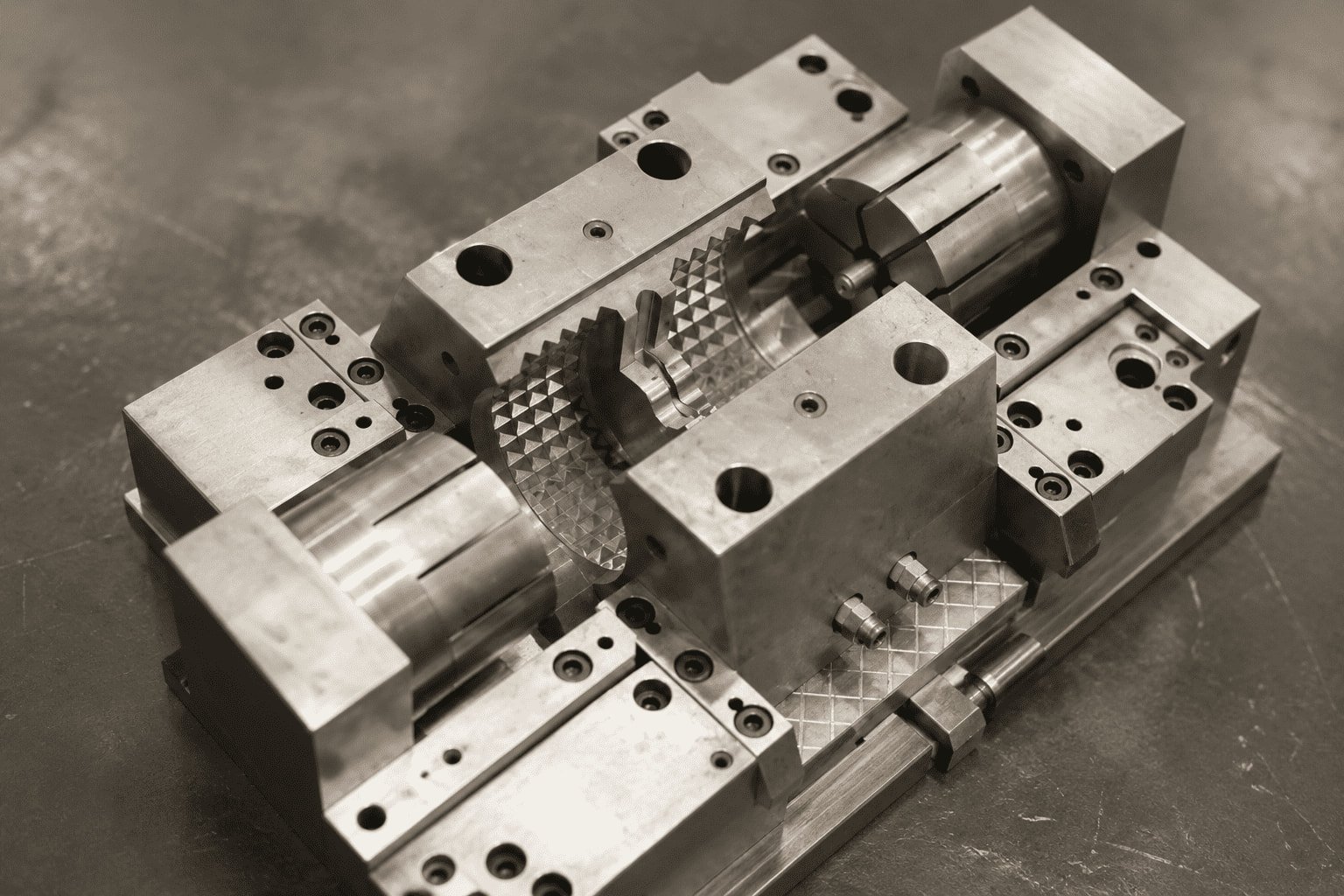
What Buyers Receive
DFM feedback, mold design, T1 samples, QC report, CMM report if required, trial video and packing photos.
What Is an Overmolding Mold?
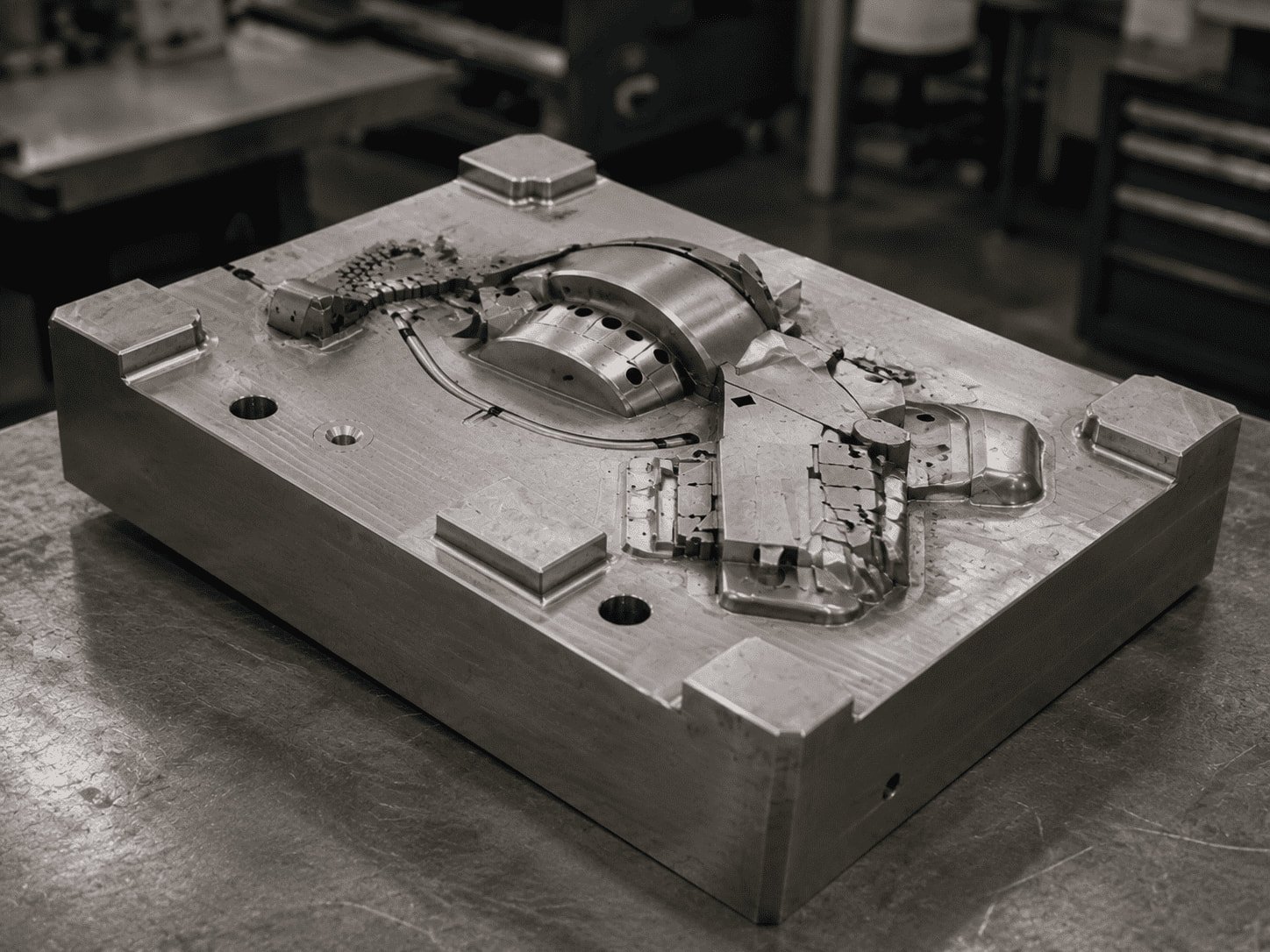
An overmolding mold is a plastic injection mold designed to place a second material over a base substrate. The substrate can be a molded plastic part, a metal insert, or a pre-formed component. The overmold material is usually a soft or functional material such as TPE, TPU or TPV, but it can also be another engineering plastic depending on the project.
| Overmolding Type | Example | Buyer Concern |
|---|---|---|
| TPE over plastic | TPE + ABS grip | Adhesion, touch feel, flash |
| TPU over plastic | TPU + PC cover | Wear resistance, ejection, bonding |
| Rubber-like sealing | TPV / TPE + PP | Sealing line, compression, material grade |
| Insert overmolding | Plastic over metal insert | Insert positioning, movement, coverage |
| Connector overmolding | Cable end / terminal | Sealing, strain relief, pin protection |
When Overmolding Is Used
Overmolding is used when a product needs multiple functions in one part, such as a hard plastic structure with a soft-touch grip, a sealed connector, a protected housing, a comfortable handle, or a multi-material appearance.
What Buyers Should Consider
Before choosing an overmolding mold, buyers should evaluate material compatibility, bonding strength, mechanical lock design, substrate positioning, wall thickness, shrinkage difference, gate location, flash control and quality validation.
How Overmolding Works
Substrate Design
Check bonding area, ribs, holes, undercuts, wrap-around edges and location features.
First Shot / Insert Preparation
Check substrate material, surface condition, dimensional stability and heat resistance.
Substrate Positioning in Mold
Check locating pins, support surfaces, shut-off area and possible insert movement.
Second Material Injection
Check TPE / TPU flow, gate position, weld line, pressure, venting and flash risk.
T1 Bonding & Ejection Review
Check delamination, flash, short shot, bubbles, shrinkage, ejection mark and critical dimensions.
In simple terms, overmolding combines two materials into one part. The success of the project depends on material compatibility, substrate positioning, mold design and T1 validation.
Overmolding Mold Parameters
Comprehensive specifications, design standards, and technical support details for custom overmolding projects.
| Parameter | GBM Support | Buyer Notes |
|---|---|---|
| Mold Category | Overmolding mold, two-step mold, insert loading overmolding mold | Selected by material pair, production volume and automation level |
| Substrate Material | ABS, PC, PP, PA, PC/ABS, POM, metal inserts | Must review heat resistance and second-shot deformation |
| Overmold Material | TPE, TPU, TPV and project-specific elastomers | Grade, Shore hardness and adhesion should be confirmed |
| Bonding Method | Chemical bonding, mechanical lock, groove, hole, undercut, wrap-around edge | Do not rely only on material name |
| Gate Design | Edge gate, direct gate, sub gate or custom gate depending on part | Affects flow marks, weld line, bonding and flash |
| Flash Control | Shut-off fitting, parting line, venting, steel contact and process window | Very important for soft materials |
| Tolerance Control | Project-dependent, based on material, part structure and critical dimensions | Use CMM for marked critical dimensions |
| Quality Documents | T1 sample, sample QC report, CMM report, mold trial video | Based on project requirement |
| Export Delivery | Drawings, spare parts, packing photos, maintenance notes | Important for overseas buyers |
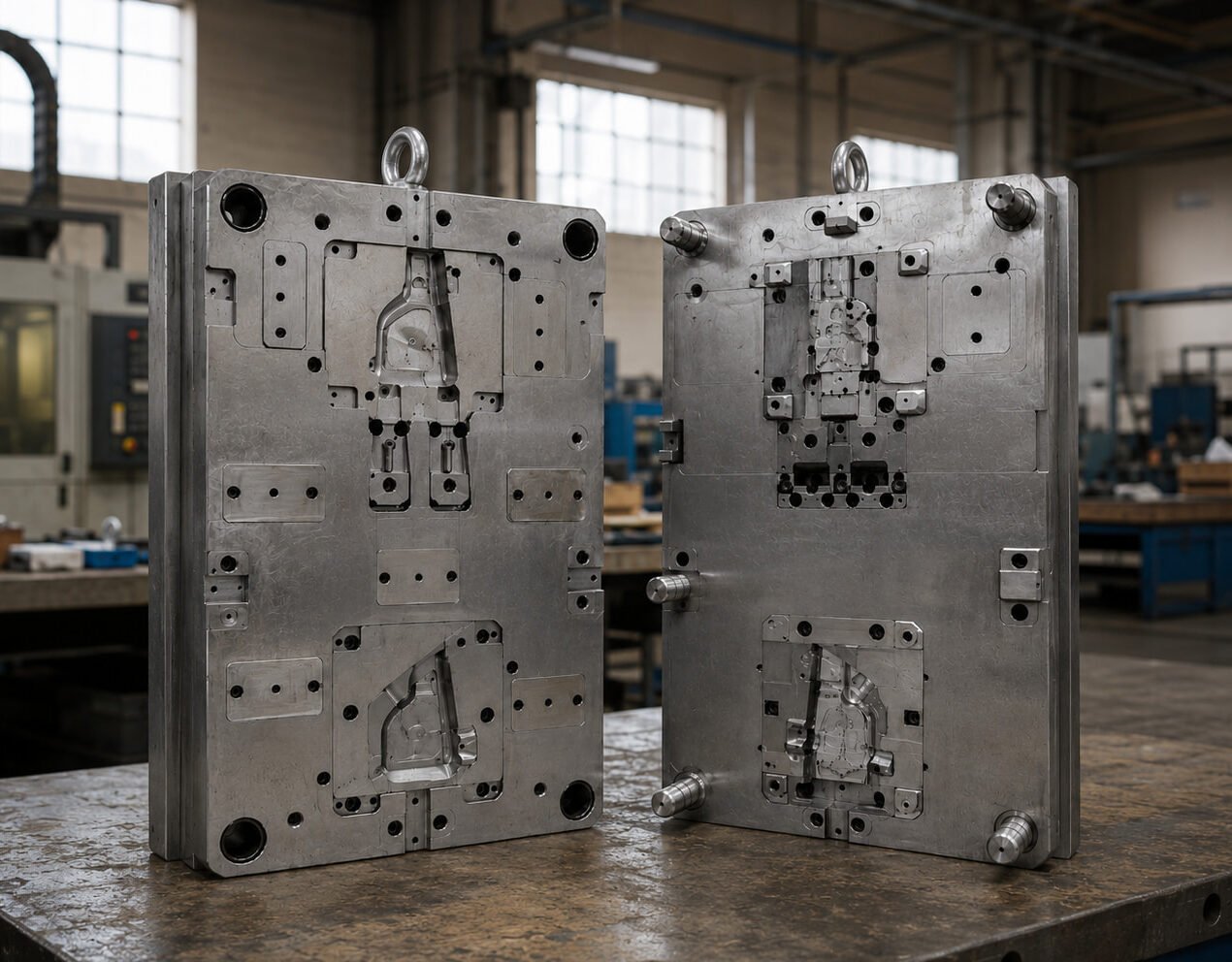
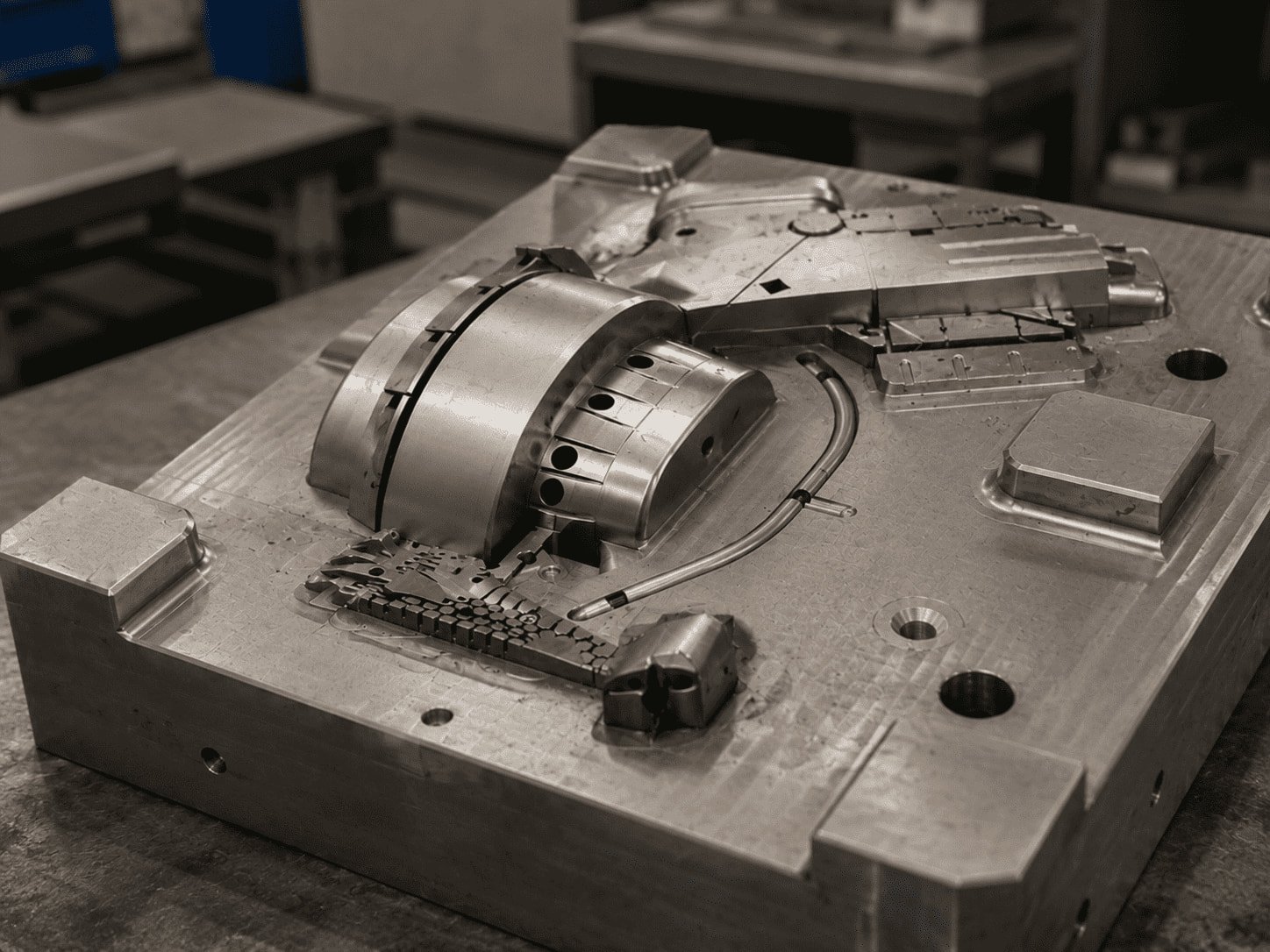
Send your drawings, material, quantity, and quality requirements for evaluation.
Overmolding Mold Types & Applications
Custom solutions for various materials and functional requirements.
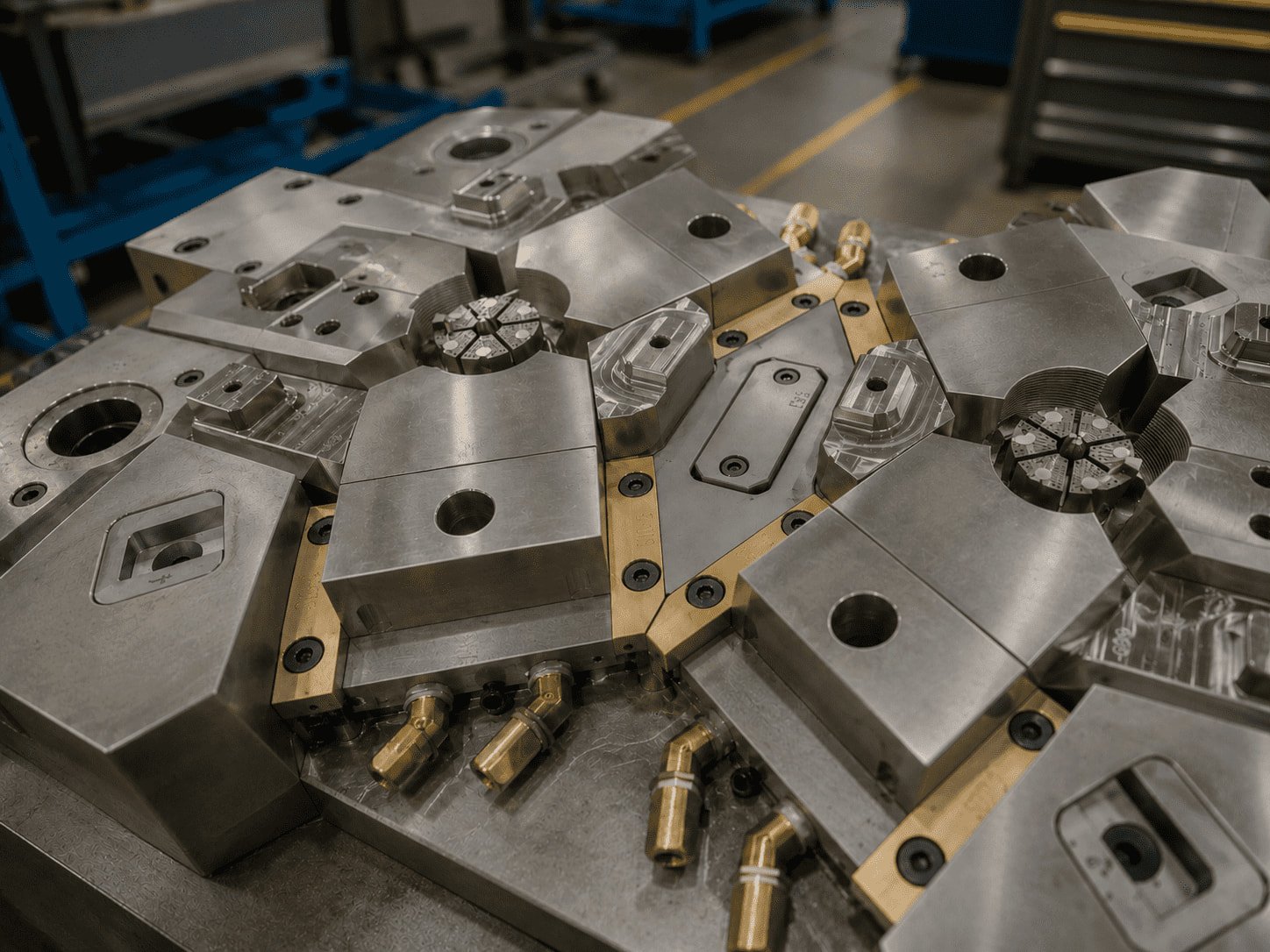
TPE Overmolding Mold
Best for: soft-touch grips, handles, housings, seals and ergonomic surfaces
Material pair: TPE + ABS, TPE + PC, TPE + PP
Mold design focus: material compatibility, bonding strength, flash control and surface texture
Common risks: weak adhesion, flash, flow marks, peeling
Buyer benefit: improves grip, comfort, sealing and product appearance
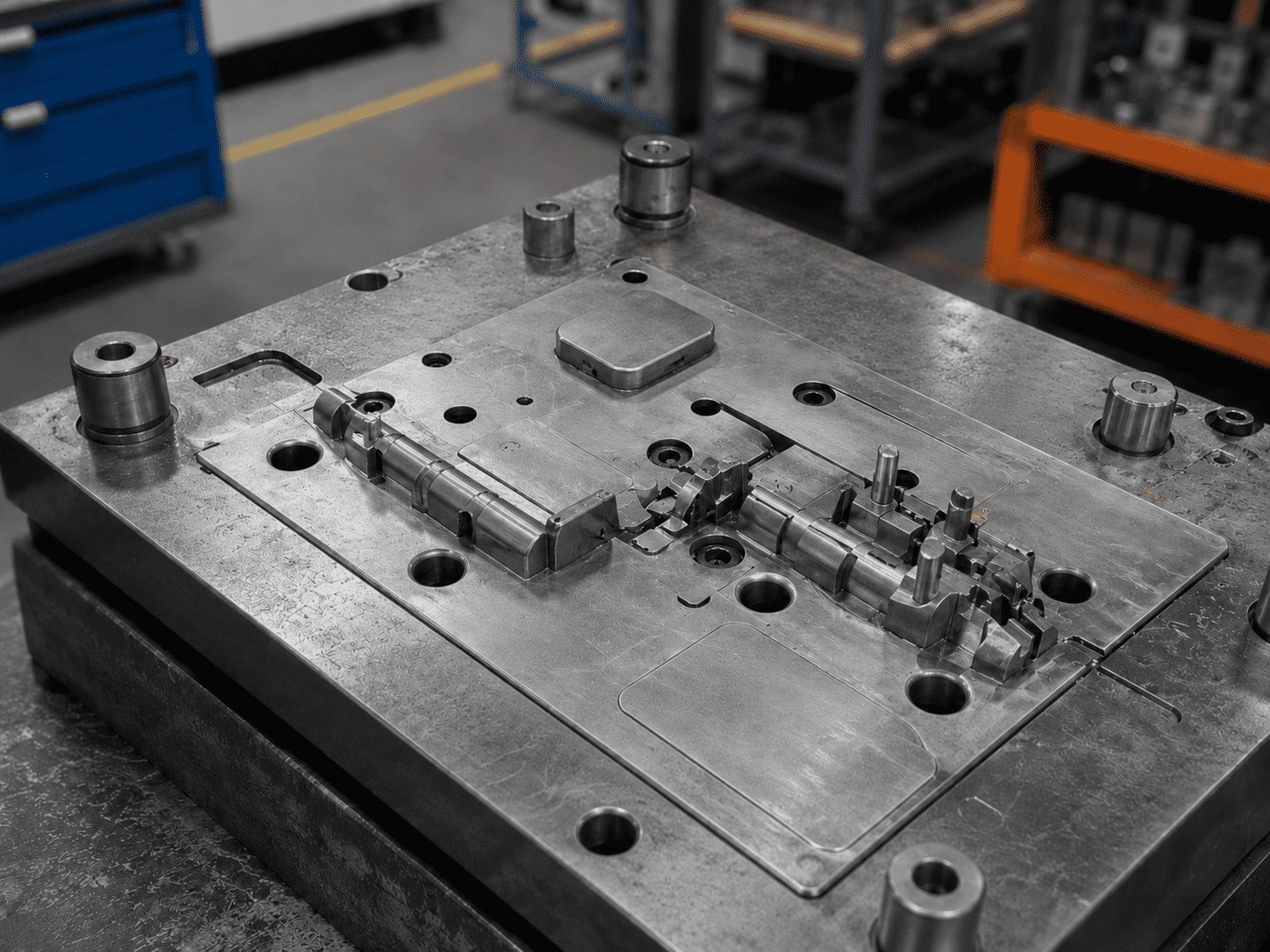
TPU Overmolding Mold
Best for: protective covers, cable strain relief, wearable components, industrial soft layers
Material pair: TPU + PC, TPU + PC/ABS, TPU + PA
Mold design focus: TPU flow, substrate stability, gate location, ejection, flash control
Common risks: sticking, flash, delamination, flow marks, deformation
Buyer benefit: improved wear resistance, protection, flexibility and impact absorption
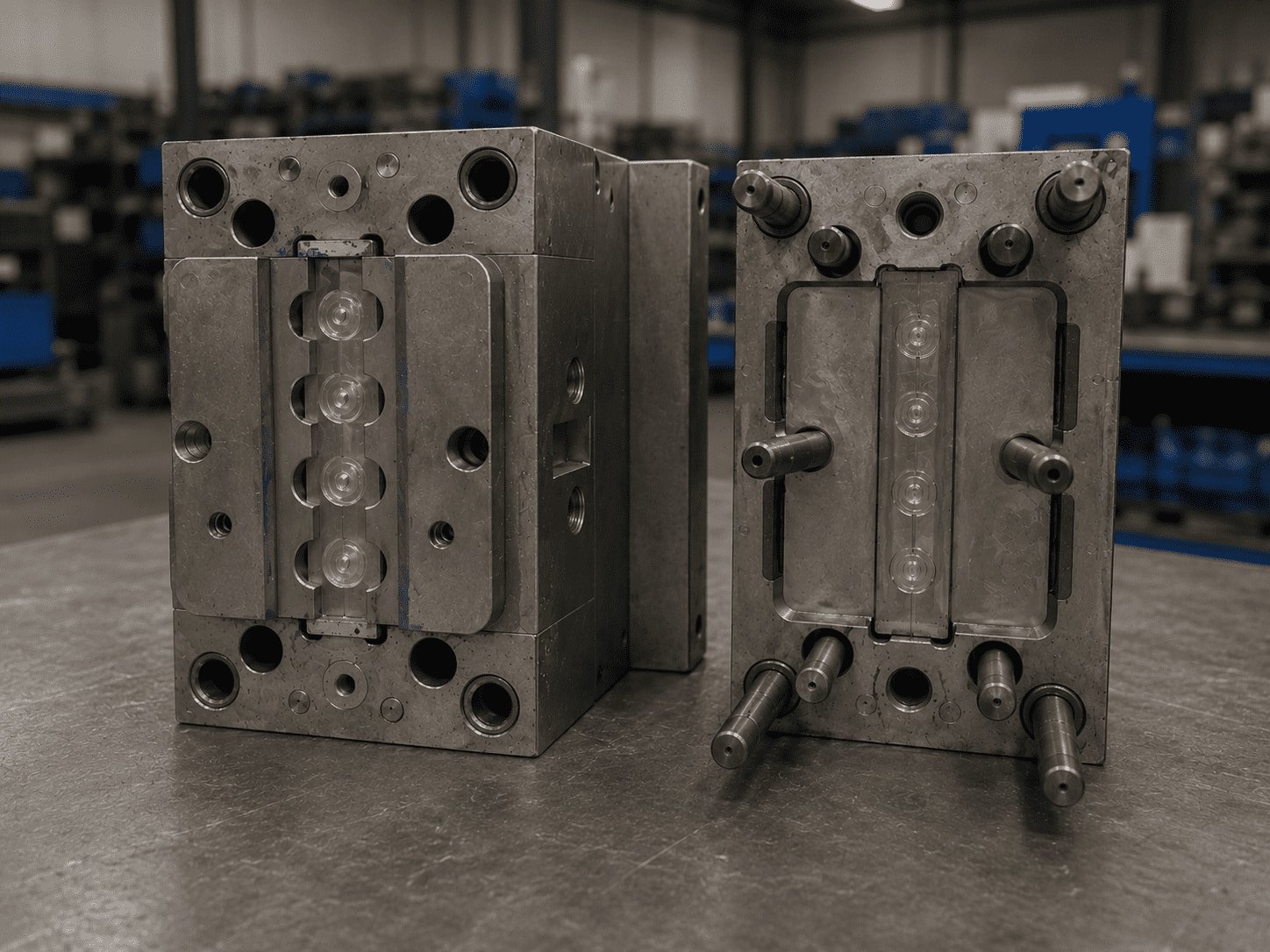
Plastic Overmolding Mold
Best for: plastic-to-plastic multi-material parts
Material pair: PC + ABS, PC + PC, PMMA + ABS
Mold design focus: substrate design, shrinkage difference, gate location and assembly fit
Common risks: warpage, shrinkage mismatch, weld lines
Buyer benefit: combines different functions in one molded component
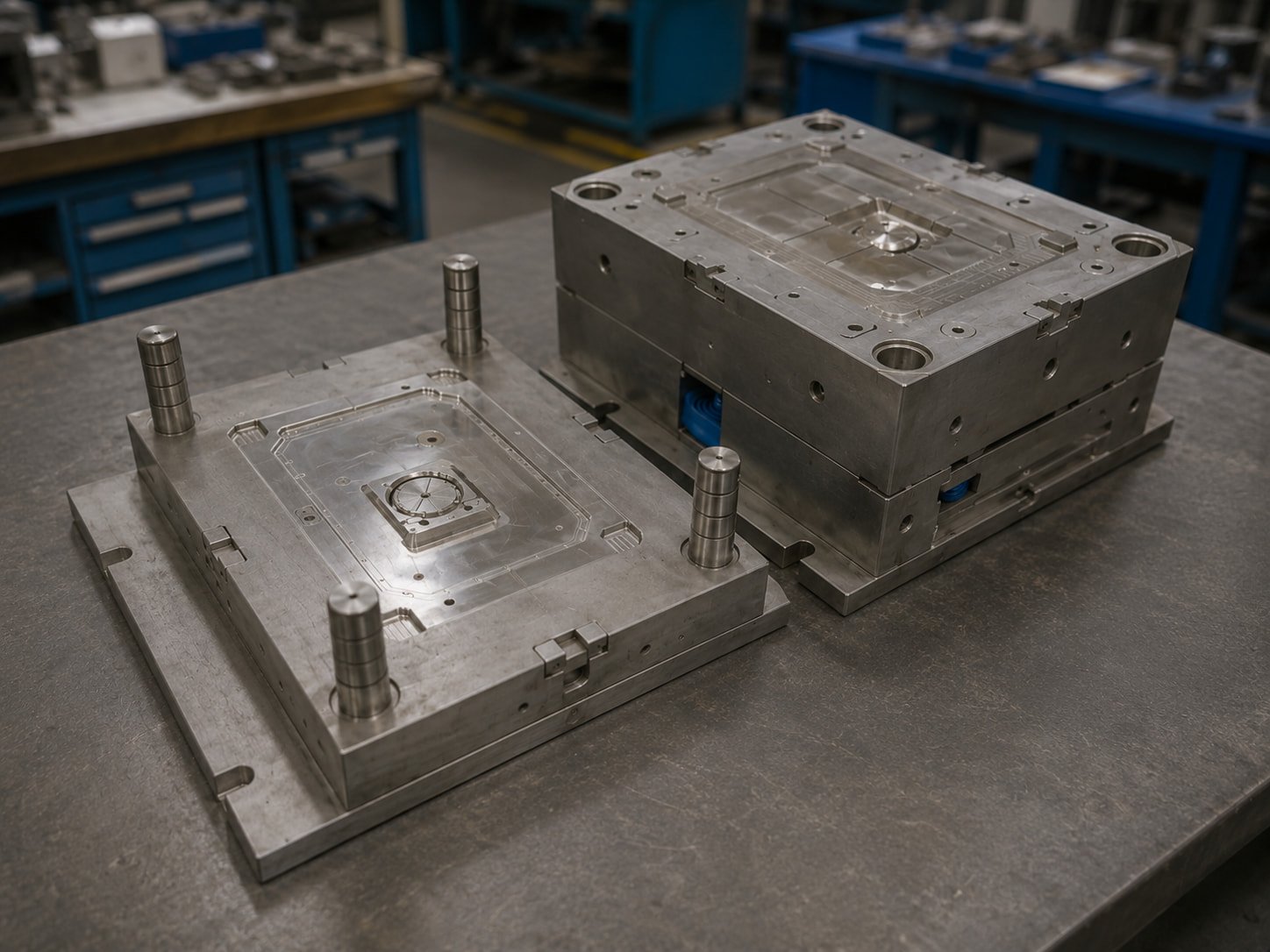
PC + TPU Overmolding Mold
Best for: protective housings, hard-soft enclosures, transparent or rigid PC structures with soft TPU features
Material pair: PC + TPU
Mold design focus: PC substrate stability, TPU bonding, gate design and T1 validation
Common risks: PC cracking, TPU sticking, poor adhesion
Buyer benefit: creates strong, durable and functional multi-material parts
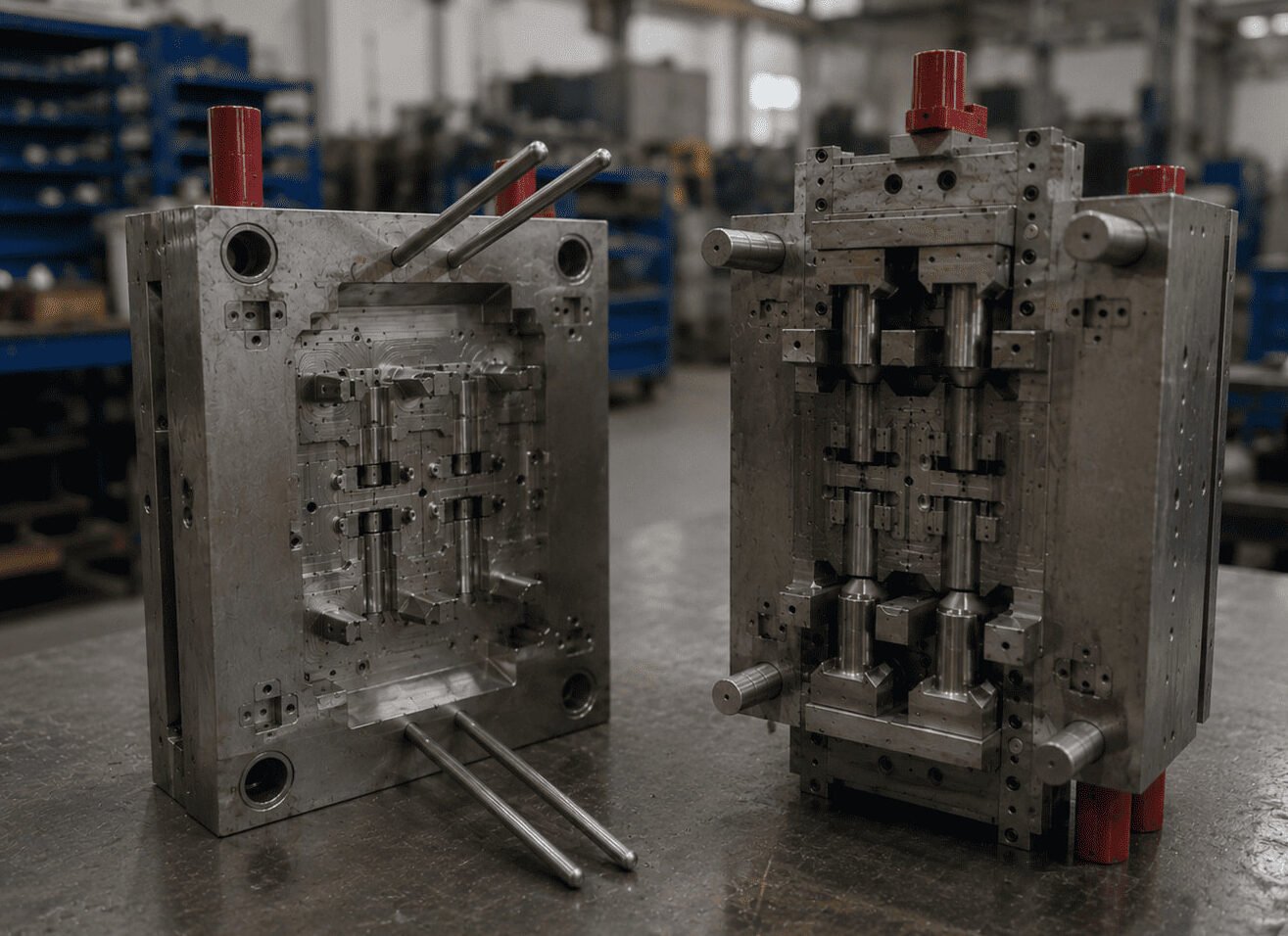
ABS + TPE Overmolding Mold
Best for: consumer housings, electronics, handheld parts and soft-touch grips
Material pair: ABS + TPE
Mold design focus: ABS substrate, TPE adhesion, surface preparation and flash control
Common risks: flash, poor texture, weak bonding
Buyer benefit: improves touch feel, grip and product appearance
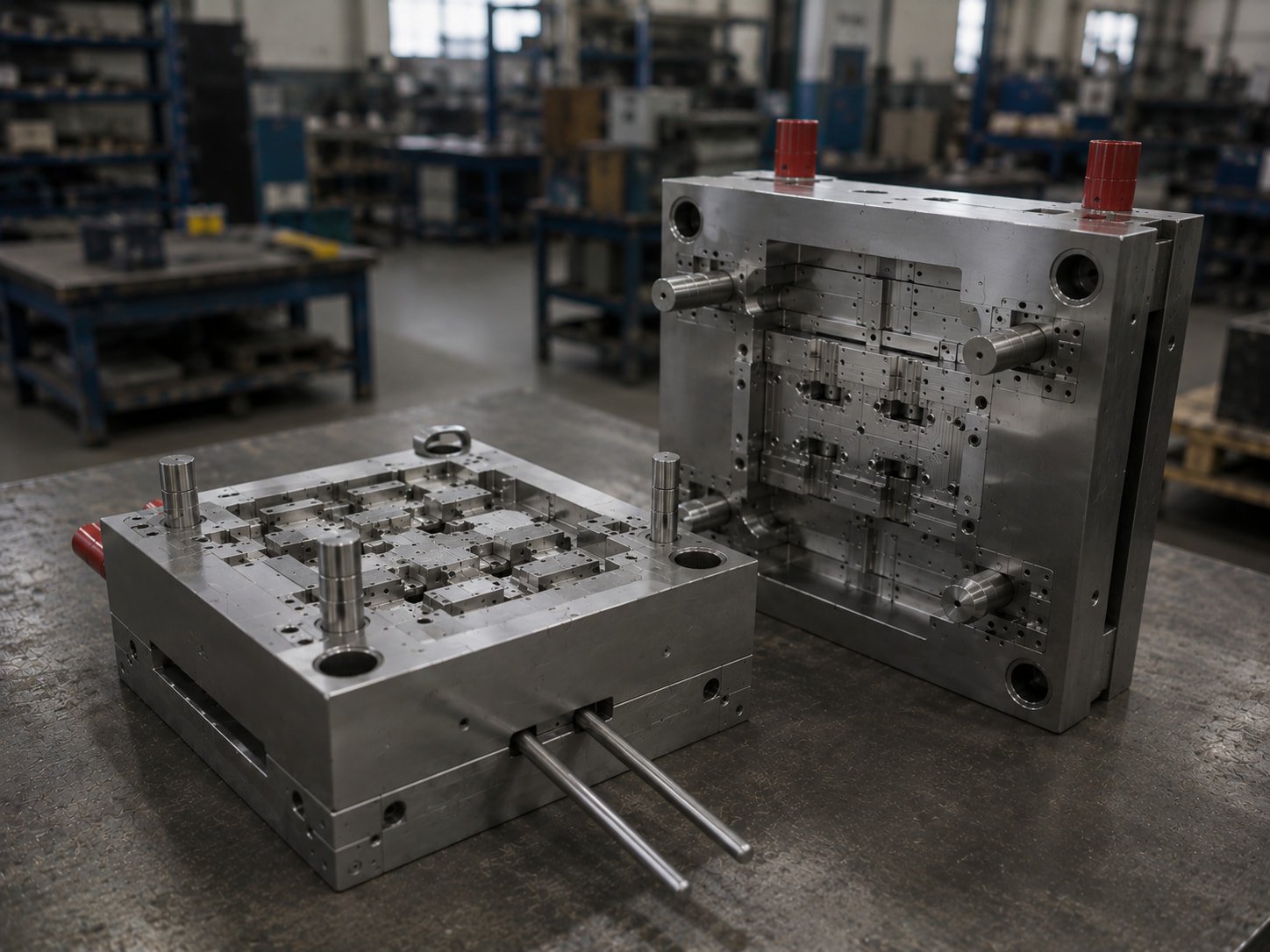
Connector Overmolding Mold
Best for: electrical connectors, cable ends, strain relief, sealing and protective encapsulation
Material pair: Plastic + Metal pins, TPU/TPE + Cable
Mold design focus: insert positioning, sealing, strain relief, flash control and dimensional accuracy
Common risks: pin movement, short circuit, flash on contacts
Buyer benefit: improves connector protection, durability and assembly performance
TPE Overmolding Mold Manufacturer for Soft-Touch and Sealing Parts
- TPE + ABS soft-touch housings
- TPE + PC protective grips
- TPE + PP sealing edges
- TPE + PA industrial grip surfaces
- TPE over metal insert sealing areas
TPE overmolding is commonly used for soft-touch grips, handles, sealing edges, anti-slip surfaces and ergonomic plastic parts. GBM reviews the TPE grade, Shore hardness, substrate compatibility, bonding surface, texture depth, shut-off line and flash control before mold manufacturing. For parts that need stronger retention, we recommend adding mechanical locks such as grooves, holes, undercuts or wrap-around edges instead of relying only on chemical adhesion.
TPU Overmolding Mold Design for Durable Protective Parts
- TPU protective covers
- Cable strain relief
- Wear-resistant soft pads
- Industrial grip parts
- PC / ABS / PA substrate with TPU layer
- Outdoor or abrasion-resistant soft components
TPU overmolding is selected when the soft layer needs flexibility, tear resistance, wear resistance or protective performance. In GBM projects, TPU mold design is reviewed together with substrate material, bonding area, gate position, shut-off structure, venting and ejection layout. For PC, ABS, PA or PC/ABS substrates, we recommend checking material compatibility and T1 bonding performance before mass production.
Material Combinations for Strong Overmolding Adhesion
Selecting the right material combination is critical for chemical bonding, shrinkage control and final part performance. GBM helps evaluate material compatibility before mold design.
| Material Combination | Common Application | Design Focus | Validation Needed |
|---|---|---|---|
| TPE + ABS | Soft-touch housings, grips, handheld parts | Adhesion, texture, flash control | T1 bonding review |
| TPE + PC | Protective housings, ergonomic surfaces | PC stability, bonding area, gate location | Appearance and adhesion check |
| TPU + PC / PC-ABS | Protective covers, durable shells | TPU flow, ejection, wear surface | Delamination and ejection check |
| TPU + PA | Industrial grip, functional soft layer | PA moisture, shrinkage, bonding | Dimensional and bonding check |
| TPV + PP | Sealing edge, automotive soft area | Grade compatibility, sealing line | Compression and flash check |
| Plastic + Metal Insert | Threaded inserts, pins, electrical parts | Insert position, coverage, movement | Insert pull / assembly review if required |
How to Choose an Overmolding Mold Manufacturer for Electronics
Material Compatibility Review
Can the supplier check TPE / TPU compatibility with PC, ABS, PA, PP or PC/ABS before tooling?
Substrate Positioning Design
Can the mold hold inserts, terminals, housings or connector parts without movement during second-shot injection?
Flash and Shut-Off Control
Does the supplier review parting line, shut-off angle, venting and soft material flow before mold cutting?
Connector and Cable Protection
Can they protect pins, cable ends, sealing areas and strain relief features during overmolding?
T1 Trial and Bonding Validation
Can they provide T1 samples, photos, videos, bonding review and mold correction feedback?
Dimensional Inspection
Can they inspect critical connector fit, sealing line, assembly surface and overmold coverage with QC or CMM reports?
Typical Application Scenarios
Where overmolding adds the most value in product design.
Electronics & Electrical
Typical parts: connector housings, cable ends, switch covers, strain relief parts, protective seals, handheld housings
Why it fits: Improves grip, insulation, sealing, strain relief and component protection.
GBM review: terminal protection, insert movement, sealing shut-off, soft material coverage, flash, assembly fit, CMM dimensions
Automotive Overmolding
Typical parts: interior grips, buttons, sealing features, door panel inserts.
Why it fits: Improves comfort, sealing, impact resistance and part integration.
GBM support: DFM review, material selection, dimensional inspection, FAI / CPK reports upon request.
Medical Device Components
Typical parts: surgical tool handles, monitor housings, ergonomic covers, non-implant parts.
Why it fits: Improves grip, comfort, protection and appearance depending on material requirements.
GBM support: Sample QC report, CMM inspection, traceable trial feedback and careful project review.
Industrial Tool & Grip
Typical parts: power tool handles, anti-slip grips, rugged device bumpers.
Why it fits: Improves ergonomics, comfort, grip and durability.
GBM support: Texture design, soft material flow review, adhesion check and T1 sample validation.
Seal and Gasket
Typical parts: sealing edges on boxes, waterproof rings, functional integrated seals.
Why it fits: Creates integrated sealing areas and reduces secondary assembly.
GBM support: Material compatibility review, shutoff design, flash control and trial verification.
Protective Housing
Typical parts: rugged tablet cases, scanner housings, hard-soft enclosures.
Why it fits: Adds shock absorption, soft-touch surface, sealing or grip to rigid plastic housings.
GBM support: PC/ABS, PC, TPE and TPU material review, CMM inspection and mold trial video.
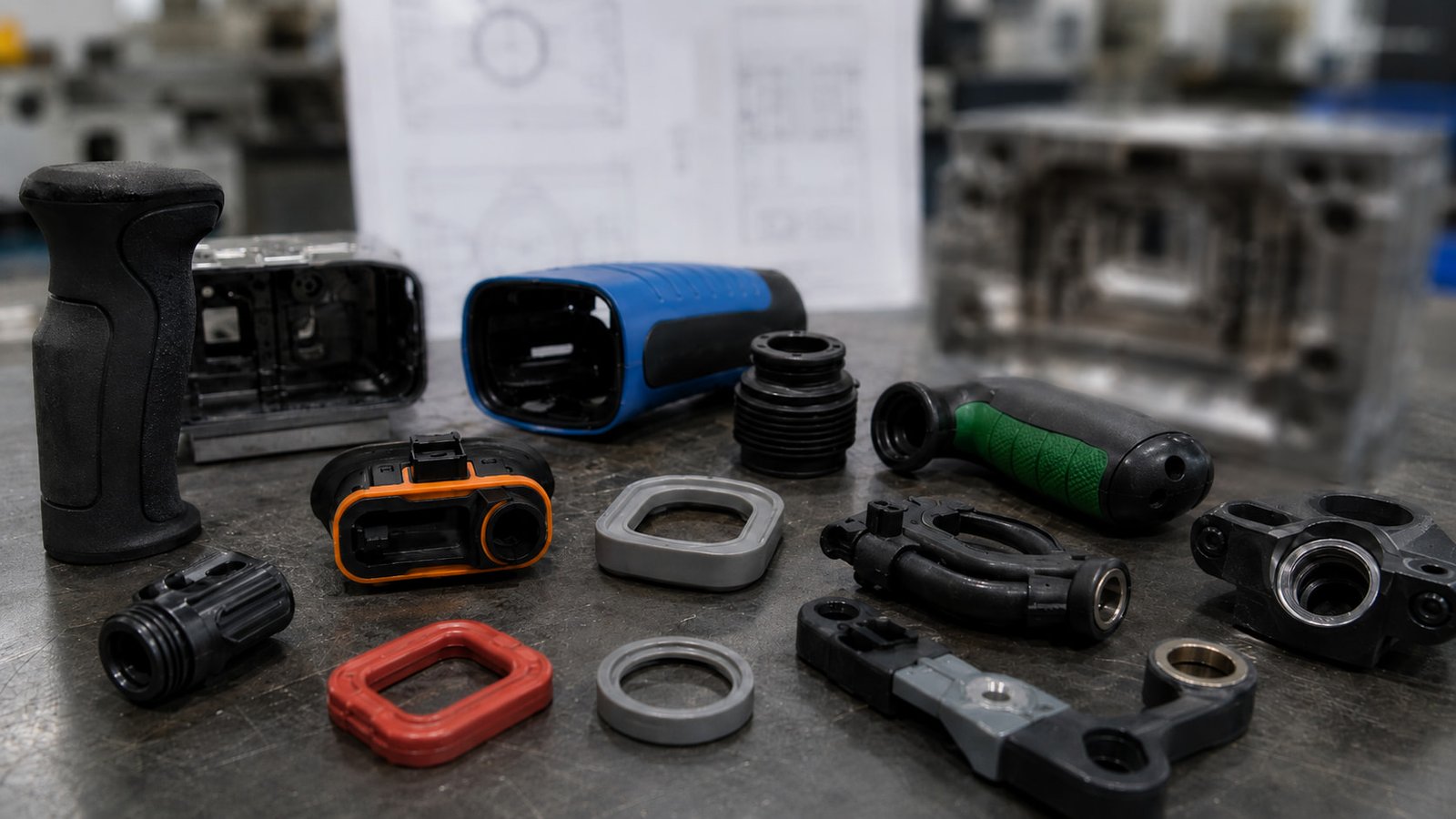
Small Batch Overmolding Mold for Prototype and Low-Volume Production
For early-stage overmolded parts, GBM can support prototype review, two-step overmolding mold design, manual substrate loading, T1 sample testing and mold adjustment before mass production. This is suitable for electronics housings, handheld grips, connector seals, protective covers and functional soft-touch samples where buyers need to confirm bonding, appearance and assembly fit before scaling up.
Best For:
- New product development samples
- Low-volume electronics overmolding
- Connector and cable end trial parts
- Soft-touch handle validation
- TPE / TPU material comparison
- Pre-production T1 sample approval
How to Choose an Overmolding Mold Manufacturer for Electronics
Key considerations when selecting a tooling partner for precision electronic components.
| Evaluation Criteria | Why It Matters for Electronics | GBM's Approach |
|---|---|---|
| Insert & Pin Protection | Terminals and pins can be crushed or covered by flash. | Precise shut-off design and locating fixtures. |
| Substrate Positioning | Small electronic substrates easily move under injection pressure. | Custom support ribs and positioning pins in the mold. |
| Flash Control | Flash on connectors causes assembly failure or short circuits. | Strict parting line fitting and venting control. |
| Material Compatibility | PC/ABS or PC housings need specific TPE/TPU grades to bond. | Material pairing review before mold design. |
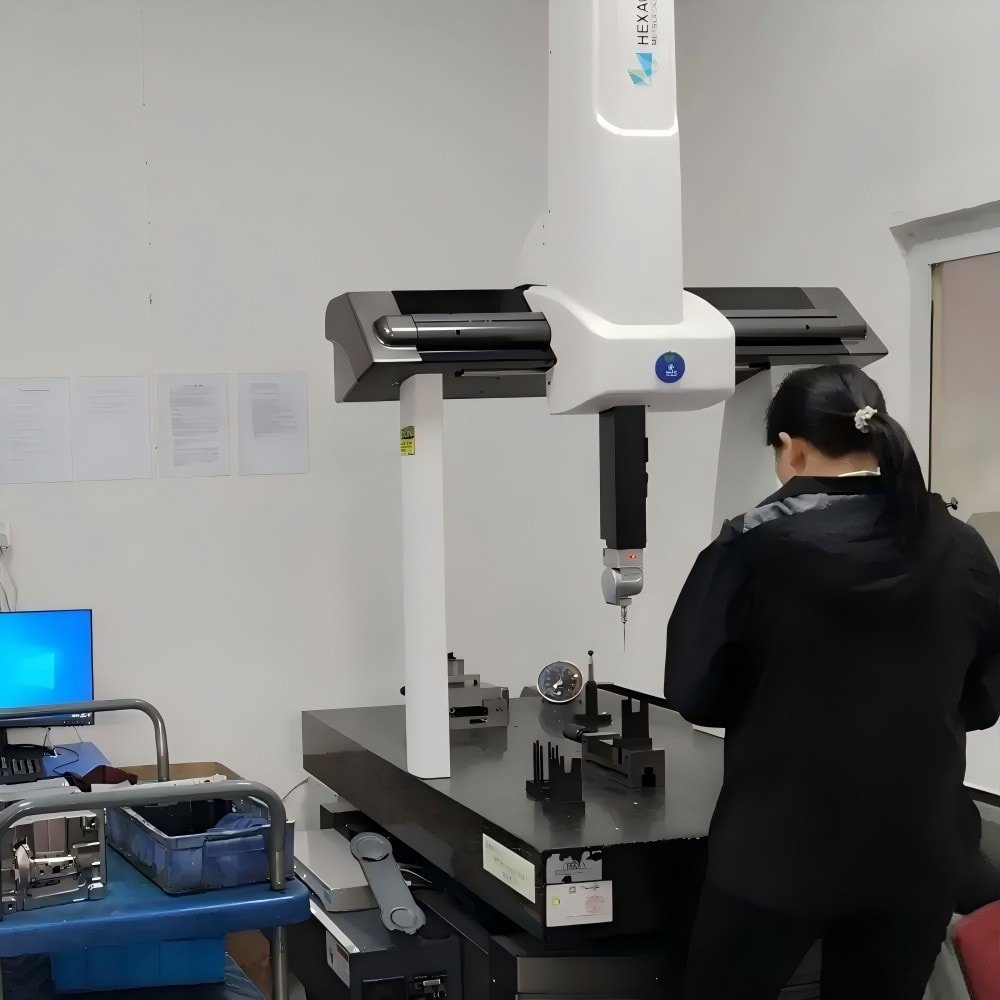
| Dimensional Accuracy | Electronic parts have tight assembly tolerances. | CMM inspection and FAI reports provided. |
Send your drawings, material, quantity, and quality requirements for evaluation.
Foundational Design Principles for an Effective Overmolding Mold
Engineering details that determine the success of an overmolding project.
1. Material Compatibility
- Check exact grade, not only material name
- Confirm TPE/TPU/TPV compatibility with ABS, PC, PP, PA or metal insert
- Validate bonding through T1 sample review
2. Bonding Area Design
- Increase contact area where possible
- Avoid too-small soft material coverage
- Add texture, ribs, holes or wrap-around edges when needed
3. Mechanical Lock Design
- Use grooves, undercuts, through-holes or side holes
- Useful when chemical bonding alone is not enough
- Important for handles, seals, cable ends and pull-force areas
4. Substrate Positioning
- Use locating pins, support ribs, inserts and shut-off surfaces
- Prevent substrate floating or deformation during second shot
- Critical for electronics and connector overmolding
5. Gate and Flow Direction
- Avoid direct impact on weak substrate areas
- Reduce weld lines and air traps
- Review gate vestige on cosmetic surfaces
6. Flash Control
- Improve parting line fitting
- Add correct venting
- Control shut-off angle and steel contact area
7. Shrinkage and Cooling
- Different materials shrink differently
- Check warpage and assembly fit
- Use T1 samples to confirm final dimensions
8. Ejection and Demolding
- Soft materials may stick or deform
- Add proper draft angle
- Avoid ejector marks on sealing or cosmetic areas
Specialized Mold Components for Overmolding Applications
Component Specifications & Benefits
| Mold Component | Function in Overmolding | Buyer Benefit |
|---|---|---|
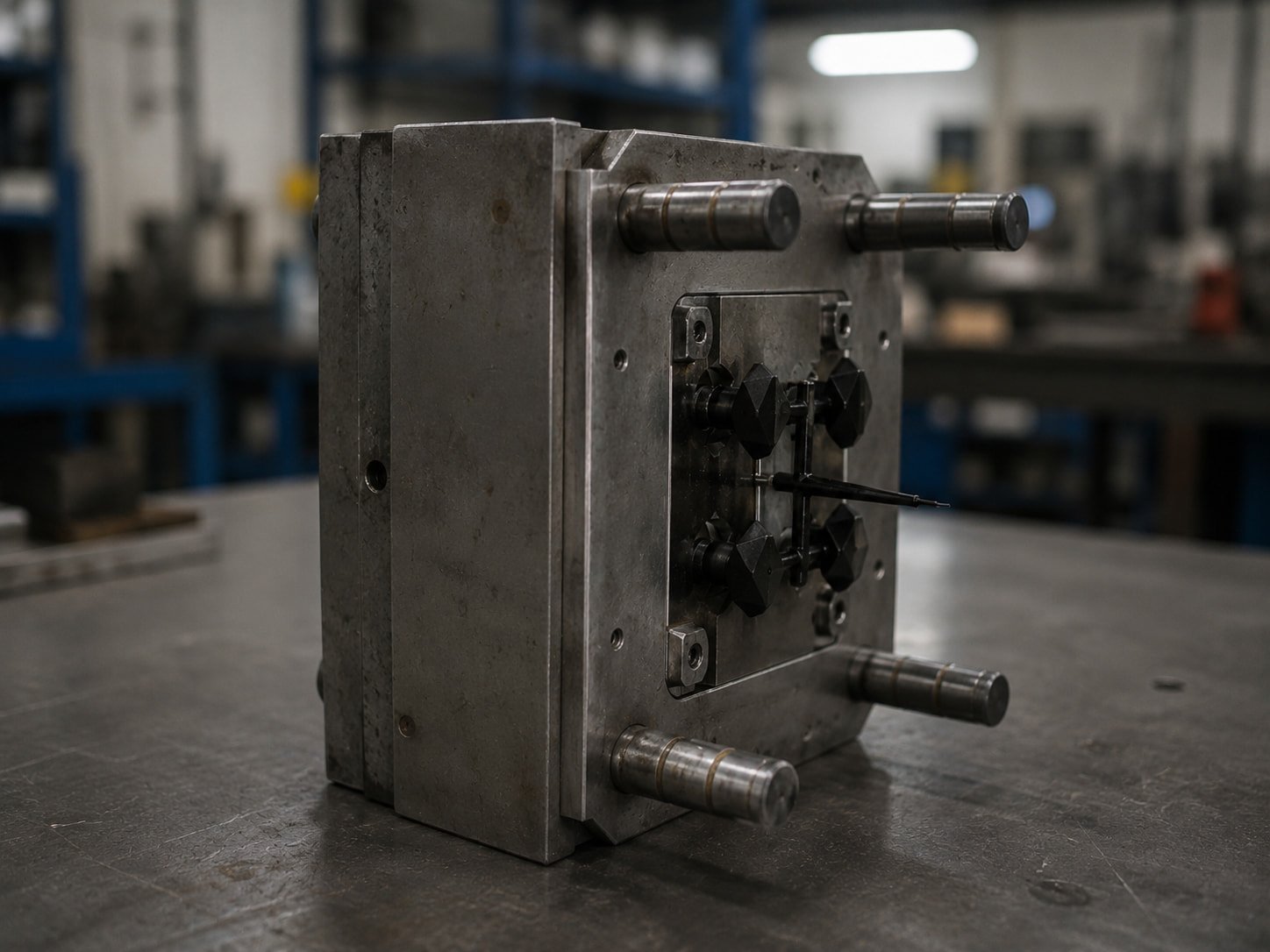
| Substrate locating pins | Hold the first-shot part or insert in position | Reduces substrate movement |
| Insert pockets | Fix metal inserts, terminals or plastic substrates | Improves coverage and alignment |
| Shut-off surfaces | Seal soft material flow at parting line | Reduces TPE / TPU flash |
| Replaceable gate inserts | Allow gate adjustment after T1 | Helps optimize flow and appearance |
| Venting grooves | Release trapped air during second shot | Reduces burn marks and short shot |
| Ejector layout | Remove soft overmolded parts safely | Reduces deformation and sticking |
| Cooling channels | Control shrinkage and cycle stability | Improves dimensional consistency |
| Mechanical lock features | Add grooves, holes, ribs or undercuts | Improves bonding strength |
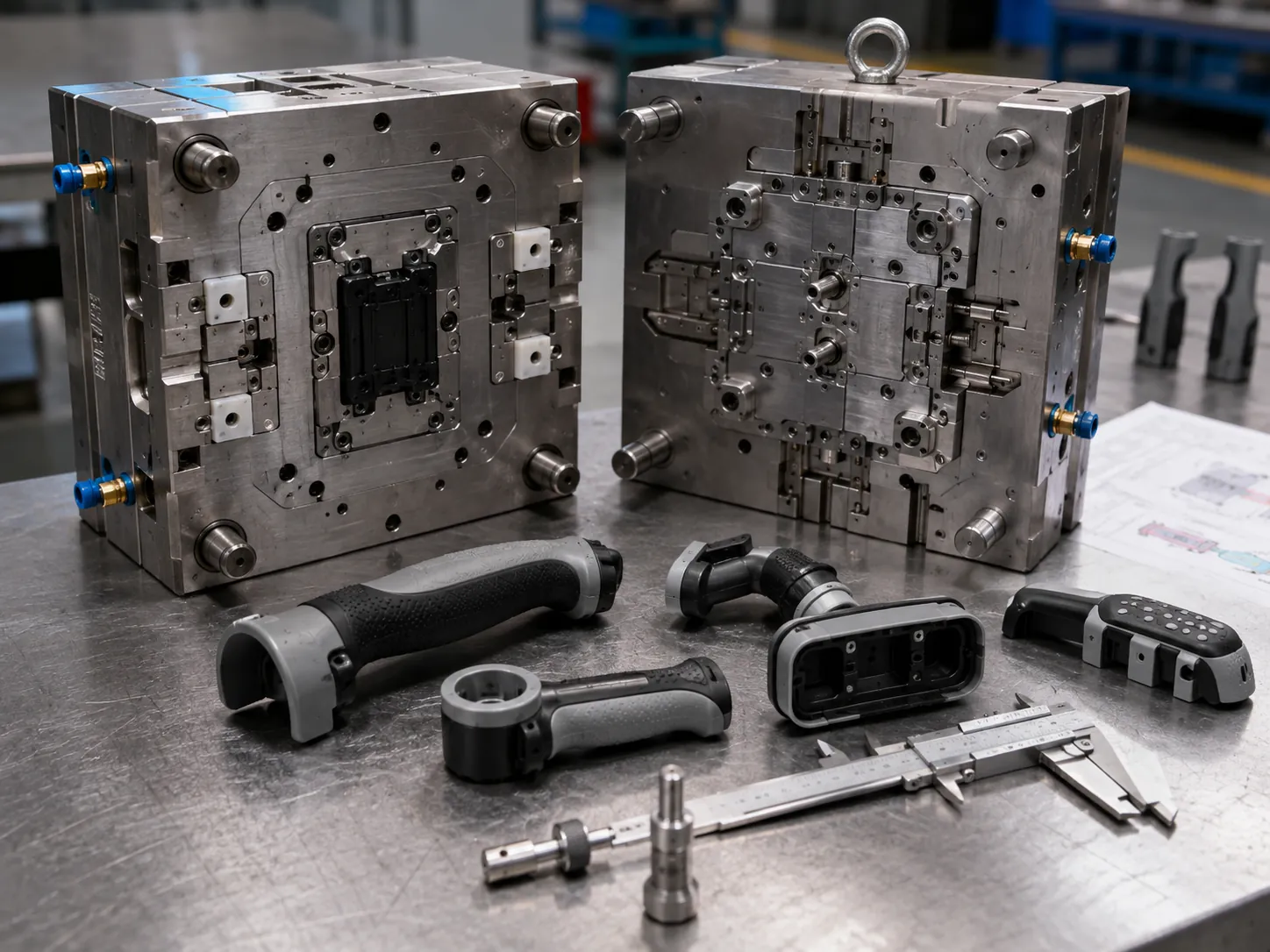
Precision Mold Engineering
Ensuring perfect alignment and flash-free results for complex overmolding projects.
Professional DFM & Mold Flow Analysis within 24 Hours
Why Overseas Buyers Choose GBM for Overmolding Molds
Expert engineering, precision manufacturing, and reliable export delivery.
DFM Before Mold Cutting
Review substrate, bonding area, shut-off, gate and flash risk before steel machining.
TPE / TPU Material Pair Review
Check material pair, Shore hardness, soft material flow and adhesion risk before production.
Substrate Positioning Control
Design locating surfaces, insert pockets and support areas to reduce movement.
T1 Sample Validation
Check bonding, flash, deformation, ejection, shrinkage and assembly fit.
Inspection Documents
Provide sample QC report, CMM report, trial video, FAI / CPK upon request.
Export Mold Delivery
Support mold drawings, spare parts, maintenance notes, packing photos and wooden case packing.
Overmolding vs Insert Molding vs Two-Shot Molding
Understand the differences to choose the right process for your project.
| Process | How It Works | Best For | Buyer Consideration |
|---|---|---|---|
| Overmolding | A second material is molded over or around a substrate to create one integrated part. | Soft-touch grips, protective housings, seals, handles and multi-material parts. | Material compatibility, bonding strength and substrate positioning are critical. |
| Insert Molding | A pre-made insert, often metal, is placed into the mold and plastic is molded around it. | Threaded inserts, electrical contacts, metal pins and reinforced plastic parts. | Insert positioning, insert movement and plastic coverage are critical. |
| Two-Shot Molding | Two materials are injected in one machine cycle or automated sequence using specialized tooling. | High-volume, repeatable multi-material parts with stable geometry. | Higher tooling investment, but better automation and consistency for large production. |
Conclusion: Overmolding, insert molding and two-shot molding are not interchangeable. The right process depends on material combination, production volume, bonding requirement, automation level, tooling budget and final part function.
For high-volume multi-material parts, two-shot or multi-shot molding may provide better repeatability and automation. For prototype, small batch or complex substrate loading projects, two-step overmolding can be more flexible. GBM can review your annual quantity, material pair, bonding requirement and tooling budget before recommending overmolding, insert molding or two-shot molding.
How to Choose the Right Overmolding Process
| Selection Factor | What to Check | Recommended Direction |
|---|---|---|
| 1. Product Function | Does the part need grip, sealing, protection, comfort, appearance or assembly reduction? | Choose overmolding when one part needs multiple functions or material properties. |
| 2. Substrate Material | Is the substrate PC, ABS, PP, PA, PC/ABS, metal or another material? | Substrate material affects bonding, shrinkage, heat resistance and deformation risk. |
| 3. Overmold Material | TPE, TPU, TPV or another material? | Select based on hardness, grip, wear resistance, flexibility, sealing and bonding. |
| 4. Bonding Requirement | Is chemical bonding enough, or does the part need mechanical lock? | Use undercuts, grooves, holes or wrap-around structures when bonding is critical. |
| 5. Production Volume | Prototype, low-volume, medium-volume or mass production? | Production quantity affects mold structure, cavity number, automation and cost. |
| 6. Appearance Requirement | Is the overmolded area visible, textured, soft-touch or cosmetic? | Gate location, parting line, texture and flash control should be reviewed. |
| 7. Dimensional Tolerance | Are there critical assembly dimensions or fit requirements? | Mark critical dimensions and request CMM inspection if needed. |
| 8. Mold Destination | Will the mold run at GBM or be exported to the buyer’s local facility? | Export molds should include drawings, spare parts list, maintenance notes and packing photos. |
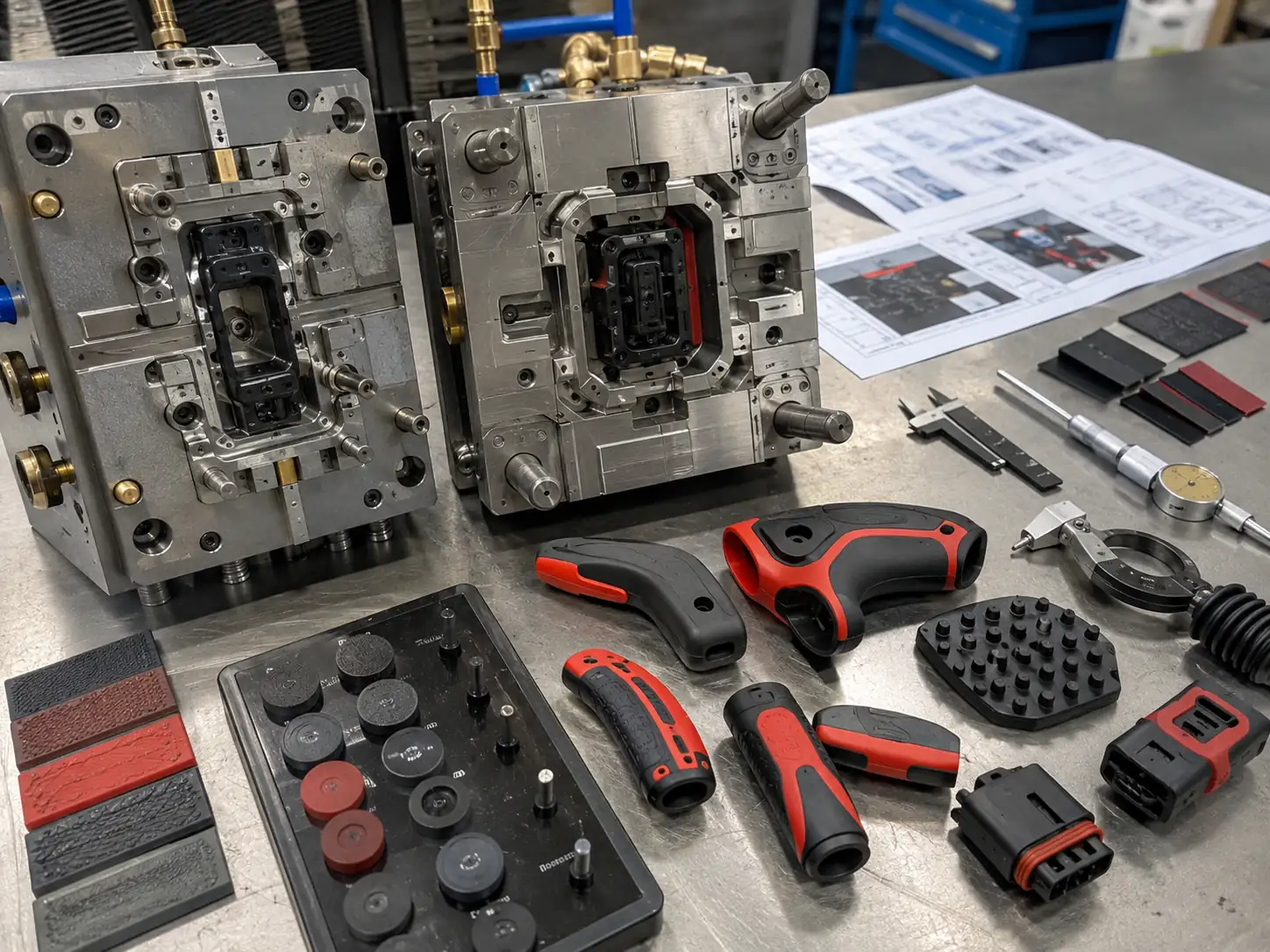
Engineering Support for Overmolded Parts
We don't just sell molds; we provide comprehensive engineering evaluation.
| Engineering Stage | GBM Checks | Buyer Receives |
|---|---|---|
| DFM Review | Substrate geometry, bonding area, shut-off, wall thickness, gate location | DFM feedback before mold design |
| Material Review | TPE / TPU / TPV grade, substrate, Shore hardness, adhesion risk | Material pair risk notes |
| Mold Design | Locating, insert pocket, gate, runner, cooling, venting, ejection | Mold layout confirmation |
| T1 Review | Bonding, flash, shrinkage, deformation, appearance, dimensions | T1 samples, photos, video, QC report |
| Mold Adjustment | Flash, short shot, delamination, ejection issue | Correction plan before approval |
Quality Control for Overmolding Molds and Parts
Overmolded parts often need careful inspection for bonding quality, appearance, flash, dimensions, substrate positioning, ejection and assembly fit. GBM supports incoming, in-process and final quality control for overmolding mold projects.
Material and Steel Incoming Check
Check mold steel, mold base, substrate material, overmold material and key components.
Machining and Electrode Inspection
Inspect CNC, EDM, electrode and key mold components during manufacturing.
Mold Assembly and Water Testing
Check mold fitting, cooling channels, water lines, shutoff areas and ejection movement.
T1 Sample & CMM Inspection
Check bonding, flash, delamination. Measure critical dimensions of overmolded samples and mold cavity.
Overmolding QC Checklist
- Bonding area coverage
- Delamination / peeling risk
- TPE / TPU flash around shut-off line
- Substrate movement after second shot
- Exposed insert or exposed substrate
- Gate mark and flow mark
- Soft material deformation after ejection
- Assembly fit with mating parts
- Critical dimensions by CMM if required
- Surface texture and appearance consistency
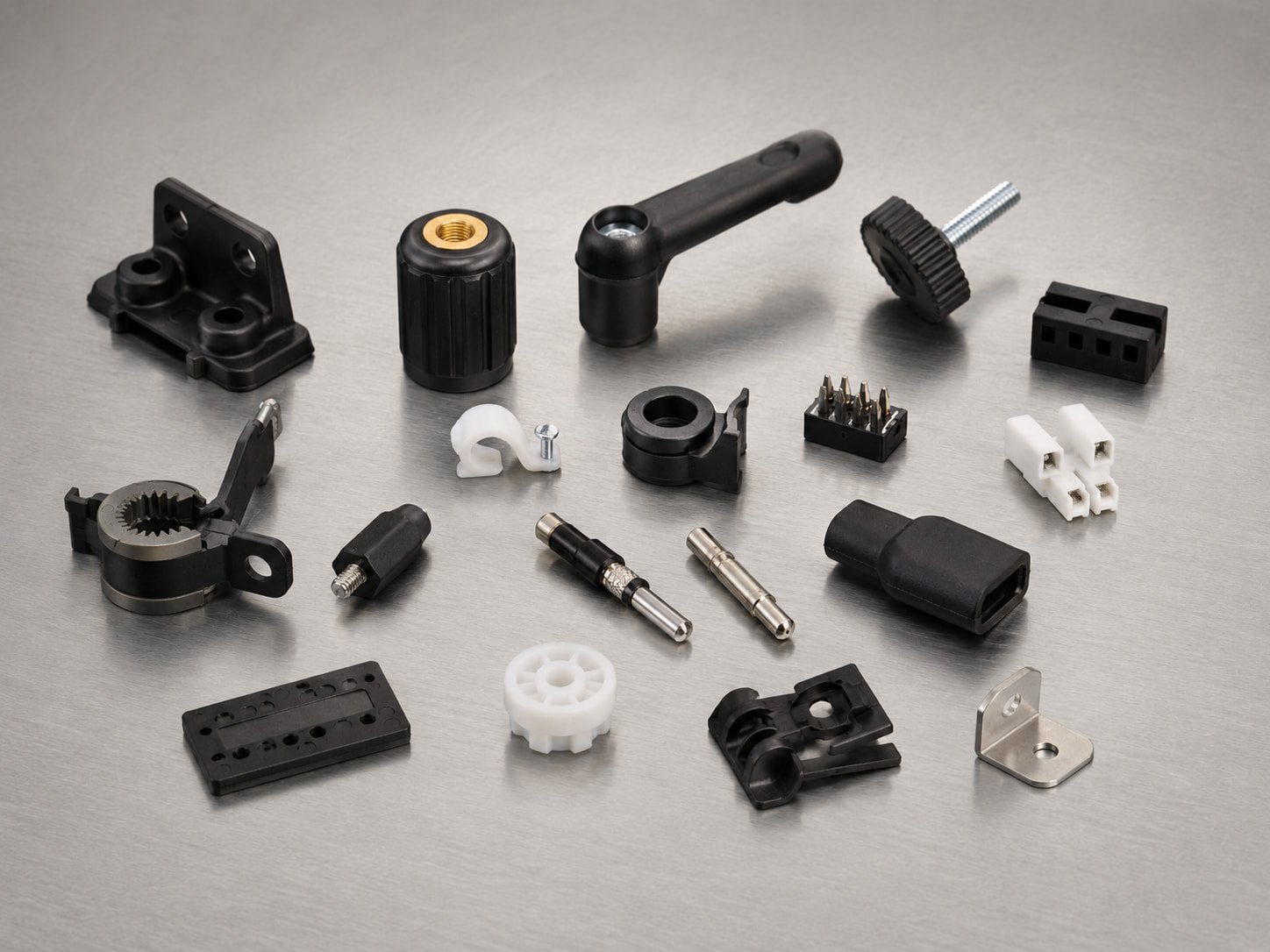
T1 Mold Trial for Overmolding Projects
For overmolding projects, T1 trial is especially important because bonding quality, flash control, substrate positioning, shrinkage difference, appearance and dimensional stability must be verified before mold approval. GBM uses T1 samples, trial pictures, mold trial videos and inspection reports to help buyers confirm whether the overmolded part meets project requirements.
| T1 Issue | Possible Cause | GBM Review Direction |
|---|---|---|
| Delamination | Material mismatch, weak bonding area, no mechanical lock | Review material pair and bonding structure |
| Flash | Poor shut-off, high pressure, substrate deformation | Adjust shut-off, fitting, venting and process |
| Short shot | Poor flow, thin soft layer, bad gate | Review gate, runner, venting and material flow |
| Substrate movement | Weak positioning or insert support | Add locating pins, pocket or support surface |
| Ejection deformation | Soft material sticking or insufficient draft | Review draft, ejector layout and surface finish |
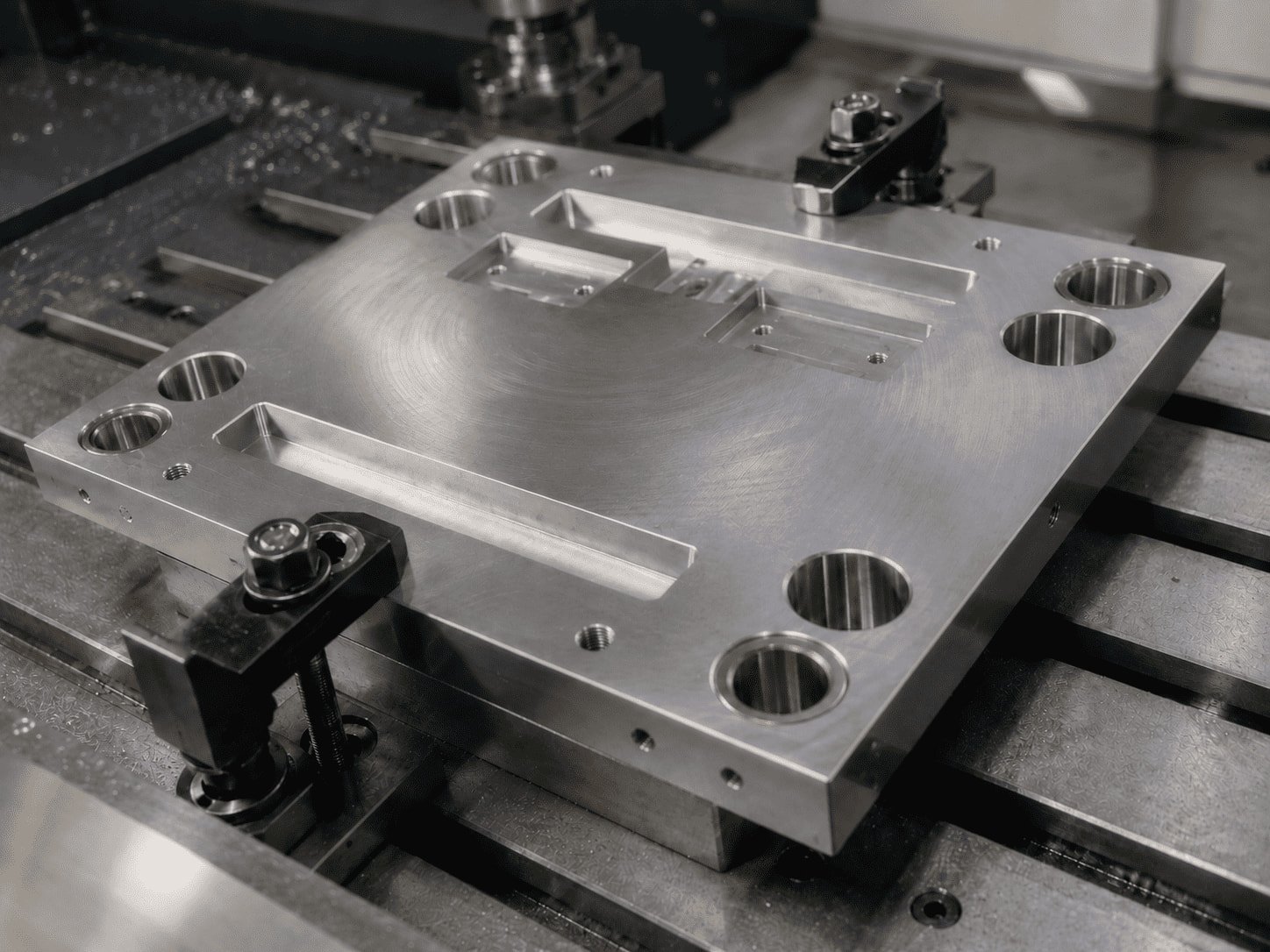
Export-Ready Overmolding Mold Delivery
For export overmolding molds, delivery is not only about shipping the mold. Buyers also need mold protection, clear documentation, spare parts support and enough trial information to install and run the mold in their own facility.
If the mold will run in the buyer’s local facility, please provide injection machine tonnage, platen size, tie-bar distance, nozzle radius, locating ring size and preferred mold standard such as DME or HASCO.
Before Packing & Packing Process
Final mold cleaning, anti-rust oil protection, water line check, ejection check, and final fit/form/function inspection. Molds are protected with wrapping, moisture protection when required, and packed securely in wooden cases with nameplates and shipping marks. Spare parts are packed separately.
Documents Available
- Mold layout drawing
- 2D / 3D mold drawing
- Spare parts list
- Mold trial video
- Sample QC / CMM report
- Maintenance instructions
- Packing photos
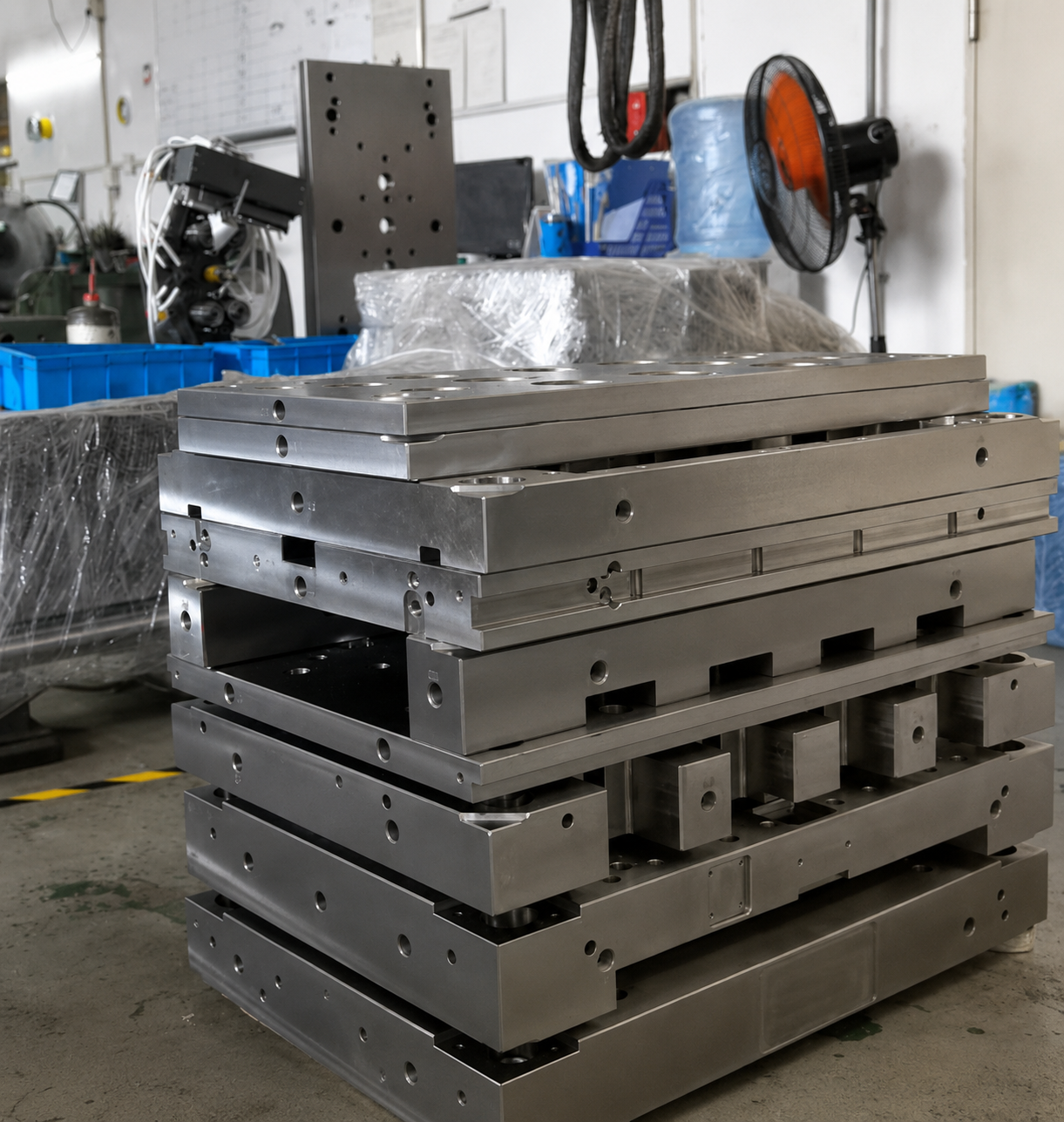
GBM Factory & Capabilities
A reliable partner for international mold buyers.
Company Snapshot
GBM has developed mold and molding capability since 2006, supporting export mold projects for automotive, electronics, medical device, aerospace and industrial applications.
- ✓ Since 2006
- ✓ 1,000+ molds completed
- ✓ Export mold project experience
Proven experience for international mold buyers.
Engineering Review
Mold design review before steel cutting to optimize substrate positioning and material flow.
Precision Machining
CNC / EDM / wire cutting / grinding / fitting support to ensure accurate shut-off control.
Mold Trial & QC
T1 sample trial with Haitian and Fanuc machines, supported by CMM inspection and sample QC report.
Delivery Support
Export mold packing and comprehensive documentation for seamless overseas installation.
What to Send for an Accurate Overmolding Mold Quote
| Quote Information | Why GBM Needs It |
|---|---|
| 2D / 3D drawings | Check dimensions, shut-off, draft, bonding area |
| Substrate material | Confirm heat resistance and second-shot stability |
| Overmold material | Review TPE / TPU / TPV flow, hardness and adhesion |
| Shore hardness | Affects soft-touch feel, flow, ejection and shrinkage |
| Annual quantity | Decide cavity number, automation level and mold steel |
| Surface texture | Affects grip, appearance, demolding and draft angle |
| Critical dimensions | Define CMM inspection points and tolerance control |
| Application environment | Check wear, oil, chemical, temperature or outdoor exposure |
| Mold destination | Decide export standard, machine matching and packing documents |
Explore Related Overmolding Capabilities
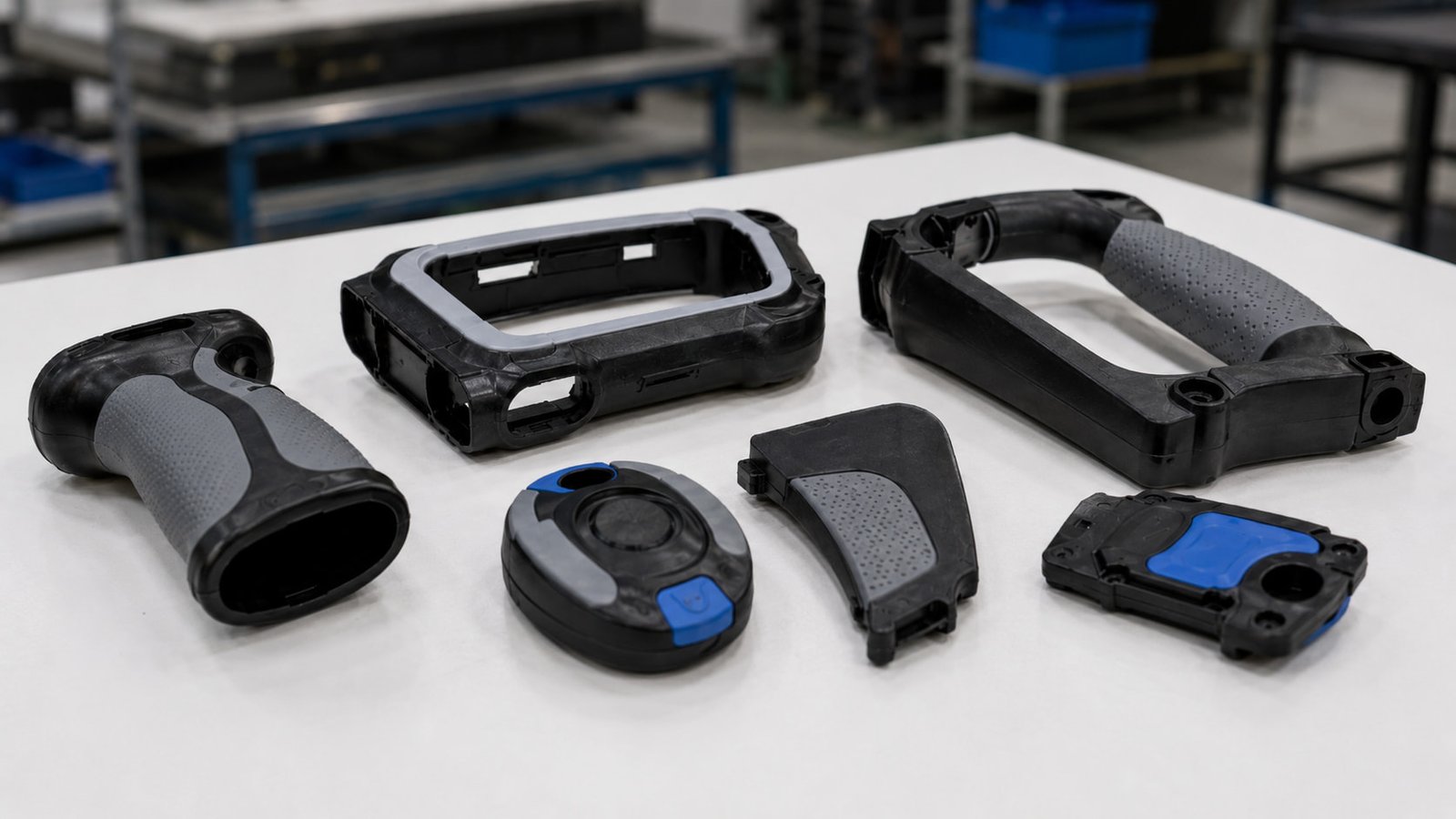
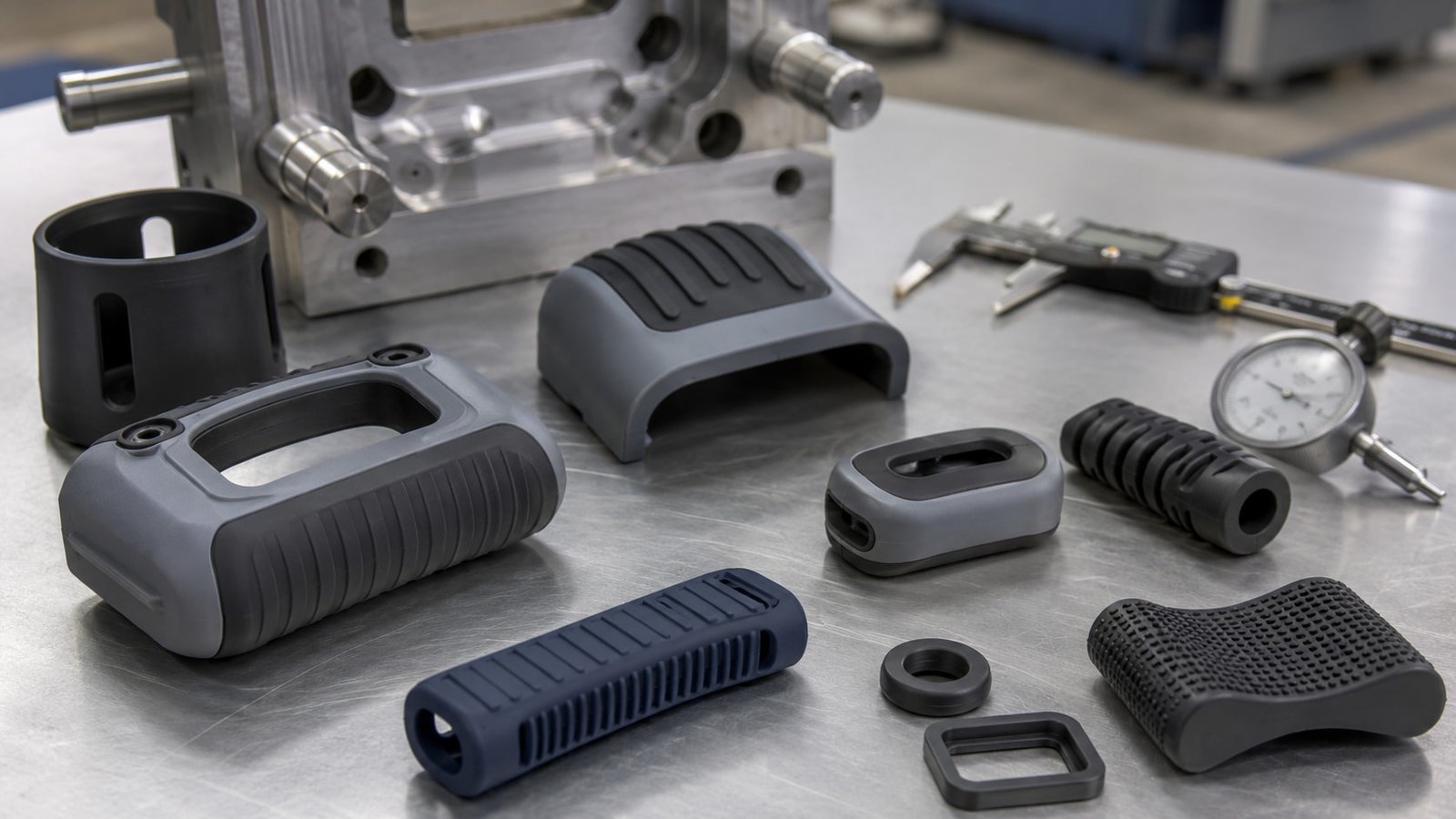
TPE Overmolding
For soft-touch grips, seals, housings and ergonomic plastic parts.
TPU Overmolding
For durable soft layers, protective covers and wear-resistant parts.
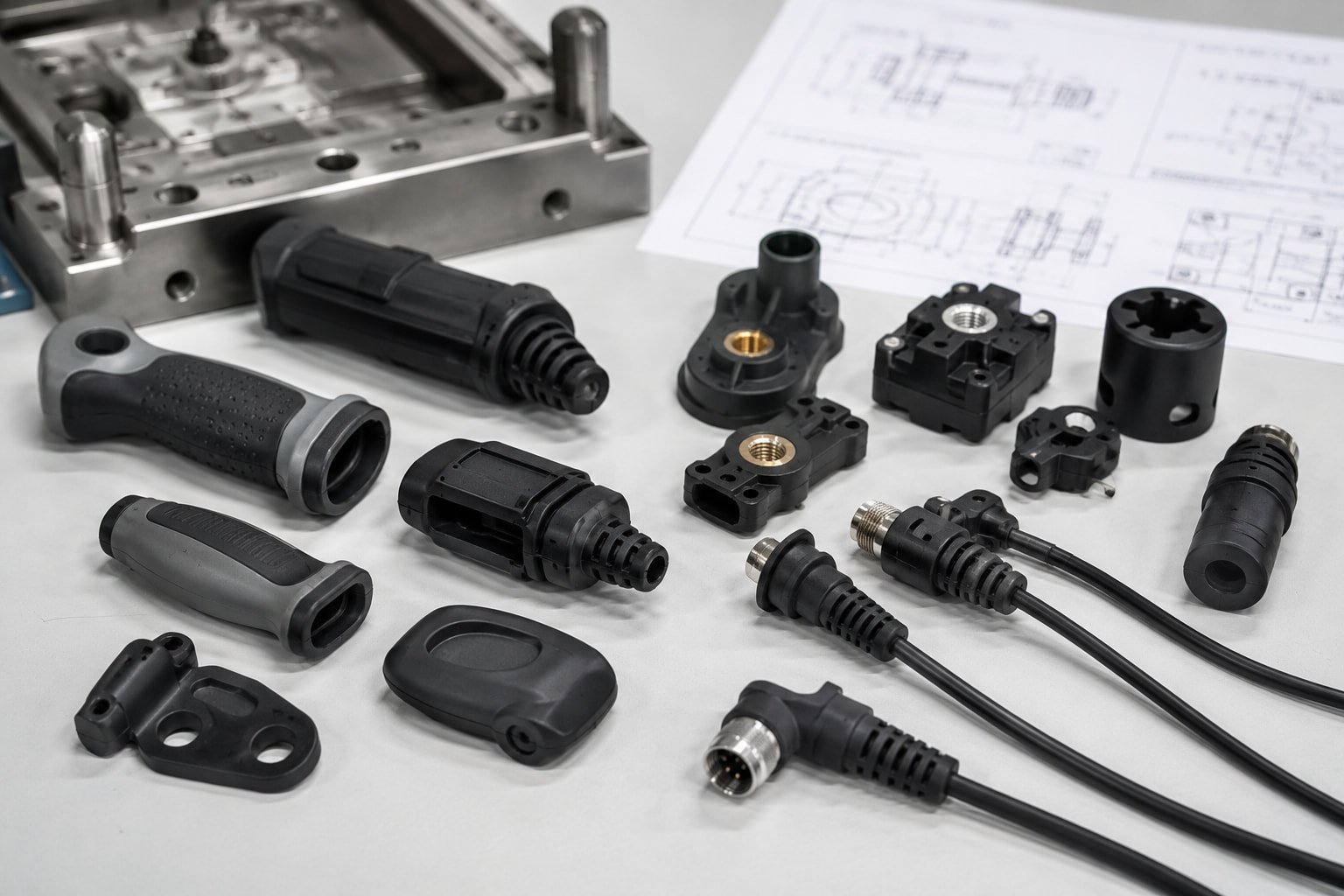
Custom Overmolding
For custom hard-soft plastic parts, prototypes and production.
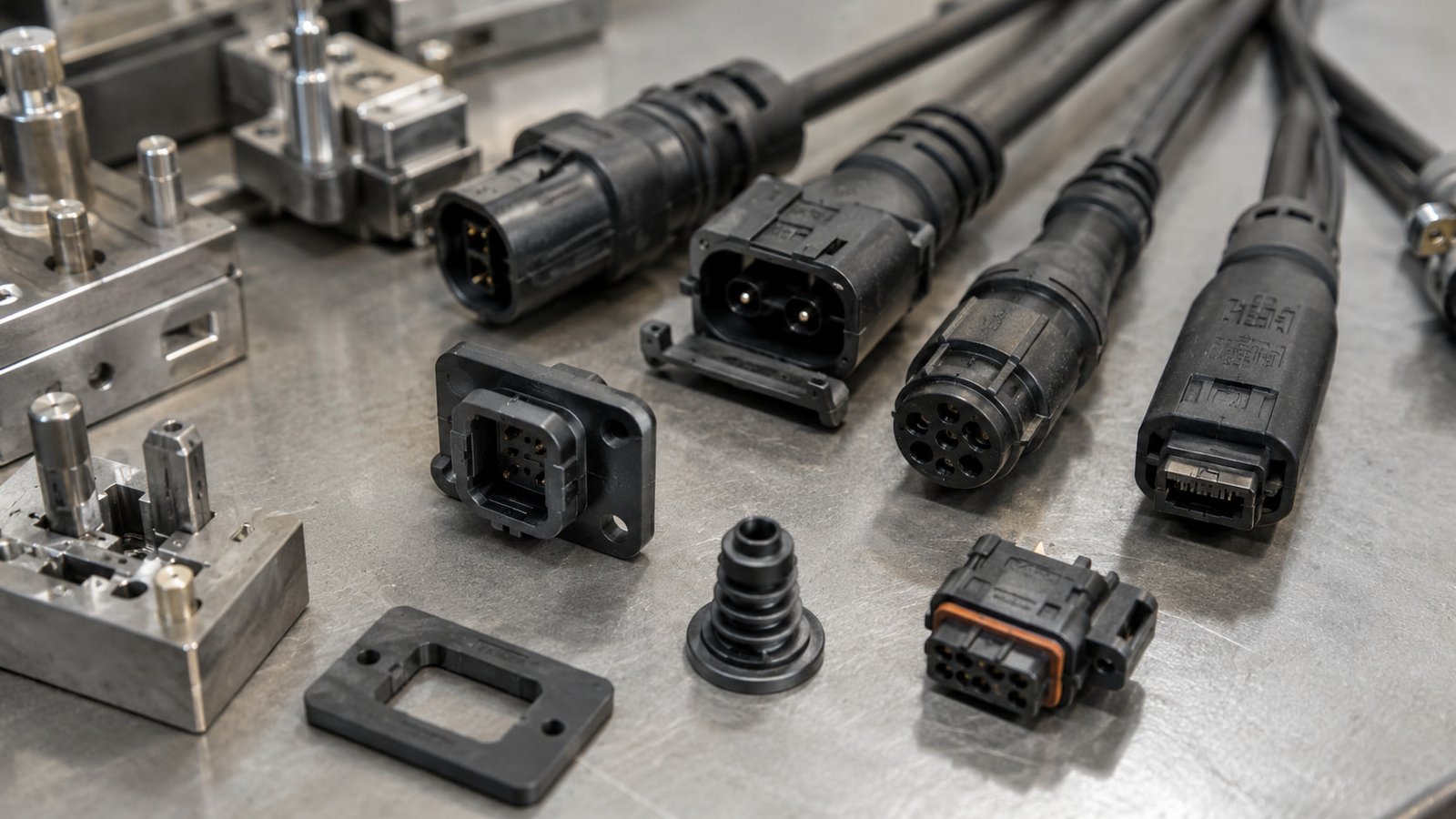
Connector Overmolding
For electrical connectors, cable ends, strain relief.
Overmolding vs Insert
Learn which molding process is better for your part.
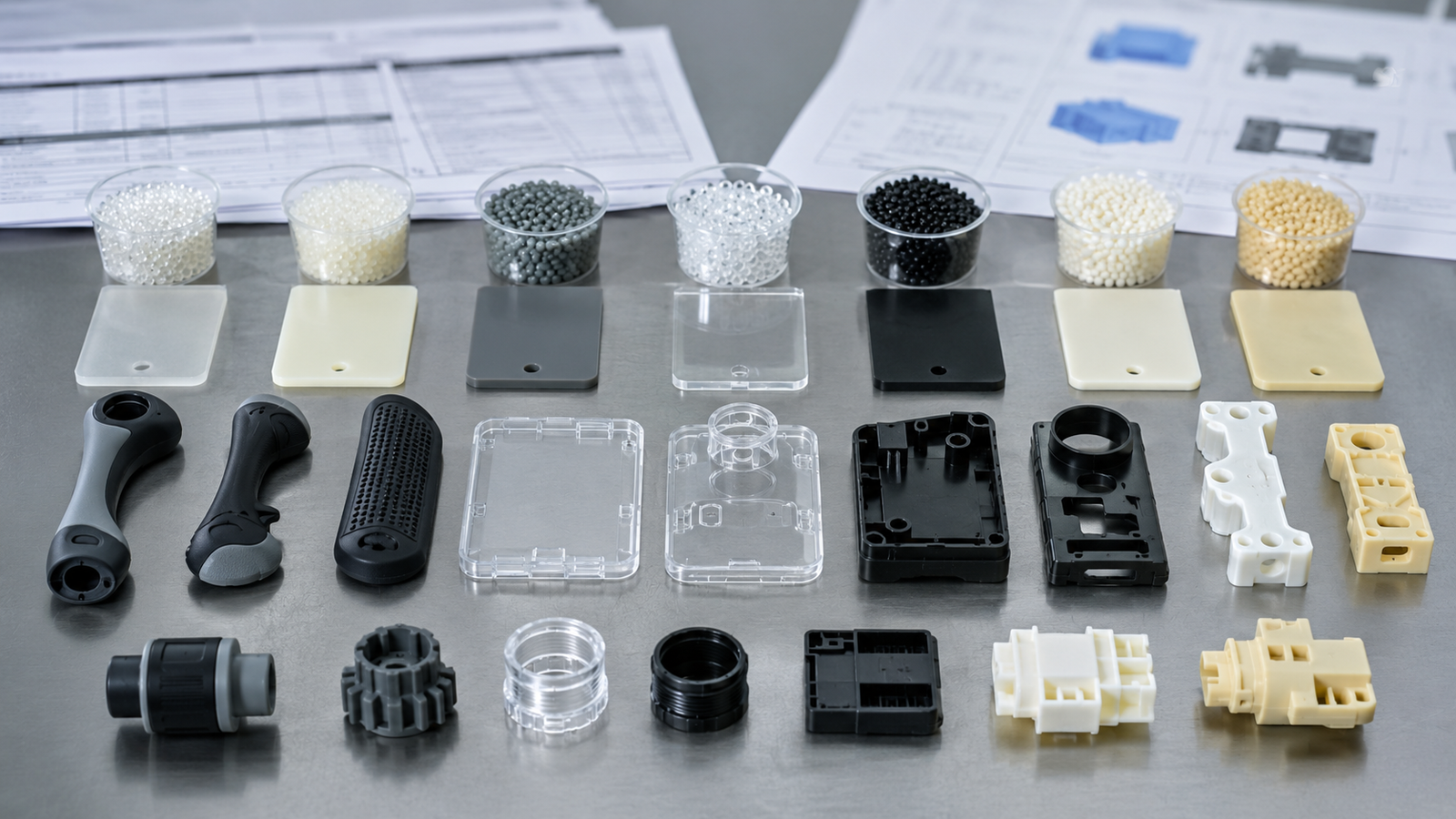
Materials Guide
Compare TPE, TPU, TPV, PC, ABS, PP and PA.
Overmolding Mold FAQ
Answers to common engineering and procurement questions.