POM Injection Molding Manufacturer for Precision Acetal Parts
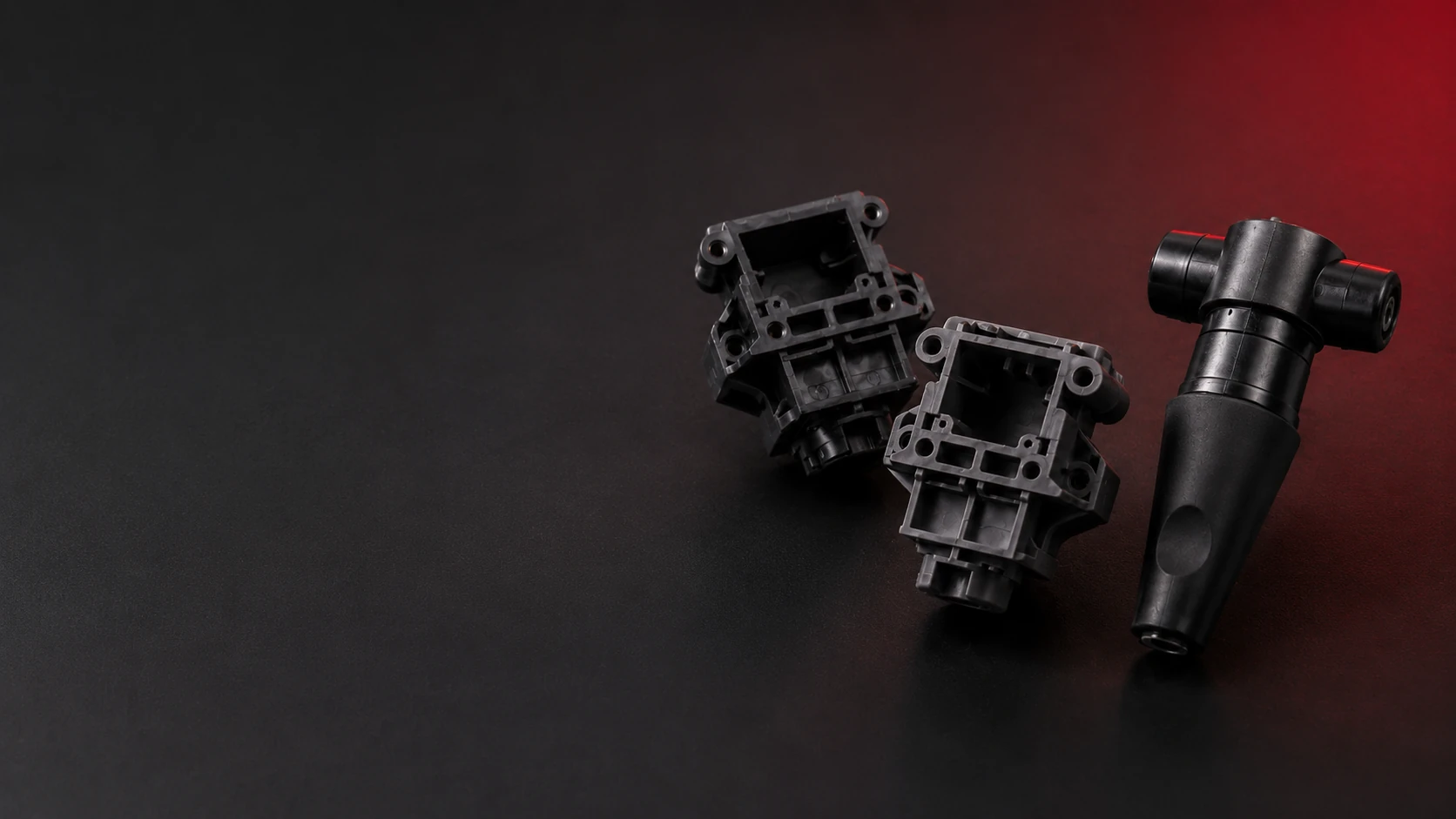
GBM Mold supports custom POM, acetal and Delrin injection molded parts for gears, bushings, sliding components, connectors, automotive latches and precision functional parts. We review shrinkage, gate location, venting, draft angle, wall thickness and T1 molding risks before cutting steel.
What Is POM Injection Molding?
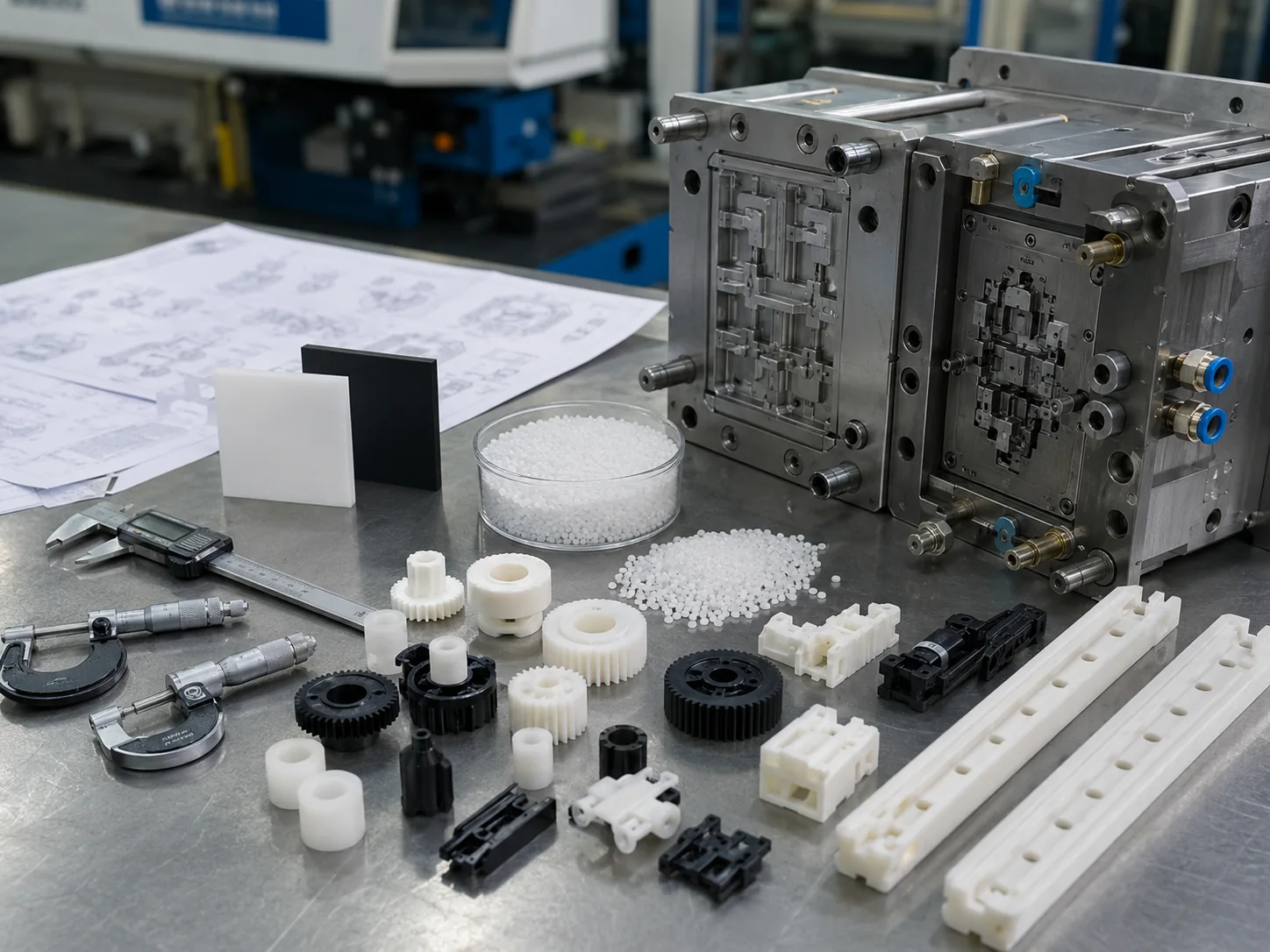
POM injection molding is a plastic molding process used to produce precision parts from polyoxymethylene, also known as acetal or polyacetal. It is commonly selected for components that need low friction, wear resistance, dimensional stability and repeated mechanical movement, such as gears, bushings, rollers, slide rails, latches, clips and connector parts.
Compared with general plastics such as ABS or PP, POM requires closer control of shrinkage, mold temperature, residence time, gate position, venting and ejection. For precision POM parts, GBM Mold reviews the part design and mold structure before tooling so that T1 samples can be corrected faster and production risk can be reduced. Learn more about our custom plastic injection molding services for OEM parts.
Years of
Experience
POM Injection Molding Parameters & Project Capabilities
Reference ranges only. Final parameters are confirmed based on specific material grades and 2D drawings.
| Service Type | Custom POM injection molding, POM mold manufacturing, T1 trial, low-volume and batch production |
| Material Names | POM, acetal, polyoxymethylene, POM-H, POM-C, Delrin-grade acetal, glass-filled acetal |
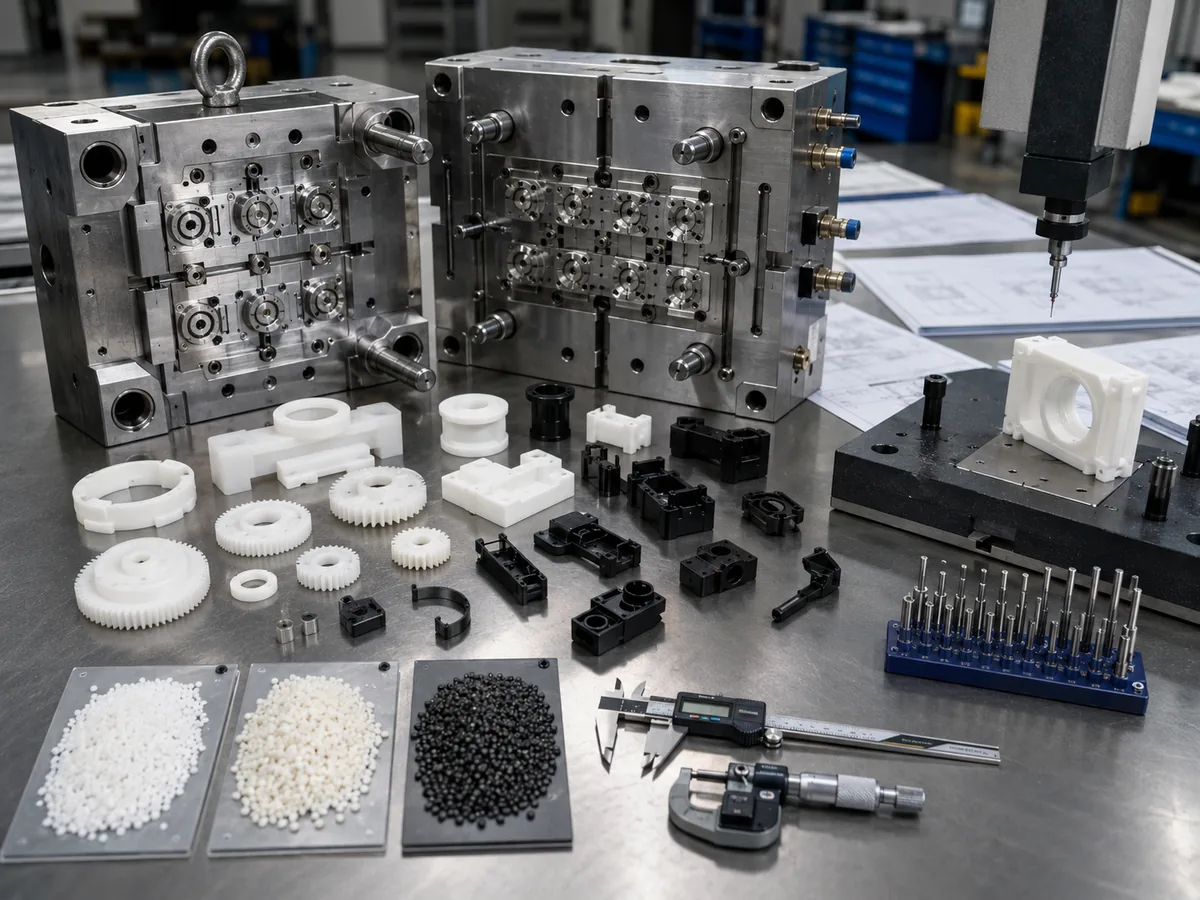
| Typical Parts | Gears, bushings, bearings, rollers, slide rails, clips, latches, connector housings, valve parts, small precision components |
| Mold Type | Single-cavity, multi-cavity mold, insert mold, cold runner mold, selected hot runner design after residence-time review |
| Key Mold Review | Shrinkage allowance, gate position, venting, cooling balance, draft angle, ejector layout, parting line, cavity steel |
| Typical Melt Temperature | Around 190–215°C depending on grade; Delrin standard grades commonly use about 215±5°C according to Delrin guidance. |
| Typical Mold Temperature | Around 80–100°C for many Delrin grades; high precision parts may need higher mold temperature up to about 120°C depending on requirements. |
| Drying | Standard Delrin grades generally do not require drying, but drying at 80°C for 2–4 hours may be needed if moisture, damaged packaging or poor storage is present. |
| Shrinkage Risk | POM has relatively high shrinkage; common POM grades are around roughly 1.8–2.3% and can be prone to shrinkage. |
| Quality Support | T1 sample photos, dimensional inspection, CMM/FAI report, assembly fit review, packing photos on request |
| RFQ Input | 3D CAD, 2D drawing, material grade, tolerance, annual quantity, surface finish, application, assembly requirement |
Need help checking POM shrinkage, gate position or draft angle?
Upload your CAD file for a free DFM review.
Custom POM Injection Molded Parts We Support
Focusing on application function and mold DFM review to ensure precision and reliability.
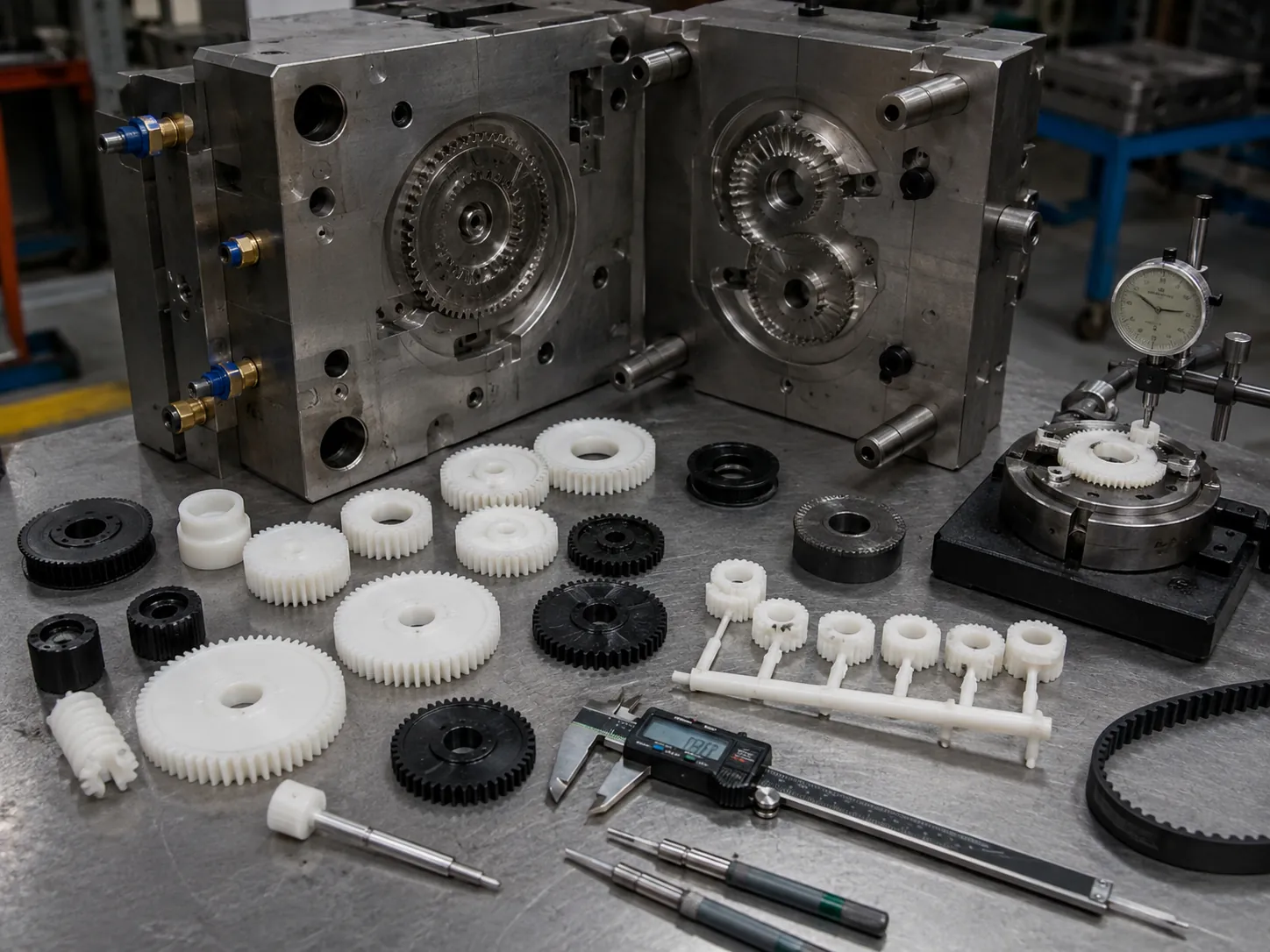
POM Gears & Transmission Parts
Best for: Small gears, gear wheels, pulleys, timing components, movement parts.
GBM Review Focus: Tooth shrinkage, concentricity, ejection location, meshing clearance, T1 gear face flash and dimensional deviation.
High precision mold for small gears →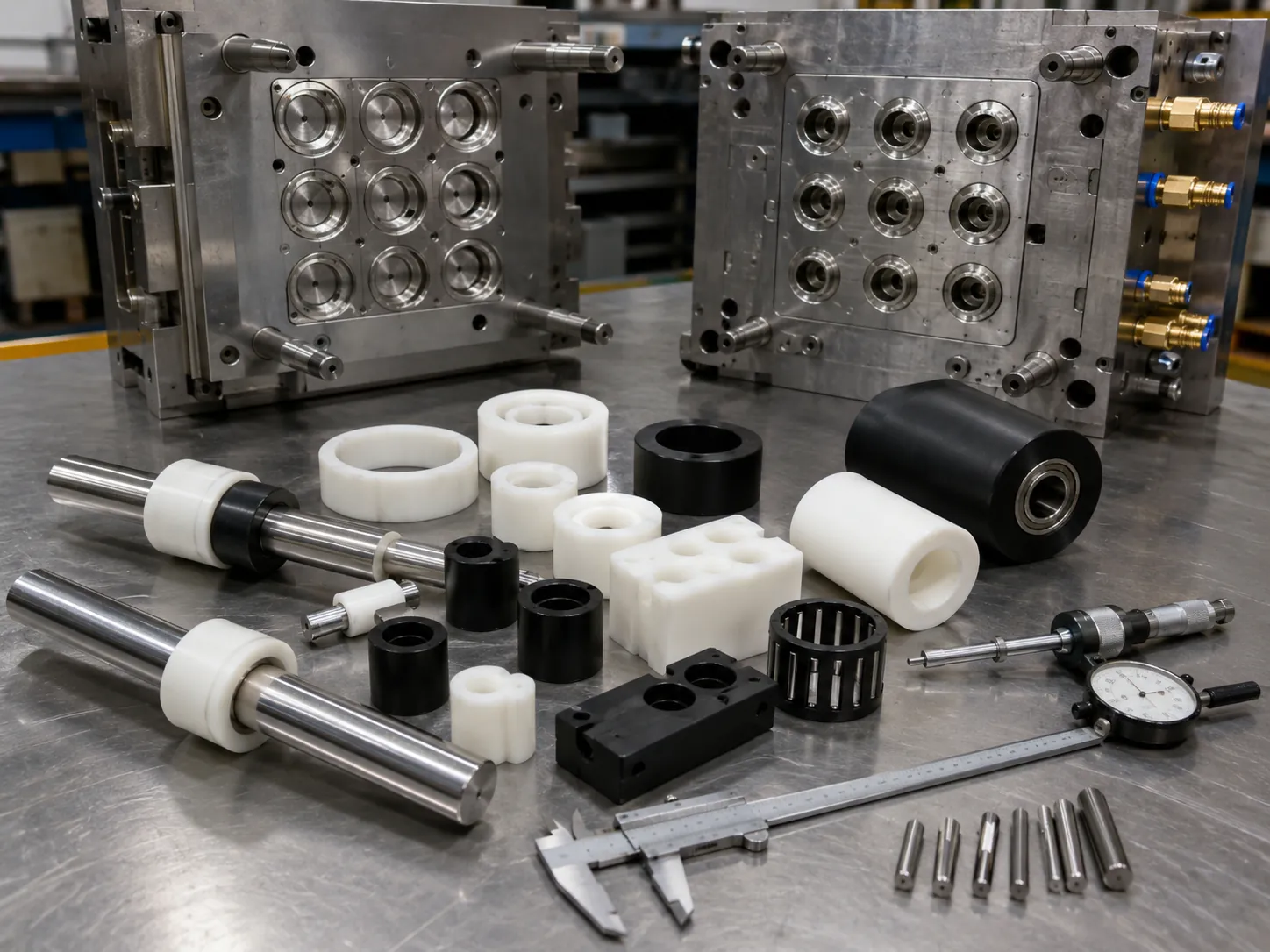
POM Bushings & Rollers
Best for: Bushings, sleeves, rollers, bearing cages, sliding blocks.
GBM Review Focus: Low friction surfaces, roundness, inner/outer diameter tolerance, cooling uniformity, shrinkage and oval deformation.
High precision mold for functional parts →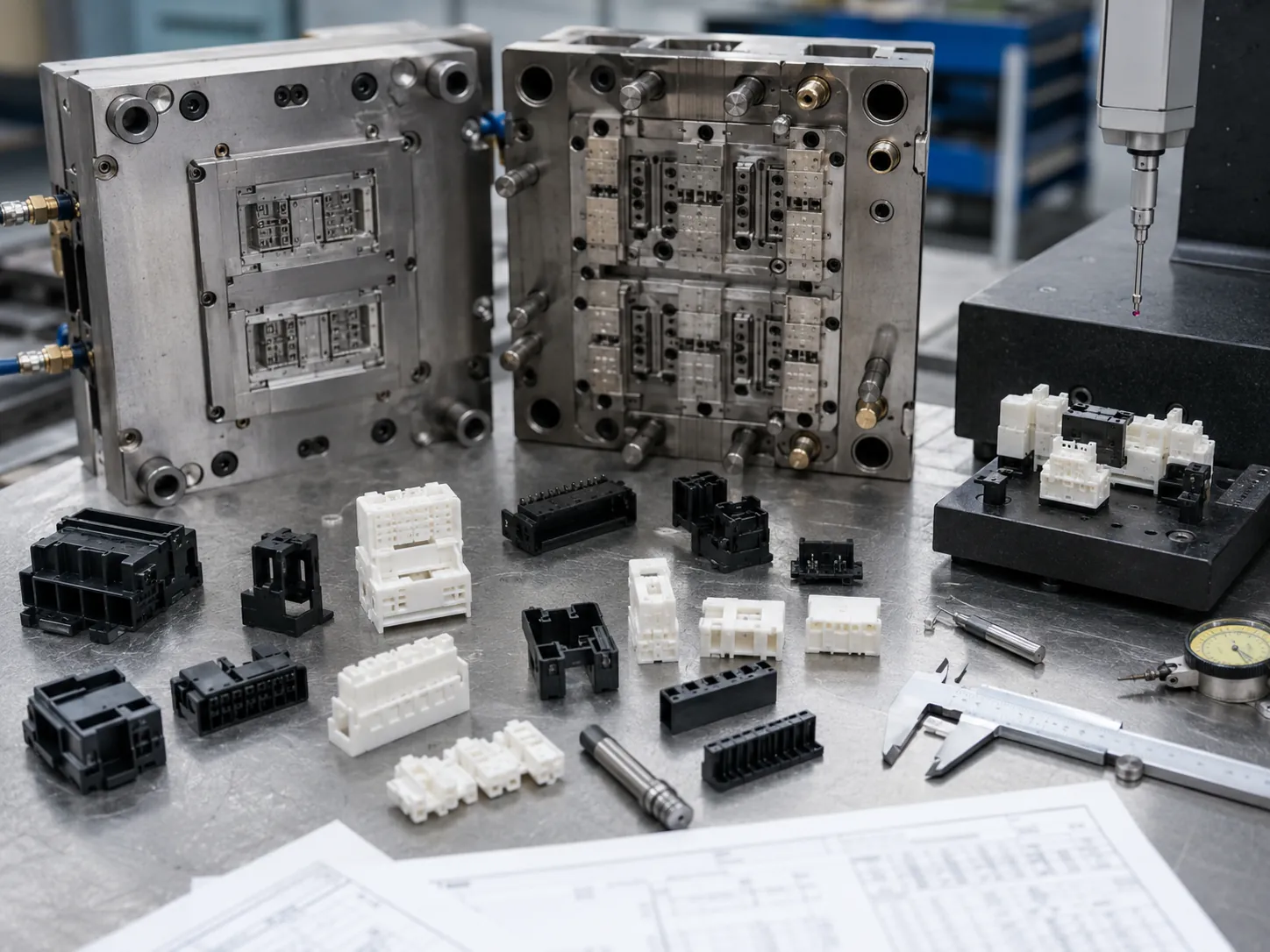
POM Connector Housings
Best for: Connector housings, insulators, small covers, guide parts, terminal support structures.
GBM Review Focus: Thin-wall filling, slot dimensions, flash, venting, pin/terminal fit, CMM inspection.
Connector mold for tight-tolerance components →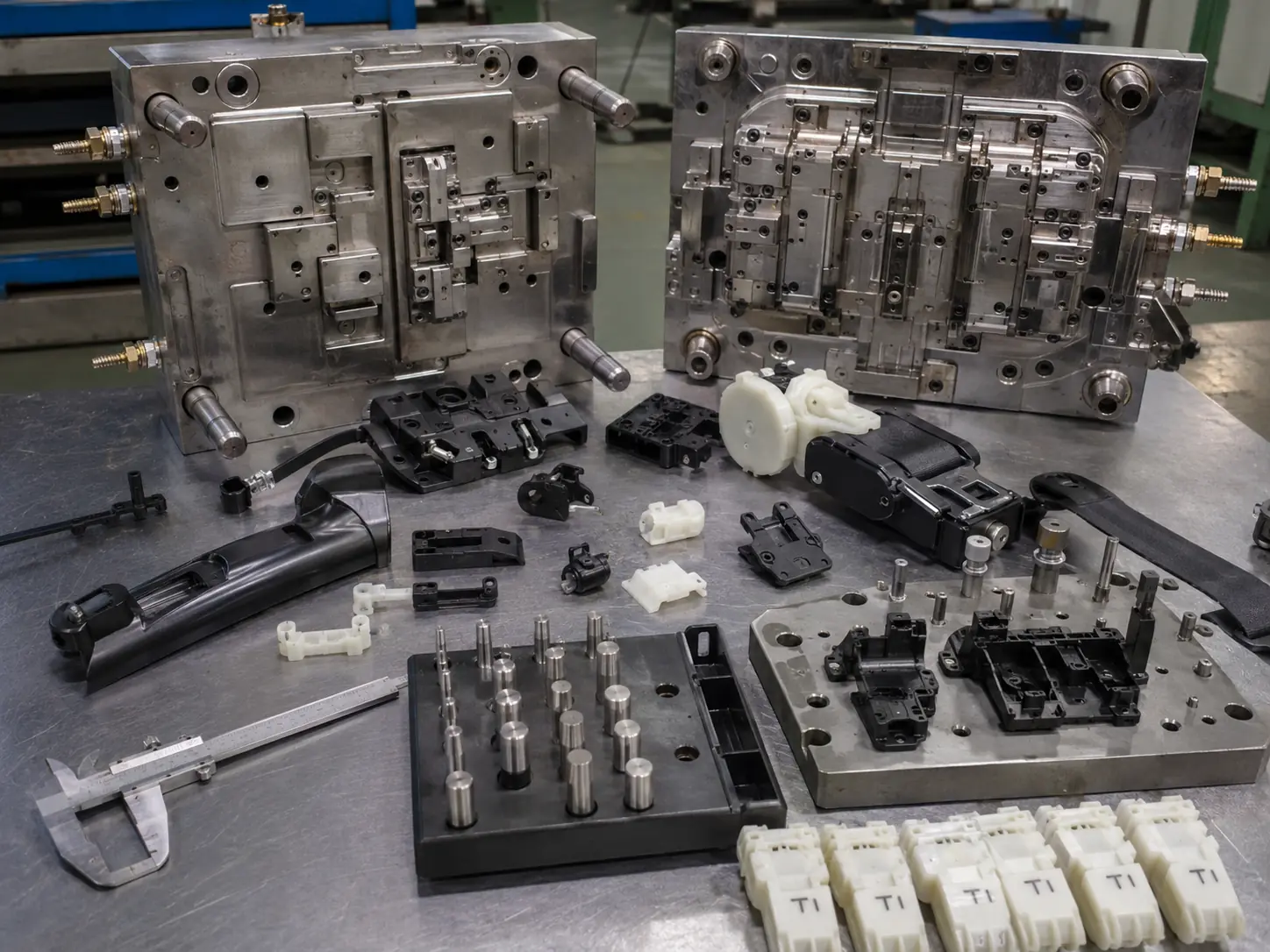
Automotive POM Parts
Best for: Door latches, seat belt components, clips, locks, sliding guides.
GBM Review Focus: Wear resistance, assembly clearance, clip fatigue, dimensional stability, batch consistency, thermal degradation risk.
Automotive POM injection molded parts →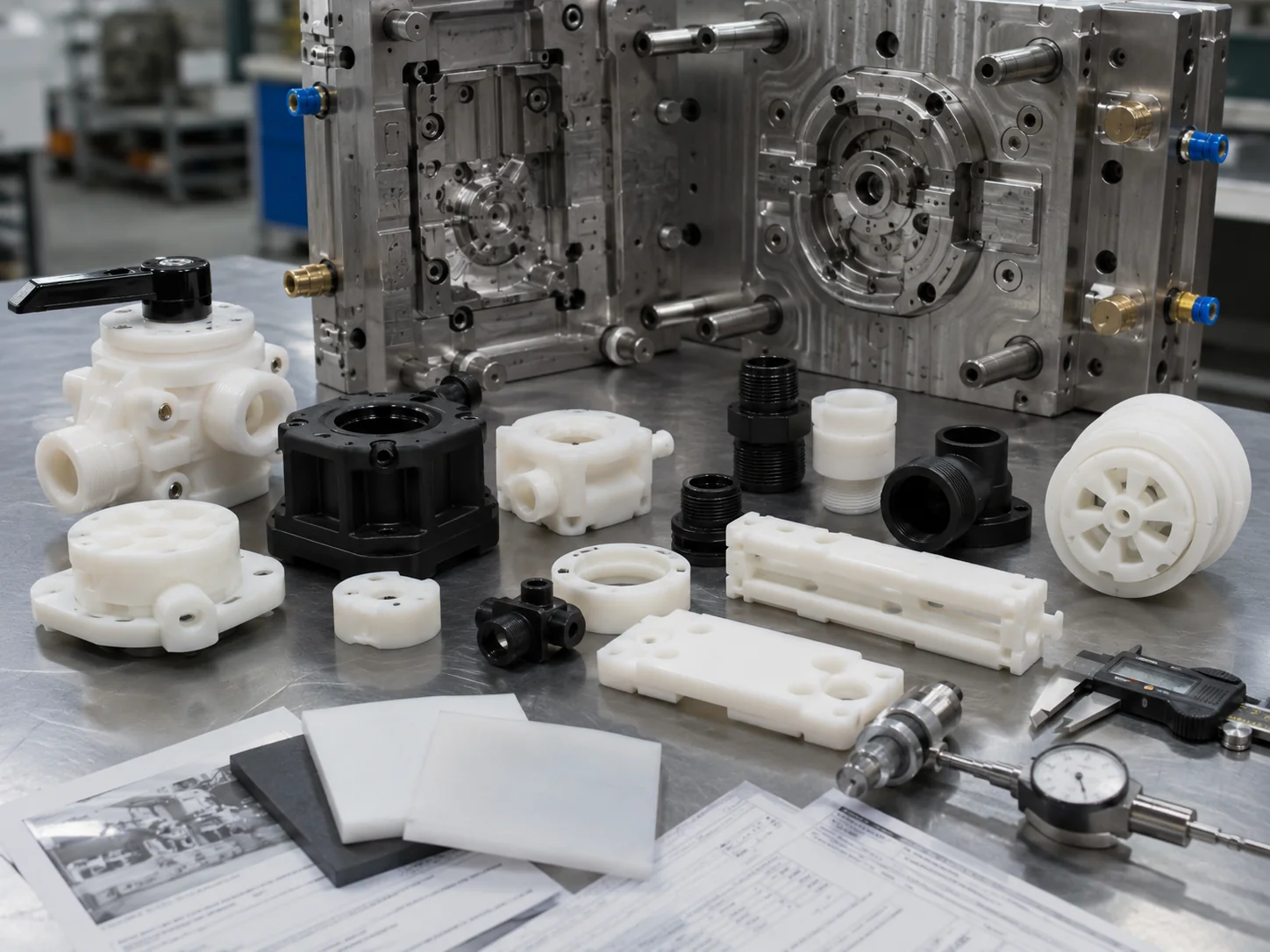
POM Valve & Fluid Parts
Best for: Valve parts, pump parts, fittings, water-contact components.
GBM Review Focus: Chemical environment compatibility, sealing surfaces, dimensional stability, water contact grades, material certificates.
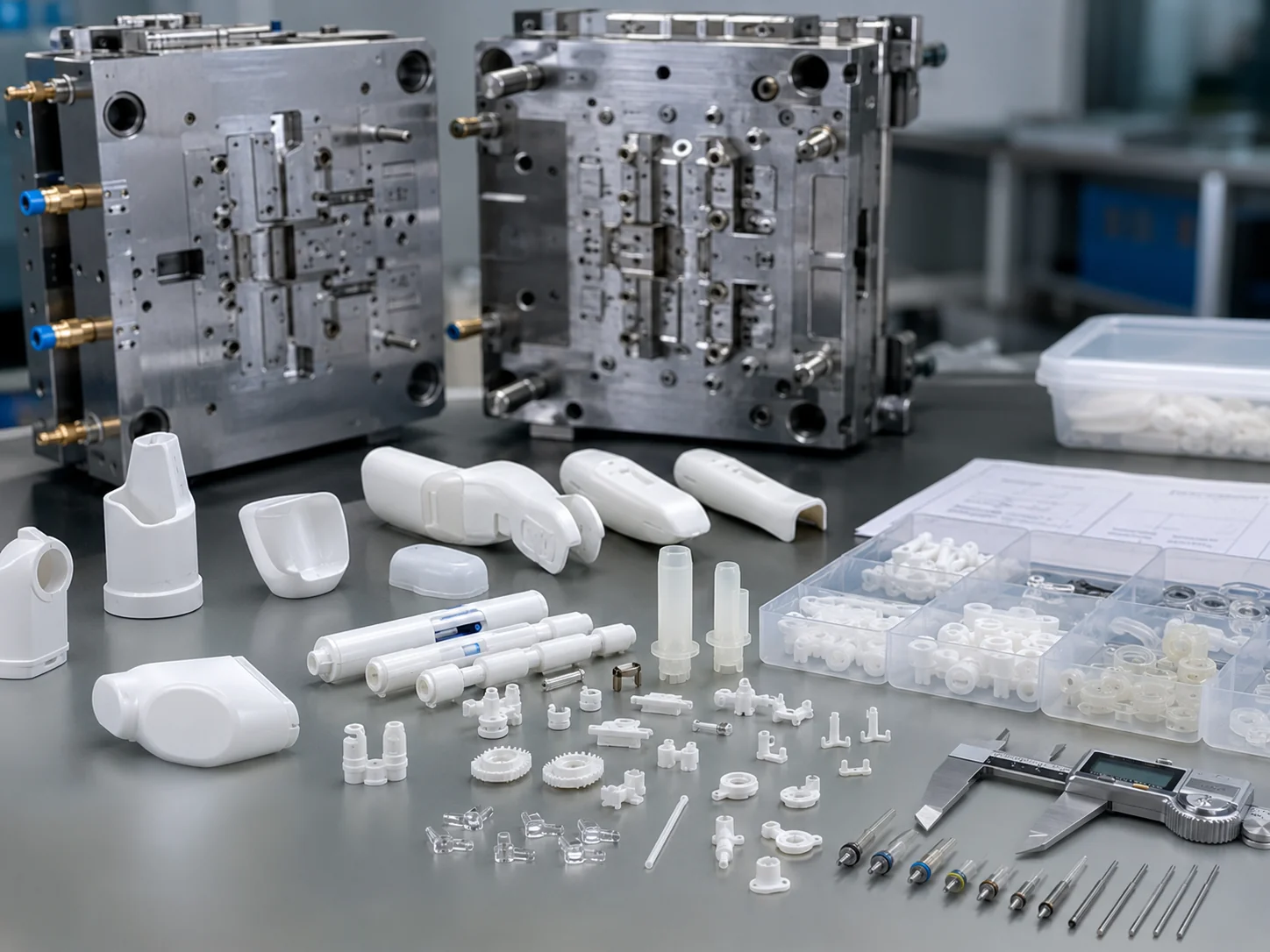
POM Medical Device Parts
Best for: Non-implant device parts, inhaler parts, pen mechanism parts, handles, moving structures.
GBM Review Focus: Material grade selection (FDA/NSF options), compliance documents, dimensional inspection, clean packaging.
Why Use POM for Injection Molded Parts?
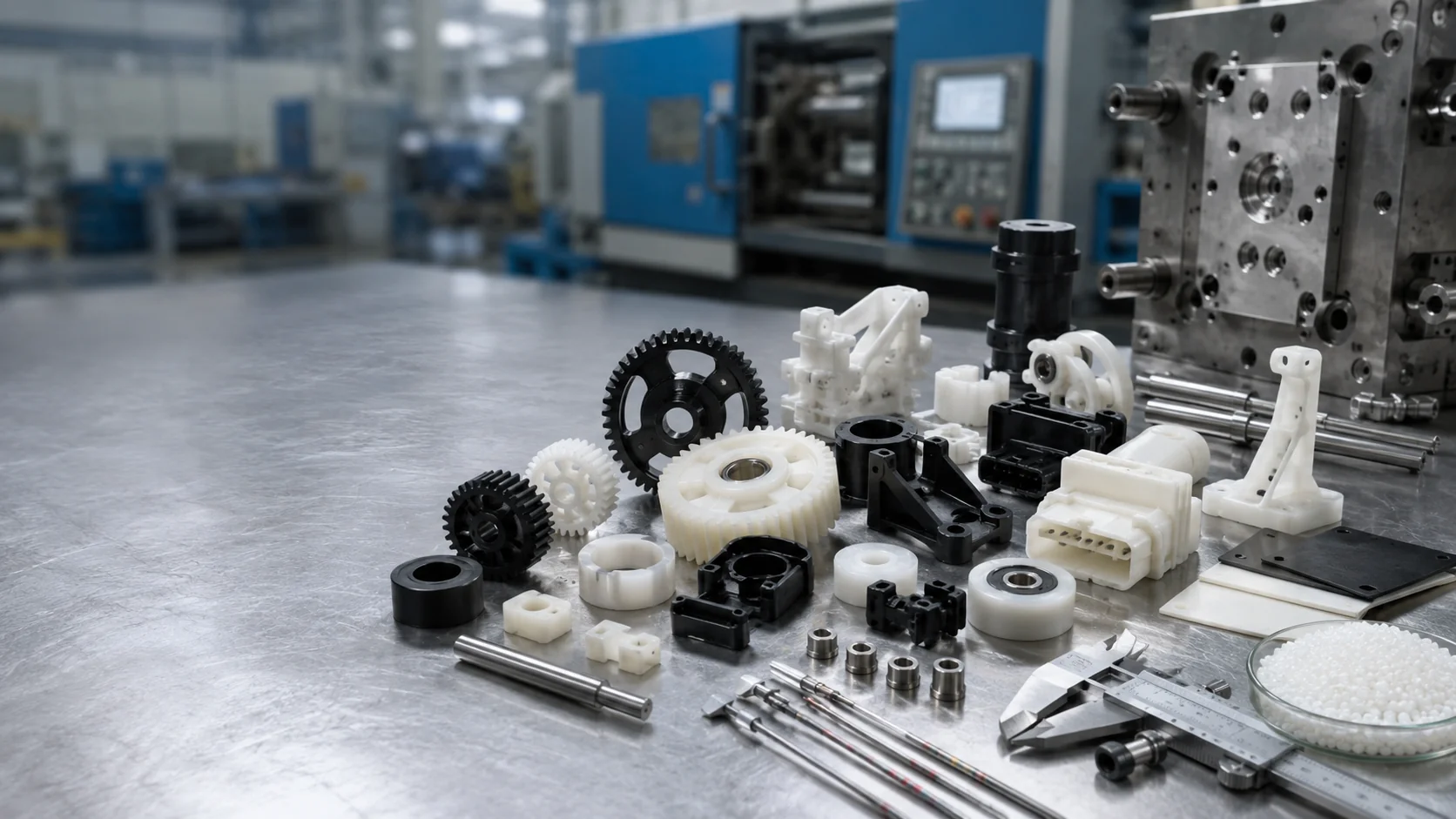
Low Friction
Ideal for: Gears, sliders, rollers, bushings
Reduces kinetic wear, making it perfect for long-term sliding structures without external lubrication.
Wear Resistance
Ideal for: Latches, locks, mechanical parts
Lowers the risk of failure after repeated mechanical actions in assembled components.
Dimensional Stability
Ideal for: Connectors, precision housings
Maintains strict tolerances over time, crucial for parts with tight assembly clearances.
Low Moisture Absorption
Ideal for: Electrical parts, moving parts
Unlike Nylon (PA), POM resists moisture uptake, preventing dimensional swelling in humid environments.
High Stiffness & Strength
Ideal for: Brackets, clips, structural parts
Provides excellent rigidity, allowing it to replace certain metals or more expensive engineering plastics.
Chemical Resistance
Ideal for: Fuel, solvent or fluid-related parts
Stable in various industrial and automotive fluid environments, resisting degradation.
Common POM Injection Molding Challenges & GBM Review Points
The difficulty with POM isn't just molding it—it's stabilizing shrinkage, warpage, gas emissions, and preventing mold contamination.
| Buyer Pain Point | Potential Causes | GBM Mold Solution & Review |
|---|---|---|
| Warpage after molding | POM shrinkage, uneven wall thickness, unbalanced cooling | DFM checks wall thickness transitions, cooling layout, gate position, and packing window before tooling. |
| Size out of tolerance | High shrinkage, crystallization variations, insufficient packing, unstable mold temp | Identify key dimensions early. T1 samples are measured via CMM/FAI to provide precise steel-safe modification feedback. |
| Burn marks or gas traps | Poor venting, melt stagnation, localized overheating | Implement flow end venting, parting line venting, and proper exhaust slots during mold design phase. |
| Formaldehyde smell / degradation | Melt temp too high, long residence time, hot runner dead spots | Control barrel residence time, avoid hold-up spots. We prioritize cold runners or carefully evaluate hot runner designs. |
| Sink marks on thick sections | Thick walls, insufficient packing pressure, uneven cooling | Recommend coring out thick sections, adding radii, and optimizing gate size and holding time. |
| Flash on precision edges | Insufficient clamping force, poor parting line/insert fit | Verify parting line shut-offs, mold base rigidity, and inspect T1 flash locations meticulously. |
| Poor ejection or scratch marks | Inadequate draft angle, uneven ejection, POM is hard and slippery | Review draft angles, ejector pin placement, surface polishing, and demolding direction. |
Have POM warpage, shrinkage or burn mark risk? Send your part drawing and we will check the mold design before tooling.
POM Mold Design Guidelines Before Tooling
1 Wall Thickness
POM requires uniform wall thickness. Wall thickness variations should be kept within 15% of the nominal wall to reduce short shots, sink marks, and knit line risks. GBM checks ribs, bosses, step transitions, and thick areas to prevent T1 warpage.
2 Draft Angle
While POM has good lubricity and typically uses a 0.5°–1° draft angle, GBM confirms the exact draft based on cosmetic surfaces, assembly faces, gear teeth, sliding surfaces, and ejection direction rather than applying a universal angle.
3 Radii & Stress Control
POM is sensitive to stress concentrations. Radii should be at least 25% of the nominal wall thickness. Sharp corners on clips, gear roots, bushing edges, and latches must be avoided to ensure fatigue life and assembly strength.
4 Gate Location
Gate location impacts flow direction, shrinkage, weld lines, and gear concentricity. For gears, bushings, and round parts, we strictly check if the gate will affect roundness, inner bore dimensions, or leave marks on sliding faces.
5 Venting
POM is sensitive to gas and localized overheating. Insufficient venting causes burn marks, gas traps, and mold deposits. GBM adds venting at flow ends, thin-wall extremities, clip roots, and deep rib areas.
6 Hot/Cold Runner Choice
POM works well with cold runners. If a hot runner mold with residence-time review is used, it must have no hold-up spots to prevent degradation. We frequently recommend a cold runner mold for engineering plastics such as POM.
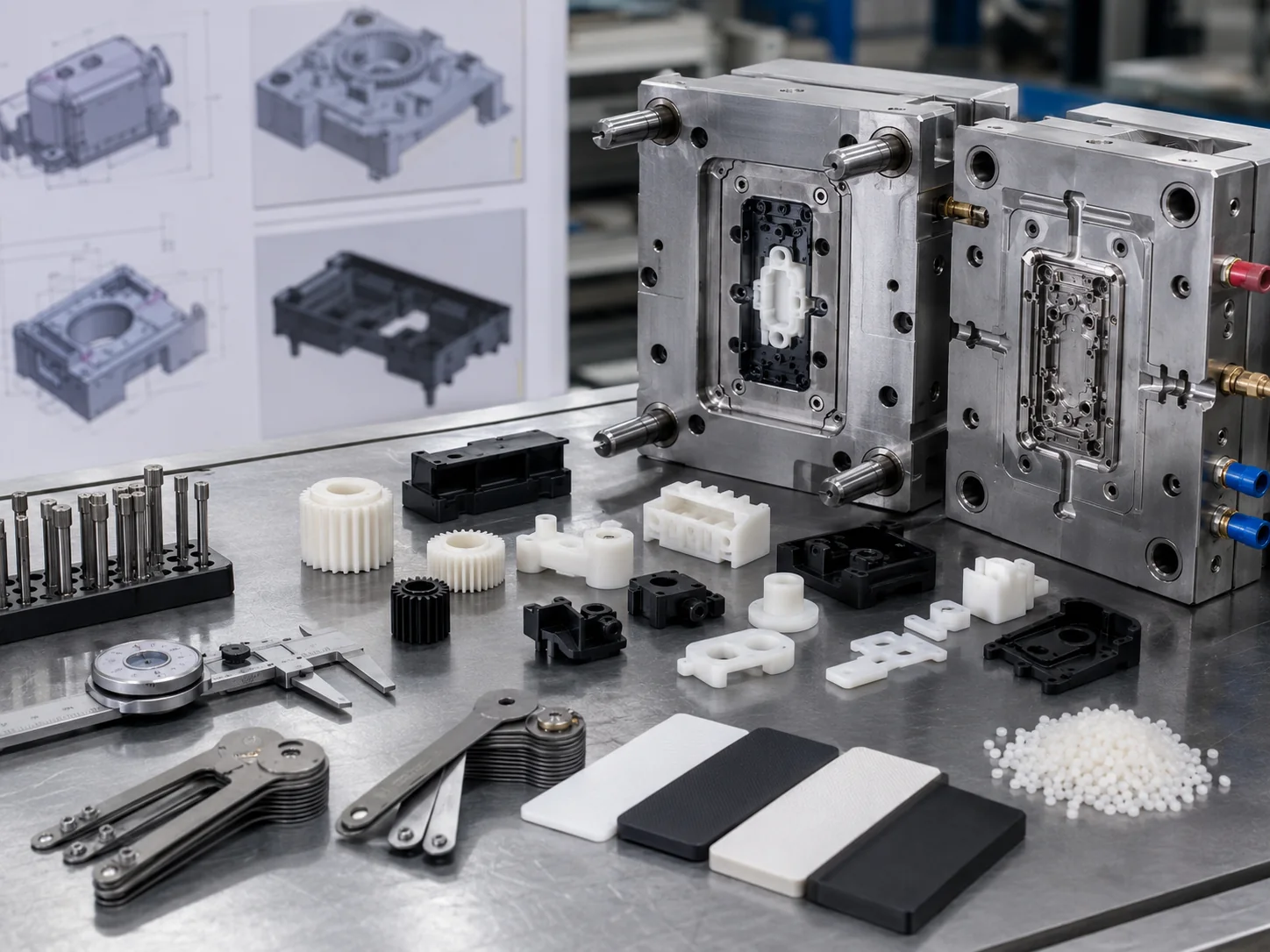
POM vs Nylon, ABS and PP: Which Material Should You Choose?
Selecting the right engineering plastic is critical for product performance and manufacturing efficiency. Compare POM with other common injection molding materials to find the perfect match for your application.
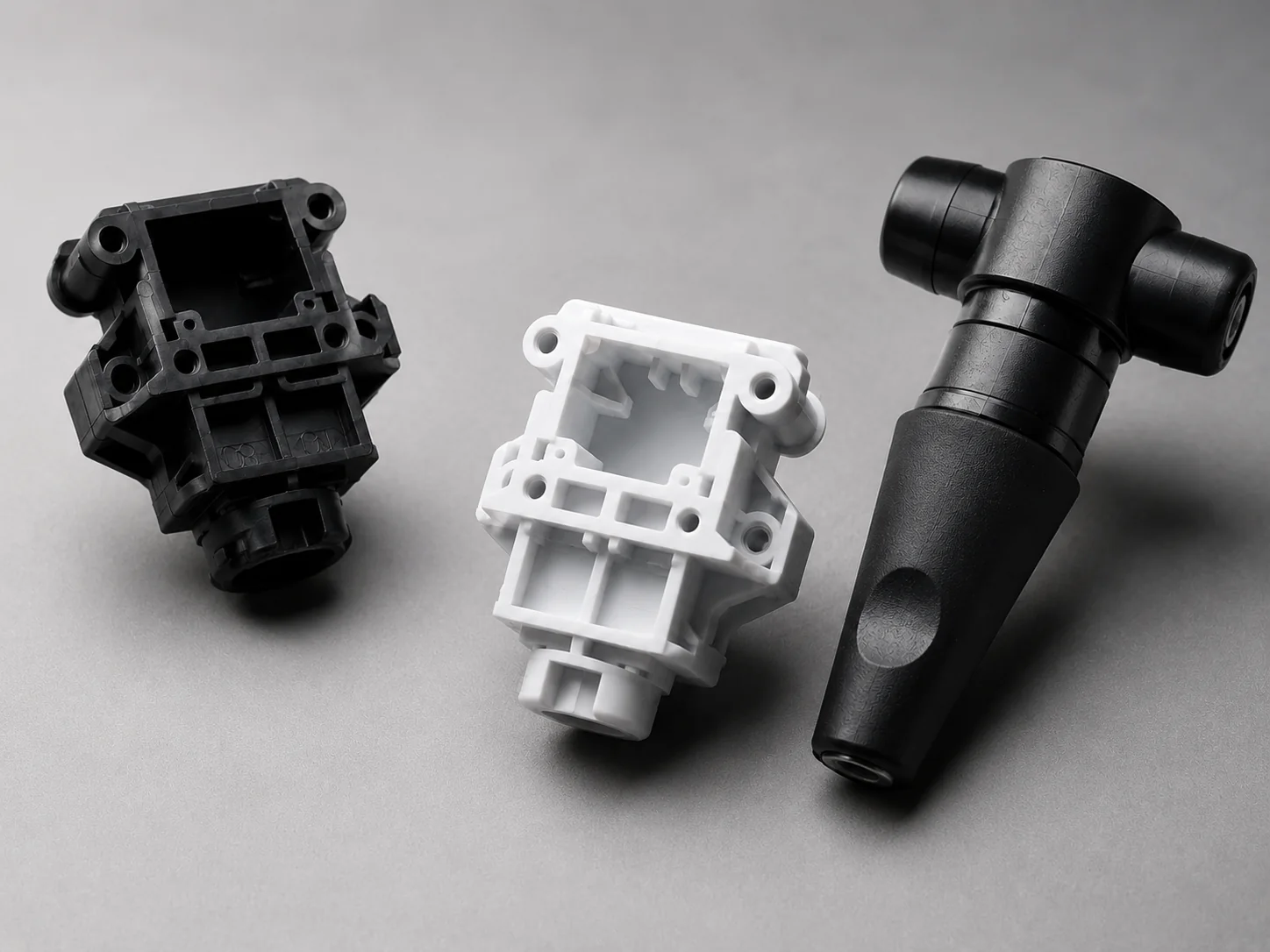
| Material |
Better Suited For
|
Not Recommended For
|
|---|---|---|
| POM / Acetal | Excellent choice for gears, sliders, bushings, connectors and low-friction moving parts due to its natural lubricity and high dimensional stability. | Avoid environments with strong acids/bases, high UV exposure, or extremely high temperatures. |
| Nylon / PA6 / PA66 | Ideal for high toughness, structural parts and glass-filled applications. Learn more about our Nylon injection molding for wear-resistant parts. | Not ideal for precision assemblies where moisture absorption causes dimensional changes over time. |
| ABS | Perfect for housings, covers and painted parts due to its impact resistance and surface finish capabilities. Discover our ABS injection molding for housings and covers. | Not ideal for long-term friction and high-wear moving components due to lower fatigue resistance. |
| PP | Great for low-cost parts, living hinges and packaging. Explore our PP injection mold for chemical-resistant parts. | Not recommended for high-rigidity, high-precision moving parts where structural stiffness is required. |
| PPS / PEEK | Engineered for high temperature and harsh environments. See our capabilities in PPS injection molding and PEEK molding for demanding engineering applications. | Not recommended for cost-sensitive standard wear applications due to significantly higher material costs. |
POM vs Nylon, ABS and PP: Which Material Should You Choose?
Selecting the right thermoplastic is critical for part performance, longevity, and manufacturing efficiency. Compare our standard and engineering plastics to find the ideal match for your injection molding project.
| Material |
Better Suited For
|
Not Recommended For
|
|---|---|---|
| POM / Acetal |
Suitable for gears, sliders, bushings, connectors and low-friction moving parts. |
Not recommended for strong acids/bases, high UV exposure or extremely high temperatures. |
| Nylon / PA6 / PA66 |
Suitable for high toughness, structural parts and glass-filled applications. Nylon injection molding for wear-resistant parts |
Not ideal for precision assemblies where moisture absorption causes dimensional changes. |
| ABS |
Suitable for housings, covers and painted parts. ABS injection molding for housings and covers |
Not ideal for long-term friction and high-wear moving components. |
| PP |
Suitable for low-cost parts, living hinges and packaging. PP injection mold for chemical-resistant parts |
Not recommended for high-rigidity, high-precision moving parts. |
| PPS / PEEK |
Suitable for high temperature and harsh environments. |
Not recommended for cost-sensitive standard wear applications. |
How to Choose the Right POM Grade and Mold Plan
A systematic approach for OEM buyers to select the optimal acetal material and tooling strategy for high-precision plastic components.
Confirm the Function
Identify the primary mechanical requirements of your component. We evaluate if your part requires gear teeth engagement, snap-fit resilience, or structural housing durability to ensure POM is the correct baseline polymer.
Check Load & Friction
Assess the dynamic stress, wear resistance, and required coefficient of friction. POM naturally excels in high-fatigue, moving-part applications, making it ideal for bearings, rollers, and sliding mechanisms.
Review Tolerance & Shrinkage
POM has a relatively high and directional shrinkage rate (1.5-3.0%). Our DFM engineers evaluate your dimensional tolerance limits upfront to design precision mold cavities that compensate for post-molding warpage.
Confirm Environment
Analyze operating temperatures and chemical exposure. While acetal provides excellent resistance to fuels and solvents, it may require specific UV stabilization additives if the final assembly is exposed to outdoor elements.
Choose POM Grade
Select between Homopolymer (e.g., Delrin®) for maximum stiffness and mechanical strength, or Copolymer (e.g., Celcon®) for superior dimensional stability, lower porosity, and better resistance to strong alkalis.
Decide Tooling Strategy
Based on your projected lifecycle volume, we help you choose from rapid prototype molds for testing, low-volume aluminum tooling, or hardened steel multi-cavity production molds for maximum cost-efficiency.
Not sure whether POM or nylon is better? Send your application details for material review.
Custom POM Injection Molding Process at GBM Mold
CAD & Application Review
Checking 3D, 2D, material, quantity, application, assembly method, and key dimensions.
POM DFM Review
Checking wall thickness, draft angles, radii, gear teeth, inner bores, clips, gates, venting, and shrinkage risks.
Mold Design
Confirming cavity/core layout, runner, gate, ejector, cooling, venting, steel selection, and parting line.
Mold Manufacturing
Precision CNC, EDM, polishing, fitting, and mold assembly.
T1 Trial
Checking for short shots, flash, burn marks, warpage, sink marks, gate vestige, and ejection marks.
Sample Inspection
Key dimensions, visual appearance, assembly fit, and CMM/FAI/CPK reports provided as required.
Production & Shipment
Batch injection molding, packaging photos, export communication, spare parts, and trial data support.
Why Overseas Buyers Work with GBM for POM Injection Molding
POM-Specific DFM Before Steel Cutting
GBM reviews POM shrinkage, wall thickness, gate location, venting, ejection, draft angle and tolerance risks before mold manufacturing. This helps buyers find problems before steel cutting instead of waiting until T1.
Mold + Molding One-Stop Support
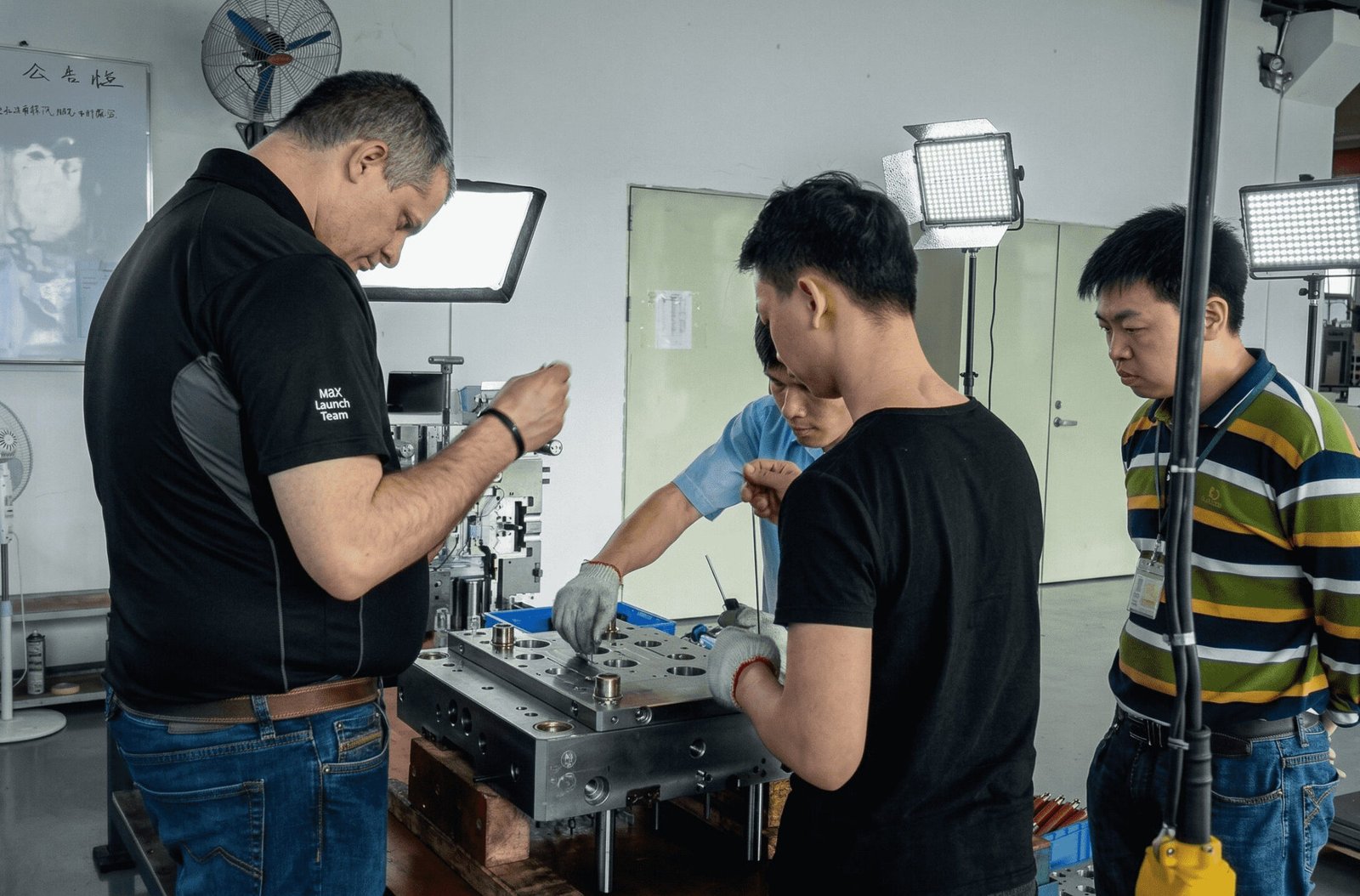
For POM projects, GBM can support mold design, mold manufacturing, T1 trial, sample correction and injection molding production, so the buyer does not need to coordinate tooling and molding separately.
T1 Defect Feedback
T1 samples are reviewed for warpage, flash, shrinkage, burn marks, gas traps, gate marks, ejection marks and assembly fit. Correction suggestions can be provided before production approval.
Dimensional Inspection
For precision POM gears, bushings, connectors and latches, GBM can check key dimensions according to 2D drawings and provide CMM, FAI or sample inspection reports when required.
Export Buyer Support
GBM can provide sample photos, trial feedback, packing photos, mold information, spare parts and shipment communication for overseas OEM buyers.
Application-Based Material Review
Instead of recommending POM for every part, GBM reviews whether POM, nylon, ABS, PP, PPS or PEEK is more suitable according to friction, tolerance, heat, chemical exposure, strength and cost.

What Affects the Cost of Custom POM Injection Molding?
- Part size and weight Affects material usage, machine tonnage required, and cycle time.
- Mold complexity Gears, inner bores, sliding surfaces, clips, and thin-wall structures increase machining and modification difficulty.
- Tolerance requirement More critical dimensions mean more CMM/FAI inspection and T1 adjustment work.
- Cavity number Multi-cavity molds have a higher upfront cost but lower unit price for mass production.
- Material grade POM-H, POM-C, glass-filled, FDA/medical/food-contact grades vary significantly in price.
- Gate and runner system Cold runners cost less. Hot runners require extra evaluation for residence time and temperature control risks.
- Inspection requirement CMM, FAI, CPK, and PPAP-style documents increase quality control workload.
- Annual quantity Determines whether to build prototype tooling, a low-volume mold, or a high-durability production mold.
POM Injection Molding FAQ
What is POM injection molding?
Is POM the same as acetal?
Is Delrin the same as POM?
What are the main advantages of POM injection molded parts?
What are common POM injection molding defects?
Does POM need drying before injection molding?
What is the typical POM injection molding temperature?
What mold temperature is used for POM injection molding?
Why does POM smell during molding?
How much draft angle is needed for POM parts?
Is POM suitable for gears and bearings?
Is POM better than nylon?
Can POM be used for medical or food-contact parts?
What information is needed for a POM injection molding quote?
Need more help? Explore our Injection Molding Services or Injection Mold Services.
Request a POM Injection Molding Quote
Upload your CAD files and project details. Our engineers will review DFM, shrinkage, material selection and tooling costs.