PBT Injection Molding Manufacturer for Custom Parts
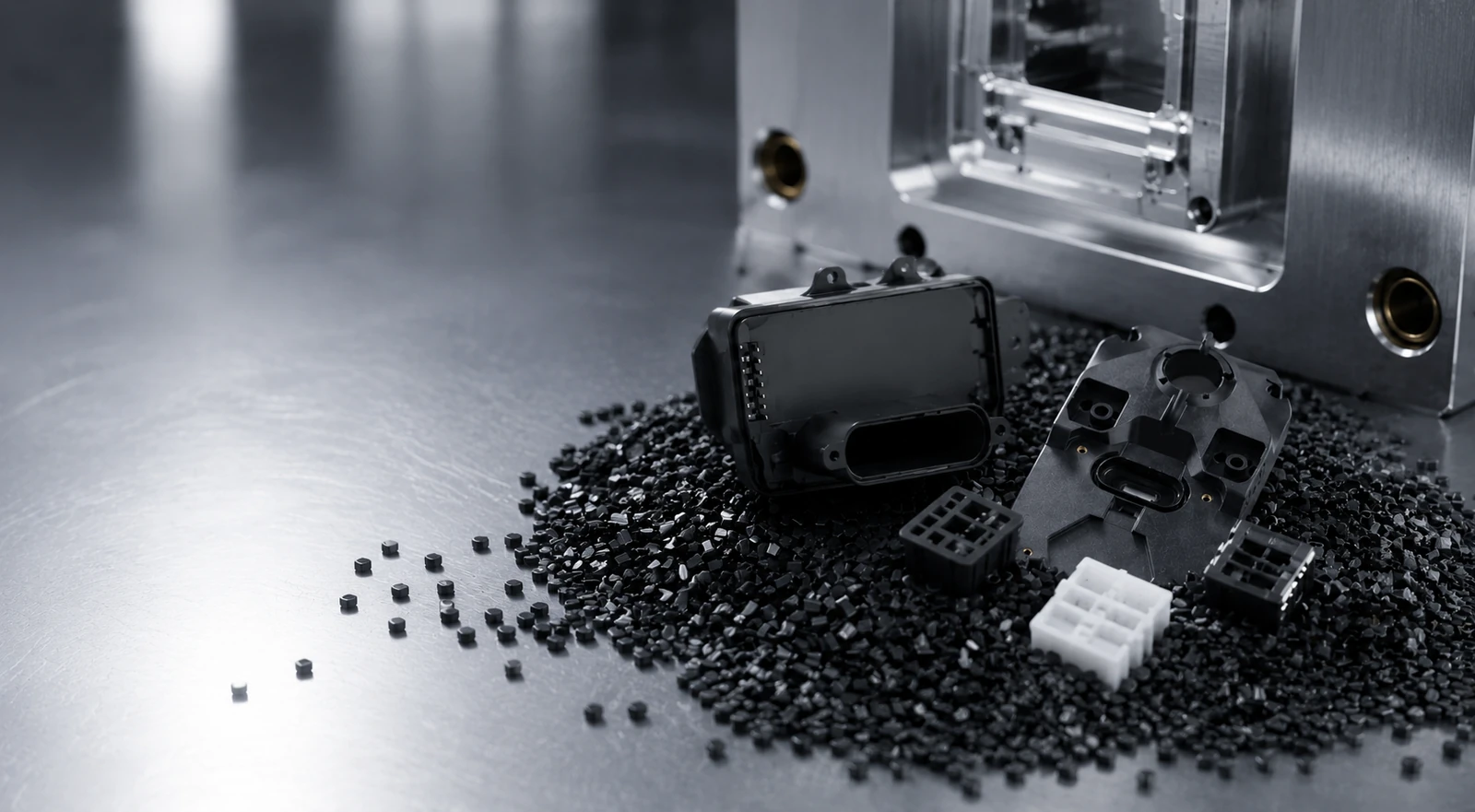
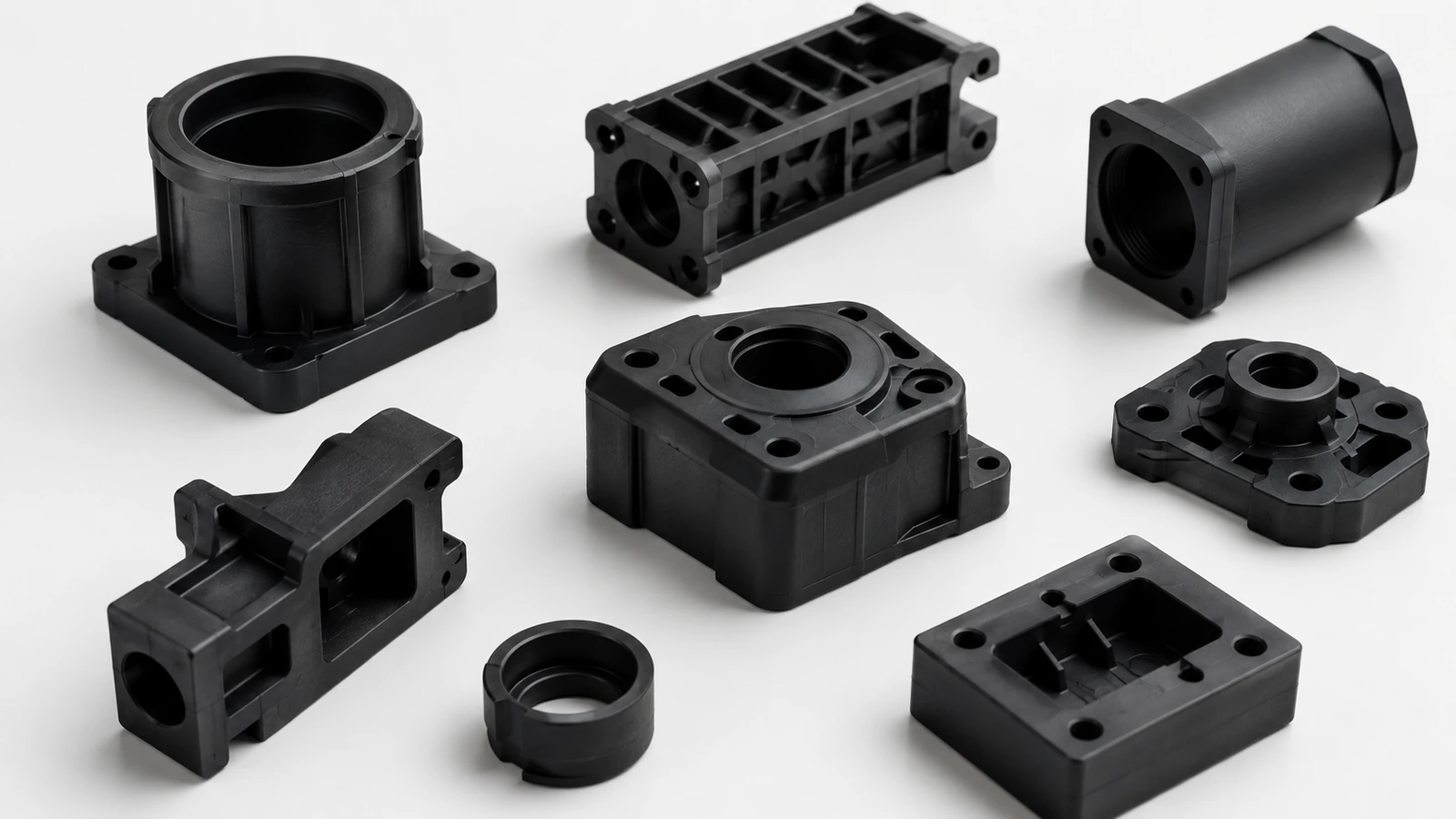
Custom PBT injection molding for electrical connectors, transformer frames, LED light cases, automotive components, industrial housings and precision engineering plastic parts. GBM Mold supports PBT material selection, injection mold tooling, DFM review, T1 samples validation, CMM inspection and production molding for overseas OEM projects.
Quick Facts About GBM PBT Injection Molding
Quick facts about GBM PBT injection molding include essential specifications and capabilities for your custom projects, such as DFM review, T1 samples, and CMM inspection.
Materials
PBT, PBT GF30, FR PBT (flame-retardant), reinforced PBT, modified PBT, PBT/PC blends.
Best For
Electrical connectors, bobbins, transformer frames, LED light cases, sensor housings, switch bases, relay parts and automotive components.
Mold Types
Single-cavity, multi-cavity, cold runner, hot runner, insert mold and export injection mold tooling.
Process Focus
Drying, melt/mold temperature, gate design, cooling, shrinkage, warpage, weld line and flash control.
Inspection Support
T1 samples, dimensional report, CMM inspection, sample QC, FAI or CPK upon request.
Quote Data Needed
3D/2D drawings, PBT grade, annual quantity, color, finish, flame rating and application environment.

What Is PBT Injection Molding?
PBT injection molding is the process of melting polybutylene terephthalate resin and injecting it into a precision mold cavity to produce strong, dimensionally stable and electrically reliable plastic parts.
PBT is often selected for parts that need good electrical insulation, chemical resistance, heat resistance, low moisture absorption and stable dimensions. In real B2B projects, it is commonly used for electrical connectors, transformer frames, relay bases, LED light cases, automotive sensors and industrial covers.
Compared with general-purpose plastics, PBT needs closer control of drying, melt temperature, mold temperature, gate location, glass fiber orientation and cooling balance. Poor control may lead to dark spots, short shots, flash, warpage, weld lines, brittle parts or unstable dimensions.
Request DFM ReviewCustom PBT Injection Molding Services
Custom PBT injection molding services at GBM range from early DFM review to mold manufacturing, T1 samples trial and production molding. Before mold cutting, our engineers review the part geometry, wall thickness, rib design, tolerance requirement, material grade, runner system, gate location, cooling layout and CMM inspection plan.
PBT Mold Tooling
For buyers who need a dedicated injection mold for PBT parts.
We review mold steel, cavity layout, gate type, venting, cooling, ejection, glass-fiber wear risk and future maintenance. For export molds, GBM can prepare mold drawings, spare parts, T1 samples video, sample photos and packing photos.
Custom PBT Molded Parts
For OEM buyers who need molded PBT parts instead of mold-only delivery.
GBM can support prototype samples, low-volume validation and production molding. Each project can include T1 samples, CMM inspection, appearance review, packaging confirmation and production readiness checks.
PBT Insert Molding
For PBT parts with metal terminals, pins, sleeves or threaded inserts.
We check insert positioning, shut-off area, flow around the insert, flash risk, terminal deformation, ejection balance and electrical assembly requirements before mold trial.
PBT Multi-Cavity Production Mold
For connector parts, switch components, or LED light cases requiring stable output.
We review cavity balance, runner balance, hot runner or cold runner selection, cooling uniformity, part weight consistency and cavity-to-cavity dimensional variation.
PBT Material Grades for Injection Molding
The selected PBT injection molding material grade directly affects dimensional stability, stiffness, flame resistance, surface appearance, shrinkage, warpage, flow behavior, and the processing window. Before starting mold design for custom PBT molded parts, GBM comprehensively reviews the part application, working temperature, humidity, electrical requirements, glass fiber content, flame rating, and production volume to ensure T1 validation success.
Unfilled PBT
General electrical insulation parts, housings, covers and molded components with cleaner surface appearance.
Wall thickness, shrinkage, gate mark, surface quality and dimensional tolerance.
Send application environment, color, finish and annual volume.
PBT GF30
Automotive electrical parts (see Automotive Injection Mold), sensor housings, industrial components and structural reinforced PBT molded parts requiring higher stiffness.
Glass fiber orientation, anisotropic shrinkage, warpage, gate wear, weld line strength and ejection balance.
Confirm glass fiber content, critical dimensions and assembly requirements.
Flame-Retardant PBT
PBT electrical connector projects, relay bases, switch parts, PBT transformer frame injection molding, bobbins and LED light cases.
Flame rating, wall thickness, color stability, electrical insulation, flash control and mold venting.
Send flame rating requirement, part thickness, certification needs and application environment.
Hydrolysis-Resistant PBT
Hot, humid, automotive or industrial environments where long-term stability is important. (Compare with PPS Injection Molding or PEEK Molding for extreme conditions).
Working temperature, humidity exposure, chemical contact, mechanical load and long-term dimensional stability.
Provide working environment, temperature range, humidity and chemical exposure.
PBT/PC Blend
Parts requiring a balance of impact resistance, surface appearance, heat resistance and dimensional stability. Often used with an Insert Molding Manufacturer for terminal inserts.
Material datasheet review, flow behavior, surface finish, shrinkage and assembly fit.
Send performance targets and current material reference if available.
Engineering Note
If you are not sure which PBT grade to use, send the working environment, temperature, humidity, electrical requirement, mechanical load, flame rating and annual quantity. GBM can help review suitable material options before mold design.
Surface Finish Options for PBT Molded Parts
The PBT surface finish of custom PBT molded parts directly affects appearance, defect visibility, assembly fit, sealing areas, and ultimate customer acceptance. Whether you are defining a PBT electrical connector surface finish, a PBT LED light case finish, or specifying requirements for sensor housings, industrial covers, and automotive components, the surface finish should be confirmed before mold manufacturing begins.
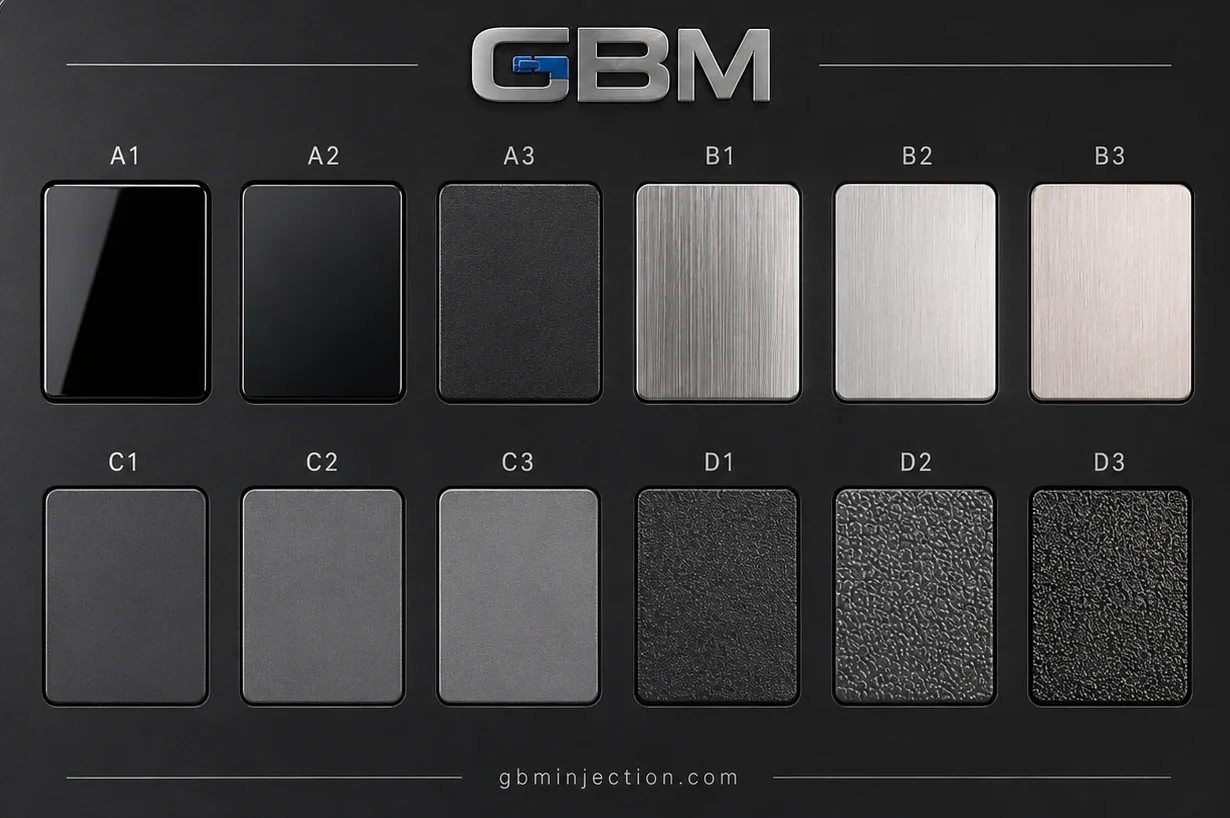
1. Glossy Finish
Use for visible housings or appearance surfaces that need a brighter look. It is important to note that a glossy PBT housing can reveal sink marks, weld lines, scratches, and flow marks more easily than textured alternatives.
2. Semi-Gloss Finish
Use for molded housings, covers, and electrical components that need a balance between appearance and process stability. Semi-gloss finishes are often easier to control during production than high-gloss surfaces.
3. Matte Finish
Use for industrial housings, connector shells, sensor housings, and functional matte PBT parts. Matte surfaces reduce reflection and can effectively make minor surface marks or tooling imperfections less visible.
4. Fine Texture
Use for low-glare, lightly textured, or grip-related surfaces on textured PBT injection molded parts. GBM rigorously reviews texture depth, draft angle, release direction, and part geometry before mold texturing begins.
5. Sandblasted Texture
Use for functional industrial parts or non-gloss surfaces. When specifying this finish, mold texture depth, uniformity across the cavity, and routine mold cleaning requirements should be carefully considered.
6. Light Brushed / EDM
Use for certain engineering appearance requirements or mold-machined surface effects. Texture direction and the customer's physical surface reference should always be confirmed before cutting steel.
GBM Review Points
Before mold manufacturing, GBM reviews the following parameters to ensure optimal injection mold surface texture and part quality:
Practical Buyer Guidance
Buyers can send surface reference photos, sample parts, or finish requirements before tooling. GBM will comprehensively review whether the requested finish is suitable for the selected PBT grade, glass fiber content, part geometry, and mold structure to guarantee manufacturing success.
Explore related capabilities: High Precision Mold for tight-tolerance and visible PBT parts | Connector Mold for PBT electrical connector projects | Automotive Injection Mold for automotive PBT housings | Injection Molding Services for production molded parts.
PBT Injection Molding Temperature, Drying and Process Control
PBT injection molding temperature and drying require a typical melt range of 230°C to 280°C and drying at 120°C for 2-4 hours. However, the exact setting depends on the grade and you must follow the resin datasheet. Insufficient drying causes unstable processing, dark spots, brittle parts, bubbles or surface defects.
For PBT GF30 and FR PBT parts, cooling time and mold temperature must be reviewed together. A short cycle is attractive for cost, but insufficient cooling may cause warpage, ejection marks, dimensional drift or poor assembly fit.

Typical Process Review Points
-
Resin drying temperature and drying time & actual moisture level
-
Melt temperature and mold temperature setting
-
Screw residence time, injection speed and pressure
-
Holding pressure, holding time, cooling time and ejection temp
-
Glass fiber orientation in reinforced PBT GF30
-
Hot runner temperature balance if a Hot Runner Mold is used, or gate freezing in a Cold Runner Mold.
Common PBT Injection Molded Products
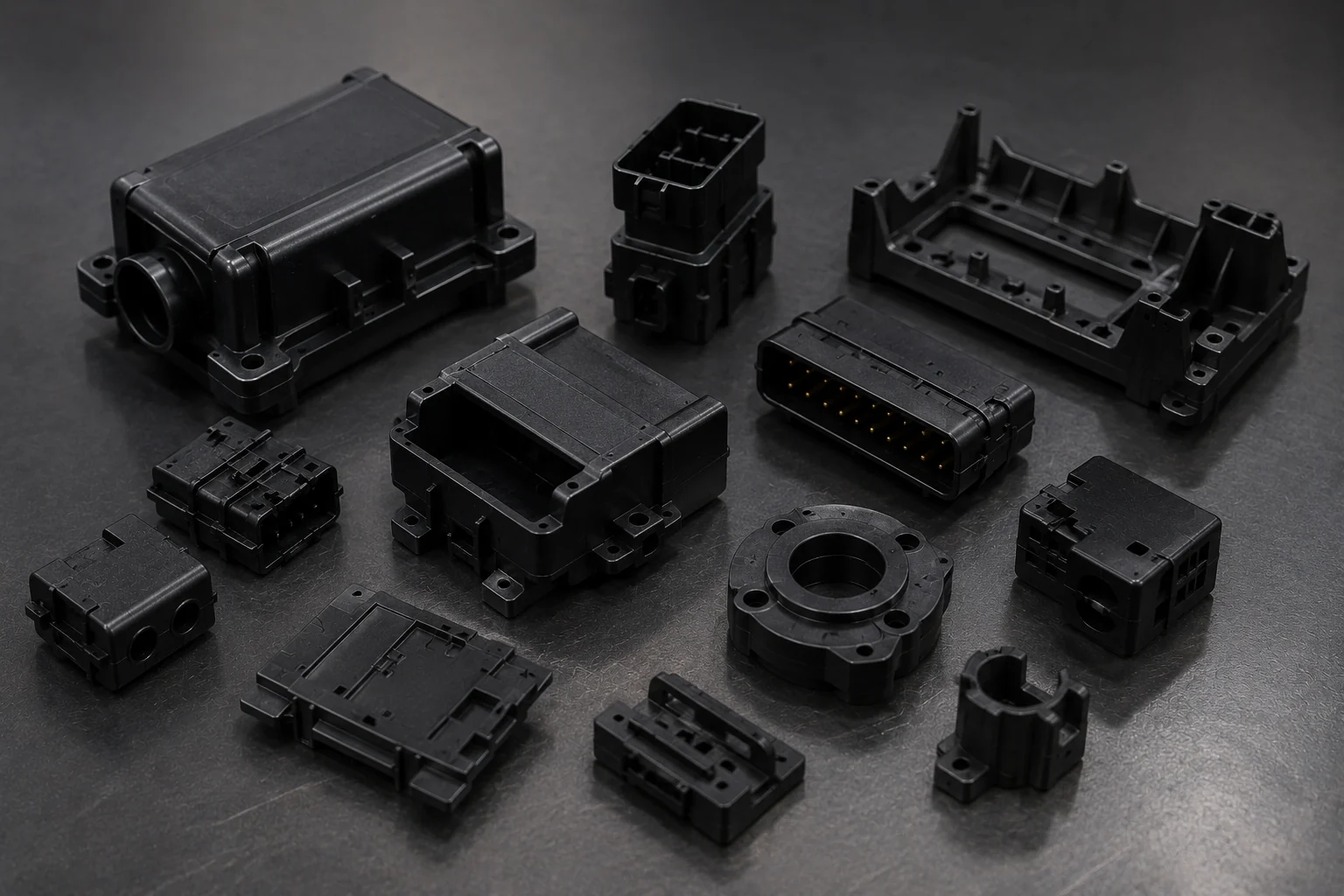
Common PBT injection molded products include electrical connectors, transformer frames, LED light cases, and automotive components.
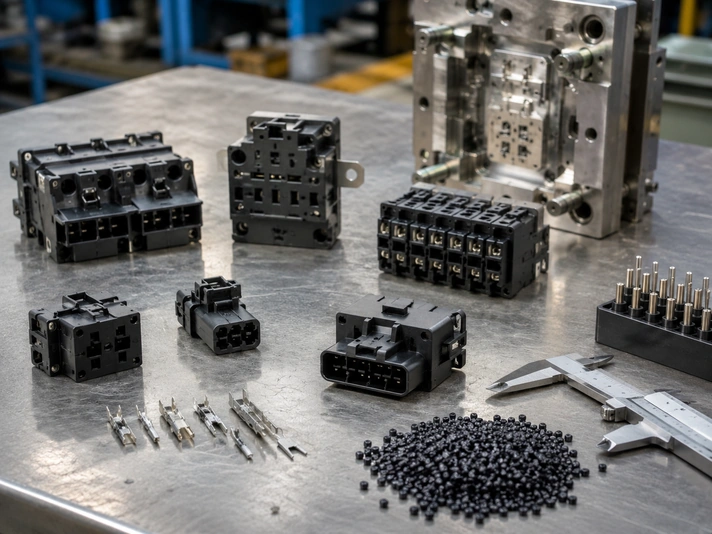
PBT Electrical Connectors
Used for connector housings, terminal blocks, relay bases and switch parts. Mold controls flash around terminals, weld lines, and shut-off surfaces.
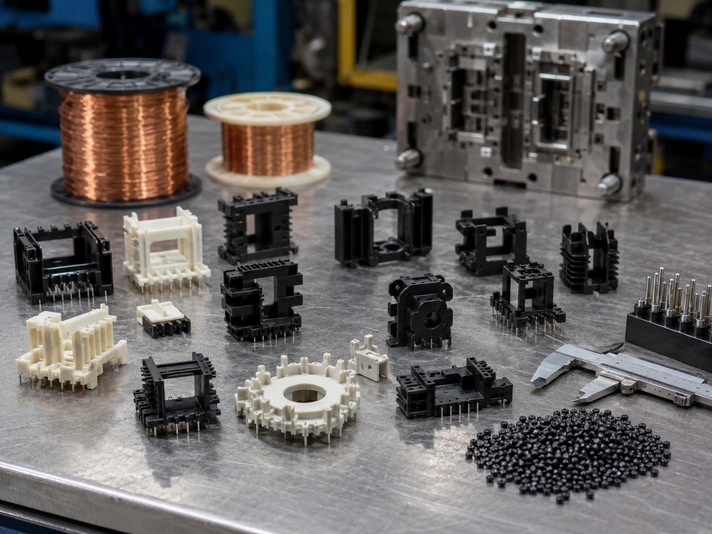
Transformer Frames & Bobbins
Requires dimensional stability and electrical insulation. We review thin walls, ribs, pin slots, winding areas, and gate locations.
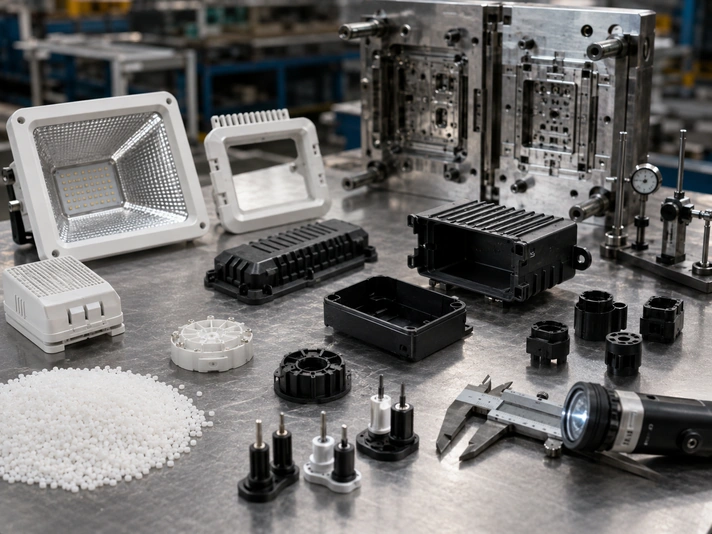
PBT LED Light Cases
Needs heat resistance, electrical safety, stable assembly dimensions and controlled surface finish. FR PBT is often used.
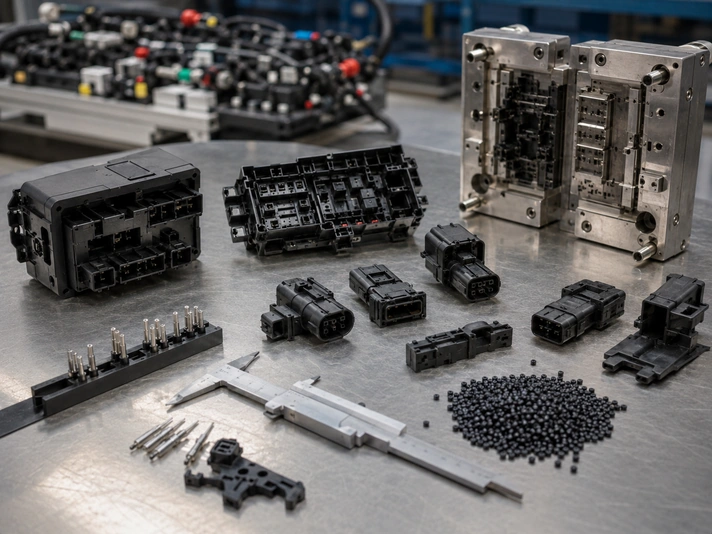
Automotive PBT Components
Used in automotive electrical parts, sensor housings, and power distribution. Requires review of temp exposure, vibration, and tolerances.
PBT Injection Molding Design Challenges & GBM Solutions
PBT injection molding design challenges are mitigated through expert DFM review to prevent issues like warpage, flash, and short shots before tooling begins.
Moisture and Hydrolysis Risk
Problem: PBT may process poorly if the resin is not dried correctly. Moisture can affect surface quality, mechanical strength and process stability.
GBM Solution: Confirm resin drying requirements, use controlled drying before molding, reduce unnecessary material residence time and validate T1 samples before production.
Warpage and Shrinkage
Problem: PBT is semi-crystalline, and glass-filled grades like PBT GF30 may shrink differently along and across the flow direction.
GBM Solution: Review gate location, wall thickness, rib ratio, cooling balance, holding pressure and fiber orientation during DFM.
Weld Lines in Connector and Frame Parts
Problem: Thin walls, slots, terminal openings and multi-flow areas may create weld lines.
GBM Solution: Adjust gate position, venting, flow path, injection speed and mold temperature to improve filling and weld line strength.
Flash Around Shut-Off and Terminal Areas
Problem: Electrical connectors and insert molding areas are sensitive to flash.
GBM Solution: Review shut-off angle, mold fitting, vent depth, steel selection, parting line position and T1 samples feedback.
Short Shots in Thin-Wall PBT Parts
Problem: Thin ribs, long flow paths or low mold temperature can cause incomplete filling.
GBM Solution: Check flow length, material grade, gate size, runner design, injection speed, venting and hot runner feasibility during DFM review.
Gate Wear in PBT GF30
Problem: PBT GF30 can increase wear around gates and high-shear areas.
GBM Solution: Use suitable mold steel, wear-resistant inserts, replaceable gate inserts and planned maintenance for production molds.
PBT vs Other Engineering Plastics
Comparing PBT vs other engineering plastics like PA, PC, PPS, and PET helps determine the best material for electrical connectors and structural components.
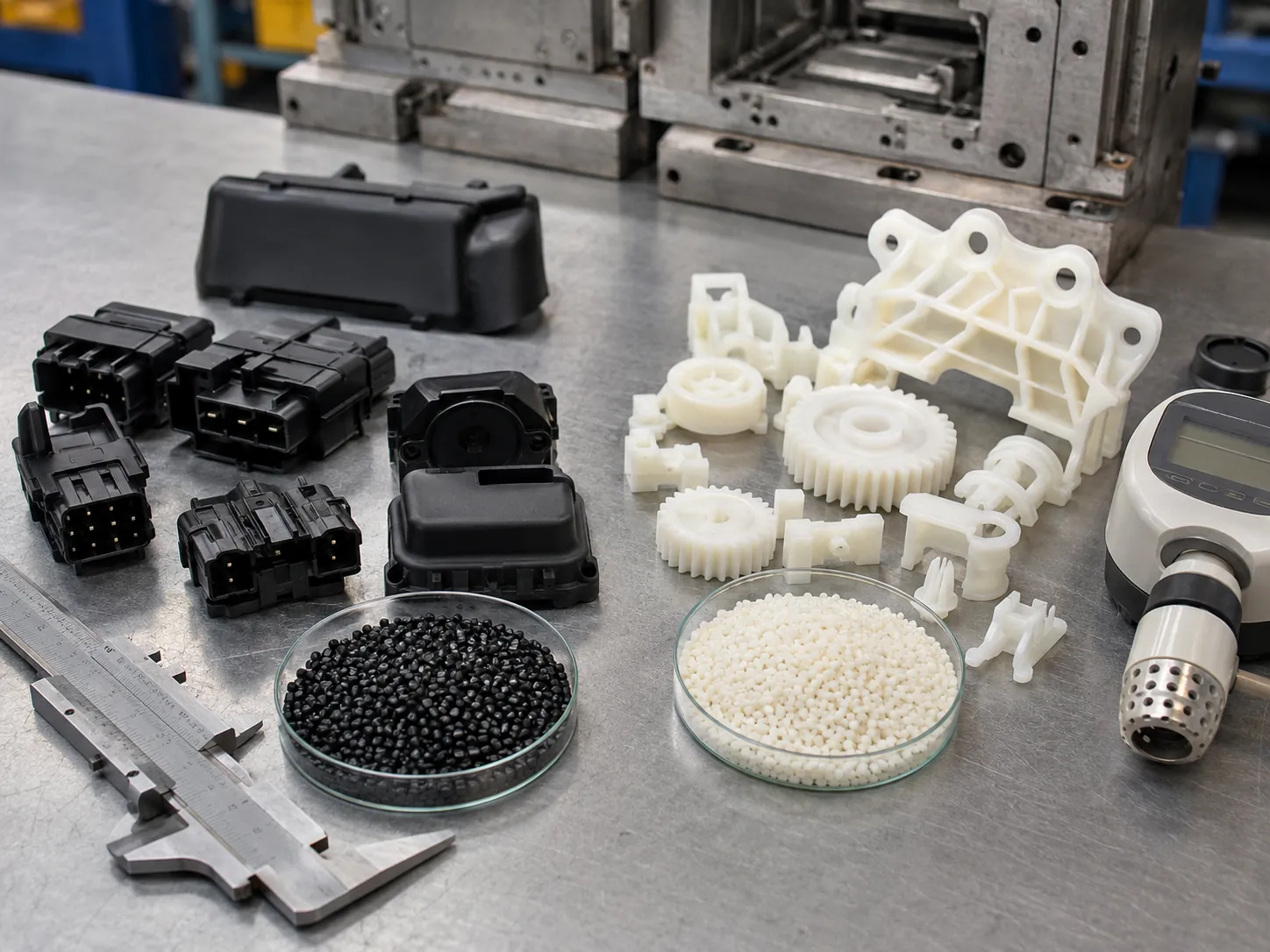
PBT vs PA / Nylon
PBT usually offers lower moisture absorption and more stable electrical performance than nylon. Nylon may be better for impact or toughness, but needs more moisture-related design consideration.
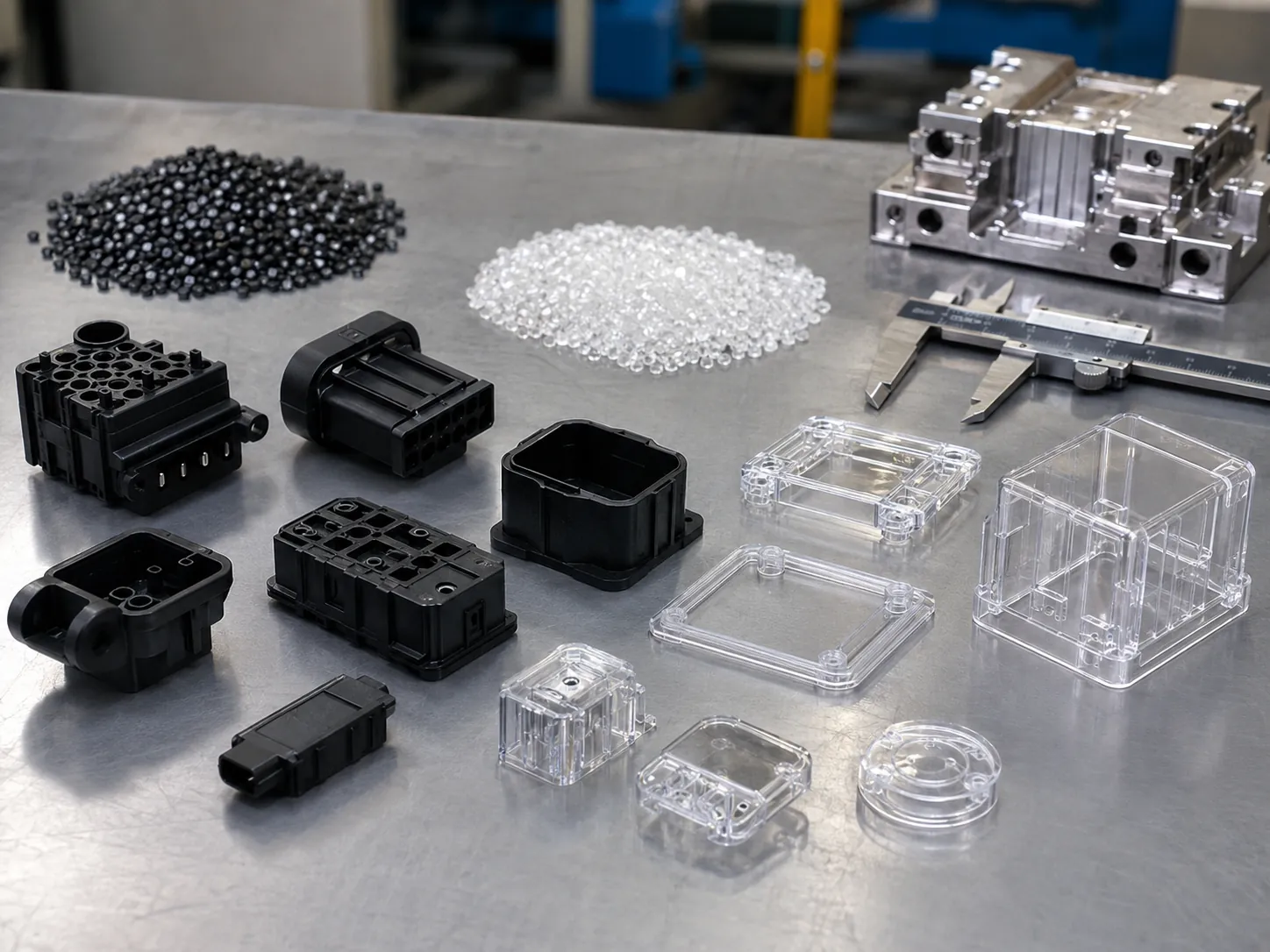
PBT vs PC
PC is commonly selected for impact resistance and transparency, while PBT is often selected for electrical insulation, dimensional stability and chemical resistance in connector applications.
Polycarbonate Injection Molding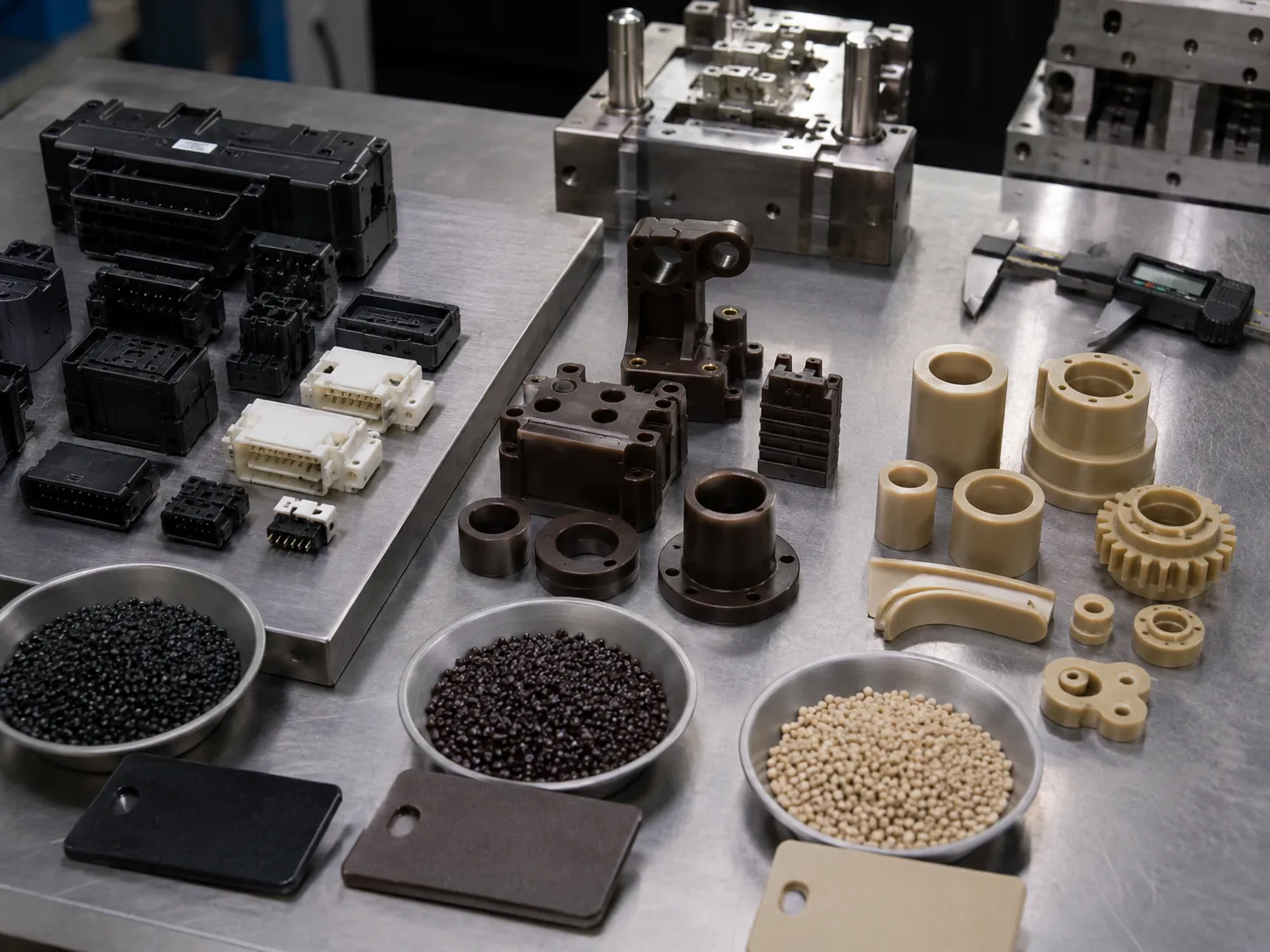
PBT vs PPS & PEEK
PPS and PEEK are used for extreme high-temperature and demanding chemical environments. PBT is a practical choice when the part doesn't need such extreme thermal performance but needs stable electricals.
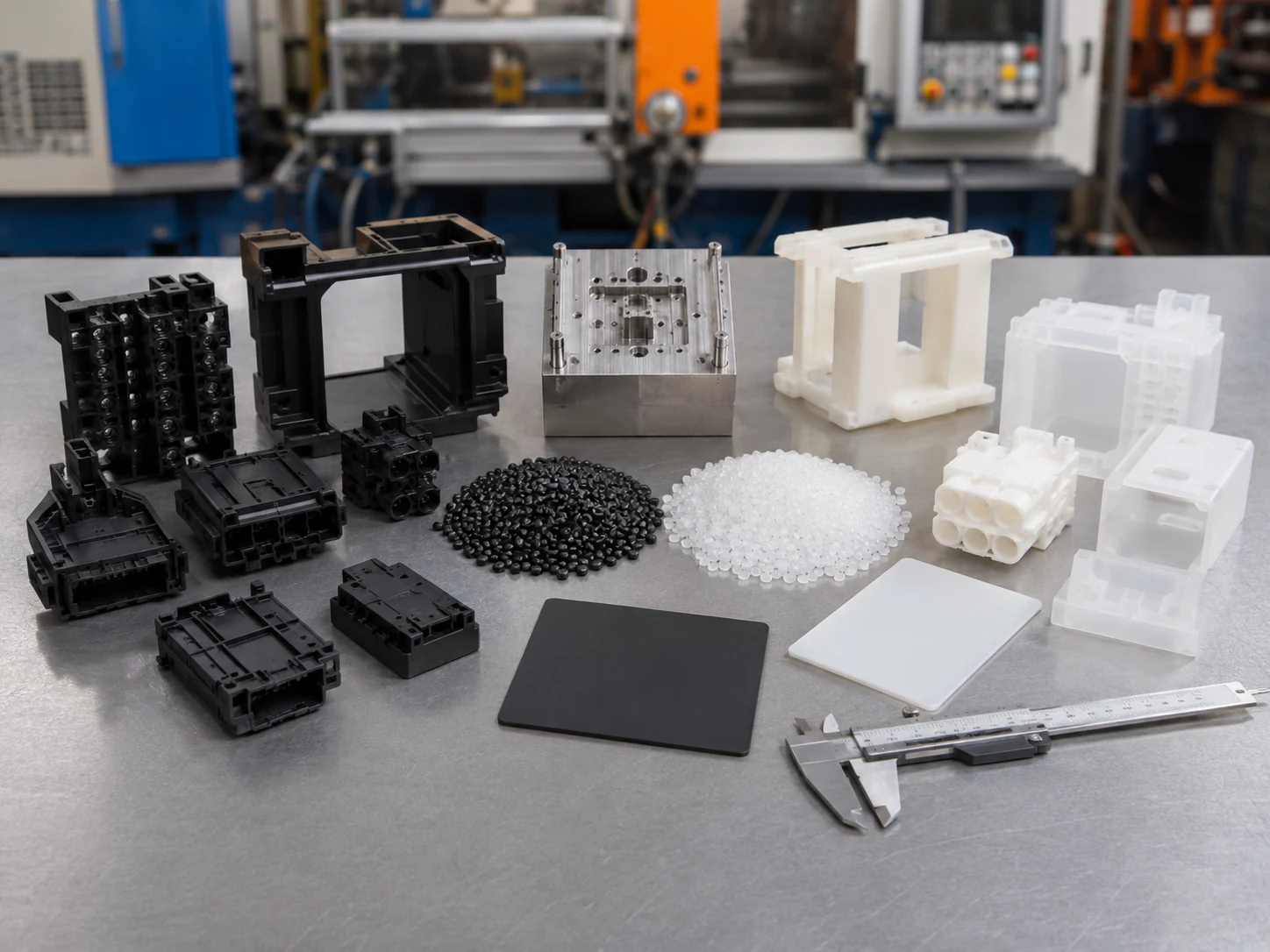
PBT vs PET
Both are thermoplastic polyesters. PBT is often easier to process in injection molding due to its crystallization and flow behavior, while PET may be selected for other property balances.
GBM PBT Injection Molding Process
The GBM PBT injection molding process includes requirement review, DFM review, mold manufacturing, T1 samples validation, CMM inspection, and final production.
Drawing & Requirement Review
Send 3D CAD files, 2D drawings, material grade, color, annual quantity, flame rating, tolerance and environment. We review PBT suitability before design.
DFM Review
We check wall thickness, ribs, bosses, draft angle, gate location, parting line, ejection, shrinkage, warpage risk, weld line risk and critical dimensions.
Mold Design & Manufacturing
GBM manufactures the mold according to volume, geometry, and material. Options include cold/hot runner, single/multi-cavity and insert molding.
T1 Samples Trial
During T1 trial, we review filling, flash, short shot, sink mark, burn mark, weld line, warpage, gate mark, ejection mark and assembly fit.
CMM Inspection & Approval
GBM provides T1 samples, sample photos, dimensional checks, CMM inspection and sample QC reports according to buyer requirements.
Production or Export Mold
After approval, GBM supports production molding or export-ready mold shipment with drawings, spare parts, trial video, and packing photos.
Quality Control for PBT Molded Parts
Quality control for PBT molded parts includes CMM inspection, T1 samples validation, and checking critical dimensions for electrical and assembly-sensitive applications.
- Critical dimensions
- Connector slots & pin holes
- Flatness and warpage
- Flash at parting lines
- Weld line position
- Gate vestige & surface marks
- Screw boss & rib quality
- Insert position & Assembly fit
In-House Manufacturing
Delivering T1 samples in 15 days with ±0.002mm precision for all custom molding services.
Packaging and Export Support
Packaging and export support for PBT molds ensures overseas buyers receive visible project evidence, T1 samples, and CMM inspection reports before shipment.
- T1 samples photos
- Mold trial video
- Sample QC & CMM inspection
- Mold drawings
- Spare parts list
- Mold maintenance notes
- Packing photos
- Wooden case export packaging
PBT Injection Molding FAQ
PBT injection molding FAQs cover essential topics like material selection, typical temperature ranges depending on grade, drying requirements following the resin datasheet, and how to choose a manufacturer.
What is PBT injection molding?
What is PBT used for in injection molding?
What are the advantages of PBT for injection molding?
What is the typical PBT injection molding temperature?
Does PBT need drying before injection molding?
Who are common PBT material suppliers?
What are common defects in PBT injection molding?
How to choose a PBT injection molding manufacturer?
What is PBT GF30 injection molding?
What is flame-retardant (FR) PBT used for?
Can PBT be used for electrical connectors?
Can PBT be used for LED light cases?
Is PBT better than nylon for electrical parts?
What should I send for a PBT injection molding quote?
Can GBM manufacture both the PBT mold and the molded parts?
Ready to Start Your Project?
Discuss your PBT injection molding requirements with our engineering team.
What to Send for a PBT Injection Molding Quote
To receive an accurate quote, please prepare 3D/2D drawings, PBT grade, GF30 or flame requirements, annual volume, surface finish, critical dimensions, and testing requirements. If you are not sure which PBT grade to use, send the working temperature, humidity, electrical requirements, and mechanical load. GBM can help do a preliminary material evaluation before mold design.
- 3D CAD file & 2D drawing with tolerances
- PBT grade or application requirement
- Glass fiber content, flame rating or UL requirement
- Annual quantity & expected production volume
- Color, surface finish & critical dimensions
- Assembly, testing or certification needs
Direct Contact
Email: Annie@gbminjection.com
Phone: +86 13632611848