
Polycarbonate Injection Mold Manufacturer for Optical & Impact-Resistant PC Parts
Custom PC injection mold tooling for transparent covers, optical-grade parts, impact-resistant housings, and PC/ABS enclosures. GBM supports DFM review, mold steel selection, gate and venting design, T1 trial samples, CMM inspection, and export-ready tooling for overseas OEM projects.
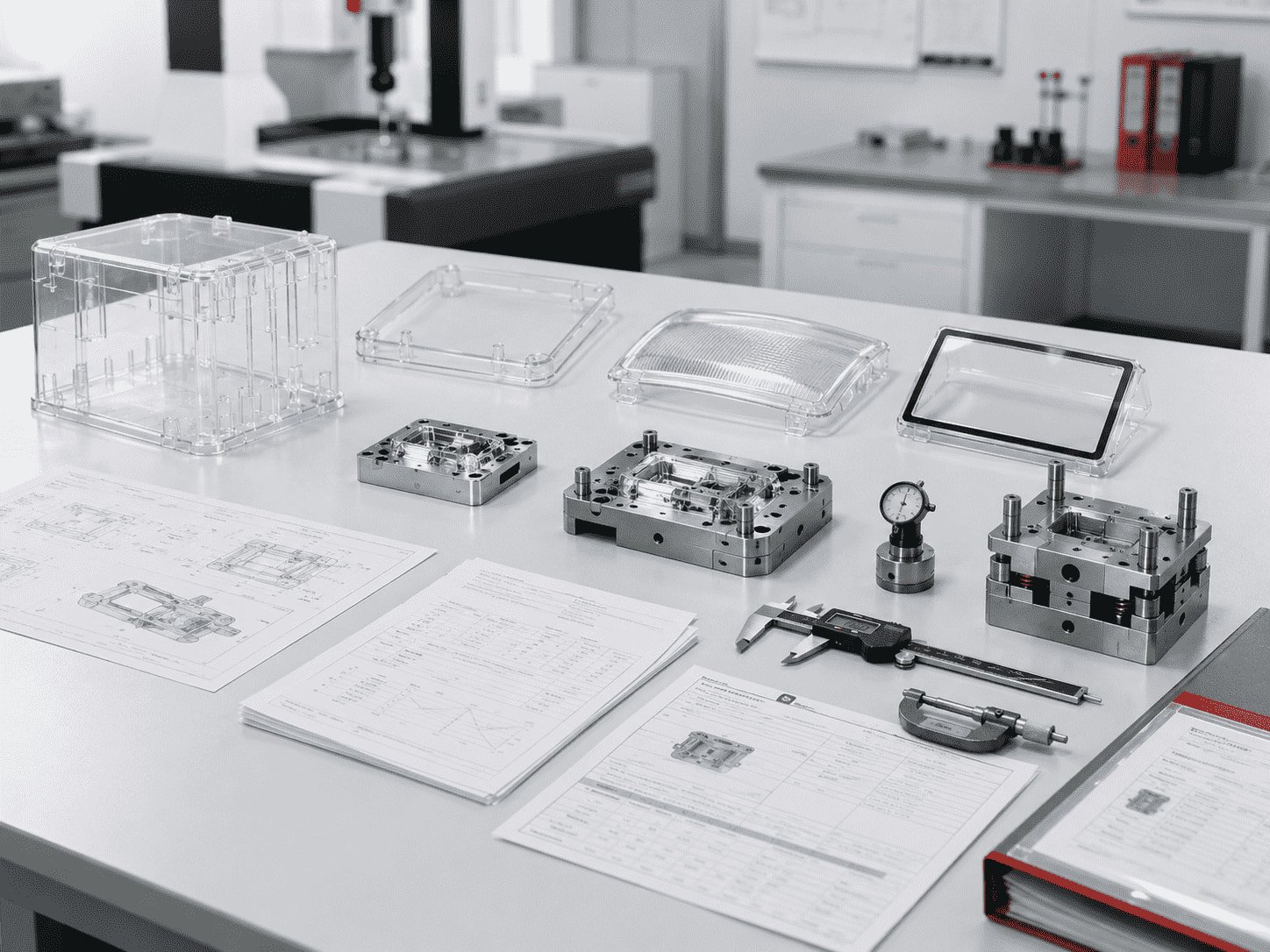
PC Mold Types We Build
As a custom PC injection molding factory, we build precision polycarbonate molds for optical parts, impact-resistant housings, PC/ABS components, and 2K overmolded products. Each mold is engineered around your part structure, material behavior, surface requirements, and production volume.
1. Optical-Grade PC Injection Molds
For transparent covers, lenses, display windows, medical clear covers, light guides and inspection windows. To achieve a high precision mold standard, design focuses on SPI A1/A2 polishing, gate position, venting, low-stress filling and clean cavity surfaces to reduce haze, bubbles, black spots and flow marks.
2. Impact-Resistant PC Housing Molds
For industrial housings, electronic enclosures, protective covers, instrument cases and device shells. Tooling review focuses on wall thickness, ribs, bosses, screw posts, shrinkage, warpage, impact strength and dimensional stability.
3. Transparent PC Molded Parts & Covers
For custom plastic PC transparent moulded parts, clear guards, lighting covers and visual inspection windows. We review polishing grade, material drying, mold temperature, flow path, weld line position and surface acceptance before mold cutting.
4. PC/ABS & PC + TPU Mold Tooling
For electronic enclosures, soft-touch covers, overmolding mold grips and 2-shot mold PC parts. We review bonding area, shut-off surfaces, material compatibility, shrinkage difference and parting line control.
Polycarbonate Injection Mold Price & Cost Factors
Polycarbonate injection mold price is not decided by material name alone. For optical-grade PC molds, the main cost drivers are steel selection, cavity polishing, gate location, venting, cooling balance, mold temperature control and T1 correction time. For impact-resistant PC housing molds, the quote is affected by part size, wall thickness, ribs, screw bosses, sliders, lifters, mold life, cavity number and multi-cavity mold requirements or export mold standards.
A low-cost PC mold may reduce the initial tooling budget, but poor venting, unstable cooling or an unsuitable gate design can cause bubbles, burn marks, flow marks, stress cracking or warpage during T1 trials. GBM reviews your 3D drawing, PC resin grade, surface finish, tolerance and annual volume before recommending a cost-effective mold structure.
| Cost Factor | Why It Affects PC Mold Price | GBM Review Point |
|---|---|---|
| Optical polish | Transparent PC defects are easy to see | SPI A1/A2, cavity steel, polishing area |
| Mold steel | PC may require polished or corrosion-resistant steel | S136, NAK80, H13, 718H |
| Gate design | Affects weld line, flow mark and stress | Gate size, gate type, flow path |
| Venting | PC can trap air and show burns or short shots | Parting line vents, insert vents, end-of-fill vents |
| Cooling layout | Affects stress, warpage and dimension stability | Core/cavity cooling balance |
| Mold structure | Sliders, lifters and undercuts increase complexity | DFM before mold cutting |
| Mold standard | Export molds require local compatibility | DME, HASCO, LKM |
| Item | Typical Reference | Why It Matters |
|---|---|---|
| Resin drying | Follow resin datasheet; many PC grades use around 120°C for 3–4 hours | Reduces bubbles, silver streaks and moisture defects |
| Mold temperature | Often controlled in a higher range than commodity plastics | Helps reduce internal stress and improve surface finish |
| Gate & runner design | Larger or balanced flow paths may be needed for PC | Reduces pressure loss, weld lines and flow hesitation |
| Venting | Add vents at flow ends, inserts and parting lines | Reduces burn marks, trapped air and short shots |
| T1 validation | Check appearance, dimension, stress and assembly | Confirms the mold before shipment or production |
PC Drying, Mold Temperature & T1 Trial Control
Polycarbonate is sensitive to moisture and processing temperature. Before PC injection molding, resin drying, melt temperature, mold temperature, venting and packing control must be reviewed together with the mold design. For transparent PC and optical-grade PC parts, moisture marks, bubbles, silver streaks and internal stress can appear quickly if the resin preparation or mold temperature is unstable.
GBM reviews the resin datasheet before T1 trial and adjusts drying, barrel temperature, mold temperature, injection speed, packing pressure and cooling time based on the part thickness, gate location, flow length and surface requirement.
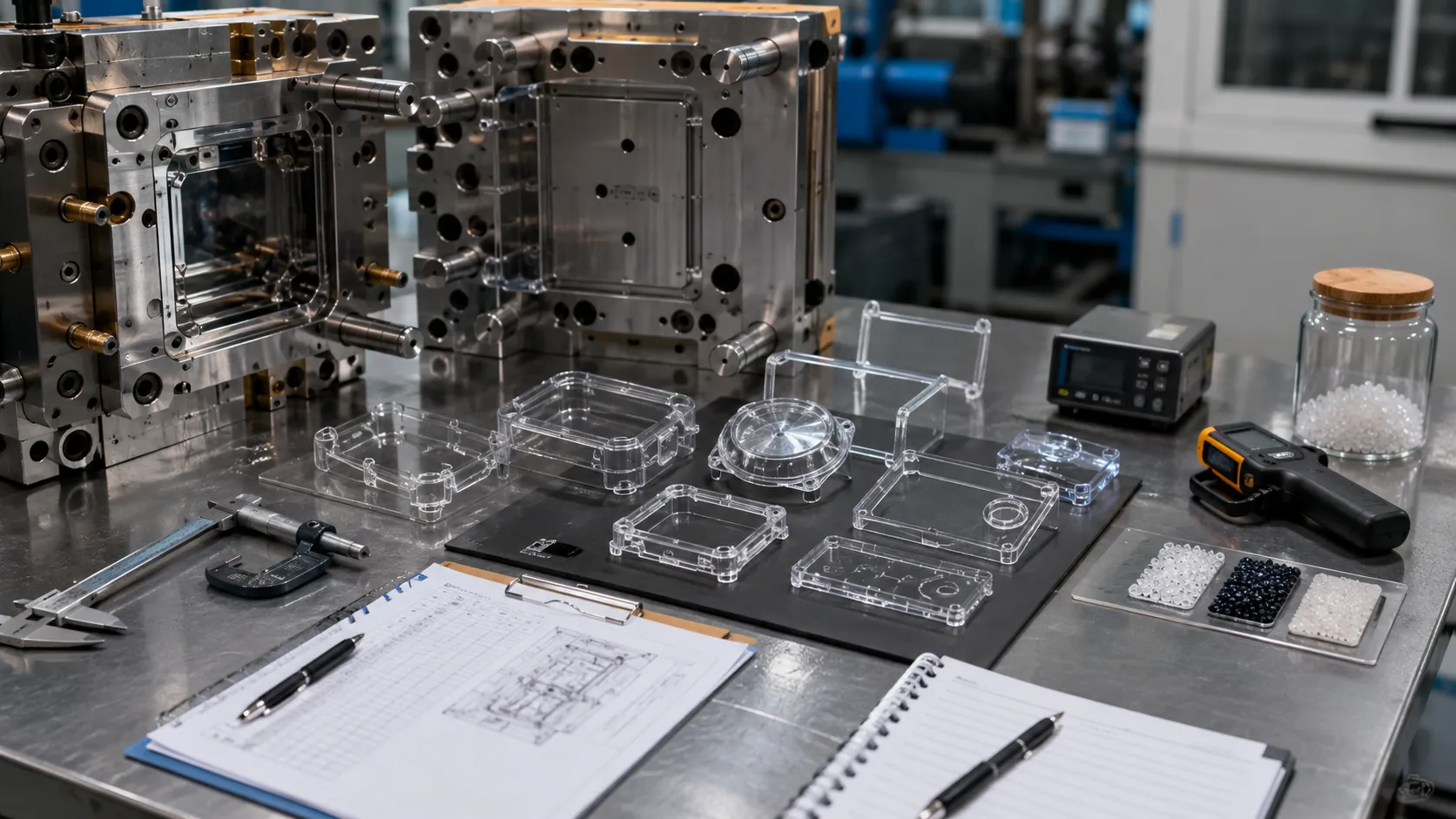
Common Polycarbonate Injection Molding Defects and Mold Remedies
Mold tooling for PC usually requires strategic venting (controlled depth to prevent flash) and optimized runner designs. These factors heavily influence filling pressure, cycle time, and part quality.
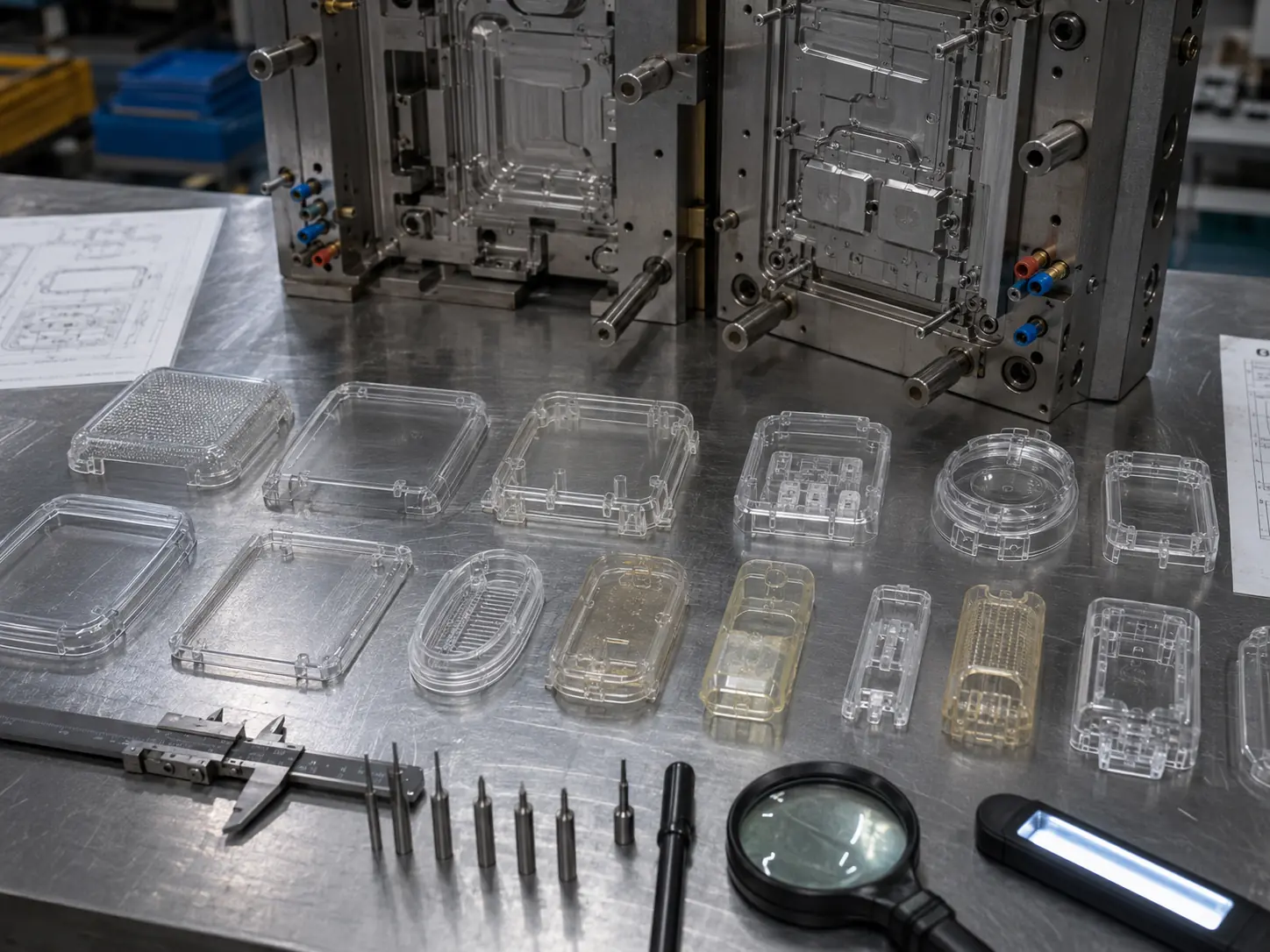
| Defect | Common Cause | Mold-Side Remedy |
|---|---|---|
| Silver streaks / splay | Moisture, overheating, trapped air | Resin drying review, venting, lower shear gate design |
| Bubbles / voids | Moisture, thick wall, poor packing | Wall thickness review, packing window, gate freeze review |
| Burn marks | Air trap, poor venting, high shear | Add vents at end-of-fill, inserts, sliders and parting lines |
| Flow marks | Long flow path, low mold temperature, poor gate location | Gate relocation, runner balance, mold temperature control |
| Weld lines | Multiple flow fronts or poor venting | Gate layout review and venting near weld area |
| Warpage | Uneven wall, unbalanced cooling, poor gate position | Cooling layout review, wall correction, gate balance |
| Stress cracking | Sharp corners, low mold temperature, high internal stress | Larger radius, stable mold temperature, stress review |
| Black spots / yellowing | Material degradation or long residence time | T1 parameter review, purging and temperature control |
Steel, Mold Life & Surface Finish for PC Molds
We build custom PC injection molds based on your part structure, production volume, PC injection molding surface finish requirements, and molding standard. The table below shows our common PC mold steel, SPI mold life expectations, surface finishes, and tooling options (including 2K PC mold configurations) for PC and PC ABS injection molding projects.
Export-Ready PC Molds for North America and Europe
DME & HASCO Standard PC Molds for Local Production
We build export-ready PC molds that fit smoothly into your local injection molding production. Whether you need a PC injection mold for North America, Europe, or Mexico, our engineering team can design PC molds based on your required mold standard, machine platen size, hot runner system, drawing format, and maintenance needs.
From DME mold components for North American molding shops to HASCO-compatible mold bases for European production, every mold is delivered with complete technical files, trial records, spare parts information, and maintenance instructions to support stable local production.
Tell us your injection machine brand, platen size, mold standard, and preferred hot runner system. Our engineers will design your PC mold for smoother installation, trial, and production in your local factory.
DME Mold Components
For North American molding shops, we can build DME standard PC molds with DME mold components, inch-based specifications, and locally serviceable parts to reduce maintenance difficulty after delivery.
HASCO-Compatible Mold Bases
For any PC mold for European production, we support HASCO standard PC molds utilizing HASCO-compatible mold bases and standard components, helping your local team install, maintain, and replace parts more efficiently.
Inch / Metric Drawing Support
We provide both inch and metric drawing support, including 2D / 3D mold drawings and CAD files, so your engineers can review the mold structure before shipment.
Hot Runner Brand Compatibility
Our PC molds can be designed around your preferred hot runner system, ensuring perfect hot runner compatibility regarding gate layout, controller interface, heating zones, and maintenance access requirements.
Complete Export Mold Documentation
Each export PC mold can be delivered with a comprehensive spare parts list for injection molds, maintenance instructions, mold trial video, inspection records, and molding parameter references for easier local setup.
Ready for Local Trial & Production
Before shipment, we provide mold trial videos, sample reports, adjustment records, and technical support to help your local team start production faster after the mold arrives.
they choose us









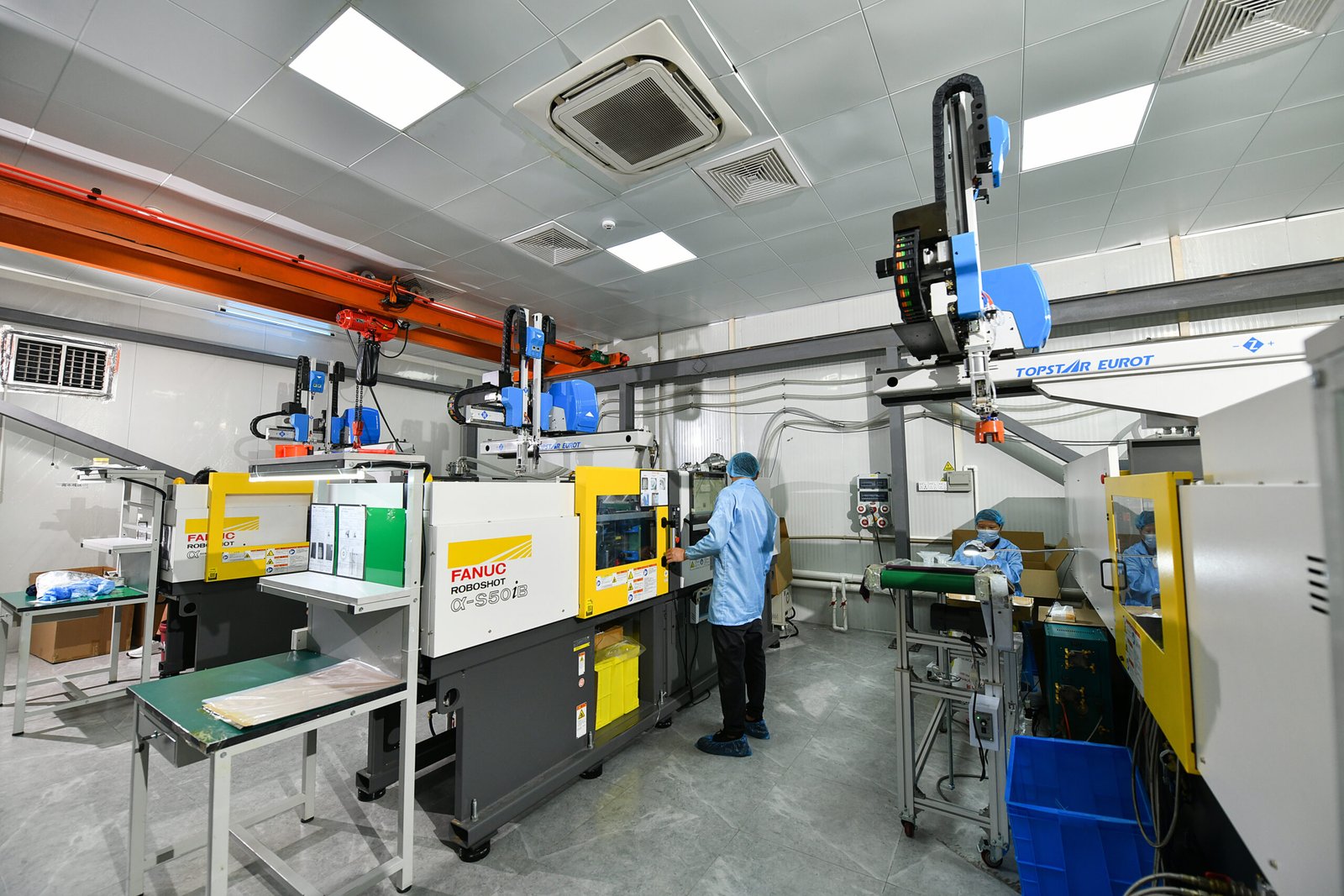
Advanced PC Mold Engineering Capabilities
Complex PC injection molding projects often require more than a standard mold structure. Our engineering team supports 2K PC mold design, unscrewing mechanisms, slide and lifter structures, multi-cavity molds, and stack mold solutions based on your part geometry, production volume, material combination, and tolerance requirements.
1. 2K PC / ABS Mold Design
For PC/ABS parts, PC + TPU overmolding, and double-shot applications. We review bonding areas, material flow direction, shut-off surfaces, and tolerance stack-up before final mold design.
2. Slides, Lifters & Unscrewing Structures
For PC parts with undercuts, inner threads, clips, or assembly features. We design reliable slide, lifter, and unscrewing mechanisms to support stable demolding and long-term production.
3. Multi-Cavity & Stack Mold Options
For high-volume PC housings and transparent components. Multi-cavity and stack mold designs can help improve production output and reduce cost per part when the annual volume supports it.
Have a PC part with threads, undercuts, overmolding, or high-volume requirements? Send us your 3D files and our engineers will review the best mold structure for your project.
| Buyer Checkpoint | Why It Matters for PC Molds | GBM Support |
|---|---|---|
| PC material experience | PC has high viscosity, moisture sensitivity and stress risk | PC, PC/ABS, transparent PC, optical-grade PC review |
| DFM before tooling | Mold defects are expensive to correct later | Wall, rib, boss, draft, gate and venting review |
| Optical polish ability | Clear PC shows every defect | SPI A1/A2 polishing and surface inspection |
| T1 trial feedback | PC often needs trial correction | T1 samples, trial photos/videos, engineering notes |
| Quality documentation | Overseas buyers need proof before shipment | CMM, FAI/CPK, sample QC report on request |
| Export mold standard | Local production needs compatible tooling | DME, HASCO, LKM, spare parts, maintenance notes |
How to Choose a Reliable Polycarbonate Injection Mold Supplier
A reliable polycarbonate injection mold supplier should not only quote the mold price. PC mold projects require engineering review before steel cutting because defects often come from wall thickness, gate location, venting, cooling and material preparation. Before choosing a PC mold factory, check whether the supplier can explain the mold structure, steel choice, polishing grade, T1 trial plan, inspection method and export documentation.
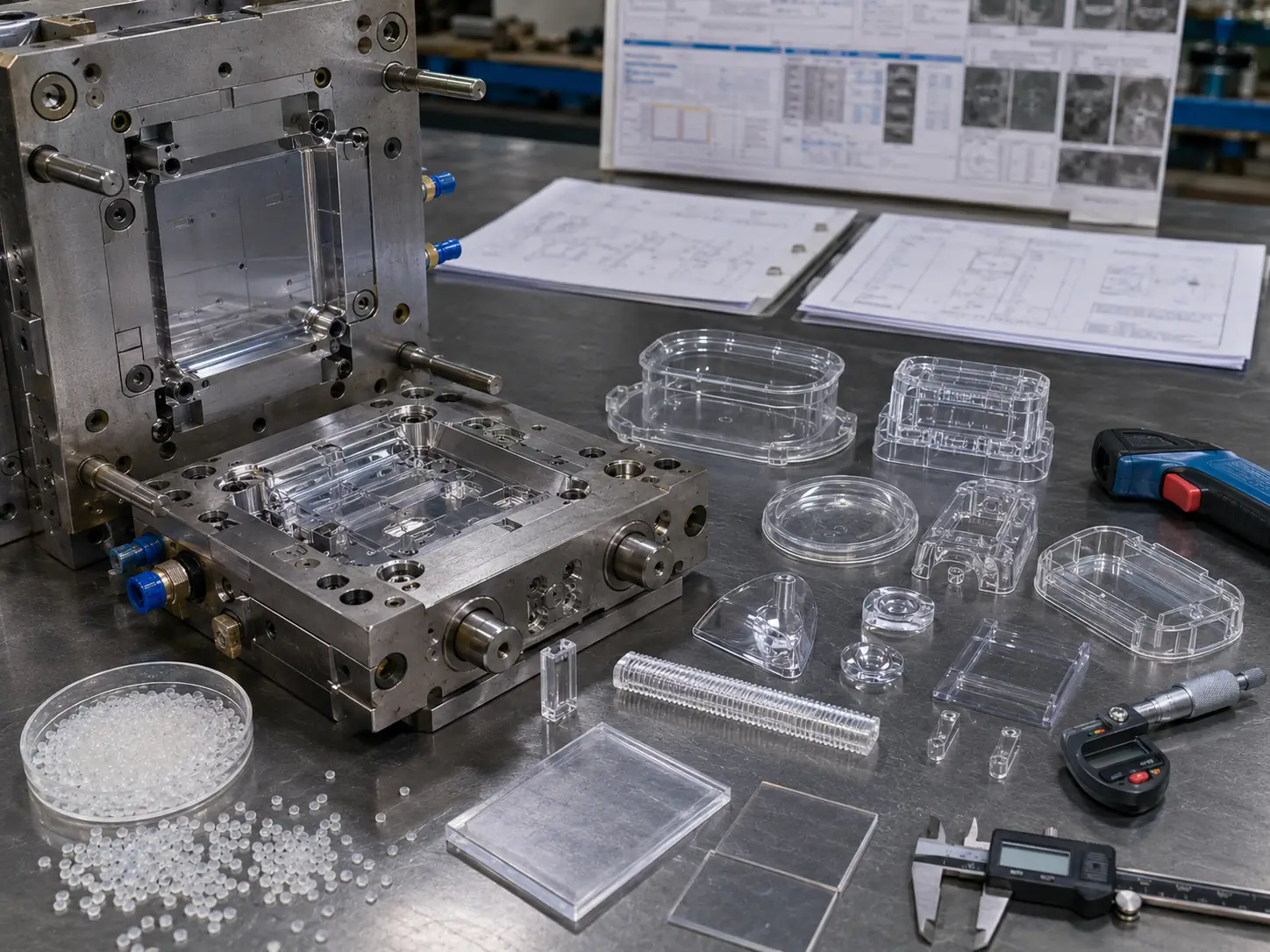
Typical Lead Time for Custom Polycarbonate Injection Molds
The lead time for a custom polycarbonate injection mold depends on part complexity, mold size, cavity number, polishing requirement, hot runner system, slider/lifter structure and T1 correction scope. Simple PC housing molds are usually faster than optical-grade PC molds or multi-cavity PC molds because optical polishing, venting review and surface validation require more engineering time.
For a reliable schedule, please send 3D drawings, 2D tolerance drawings, PC resin grade, annual quantity, surface finish requirement, mold standard and target shipping country. GBM will provide a tooling schedule after DFM review instead of giving a generic lead time without checking the part design.
PC Mold Design, DFM and Flow Review Support
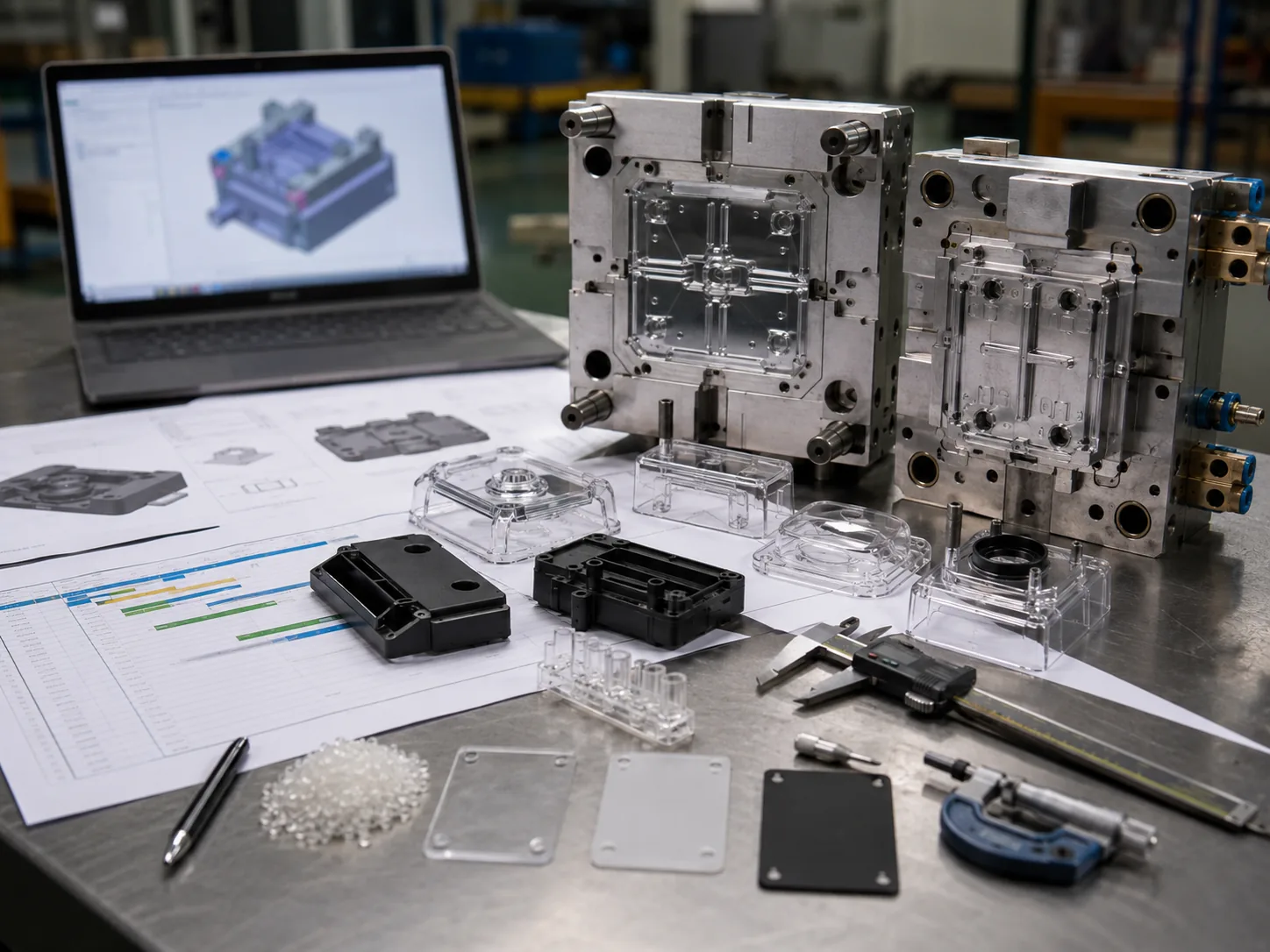
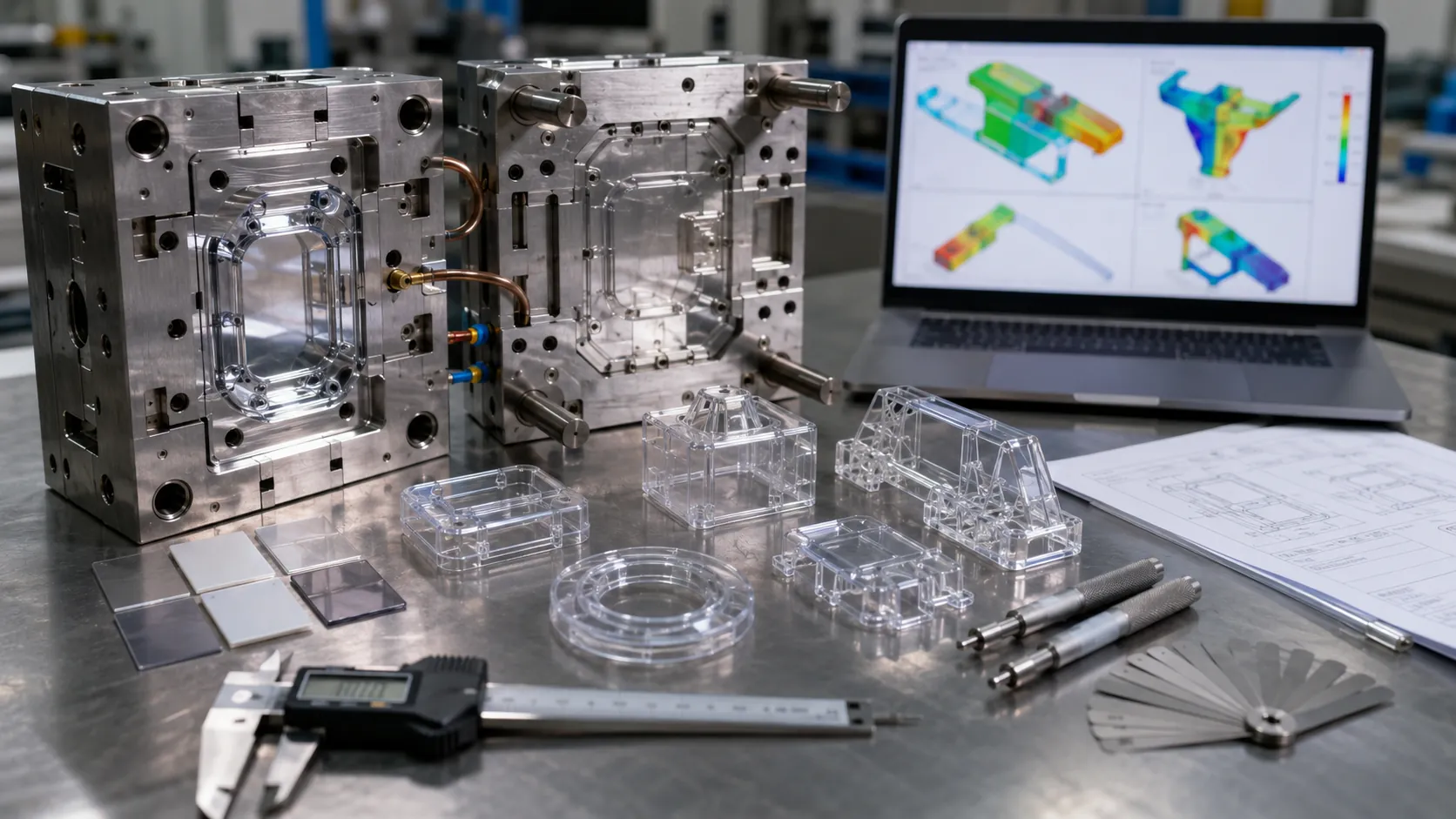
For polycarbonate injection mold projects, design software is only useful when combined with real molding experience. GBM reviews STEP, IGES, X_T, STP, DWG and PDF files to check wall thickness, draft angle, ribs, bosses, undercuts, gate location, venting areas, cooling layout and ejection risk. For complex transparent PC parts, long-flow housings or high-volume PC components, mold flow review can be used to check filling balance, weld line position, air traps and pressure loss before mold cutting.
A Tooling Partner You Can Verify
Trust in PC mold manufacturing should be supported by engineering files, inspection data, and clear project records. From DFM before mold cutting to T1 sample reports and export tooling documentation, our comprehensive injection mold services provide the information your team needs to verify mold quality, part accuracy, and production readiness before the mold reaches your facility.
DFM Before Mold Cutting
Before machining starts, we review wall thickness, draft angle, gate location, ribs, bosses, shrinkage, and possible stress areas for PC parts. This helps your engineering team identify potential molding risks before steel cutting begins.
T1 Samples With Inspection Reports
After the first mold trial, we provide T1 samples and inspection feedback, helping your engineering team confirm dimensions, surface finish, fit, and assembly performance before mass production.
Export Tooling Documentation
For export molds, we can provide 2D / 3D mold drawings, steel certificates, spare parts lists, mold trial videos, maintenance notes, inspection records, and packing records for easier local production setup.
Polycarbonate Injection Mold FAQ
These FAQs answer common buyer questions about custom polycarbonate injection molds, optical-grade PC molds, impact-resistant PC housing molds, PC drying, T1 trials, mold cost, lead time and export tooling.
Need Technical Support?
Our engineering experts are available 24/7 to discuss your DFM, mold flow analysis, and production requirements.
- Annie@gbminjection.com
- +86 13632611848
- Room 101, Jiumo Technology Park, Gangsheng Road, Yabian Village, Shajing Street, Baoan District, Shenzhen City
1. What is a polycarbonate injection mold?
2. Do you manufacture custom polycarbonate injection molds?
3. Can you make optical-grade PC molds?
4. Can you make impact-resistant PC housing molds?
5. How much does a polycarbonate injection mold cost?
6. What information do you need for a PC mold quotation?
7. Does polycarbonate need drying before injection molding?
8. What are common PC injection molding defects?
9. How do you reduce bubbles in transparent PC parts?
10. How do you reduce burn marks in PC injection molding?
11. How do you control warpage in PC housing parts?
12. What mold steel is suitable for PC injection molds?
13. Can you make PC/ABS injection molds?
14. Should I choose a hot runner or cold runner for a PC mold?
15. Can polycarbonate injection molds be multi-cavity?
16. What is the typical lead time for a custom polycarbonate injection mold?
17. Do you provide DFM before mold manufacturing?
18. Can you support mold flow review for PC parts?
19. How do you validate a PC mold during T1 trial?
20. Can you build export-ready PC injection molds?
21. How should I choose a reliable polycarbonate injection mold supplier?
22. Can you produce both the mold and molded PC parts?
23. What is the difference between a PC injection mold and PC injection molding service?
Let's Review Your CAD File for
PC Mold Making
Looking for polycarbonate injection molding services or custom PC tooling? Send us your 3D CAD file, material grade, annual volume, surface finish requirement, and target market. Our engineers will review the PC mold structure and suggest a practical tooling plan.
Direct Contact
-
Sales Email Annie@gbminjection.com
-
Direct Phone +86 13632611848
-
Headquarters Room 101, Jiumo Technology Park, Gangsheng Road, Yabian Village, Shajing Street, Baoan District, Shenzhen City
Request a PC Mold Quote
All uploads are strictly protected by our standard NDA. Our engineering team typically responds with initial feedback and a tooling strategy within 24 hours.