TPE Injection Molding Manufacturer for Custom Soft-Touch Parts
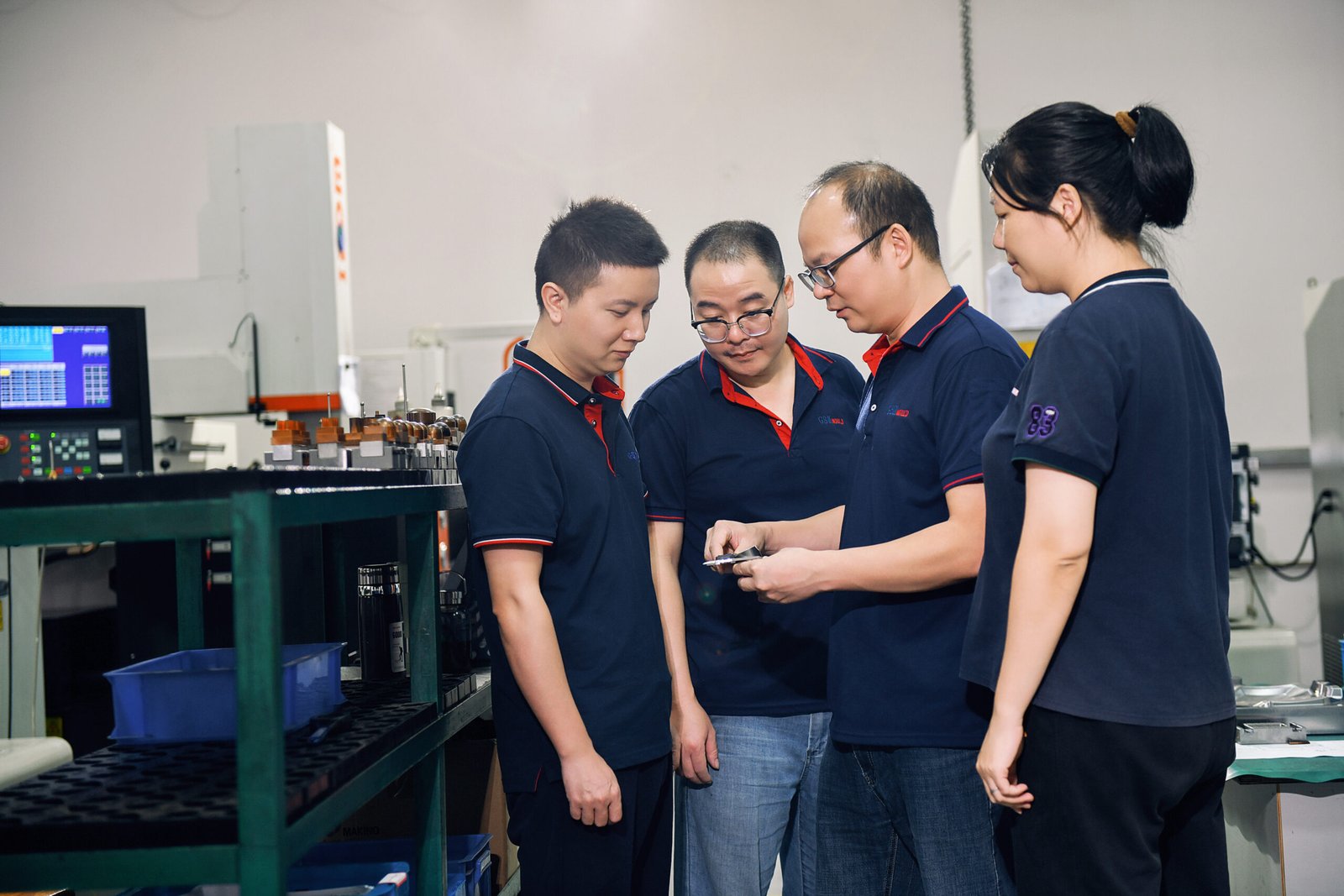
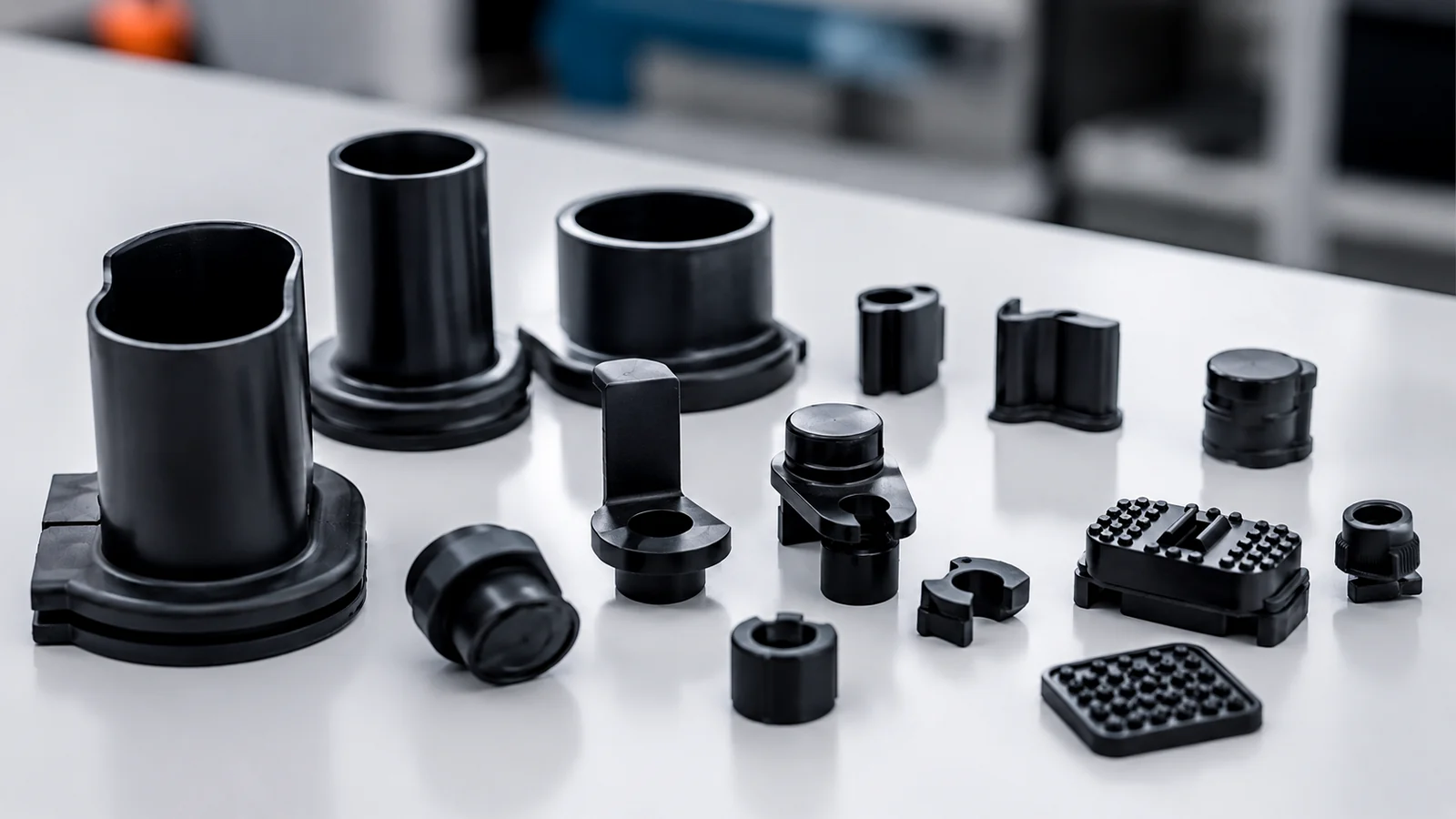
GBM Mold provides custom TPE injection molding and mold tooling for soft-touch grips, seals, gaskets, wearable parts, cable strain reliefs, protective covers and overmolded components. Our engineering team reviews TPE grade, Shore hardness, gate location, venting, mold surface, shrinkage, ejection and T1 trial results before moving your project into production.
- Custom TPE molded parts for soft-touch, sealing, grip and flexible applications
- TPE mold design review for gate location, venting, flash control and demolding
- Support for SEBS, SBS, TPV, TPU-like TPE and customer-specified TPE grades
- DFM review, T1 samples, sample inspection, trial video and export packing
Custom TPE Injection Molding at a Glance
| Item | GBM Mold Support |
|---|---|
| Service Type | Custom TPE injection molding, TPE mold tooling, TPE overmolding |
| Common Parts | Soft grips, seals, gaskets, flexible buttons, wearables, strain reliefs, covers |
| TPE Types | SEBS, SBS, TPV, TPO, TPU-like TPE, customer-specified grades |
| Key Review Points | Shore hardness, shrinkage, gate, venting, ejection, flash, surface feel |
| Mold Options | Prototype mold, production mold, cold runner, hot runner, multi-cavity mold |
| Quality Checks | Dimension, appearance, Shore hardness, fit test, adhesion test if overmolded |
| Quote Needs | 3D/2D drawings, material or hardness, quantity, color, surface and application |
What Is Thermoplastic Elastomer Injection Molding?
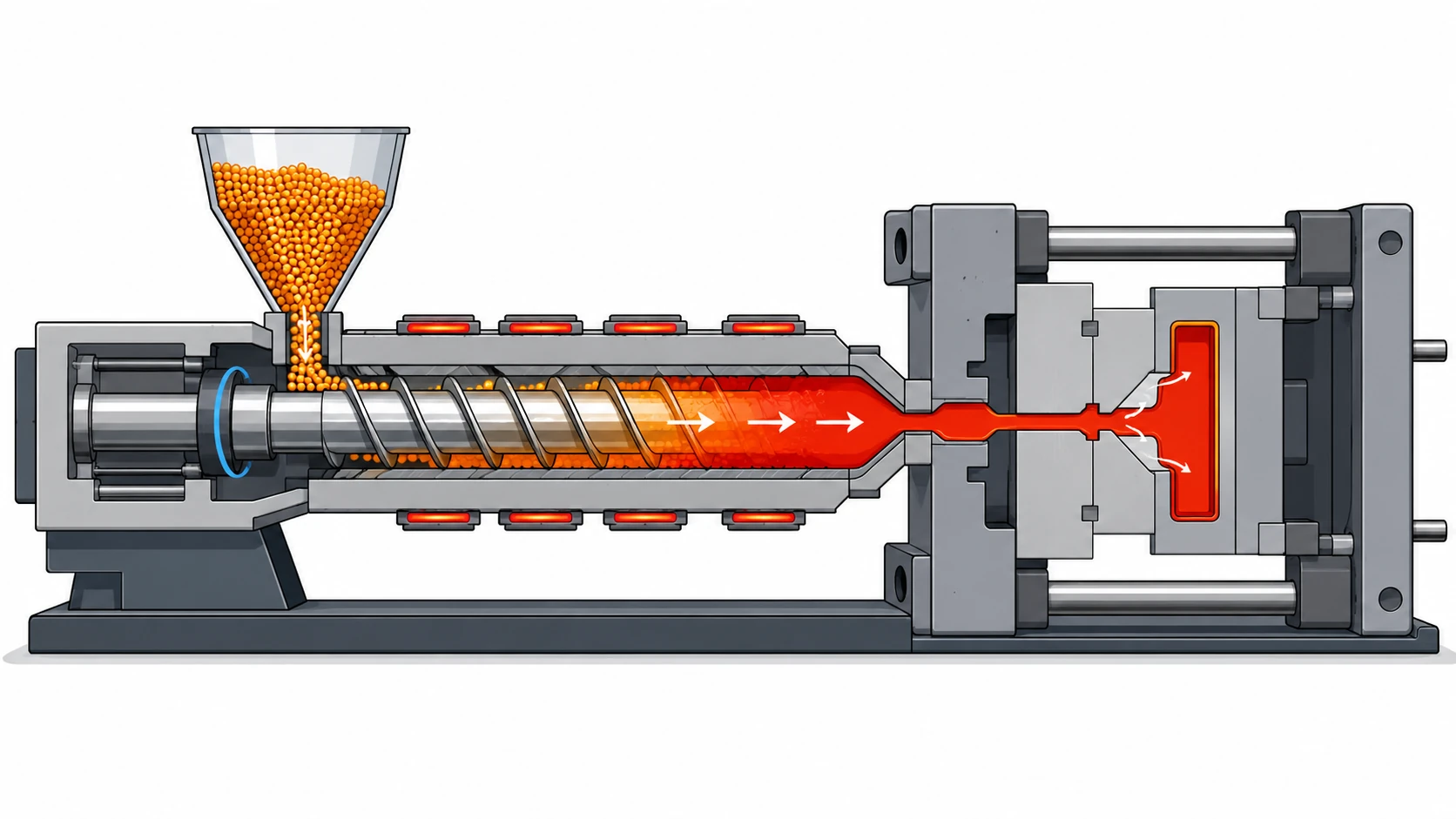
Thermoplastic elastomer injection molding is a process that melts TPE pellets and injects the material into a closed mold cavity to form flexible, rubber-like plastic parts. TPE materials combine the elastic feel of rubber with the processing advantages of thermoplastics, making them suitable for soft-touch grips, seals, gaskets, flexible covers and overmolded components.
Unlike traditional thermoset rubber molding, TPE injection molding can use standard thermoplastic injection molding equipment when the material grade, part design and processing window are suitable. HEXPOL and KRAIBURG both describe TPE as processable on conventional or standard injection molding machines, with mold design and processing settings adjusted according to the specific grade.
Ask GBM to Review My TPE Part DesignCustom TPE Injection Molding Services for Overseas Buyers
GBM Mold supports overseas OEM buyers, product developers and sourcing teams that need flexible plastic parts with controlled touch feel, sealing function or overmolded structure. We do not only mold the part; we review whether the TPE grade, mold structure, gate position, venting and demolding method are suitable before tooling.
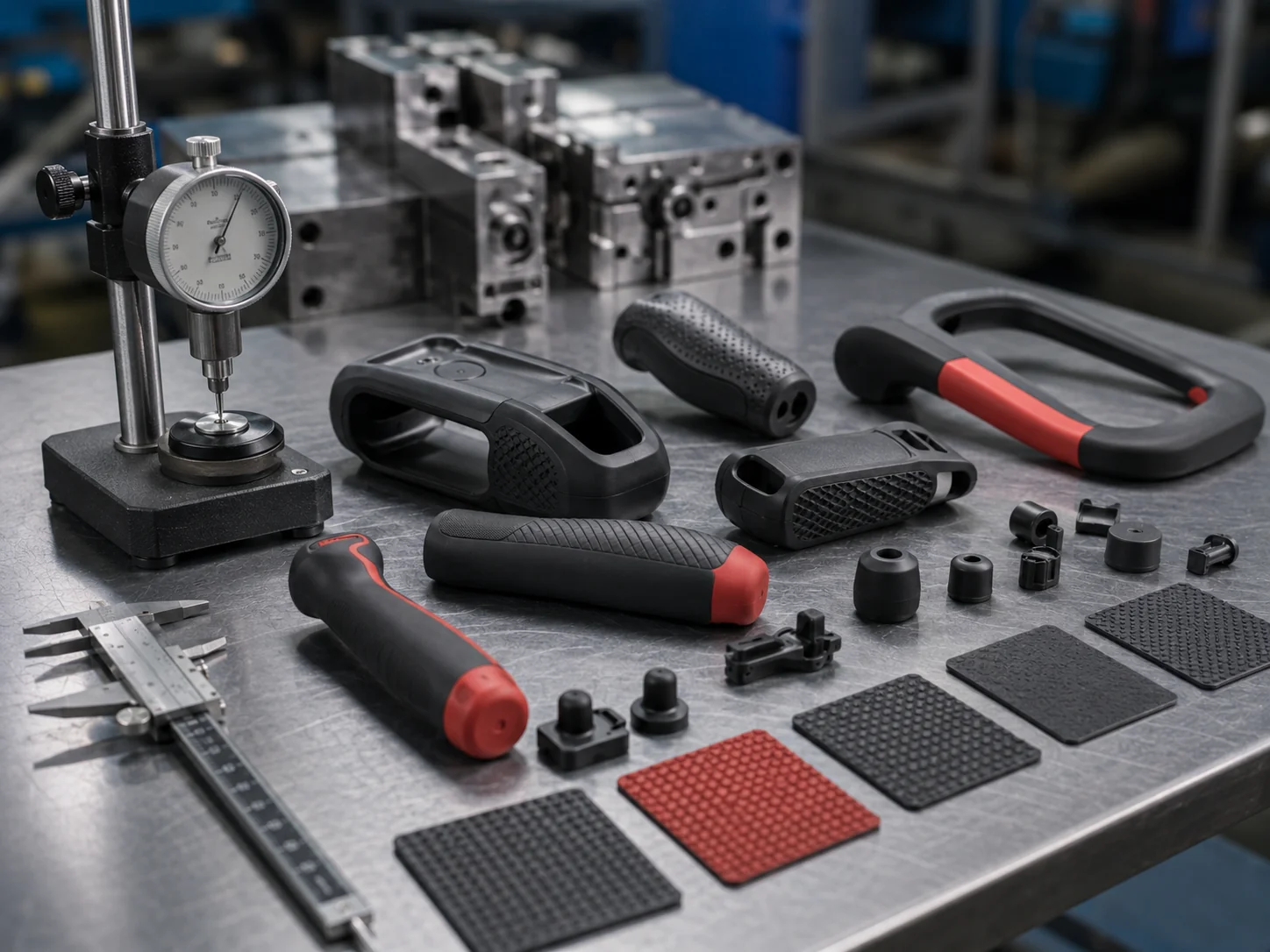
Custom TPE Molded Parts
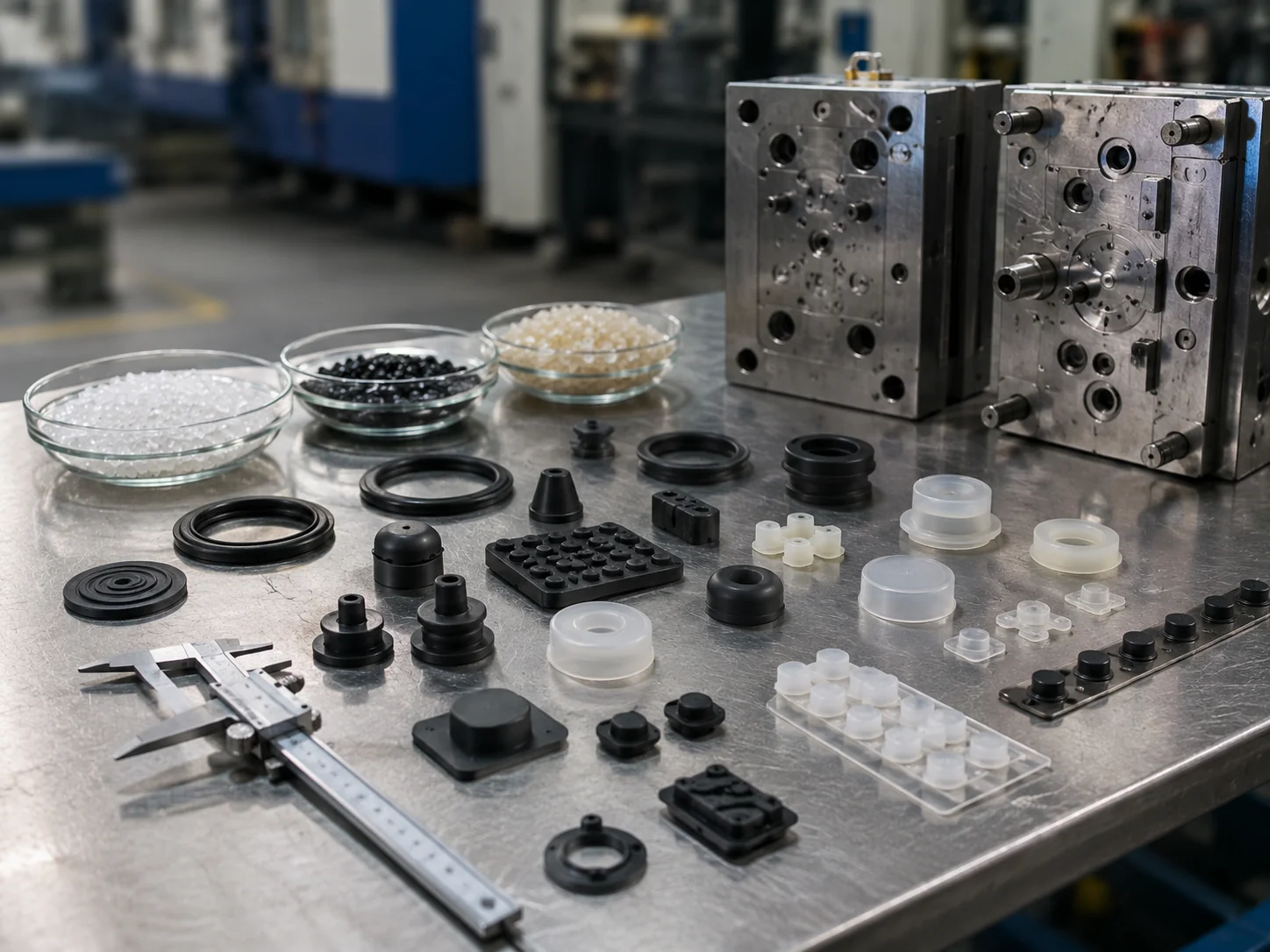
For single-material TPE parts such as soft seals, flexible covers, buttons, plugs, gaskets and anti-slip components.
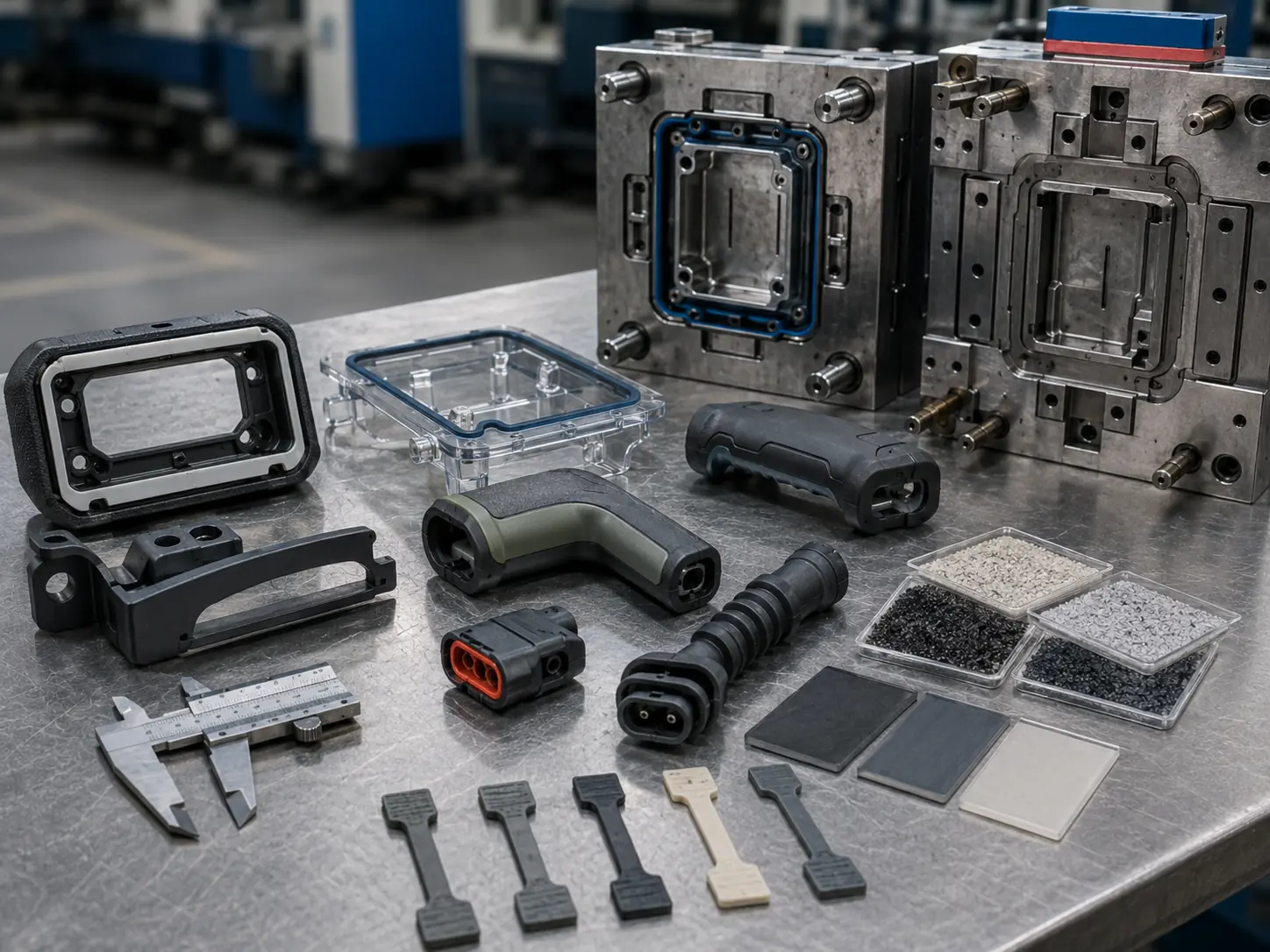
TPE Overmolding
For TPE over ABS, PC, PP, PA, PC/ABS or metal inserts used in grips, handles, protective edges and sealing structures.
TPE Soft-Touch Grips and Handles
For tool handles, handheld devices, consumer products and ergonomic components.
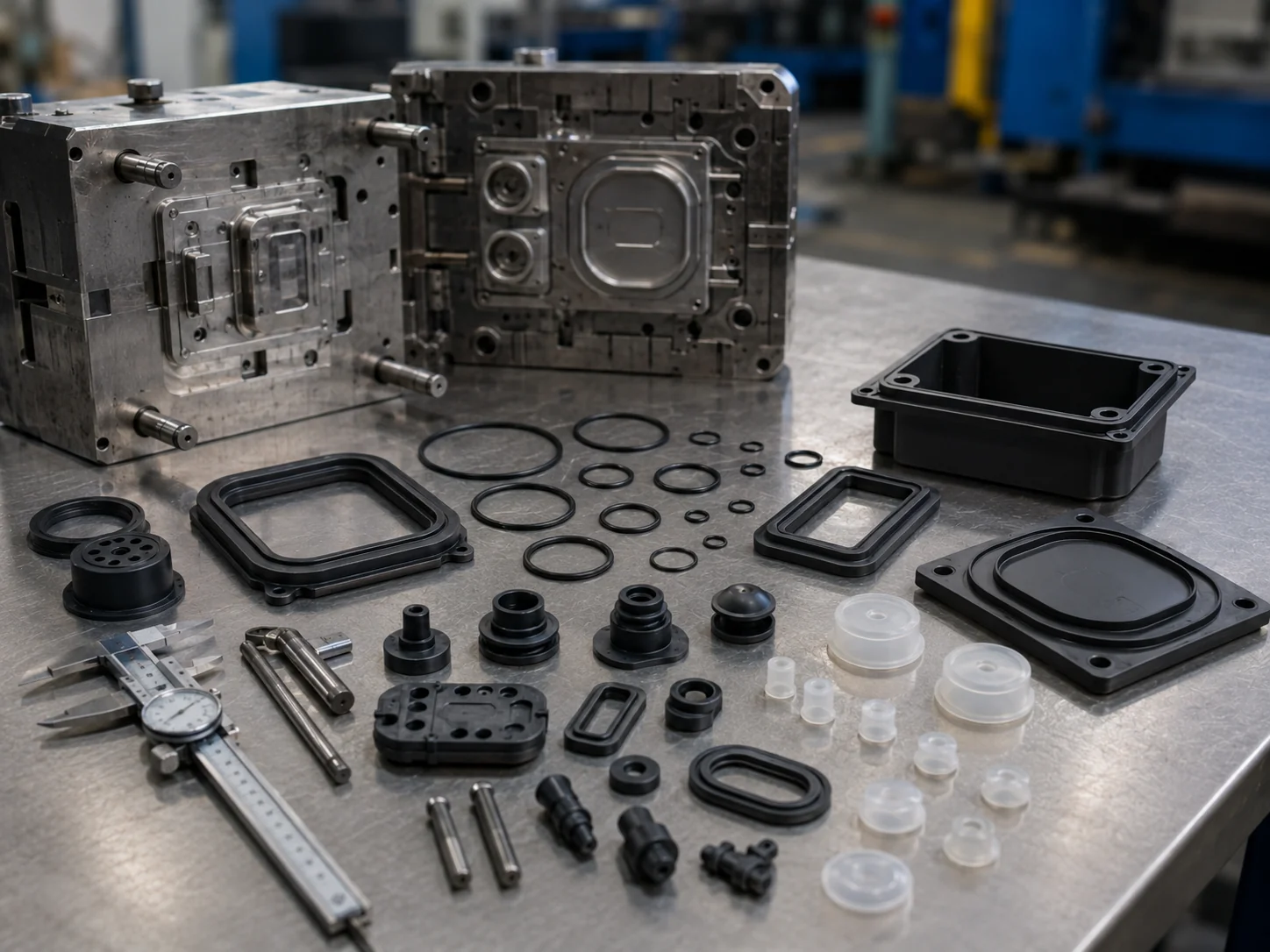
TPE Seals and Gaskets
For flexible sealing lips, compression parts, protective covers and enclosure sealing.
TPE Materials and Grades for Injection Molding
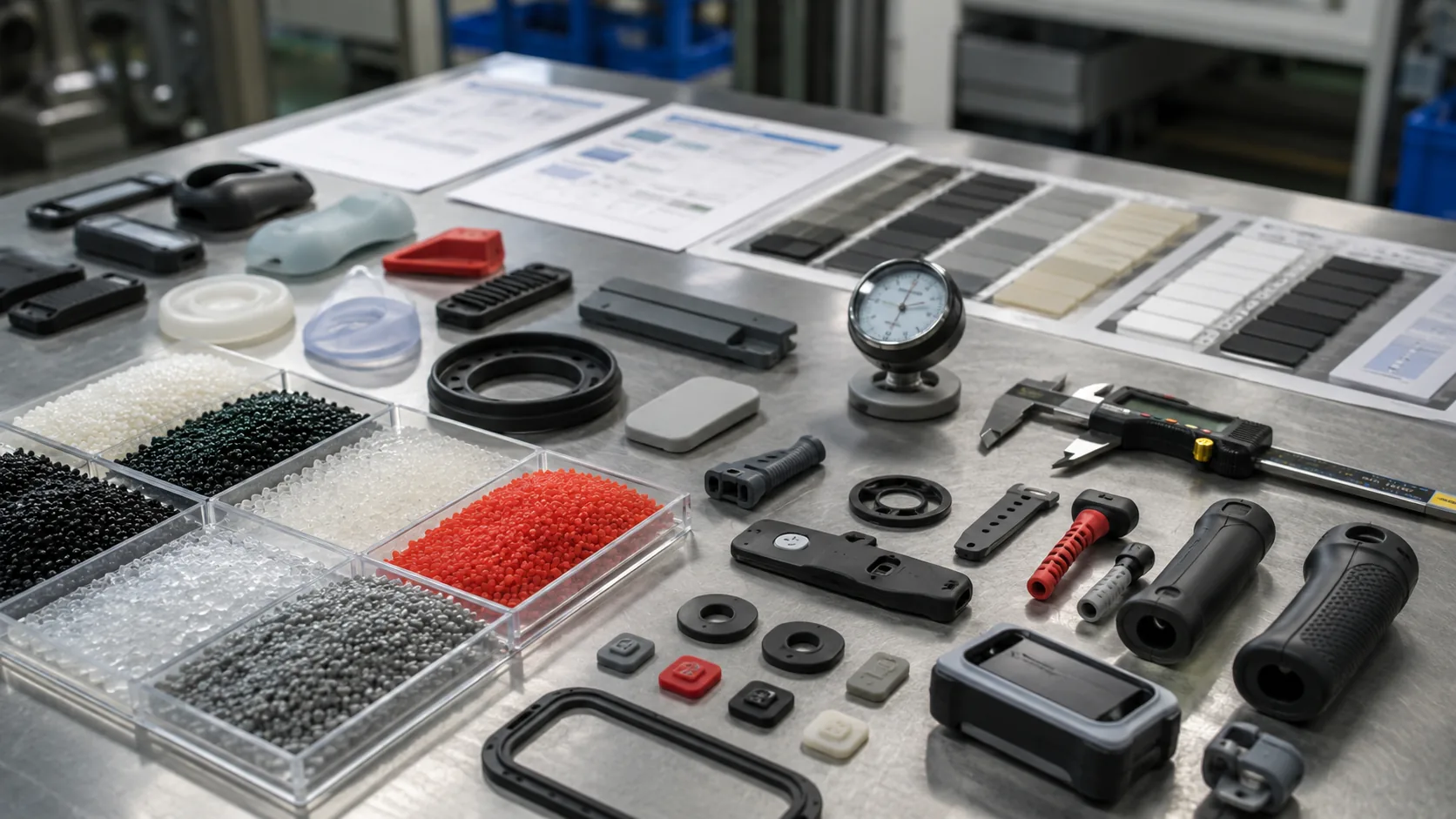
Choosing the right TPE grade is the first step in a stable molding project. A soft-touch grip, a sealing gasket and a wearable component may all use TPE, but their hardness, elastic recovery, bonding requirement, chemical exposure, UV resistance and surface feel can be very different.
| TPE Type | Typical Use | Design Focus |
|---|---|---|
| SEBS-based TPE | Soft grips, flexible covers, consumer parts, overmolding | Flow, surface feel, adhesion, residence time |
| SBS-based TPE | Soft-touch parts, grips, flexible consumer parts | Moderate processing temperature, surface control |
| TPV | Sealing parts, automotive-style flexible components | Compression set, heat aging, sealing performance |
| TPO | Flexible automotive or industrial parts | Weathering, impact, lower density |
| TPU-like TPE | Wear-resistant soft layers, protective covers | Abrasion, tear strength, ejection, sticking |
| Customer-specified TPE | Regulated or brand-specified projects | Material datasheet, testing, color and compliance |
* Note: TPE part design begins with selecting the correct TPE type and grade, while material and mold design decisions affect gate location, runner style, cooling, warp and weld line control.
How to Choose the Right TPE Grade for Injection Molding
A suitable TPE grade should be selected according to the final application, not only by material name. Before mold design, GBM checks the part function, required Shore hardness, surface feel, flexibility, mating part, environment and production volume.
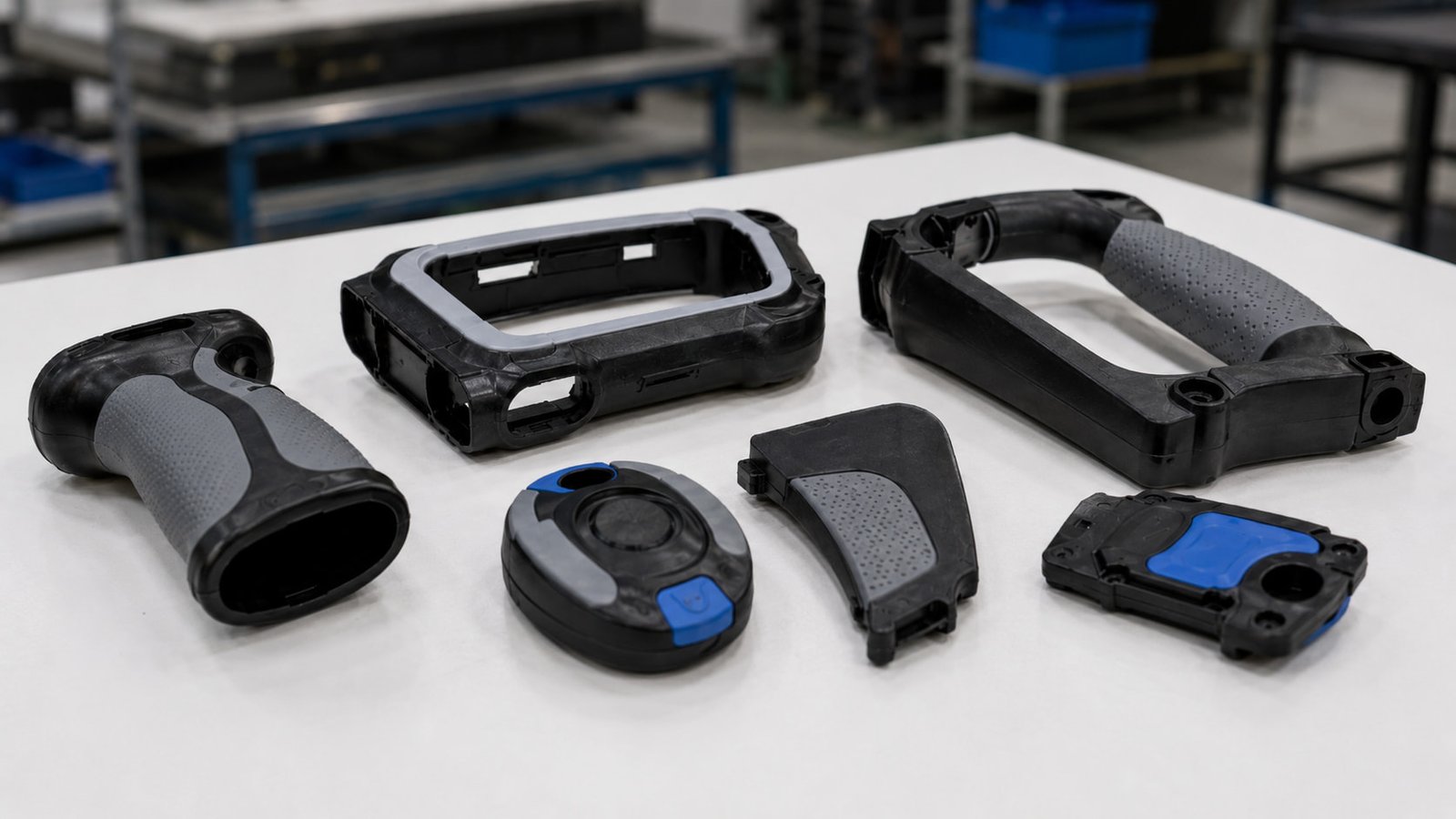
TPE Injection Molding Process from DFM to Production
A stable TPE injection molding process starts before cutting steel. GBM reviews the part design, TPE grade, wall thickness, gate location, venting, surface texture and ejection method so that T1 samples can be corrected quickly and production risks can be reduced.
RFQ & Drawing Review
We review 3D CAD files, 2D tolerances, material requirements, Shore hardness, annual volume, color and application conditions.
DFM for TPE Moldability
We check wall thickness, flow length, draft angle, ribs, sealing lips, undercuts, thin flexible areas and possible flash lines.
TPE Mold Design
We define runner type, gate location, venting groove, cooling layout, parting line, texture and ejection system based on the TPE grade.
Mold Manufacturing
CNC, EDM, wire cutting, polishing or texture preparation are selected according to the mold structure and surface requirement.
T1 Trial & Sample Review
T1 samples are checked for short shot, flash, bubbles, sticking, sink marks, deformation, Shore hardness, appearance and fit.
Production & QC
After sample approval, we support low-volume or production molding with dimensional inspection, appearance checking and shipping support.
TPE Injection Mold Design Guidelines
TPE mold design must account for soft material flow, elastic recovery, demolding difficulty and flash sensitivity. Compared with rigid plastics, soft TPE grades may require stronger attention to venting, parting line fitting, mold surface and ejection support.
Gate Design
Use gate locations that support balanced filling, avoid critical appearance areas and reduce weld lines in stressed zones. Fan gates, submarine gates, diaphragm gates or multiple pinpoint gates may be considered depending on the part geometry.
Venting
TPE parts can show burn marks, bubbles or short shots if trapped air cannot escape. A vent groove depth of 0.01–0.02 mm is generally sufficient for TPE molds to allow air out without causing flash.
Mold Surface
For soft TPE grades, a highly polished surface is not always the best choice. EDM or shot-blasted mold surfaces are often recommended as they can improve release and prevent soft parts from sticking in the mold.
Ejection
Soft TPE parts may deform during ejection. Ejector plates or stripper rings are ideal for soft grades. If ejector pins are used, they should be larger and act on the stiffest sections of the part.
Shrinkage
TPE shrinkage varies by grade, application and gate location (typically 1.0%–2.5%). GBM reviews shrinkage during DFM and validates it again during the T1 trial to ensure final dimensions meet tolerances.
TPE Injection Molding Temperature, Mold Temperature & Residence Time
TPE injection molding temperature is not a fixed value. It depends on the TPE family, grade, part thickness, runner system and target surface quality. GBM recommends confirming the final settings with the material datasheet and then validating them through mold trial.
Residence Time Control
Long residence time can increase the risk of thermal degradation, odor, bubbles, discoloration or poor surface appearance. For TPE overmolding or small second-shot volumes, GBM checks shot size, barrel usage, hot runner design and purge plan before production.
| Parameter | Practical Reference |
|---|---|
| SEBS runner temp | 170–240°C depending on grade |
| SEBS cylinder temp | 190–245°C; large parts may need higher |
| SEBS mold temp | 20–60°C to support flow and surface |
| SBS runner temp | Around 170–200°C depending on grade |
| SBS cylinder temp | 170–200°C (should not exceed 220°C) |
| SBS mold temp | 15–60°C |
| Cycle time ref | 15–25s (up to 2mm), 30–60s (2–6mm) |
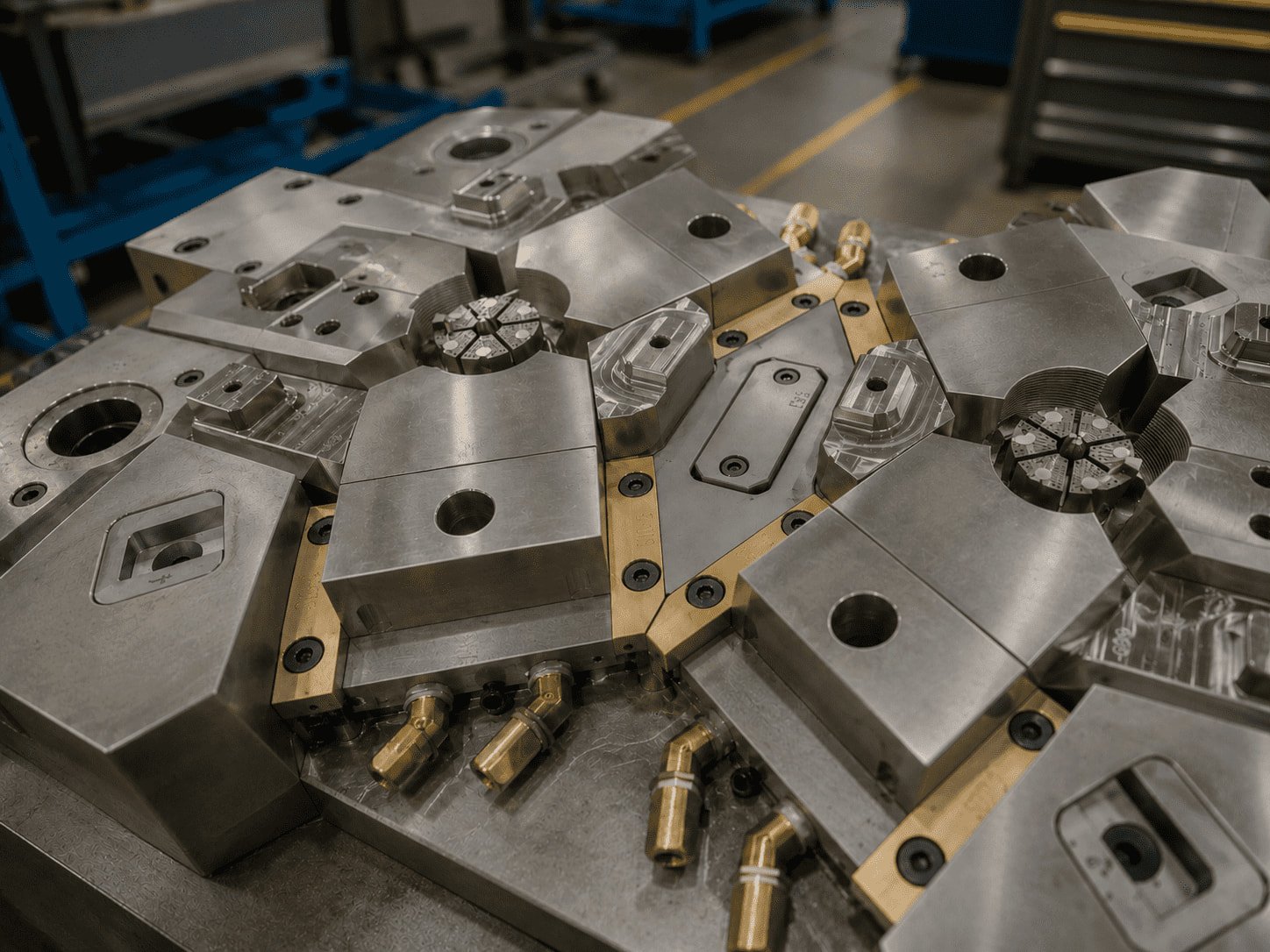
TPE Overmolding for Soft-Touch and Sealing Components
TPE overmolding is used when a rigid substrate needs a soft-touch, sealing, anti-slip or protective layer. Common combinations include TPE over ABS grips, TPE over PC covers, TPE over PP sealing edges, TPE over PA industrial handles and TPE over metal insert sealing areas.
GBM Design Review Focus:
- Substrate material and heat resistance
- Chemical adhesion or mechanical lock design
- Bonding area, grooves, holes, undercuts or wrap-around edges
- Shut-off surface and parting line flash control
- Substrate positioning during second-shot molding
- T1 adhesion, peeling, flash and deformation inspection
TPE vs TPU, Rubber, LSR, PVC and TPV
Understanding material differences helps buyers select the right elastomer. This section helps you understand when TPE is suitable and when another elastomer like TPU might be better.
| Comparison | When TPE May Fit | What to Check (Alternatives) |
|---|---|---|
| TPE vs TPU | Soft-touch feel, grips, flexible covers, some overmolding | TPU may be better for abrasion, tear strength or wear resistance |
| TPE vs Rubber | Can be processed like plastic, no vulcanization needed | Rubber may be better for high temp, strong chemicals, long compression |
| TPE vs LSR | Thermoplastic-style molding, easier coloring, recycling | LSR may be better for high heat, biocompatibility, silicone performance |
| TPE vs PVC | Flexible parts where eco-friendly PVC replacement is required | PVC may still be selected for extreme low cost or specific flexibility |
| TPE vs TPV | TPE is a broad family; TPV is one type for rubber-like sealing | TPV may be better for heat aging or automotive flexible sealing |
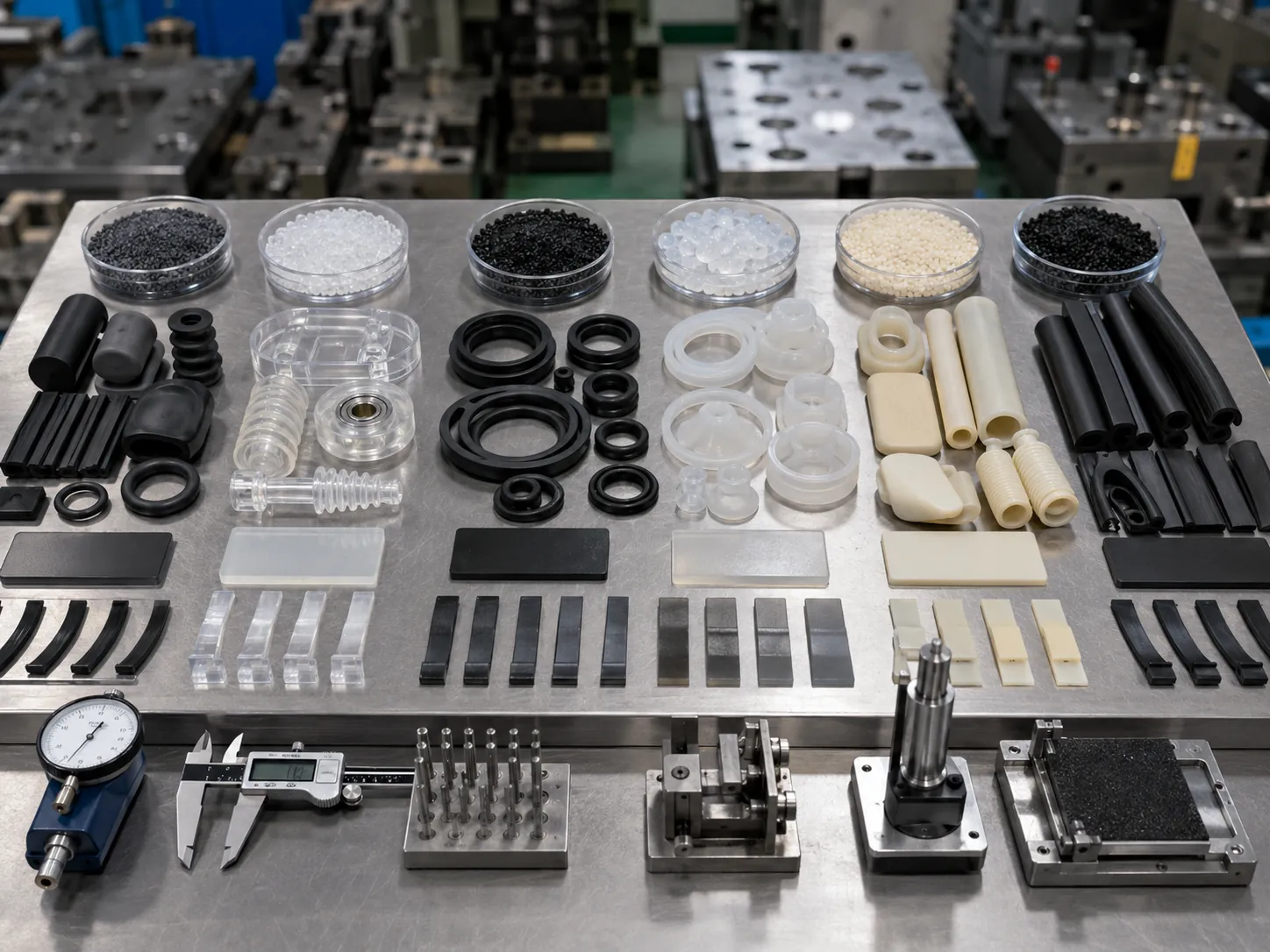
Common TPE Injection Molding Defects & Control
TPE defects are often related to material flow, venting, temperature, pressure, residence time, demolding and parting line control. GBM reviews these risks during DFM and confirms them during T1 trial.
Flash
Cause: Low clamp force, parting line gap, high pressure, poor venting.
Control: Parting line review, shut-off fitting, venting control, trial adjustment.
Short Shot
Cause: Low melt temp, poor venting, thin flow path, low injection pressure.
Control: Gate/runner review, venting, temp window, flow path optimization.
Bubbles / Blisters
Cause: Moisture, trapped air, high shear, thermal degradation.
Control: Drying review, venting, residence time control, process adjustment.
Sticking in Mold
Cause: Surface too smooth, insufficient draft, high mold temp, soft grade.
Control: EDM/texture review, draft, cooling time, ejection support.
Sink Marks
Cause: Gate freeze, holding pressure/time, cooling, wall thickness variation.
Control: Wall thickness review, packing adjustment, gate and cooling check.
Poor Adhesion (Overmold)
Cause: Wrong material pair, poor substrate positioning, weak mechanical lock.
Control: Adhesion review, substrate location, mechanical locks, T1 peel check.
TPE Injection Molded Parts We Support
GBM Mold supports custom TPE injection molded parts for OEM products that need flexibility, sealing, grip, cushioning or soft-touch surfaces.
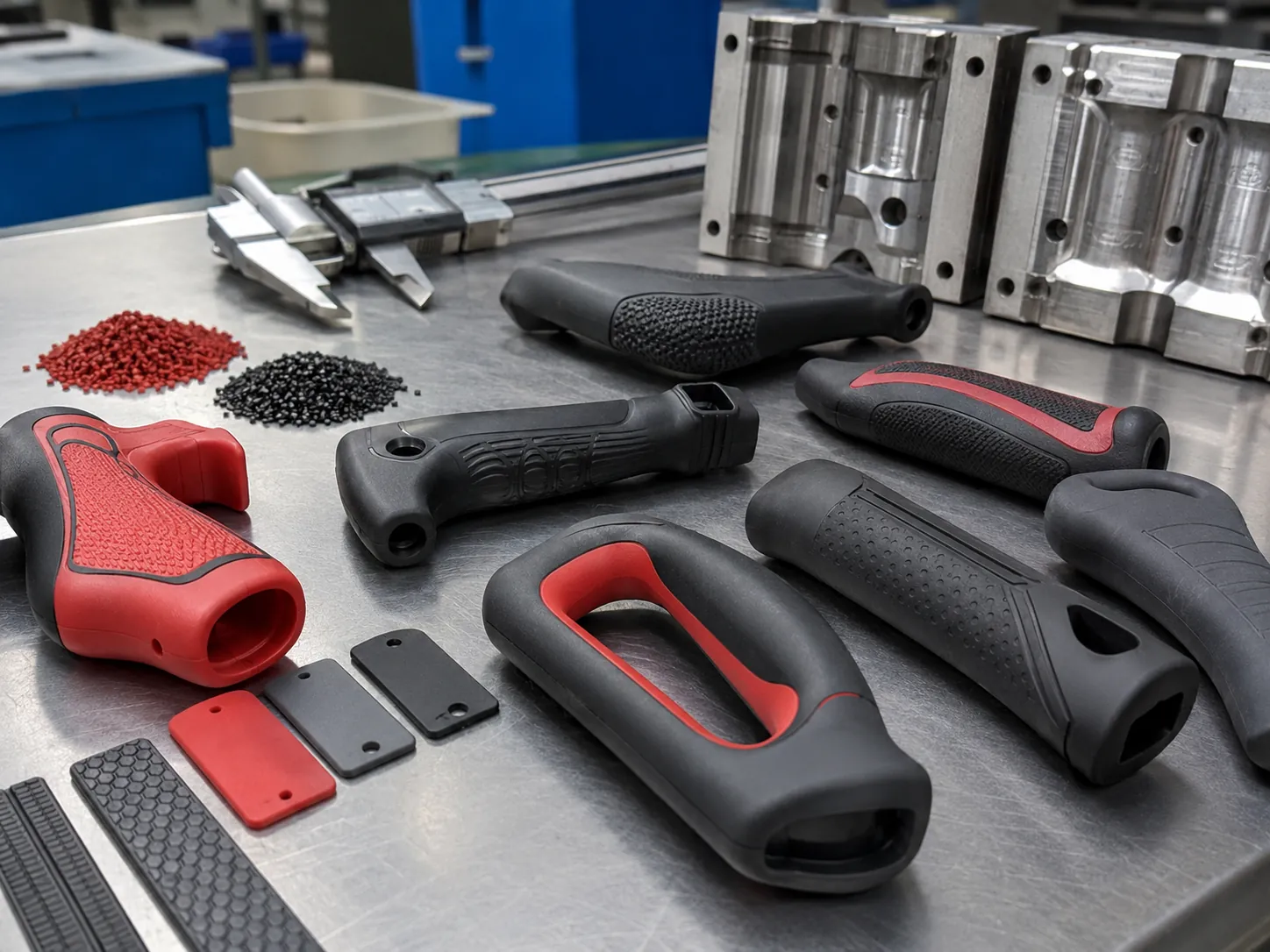
Soft-Touch Grips & Handles
For tool handles, handheld devices, control grips, consumer products and ergonomic parts.
Focus: Shore hardness, texture, anti-slip feel, gate mark, appearance.
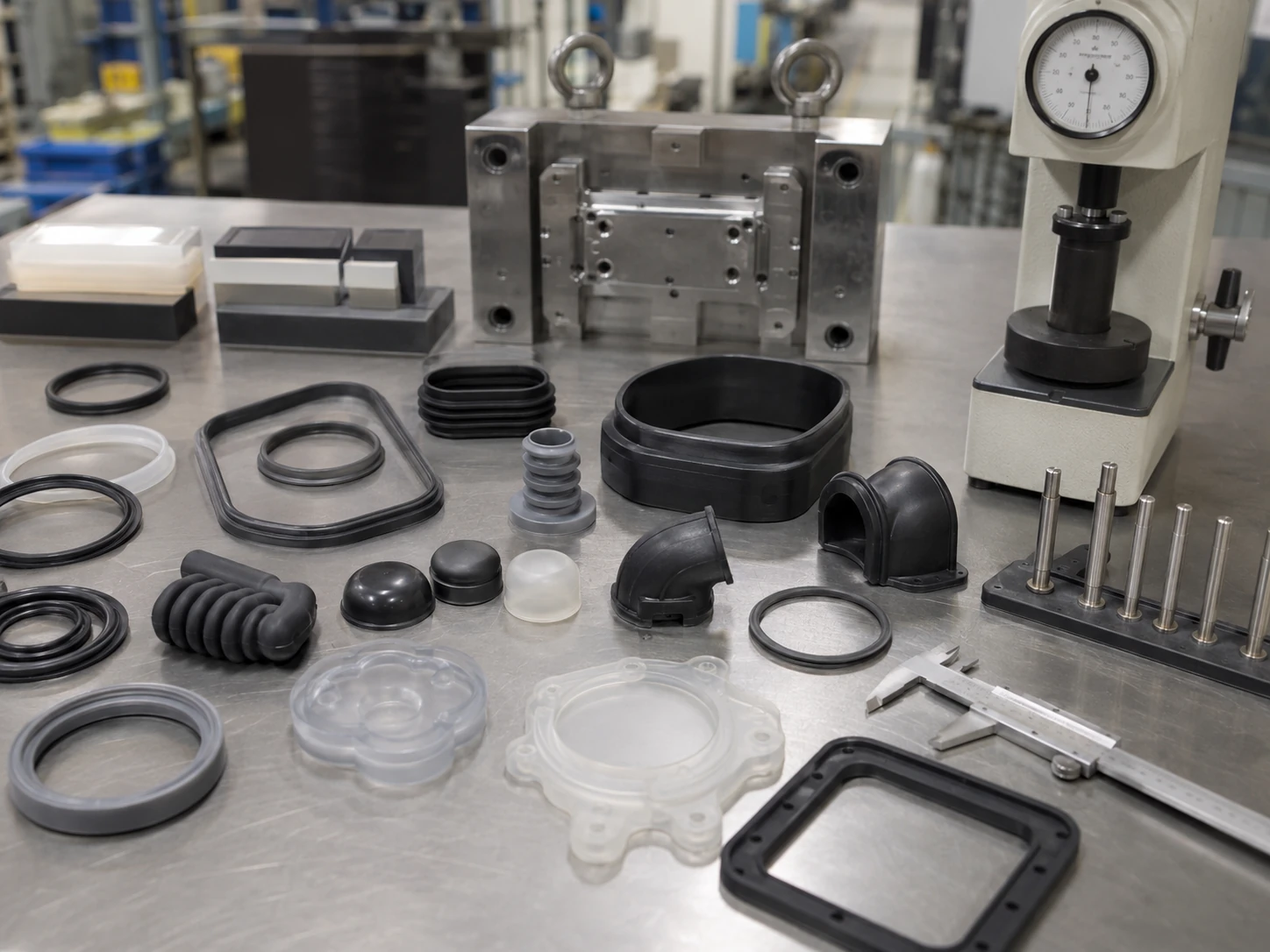
Seals and Gaskets
For enclosure sealing, flexible lips, protective covers and compression-fit parts.
Focus: Compression, flash line, fit with mating part, material recovery.
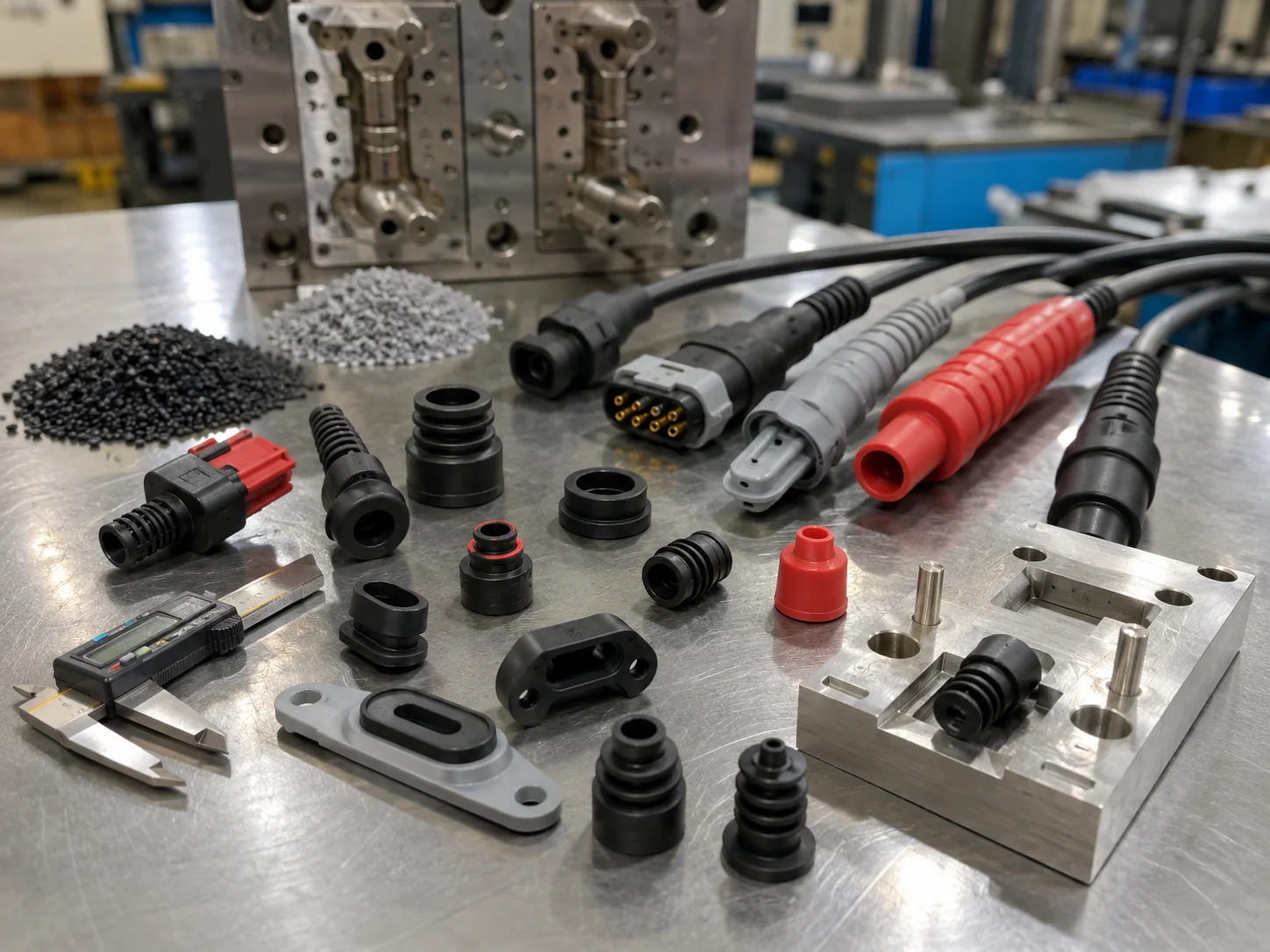
Cable Strain Reliefs
For cable ends, connector protection, flexible boots and sealing covers.
Focus: Insert positioning, strain relief shape, sealing, flash around pins.
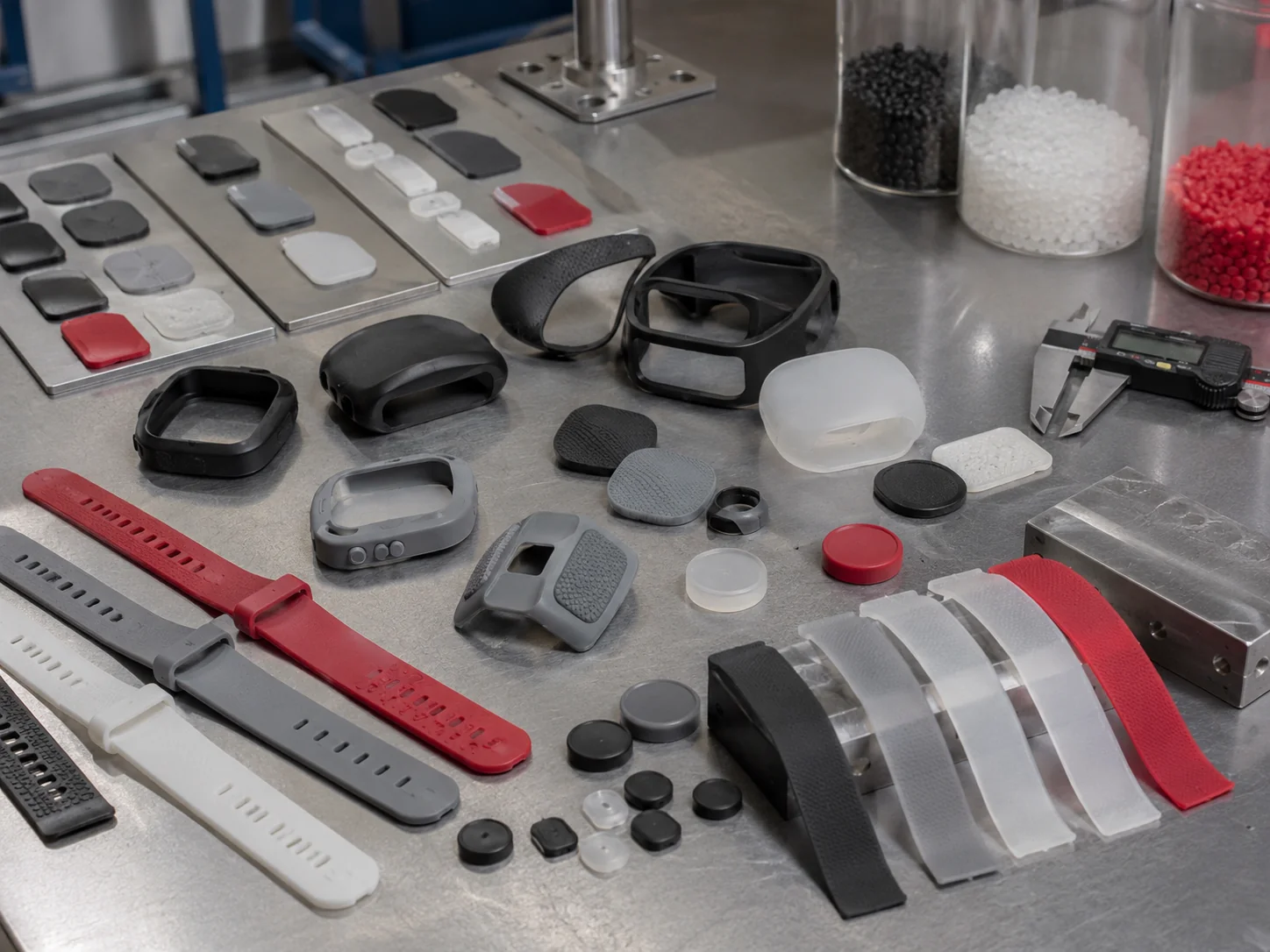
Wearables & Skin-Contact
For wearable housings, flexible bands, soft covers and comfort components.
Focus: Softness, surface feel, color, skin-contact material requirement.
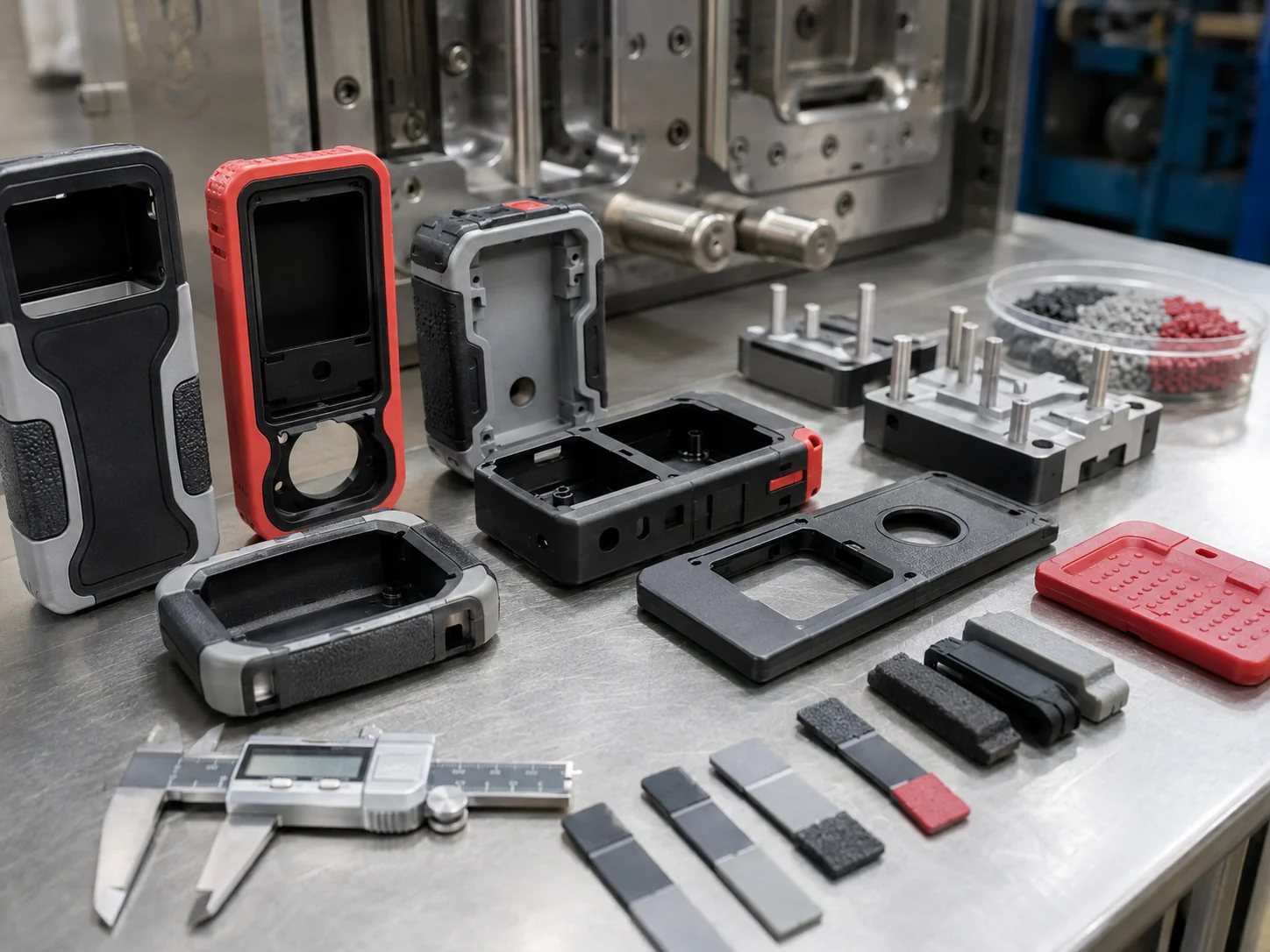
Overmolded Housings
For ABS, PC, PP or PA substrates with TPE soft layers for protection or grip.
Focus: Adhesion, shut-off line, bonding area, substrate deformation.
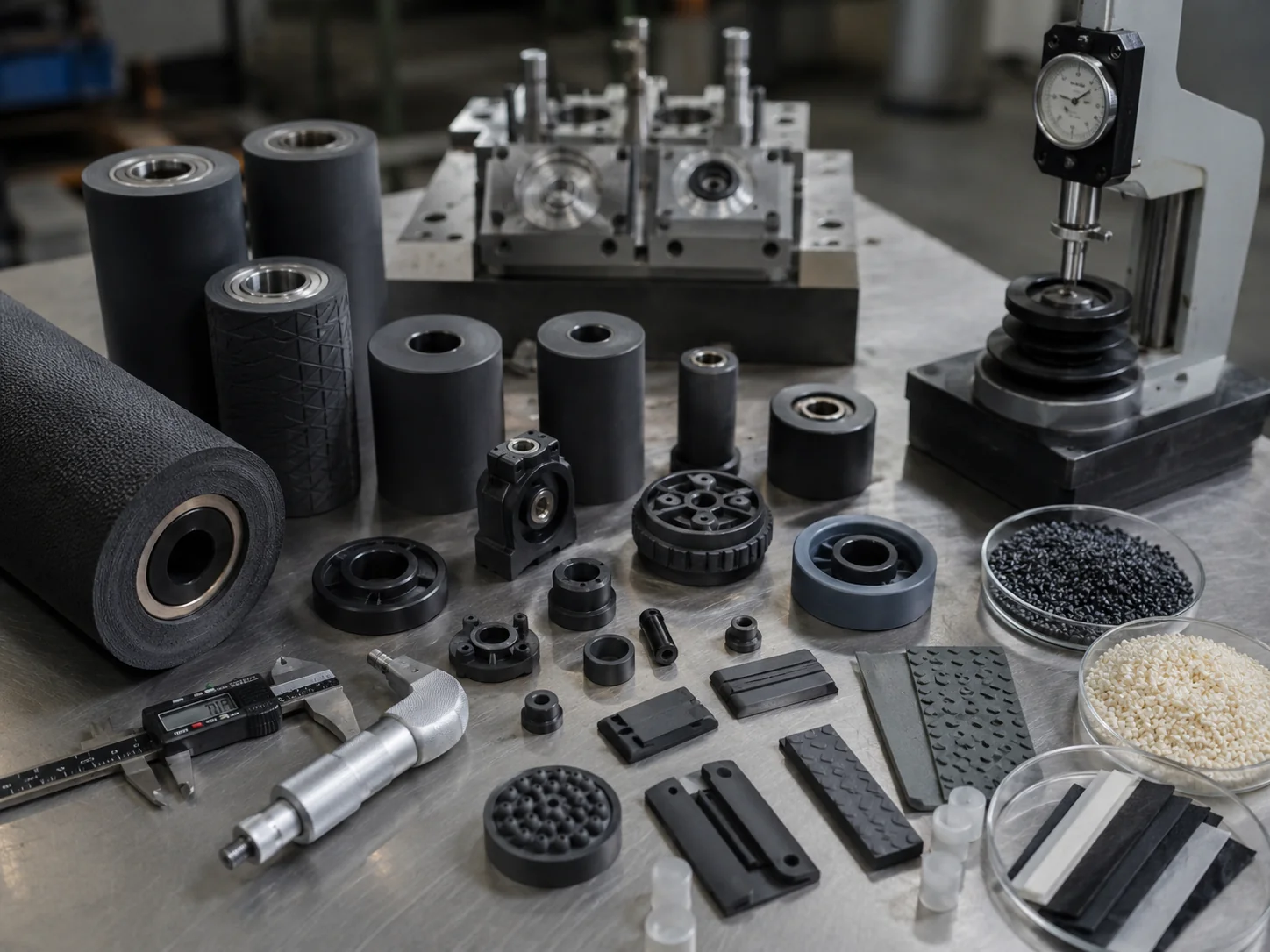
Rollers & Flexible Parts
For soft contact parts, anti-slip rollers and flexible industrial components.
Focus: Hardness, concentricity, wear, shrinkage and dimensional stability.
How to Estimate the Cost of a TPE Project
Main Cost Factors
- • Part size and weight
- • TPE grade and Shore hardness
- • Wall thickness and flow length
- • Mold steel and mold life requirement
- • Single-cavity or multi-cavity mold
- • Hot runner or cold runner system
- • Overmolding or single-material molding
- • Surface texture, polishing or special appearance
- • Annual volume and production schedule
RFQ Checklist
To quote faster, please prepare:
- 3D CAD file & 2D drawing with tolerance
- Material grade or target Shore hardness
- Annual quantity and first order quantity
- Color, surface finish & overmolding substrate
- Application, environment & testing requirements
T1 Trial, Inspection & Production Validation
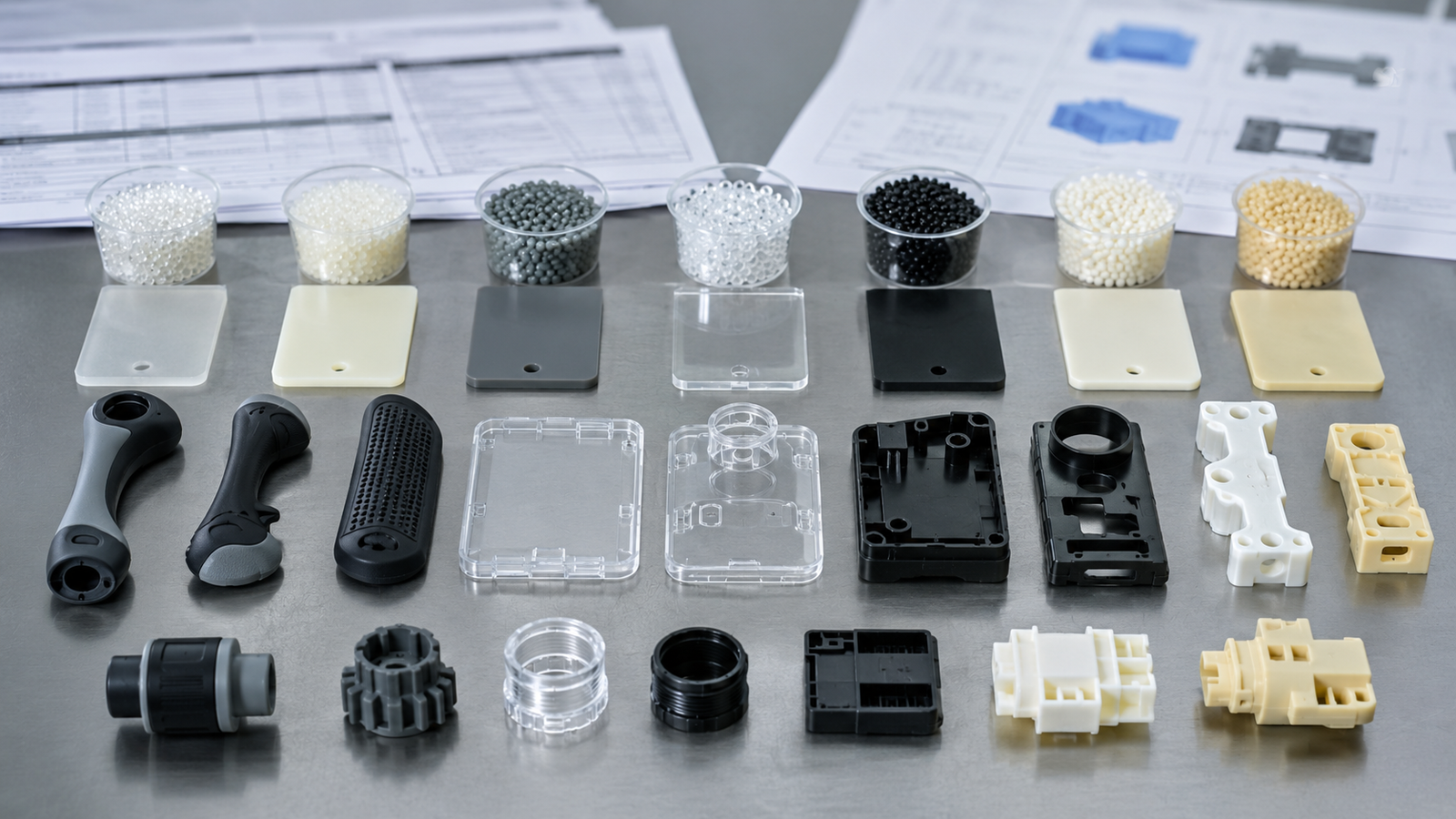
TPE molded parts are flexible, so quality control should not only check dimensions. GBM reviews appearance, flash, short shot, bubbles, surface feel, Shore hardness, deformation, fit, sealing area and overmolding adhesion when applicable.
Buyer Deliverables
- T1 sample photos
- Trial video if required
- Sample inspection report
- CMM report (marked dims)
- Mold correction feedback
- Packing photos pre-shipment
Why B2B Buyers Work with GBM Mold for TPE Projects
GBM Mold is suitable for buyers who need more than a molded part supplier. We support TPE part projects from DFM review and mold design to T1 trial, sample approval, production molding and export packing. Need prototypes first? See our prototype injection molding services.
DFM Before Tooling
We review wall thickness, draft, gate location, venting, soft material flow, shrinkage and demolding risk before mold manufacturing.
Practical Mold Design
For soft TPE parts, we check mold surface, ejection, vent groove, parting line and flash control instead of copying rigid plastic mold rules.
TPE Overmolding Support
We review TPE adhesion with ABS, PC, PP, PA, PC/ABS and metal inserts, including mechanical lock and shut-off design.
T1 Trial Correction
We use T1 samples to validate shrinkage, hardness, surface appearance, fit, flash and demolding before production approval.
Export Communication
For overseas buyers, we support drawing review, mold trial updates, photos, videos, inspection reports and export packing. We are your reliable partner for custom injection molding services.
TPE Injection Molding FAQ
1. What is TPE injection molding?
2. Is TPE suitable for injection molding?
3. What is the typical TPE injection molding temperature?
4. What mold temperature is used for TPE injection molding?
5. Does TPE need drying before injection molding?
6. What is the residence time for TPE injection molding?
7. What are common defects in TPE injection molding?
8. How do you reduce flash in TPE molded parts?
9. What mold surface is suitable for TPE parts?
10. Can TPE be overmolded onto ABS, PC, PP or PA?
11. What is the difference between TPE and TPU injection molding?
12. What are the advantages of TPE over rubber for molded parts?
13. How much does custom TPE injection molding cost?
14. What information is needed for a TPE injection molding quote?
15. Can TPE regrind be reused?
Request a Quote for Custom TPE Injection Molding
Send us your TPE injection molding project details, 3D CAD files, or RFQ. Our engineering team will provide a DFM review and competitive quote.
Engineering Review
Fast RFQ Response
Email Us: Annie@gbminjection.com
Call or WhatsApp: +86 13632611848