
Polycarbonate Injection Molding Services for Custom PC Parts
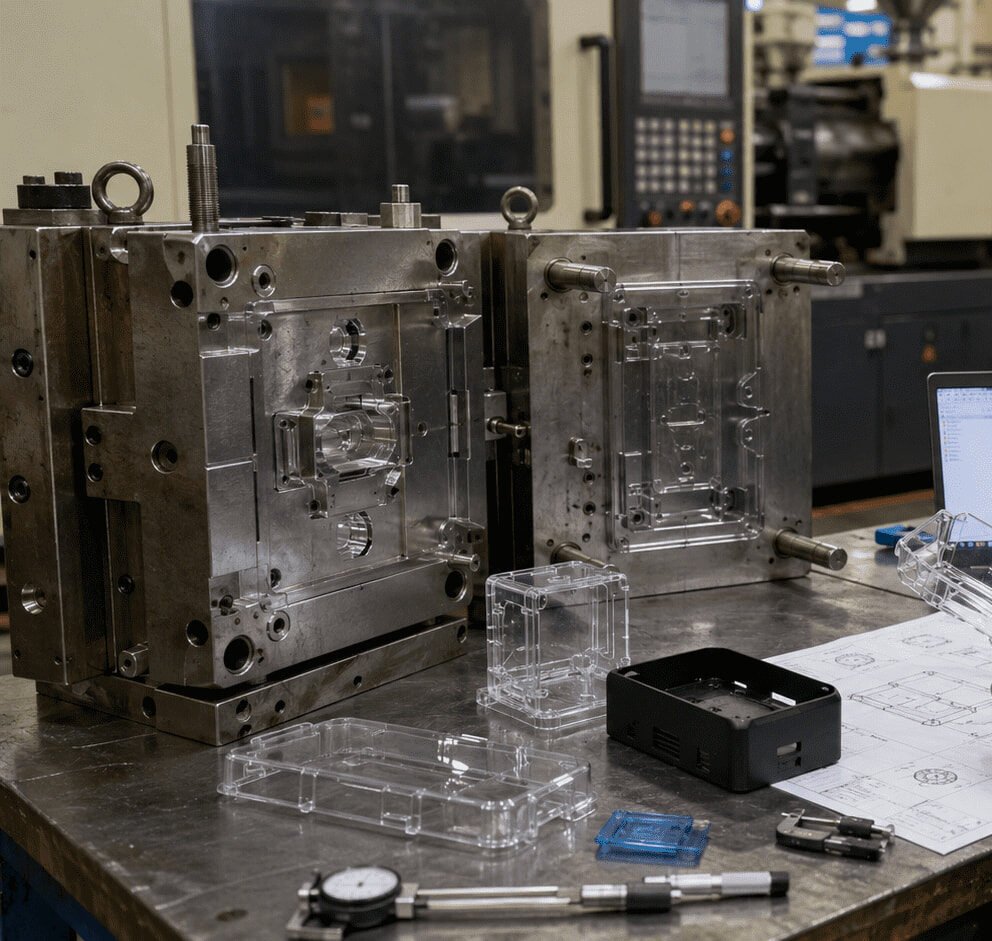
China-based polycarbonate injection molding supplier for custom PC housings, transparent covers, PC/ABS enclosures, optical-grade parts and impact-resistant components. GBM supports DFM review, PC mold tooling, T1 sample validation, CMM inspection and export-ready production for overseas OEM projects.
- Custom PC injection mold tooling for prototypes, low-volume and production projects
- DFM support for PC flow, gate design, wall thickness, internal stress and warpage control
- PC, PC/ABS, transparent PC, optical-grade PC and PC + TPU molding support
- T1 samples, mold trial videos, CMM reports and sample QC reports available
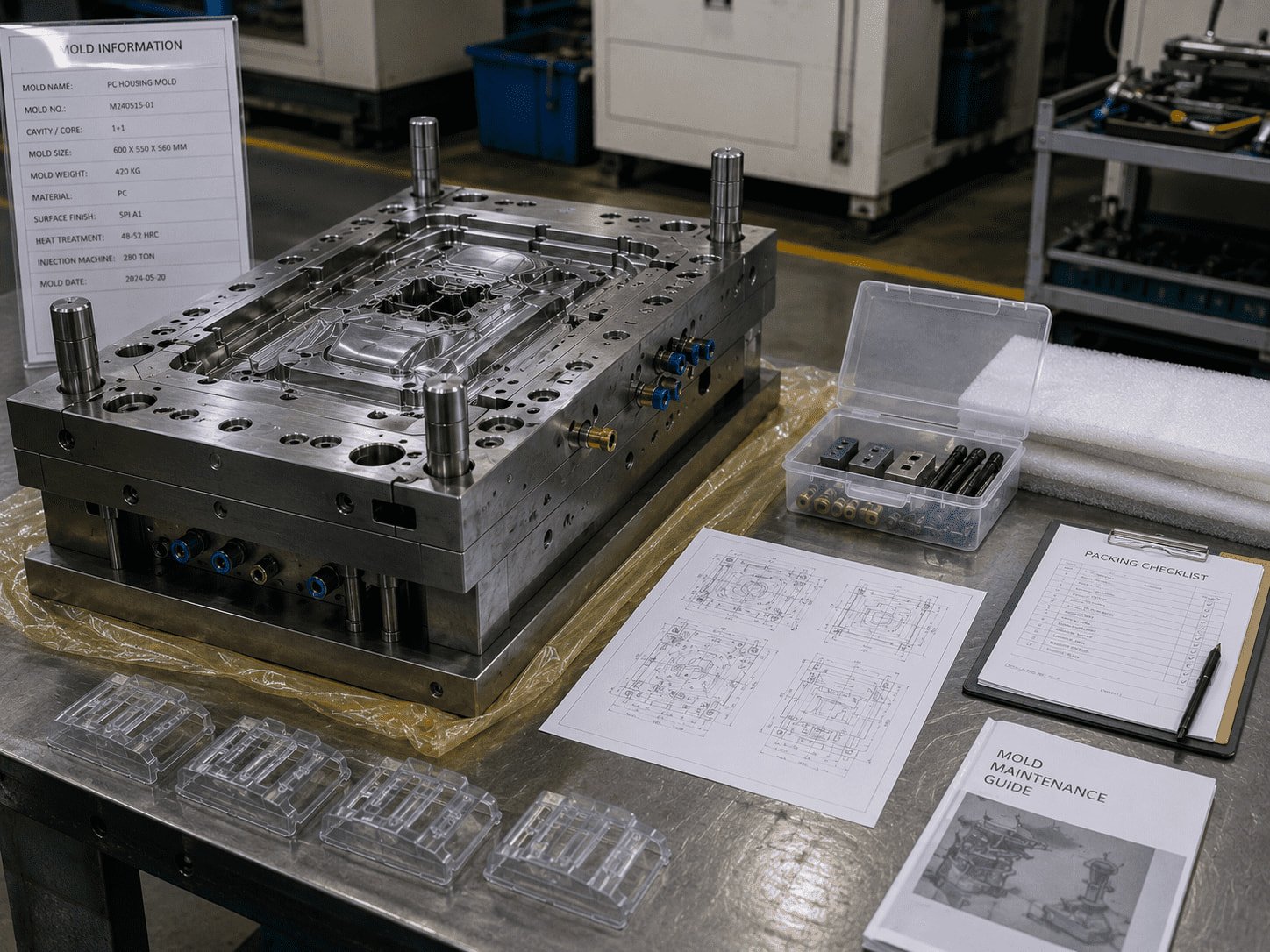
- Export-ready mold delivery with drawings, spare parts list, packing photos and maintenance notes
Quick Facts
Polycarbonate Injection Molding Services
Comprehensive custom polycarbonate injection molding solutions tailored to your production scale and requirements.
| Service Type | Best For | GBM Support |
|---|---|---|
| Prototype PC Injection Molding | Design validation, fit test, transparent sample check | DFM, single-cavity mold, T1 sample review |
| Low-Volume PC Molding | Pilot run, market testing, small batch parts | Aluminum/steel tooling option, QC report |
| Production PC Molding | Stable repeated parts and assembly components | Multi-cavity mold, process validation, packaging |
| PC Mold Tooling + Parts Production | Buyers needing one supplier from mold to molded parts | Mold design, machining, injection trial, shipment |
| Export PC Mold Tooling Only | Overseas factories needing mold delivery | Drawings, spare parts, trial video, packing photos |
Need PC mold tooling instead of molded parts production?
For buyers who only need export-ready PC injection molds, please visit our Polycarbonate Injection Mold Tooling page for mold steel, surface finish, mold life and tooling standard options.
PC Injection Molding at a Glance
What It Is
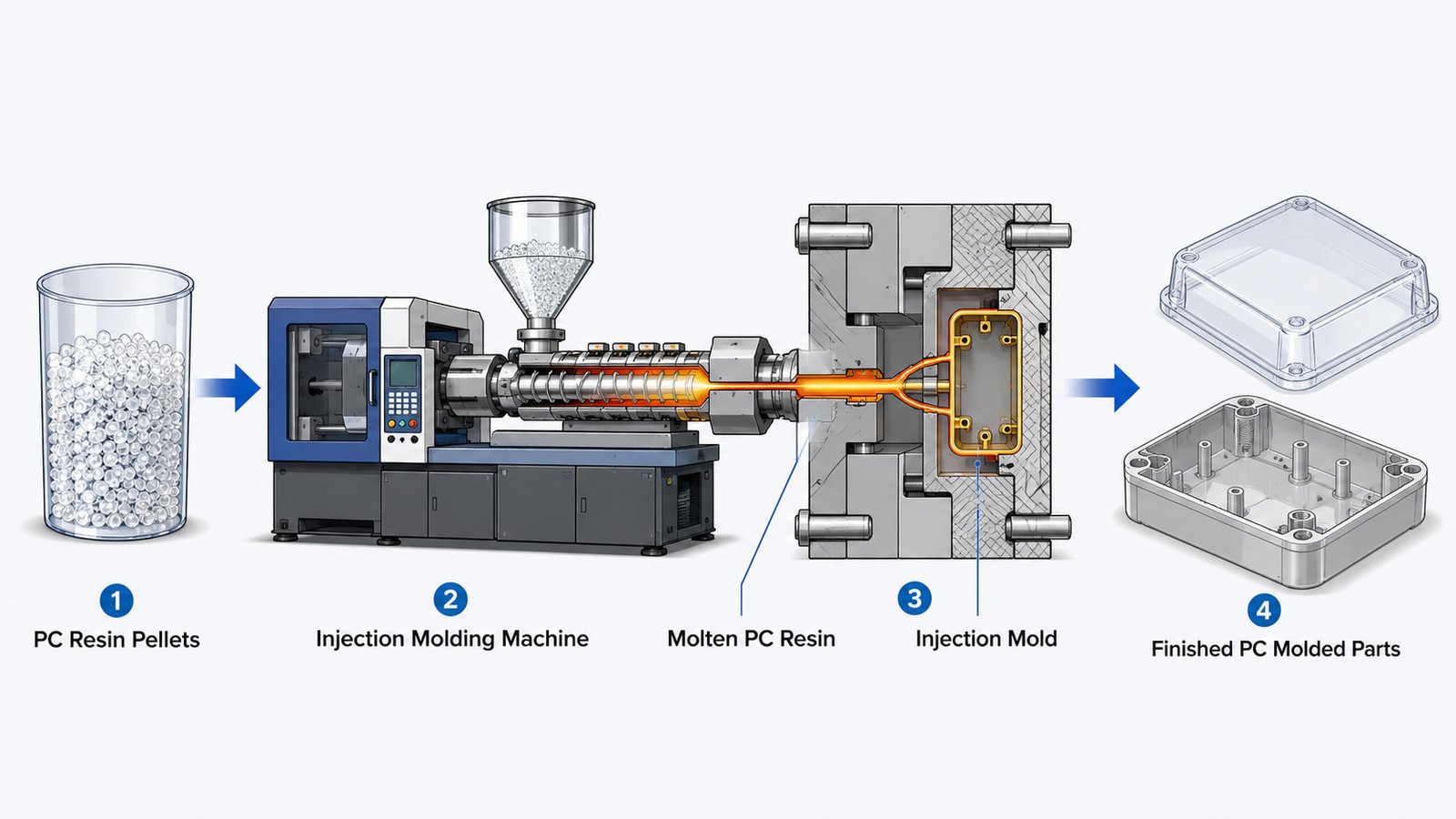
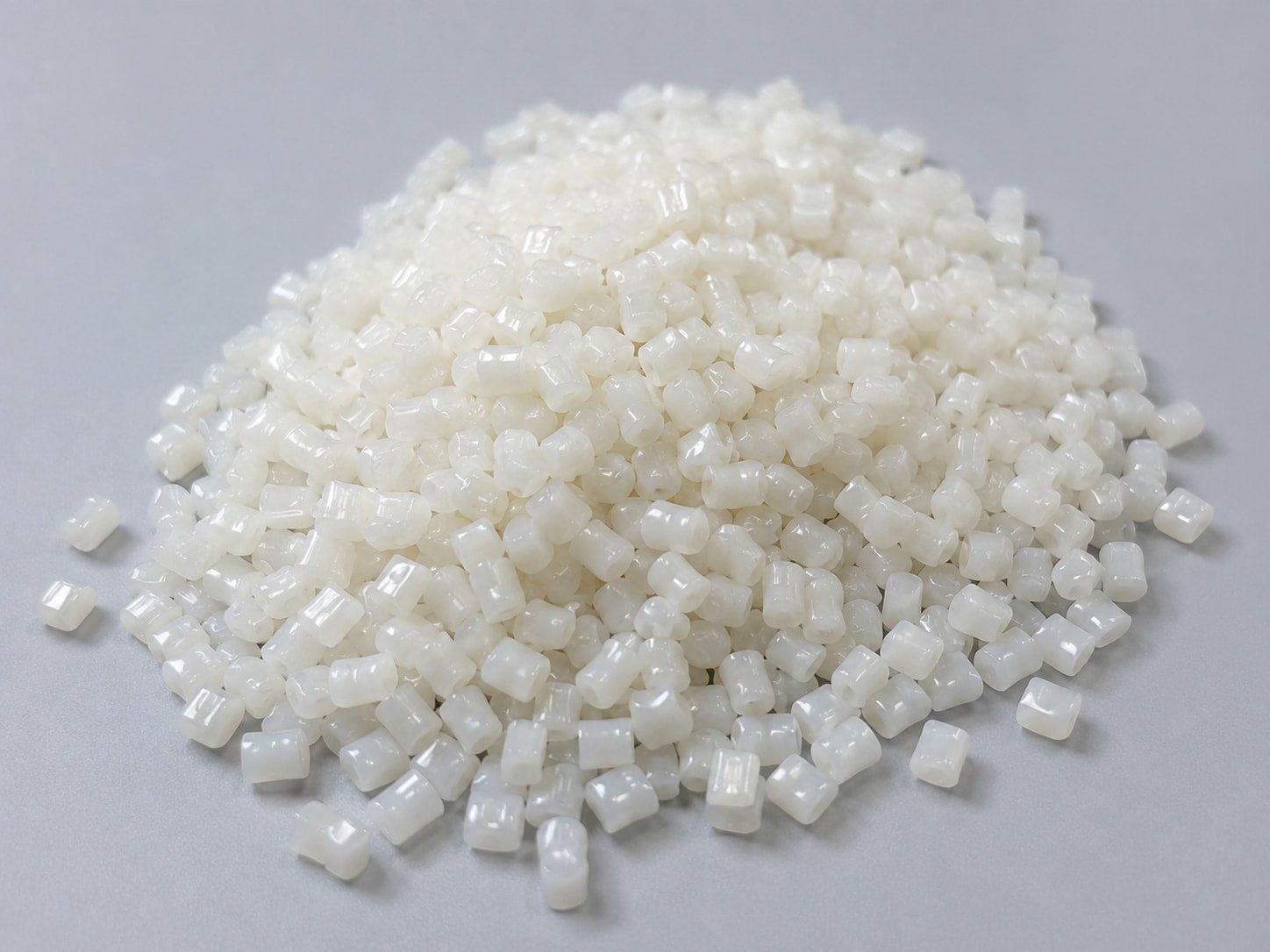
Polycarbonate injection molding uses PC resin and precision molds to produce strong, durable, and dimensionally stable plastic parts.
Why Buyers Use PC
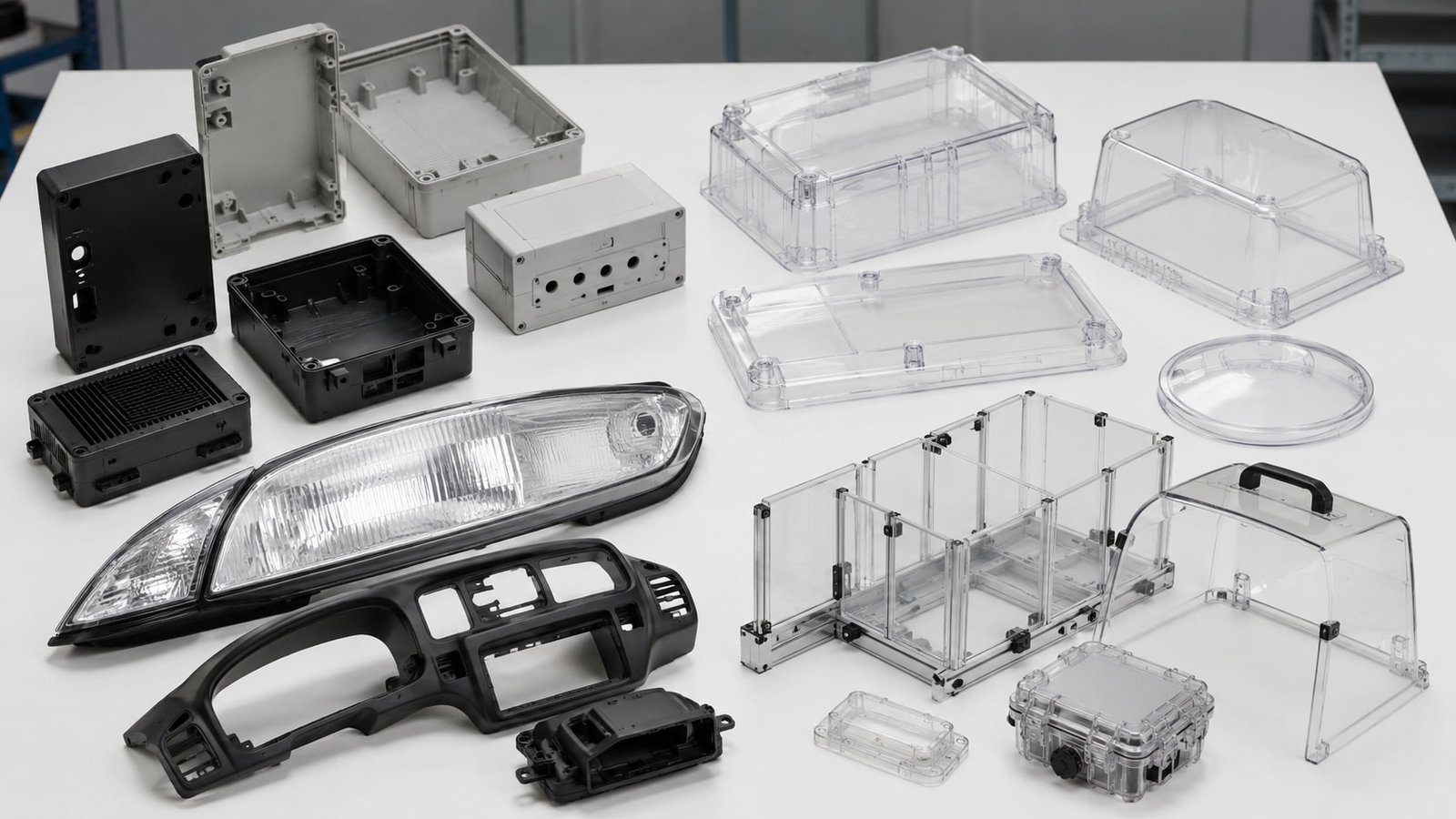
PC is selected for impact resistance, heat resistance, transparency, electrical insulation, and dimensional stability.
What GBM Provides
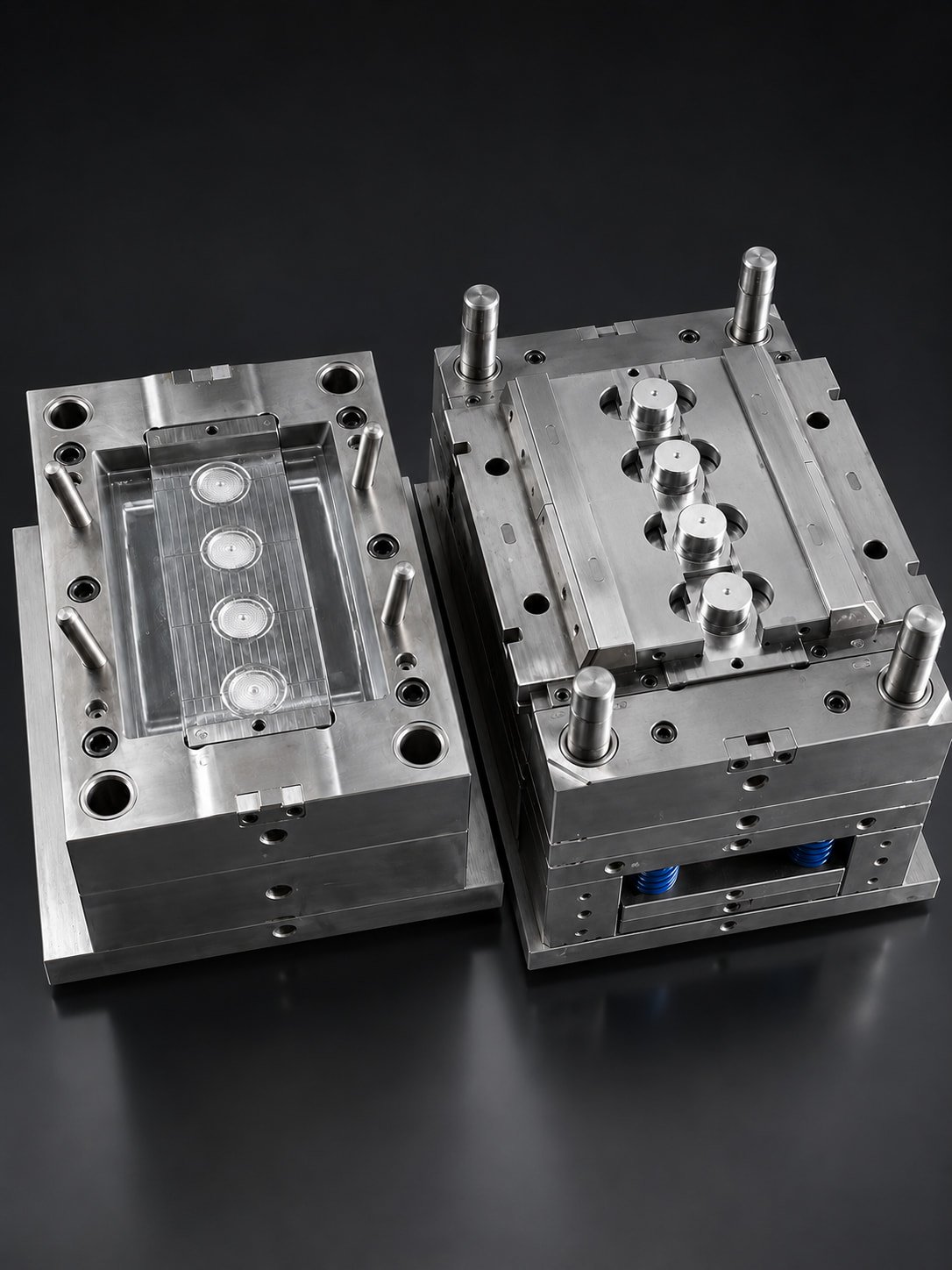
GBM provides PC mold tooling, injection molding, DFM review, T1 samples, CMM inspection, and export mold support.
What Is Polycarbonate (PC) Injection Molding?
Polycarbonate injection molding is a manufacturing process that melts PC resin and injects it into a precision mold to produce strong, transparent, impact-resistant, and dimensionally stable plastic parts. PC is often used for housings, covers, transparent components, electronic enclosures, automotive parts, and industrial components.
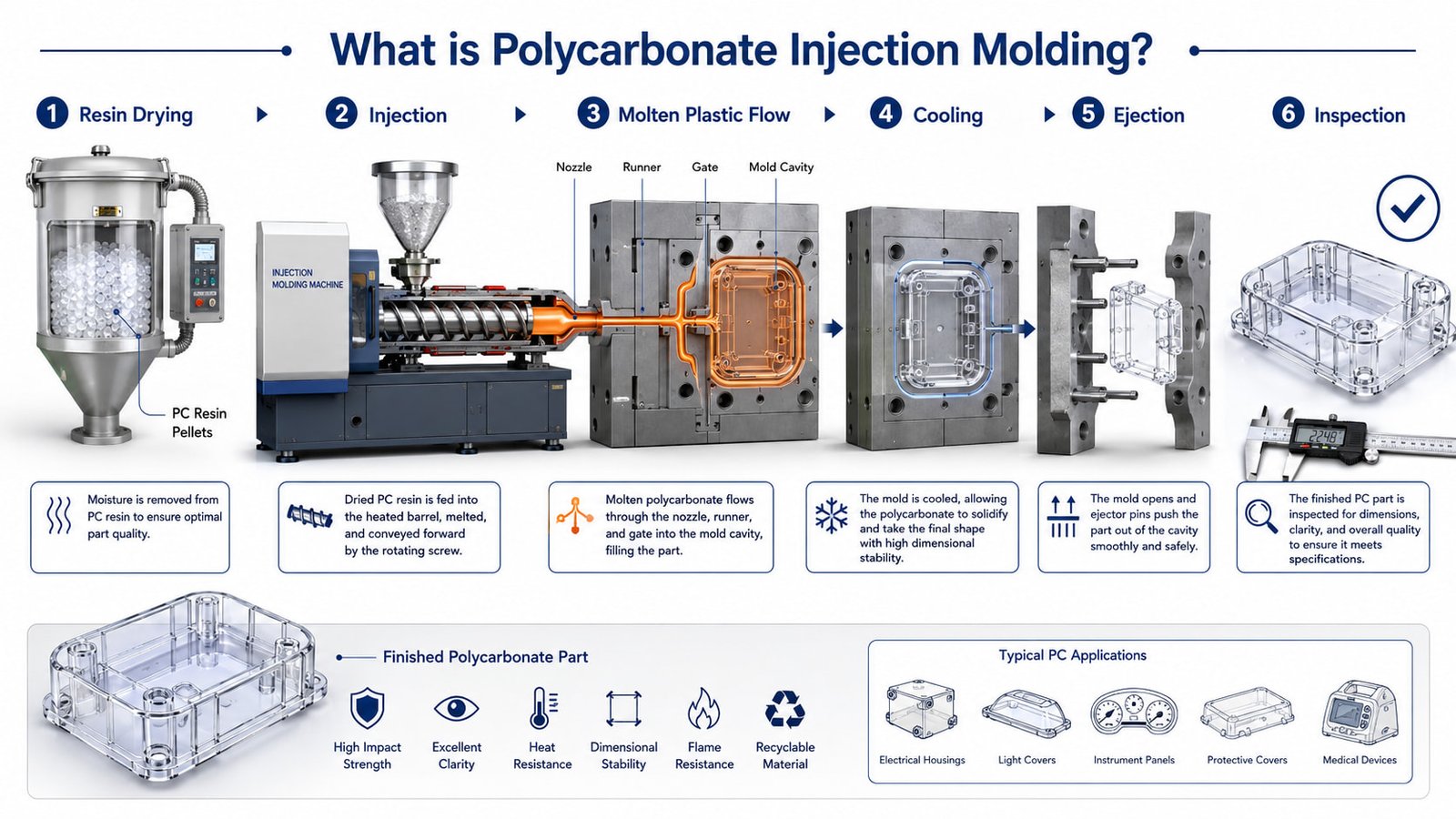
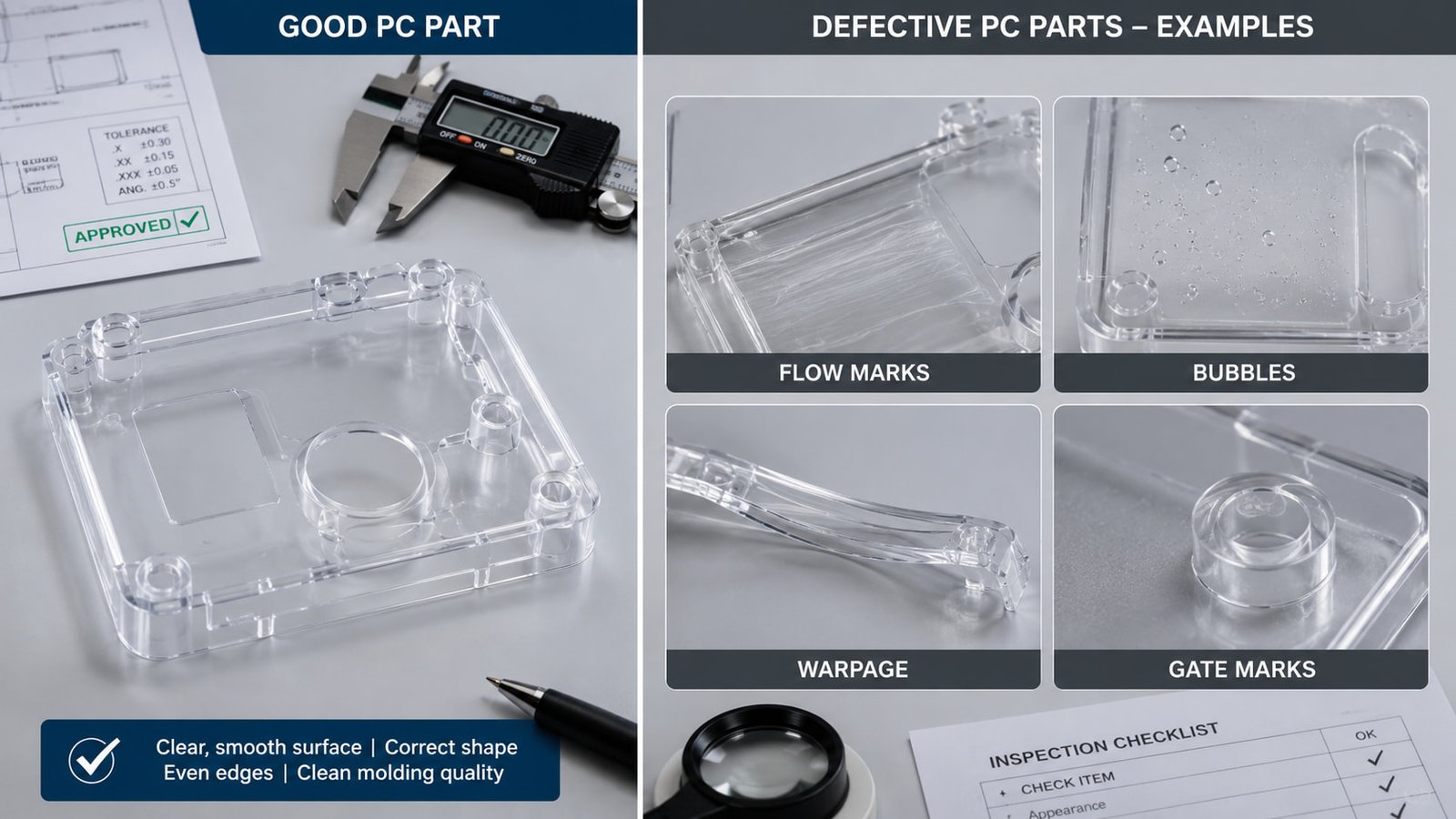
Compared with common plastics, PC requires more careful control of resin drying, mold temperature, gate design, wall thickness, cooling, and internal stress. Poor mold design or processing may lead to flow marks, bubbles, sink marks, warpage, or cracking.
GBM supports PC injection molding projects with DFM review, PC mold tooling, T1 mold trial, CMM inspection, sample QC reports, and export-ready mold delivery.
Send your 2D/3D drawings, material grade, quantity, and tolerance requirements for evaluation.
PC Material Grade Selection for Injection Molded Parts
Selecting the right polycarbonate grade is critical for part performance and moldability.
General-Purpose PC
Suitable Parts:
Housings, covers, protective parts
Design Concern:
Gate size, drying, stress control
Transparent PC
Suitable Parts:
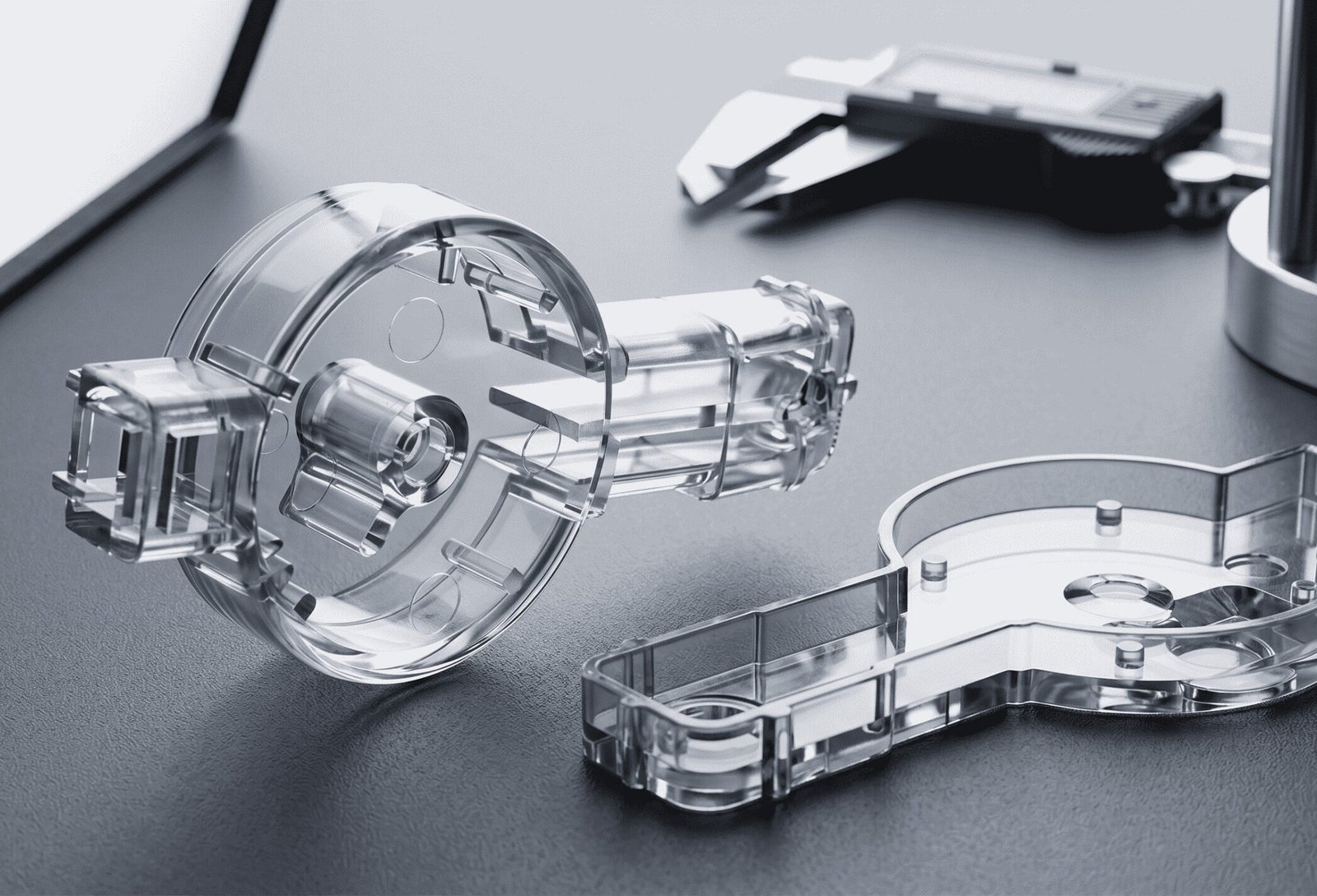
Clear covers, guards, display windows
Design Concern:
Flow marks, bubbles, black spots
Optical-Grade PC
Suitable Parts:
Lenses, light guides, optical covers
Design Concern:
Polishing, venting, low stress molding
Flame-Retardant PC
Suitable Parts:
Electrical housings, device enclosures
Design Concern:
UL grade, wall thickness, flow length
PC/ABS
Suitable Parts:
Electronics enclosures, automotive interiors
Design Concern:
Better processability, lower stress risk
Glass-Filled PC
Suitable Parts:
Structural parts, brackets
Design Concern:
Fiber orientation, warpage, tool wear
PC Molding Processing Parameters & Temperature Control
Precise temperature and pressure control is mandatory to avoid internal stress and visual defects in polycarbonate parts.
| Parameter | Typical Reference Range | Why It Matters |
|---|---|---|
| Resin Drying | 120°C, about 3–4 hours, final setting by resin datasheet | Reduces moisture marks, bubbles and material degradation |
| Melt Temperature | 280–320°C | Supports filling, surface finish and material flow |
| Mold Temperature | 80–120°C | Helps reduce internal stress and improves surface quality |
| Gate & Runner Temp | Based on hot runner/cold runner design | Prevents flow hesitation, cold slug and visible gate marks |
| Packing Pressure / Time | Based on wall thickness and gate freeze time | Controls sink marks, voids and dimensions |
| Cooling Balance | Based on part thickness and mold layout | Reduces warpage and cycle instability |
Design Guidelines for Polycarbonate Injection Molded Parts
Best practices for designing parts specifically for polycarbonate injection molding to ensure strength and cosmetics.
| Design Item | Recommendation | Reason |
|---|---|---|
| Wall Thickness | Keep wall thickness as uniform as possible | Reduces sink marks, stress and warpage |
| Ribs & Bosses | Avoid overly thick ribs and sharp transitions | Reduces voids and cracking risk |
| Gate Location | Place gate away from visible optical surfaces when possible | Reduces flow marks and gate stress |
| Venting | Add venting near flow ends and trapped-air areas | Reduces burn marks, bubbles and short shots |
| Draft Angle | Add enough draft for textured or polished surfaces | Prevents scratches and sticking |
| Radii | Use smooth transitions around corners | Reduces stress concentration |
| Transparent PC | Review weld lines, polishing, drying and flow path carefully | Improves clarity and cosmetic acceptance |
| PC/ABS Alternative | Consider PC/ABS when full PC is too difficult or too costly | Improves processability and reduces stress risk |
Why Polycarbonate Is Used for Injection Molded Parts
Comprehensive tooling and molding solutions tailored to your specific polycarbonate material needs.
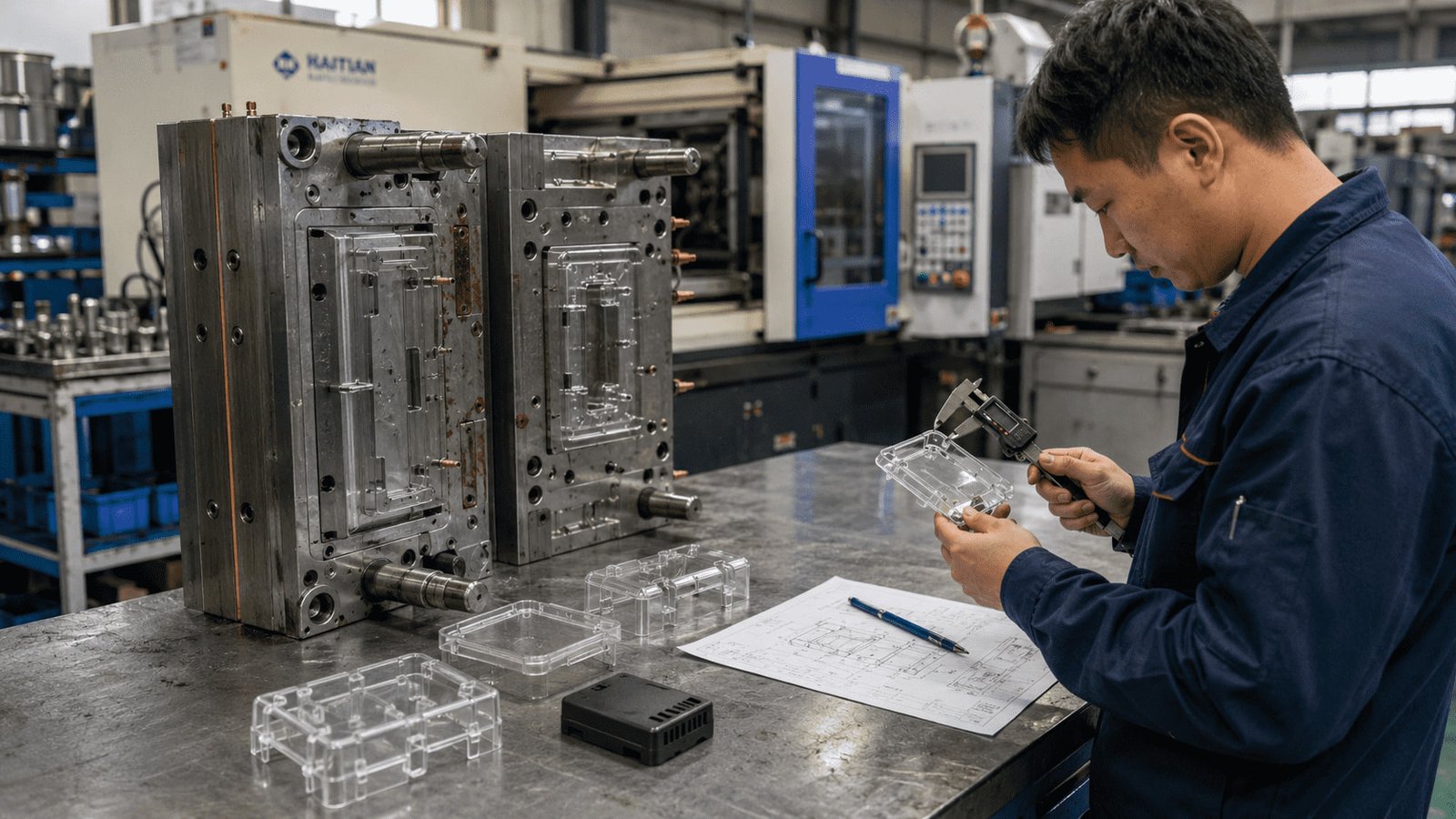
High Impact Resistance
PC is suitable for protective housings, covers, and structural plastic components that require toughness.
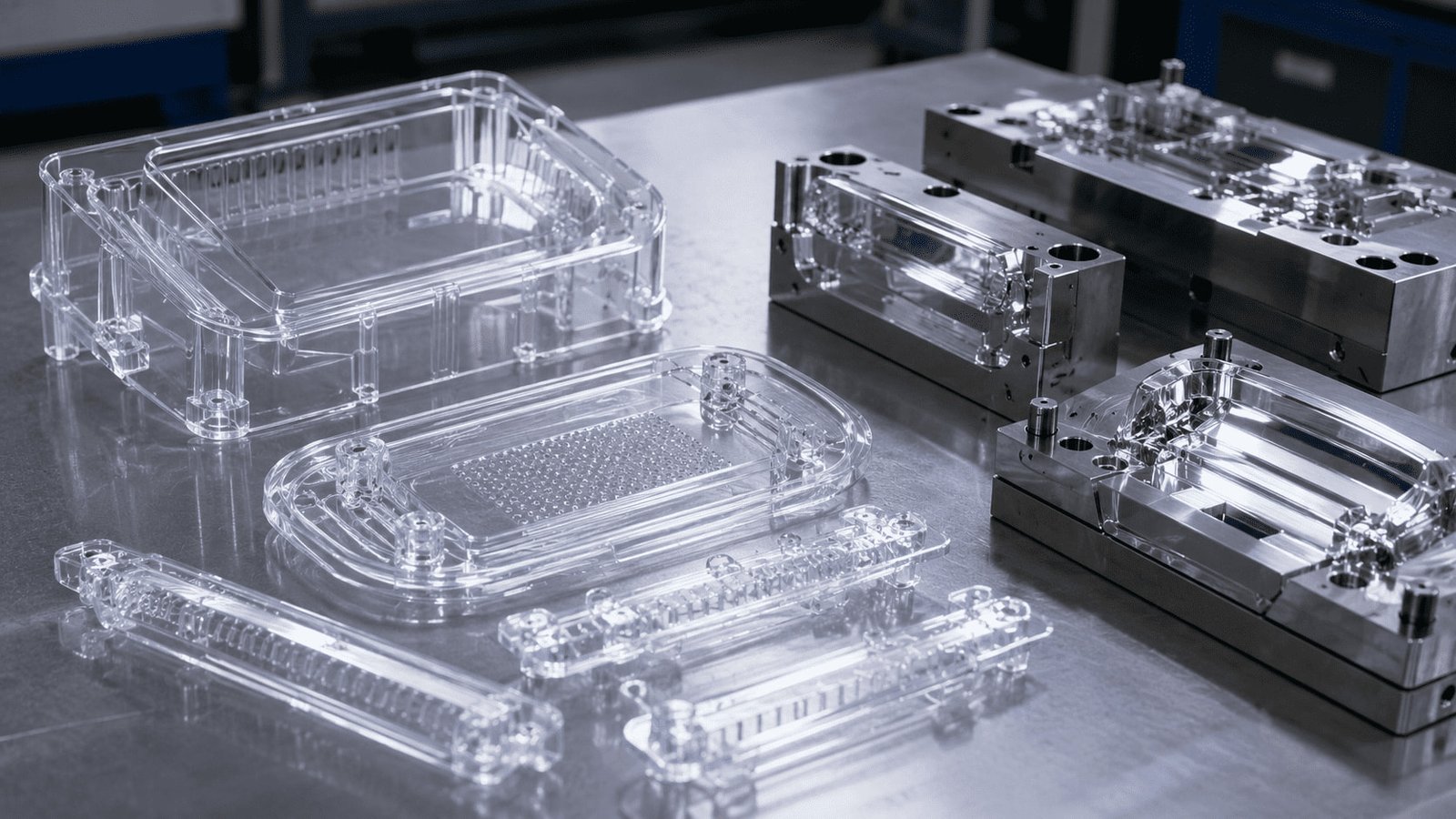
Transparency
PC can be used for transparent covers, windows, guards, and light guide components.
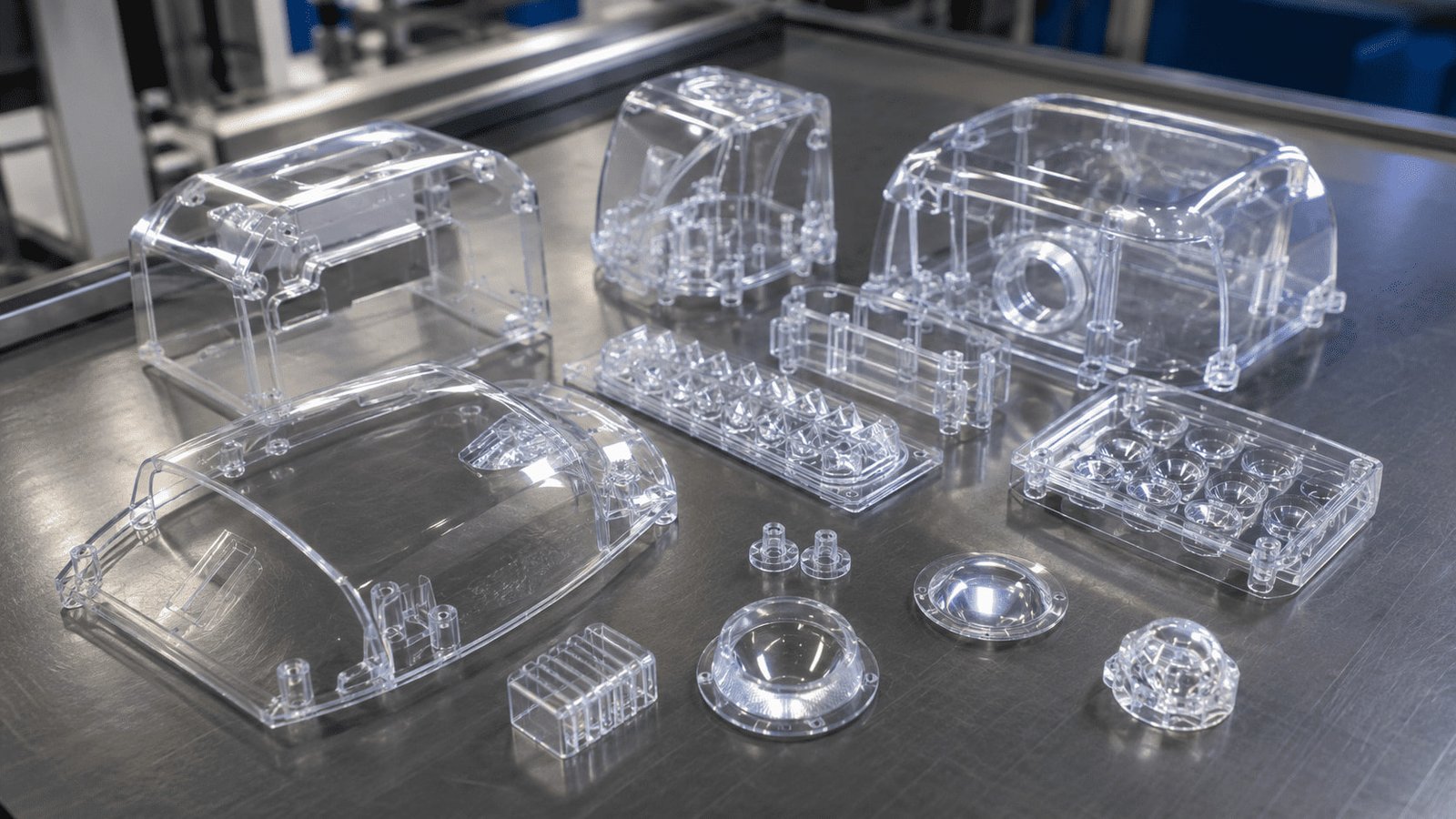
Heat Resistance
PC is suitable for applications requiring better heat resistance than many commodity plastics.
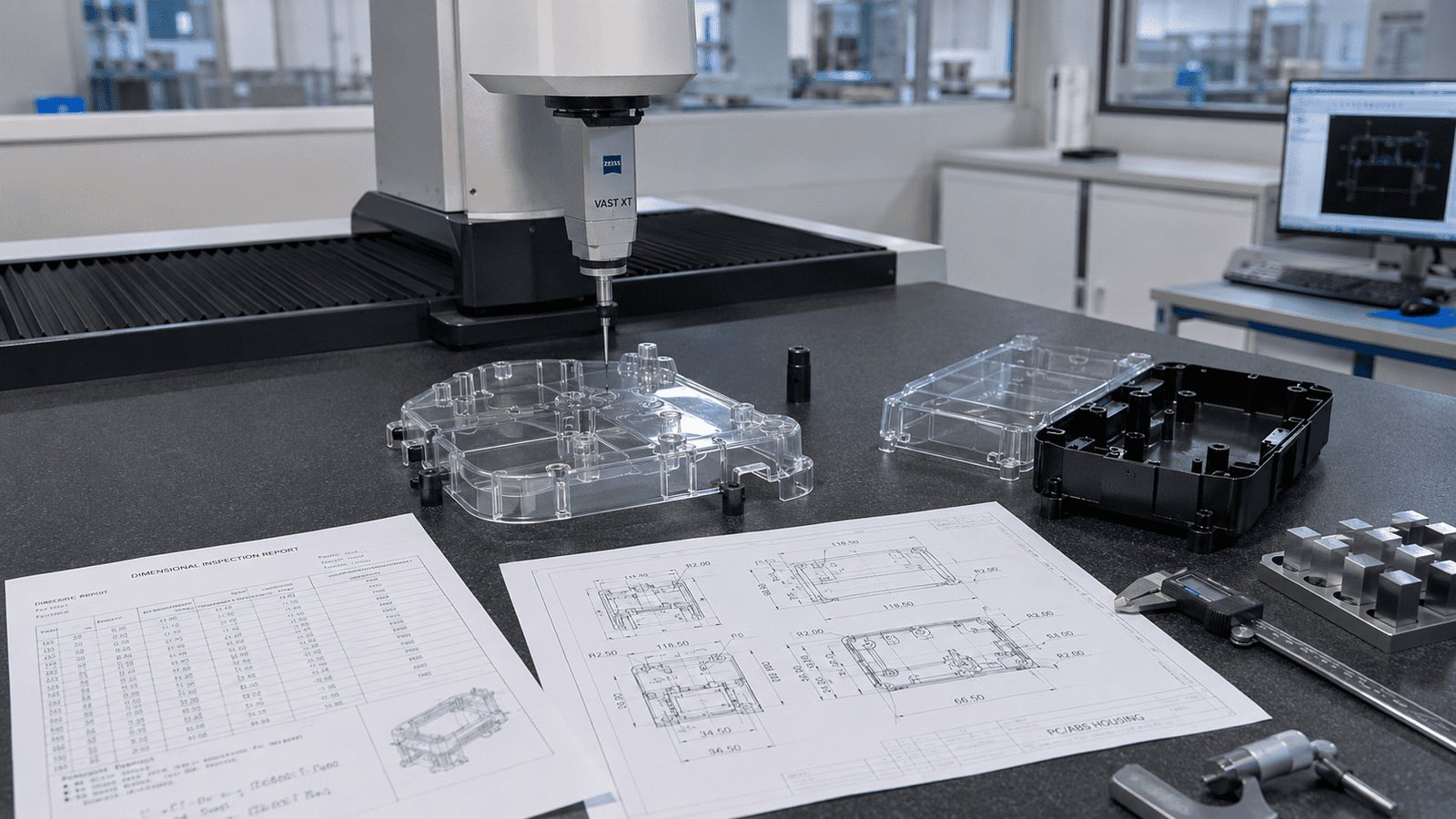
Dimensional Stability
PC can maintain stable dimensions when mold temperature, cooling, and shrinkage are properly controlled.
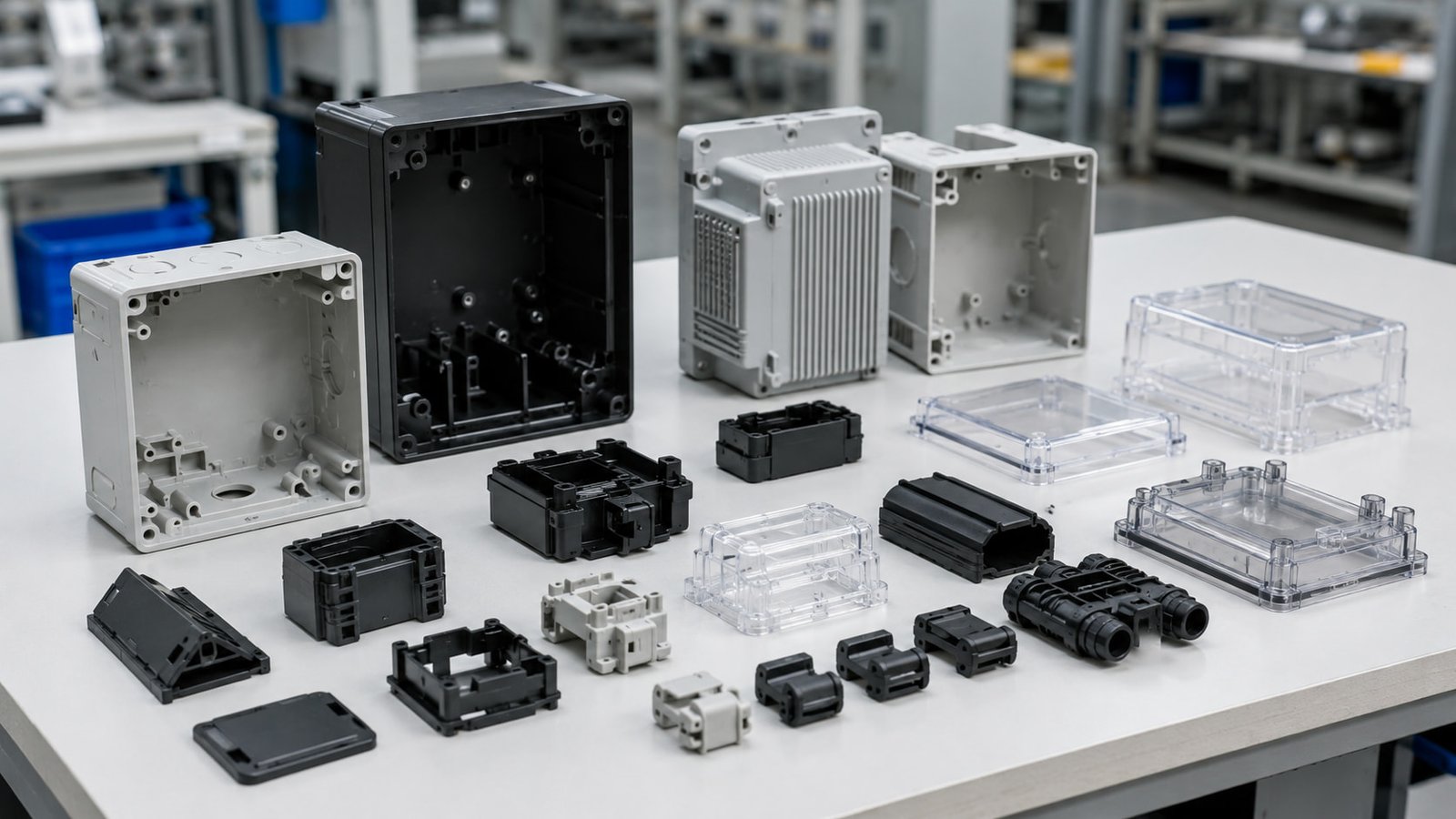
Electrical Insulation
PC and PC/ABS are commonly used for electrical housings, connector parts, and electronic enclosures.
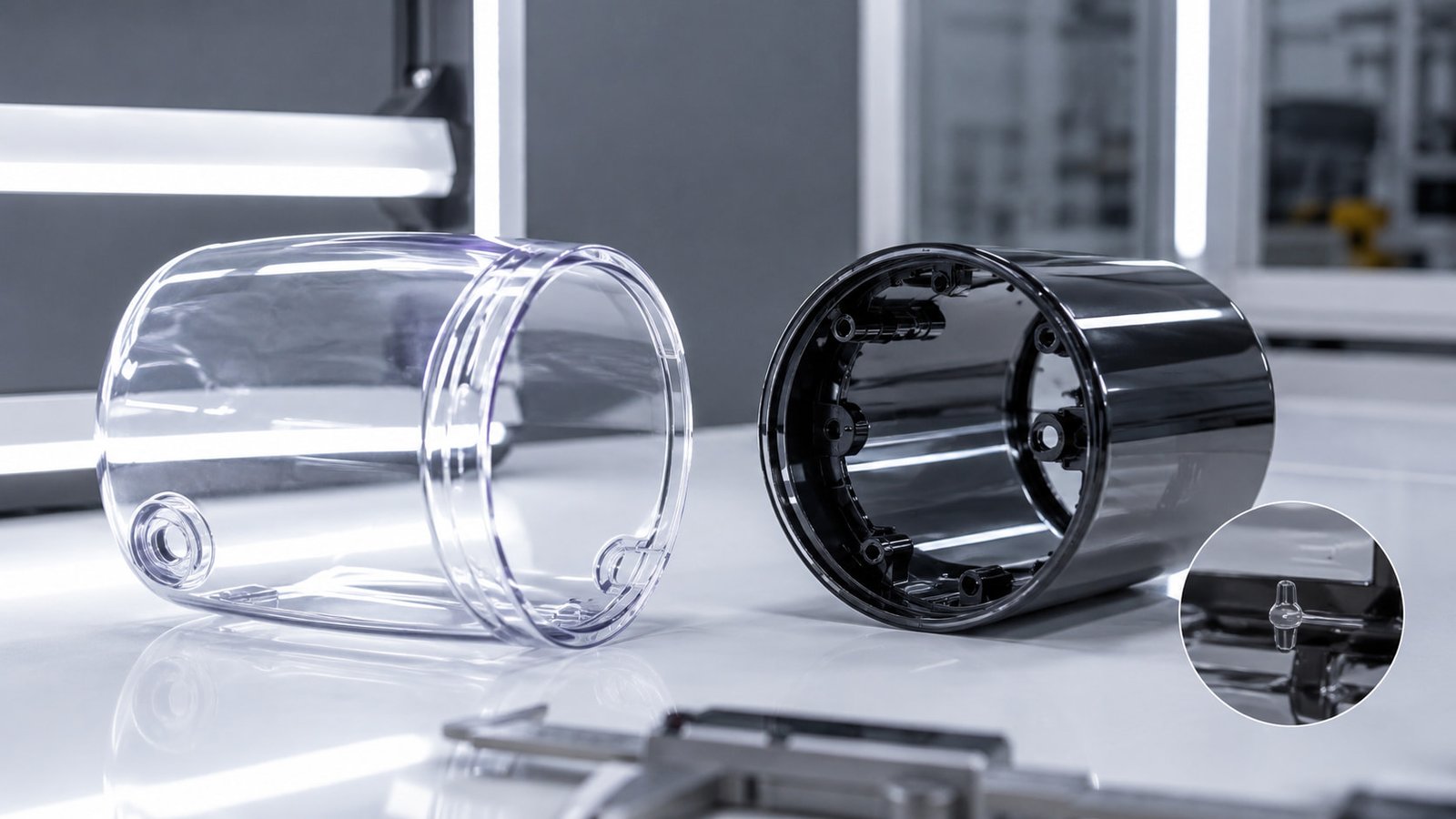
Surface Finish
PC can achieve good cosmetic surfaces, but gate design, polishing, drying, and process control are important.
Typical Applications of PC Injection Molded Parts
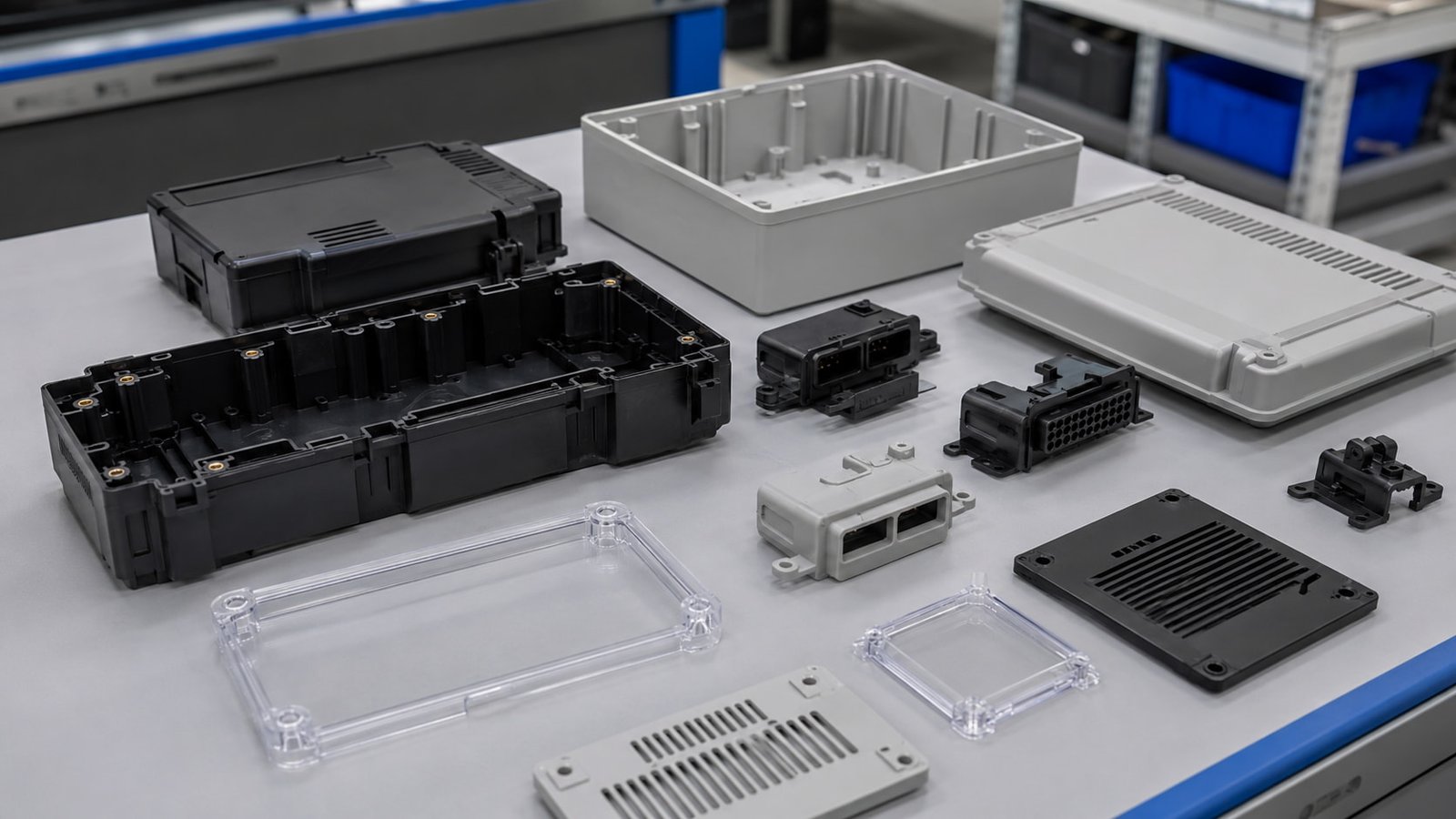
Electronics & Electrical
Housings, covers, connector housings, enclosures.
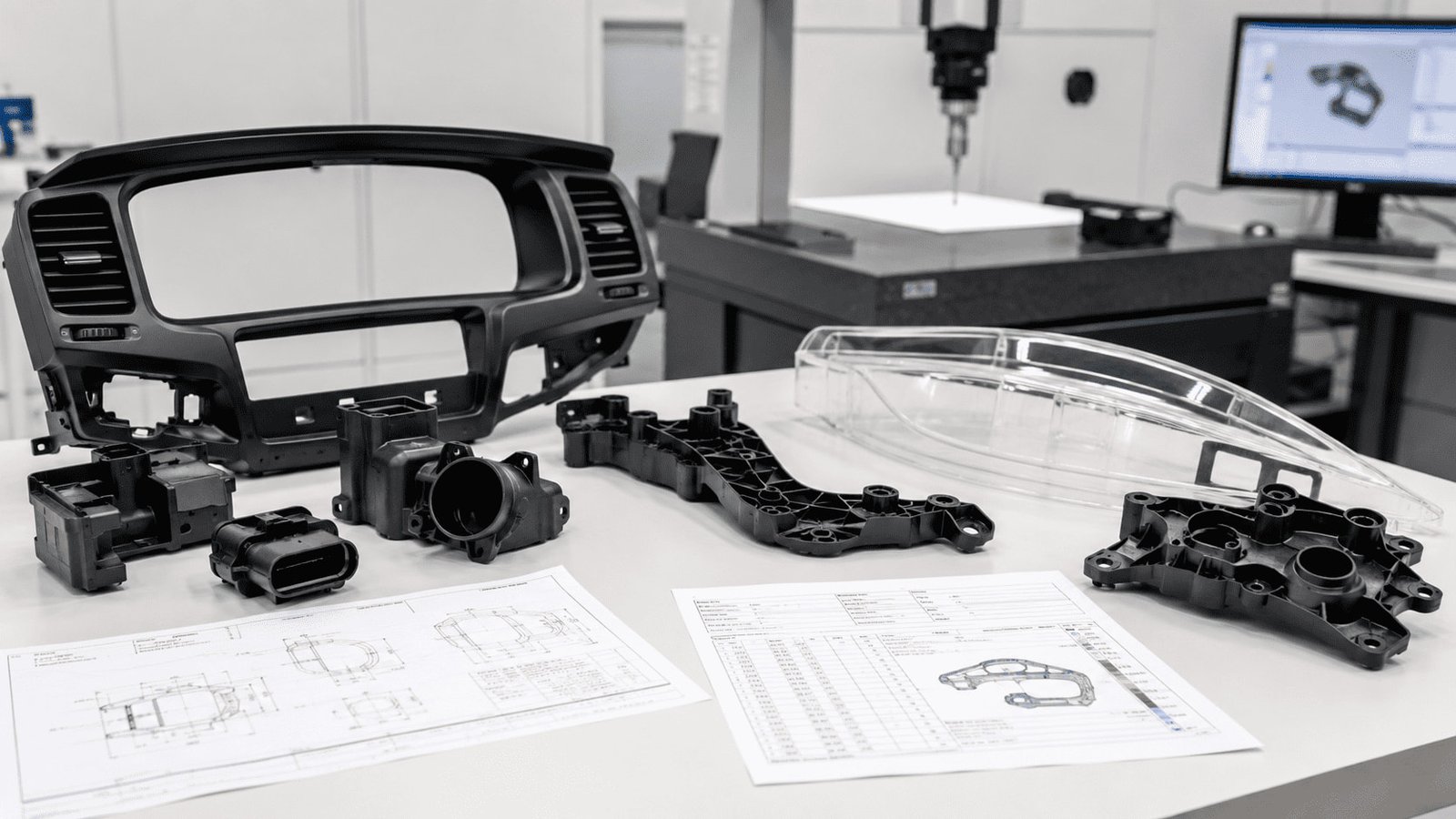
Automotive
Interior parts, covers, brackets, functional components.
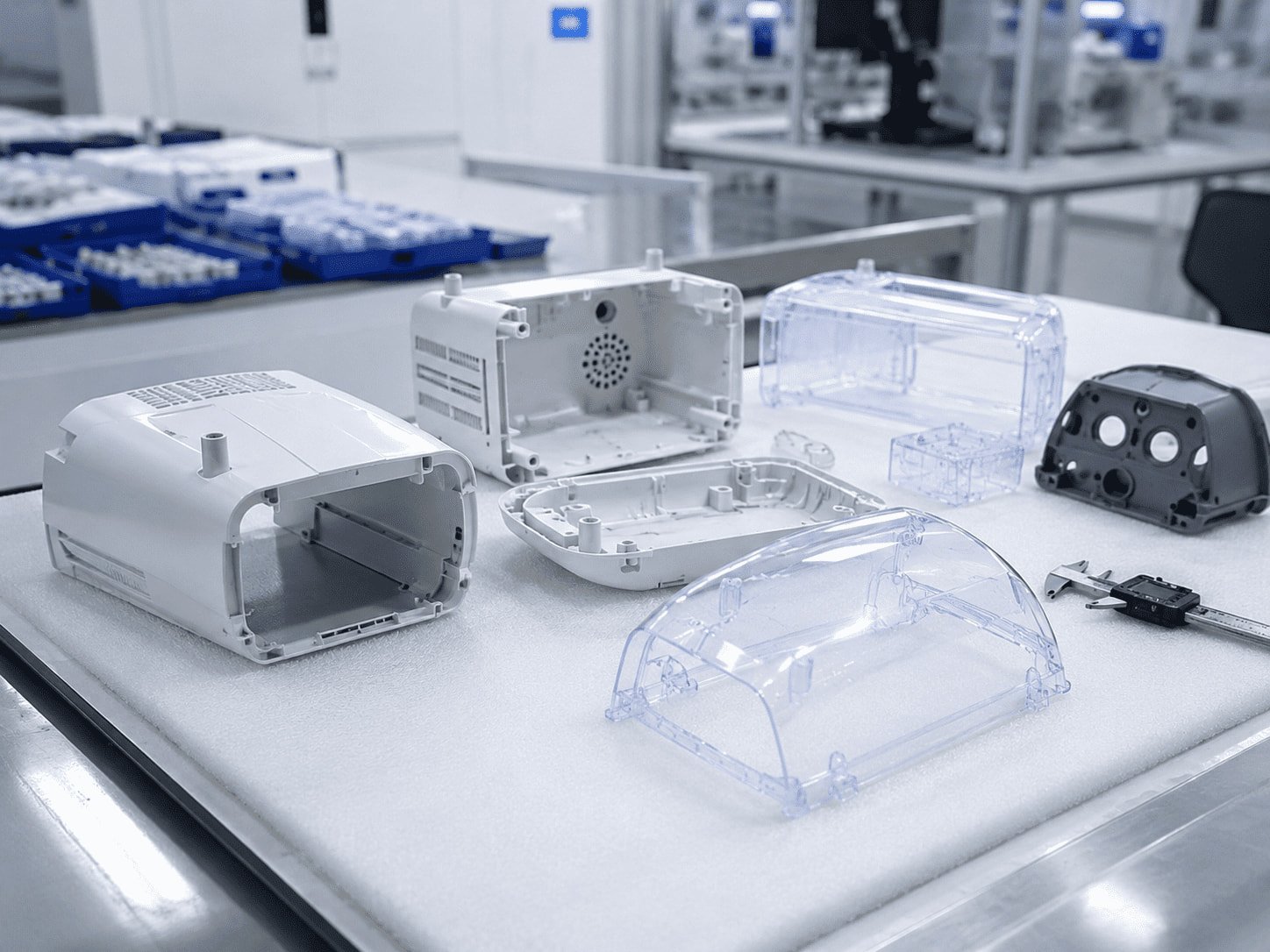
Medical Devices
Housings, covers, holders, transparent non-implant parts.
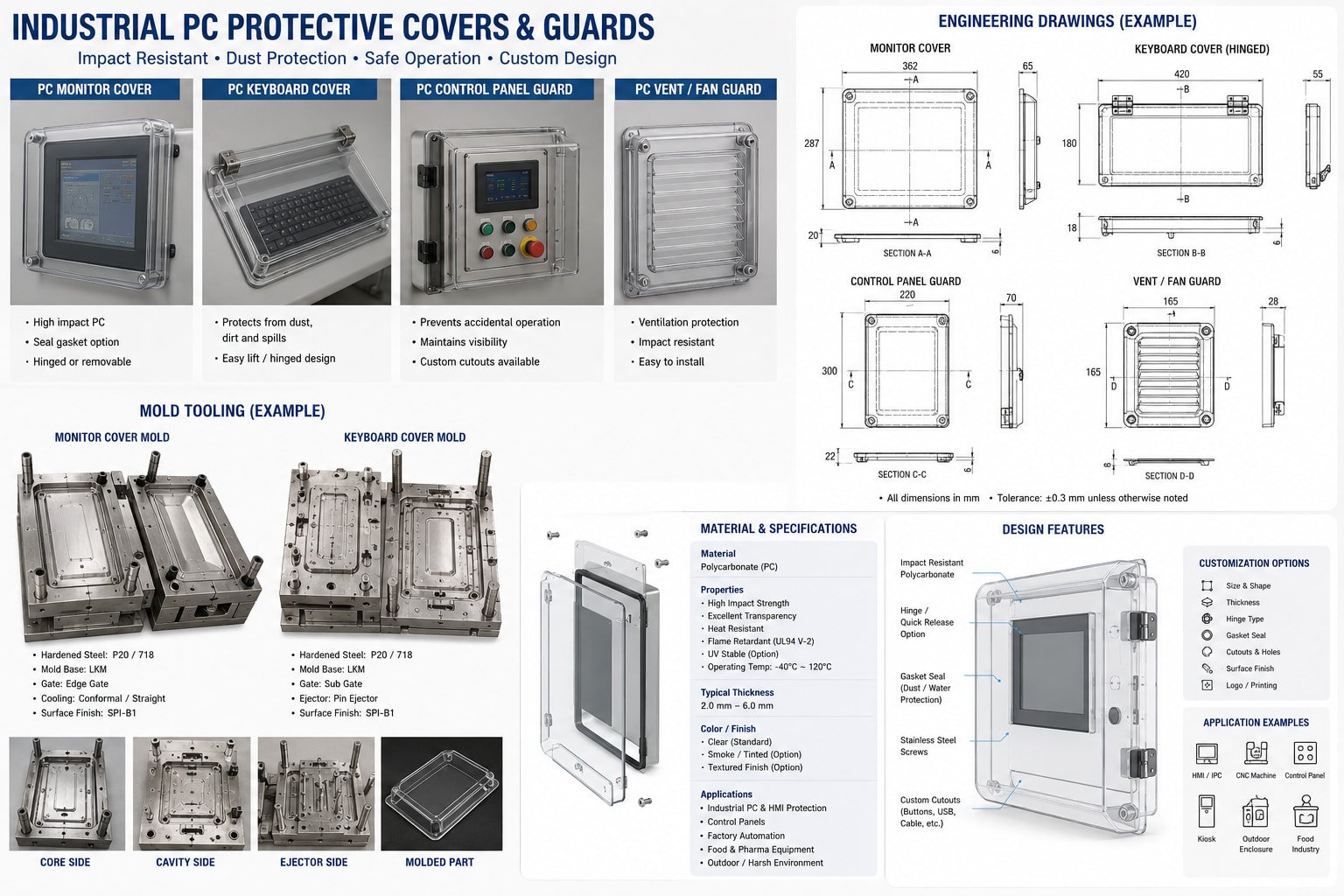
Industrial Equip
Protective covers, machine guards, control panels.
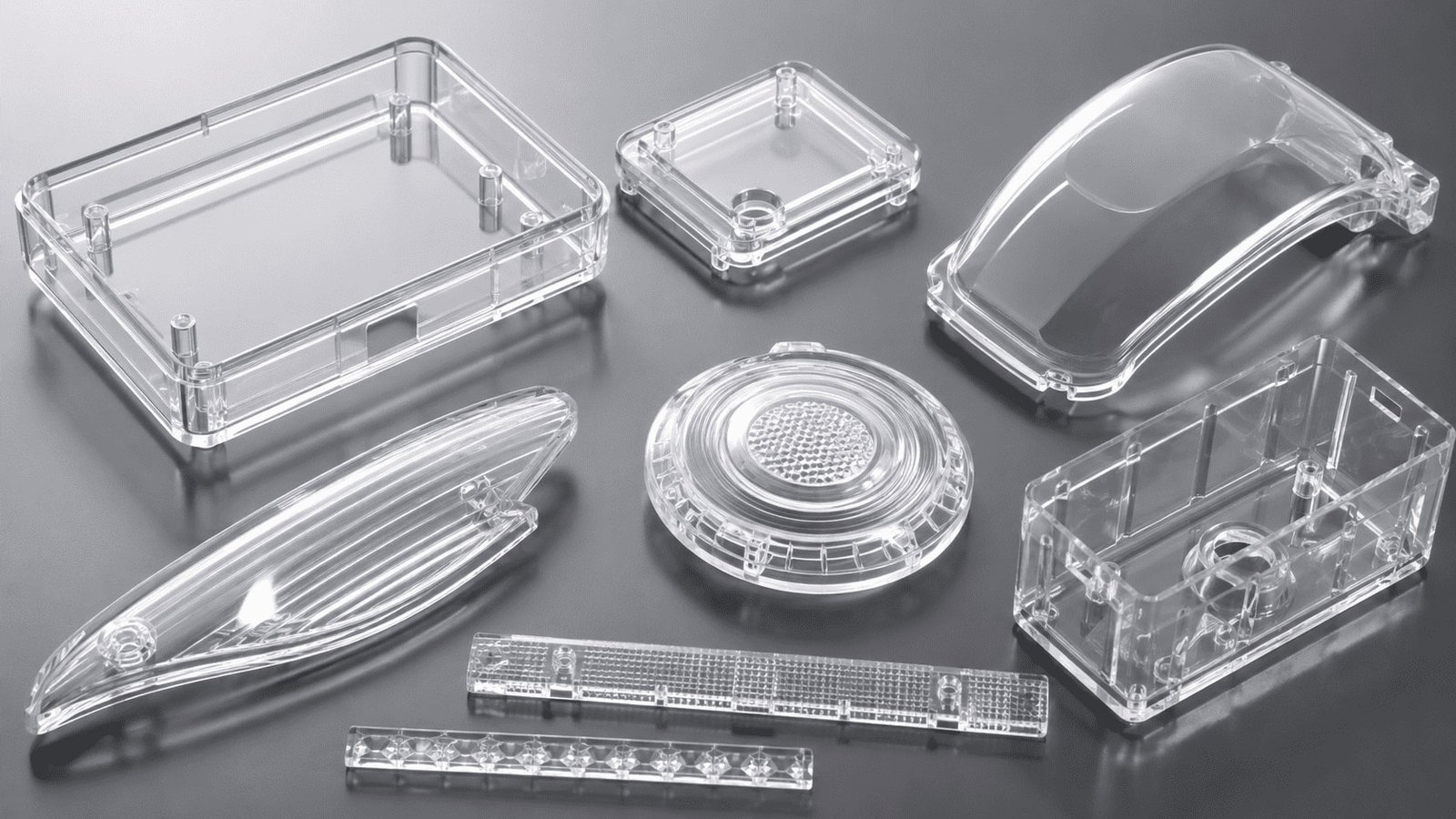
Transparent Parts
Clear covers, light guides, display covers, windows.
Start Your Project Evaluation
Send your 2D/3D drawings, material grade, quantity, and tolerance requirements for evaluation.
Common PC Injection Molding Defects and Remedies
Polycarbonate is notoriously difficult to mold due to its high viscosity and tendency for internal stress. Here is how we solve common defects.
| Defect | Common Cause | GBM Review Point |
|---|---|---|
| Silver Streaks | Moisture, material overheating, air trap | Resin drying, barrel temperature, venting |
| Bubbles / Voids | Moisture, thick walls, poor packing | Drying, wall thickness, packing pressure |
| Flow Marks | Low mold temperature, poor gate position, long flow path | Gate design, mold temperature, flow length |
| Burn Marks | Trapped air or high shear | Venting, injection speed, gate size |
| Sink Marks | Thick ribs, bosses or uneven walls | Rib/boss redesign, packing, cooling |
| Warpage | Uneven wall, unbalanced cooling, fiber orientation | Cooling layout, gate location, DFM correction |
| Cracking After Assembly | Internal stress or sharp corners | Mold temperature, radii, packing, stress review |
| Black Spots / Yellowing | Degradation, poor purging, overheating | Barrel temperature, residence time, material handling |
| Gate Blush | Gate shear or wrong gate size | Gate geometry, speed, temperature |
| Weld Lines | Multiple flow fronts, poor venting | Gate layout, venting, flow simulation if needed |
Why Choose GBM for PC Injection Molding
DFM Before Mold Cutting
We review wall thickness, draft angle, gate location, ribs, bosses, undercuts, and possible stress areas before mold manufacturing.
PC Mold Tooling Experience
GBM supports PC molds for housings, covers, transparent parts, PC/ABS enclosures, and precision components.
T1 Samples & Mold Trial Support
We provide T1 samples, mold trial pictures, trial videos, and engineering feedback before mold approval.
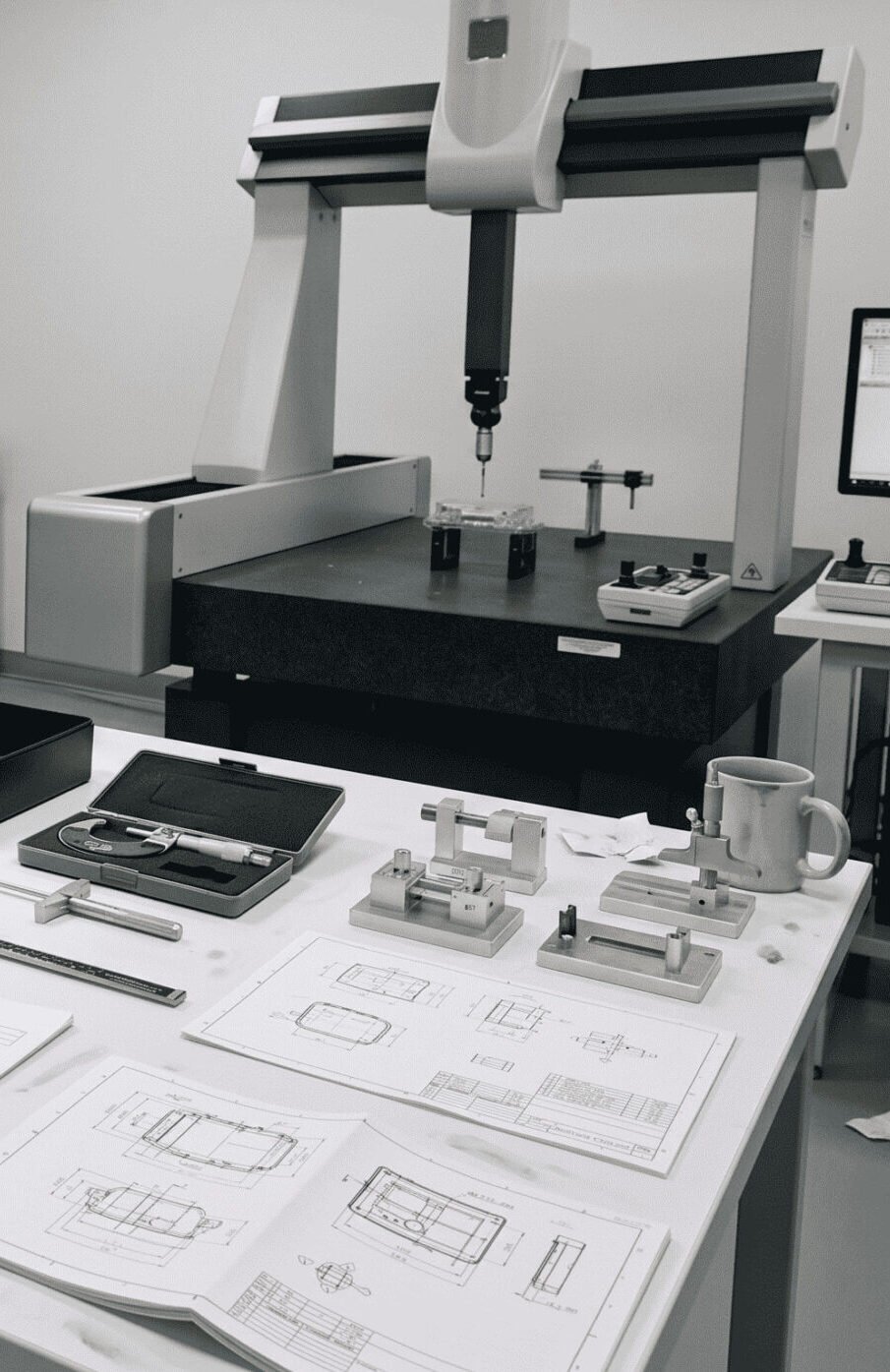
CMM-Based Quality Control
CMM reports, sample QC reports, FAI, and CPK reports are available based on project requirements.
Export-Ready Mold Delivery
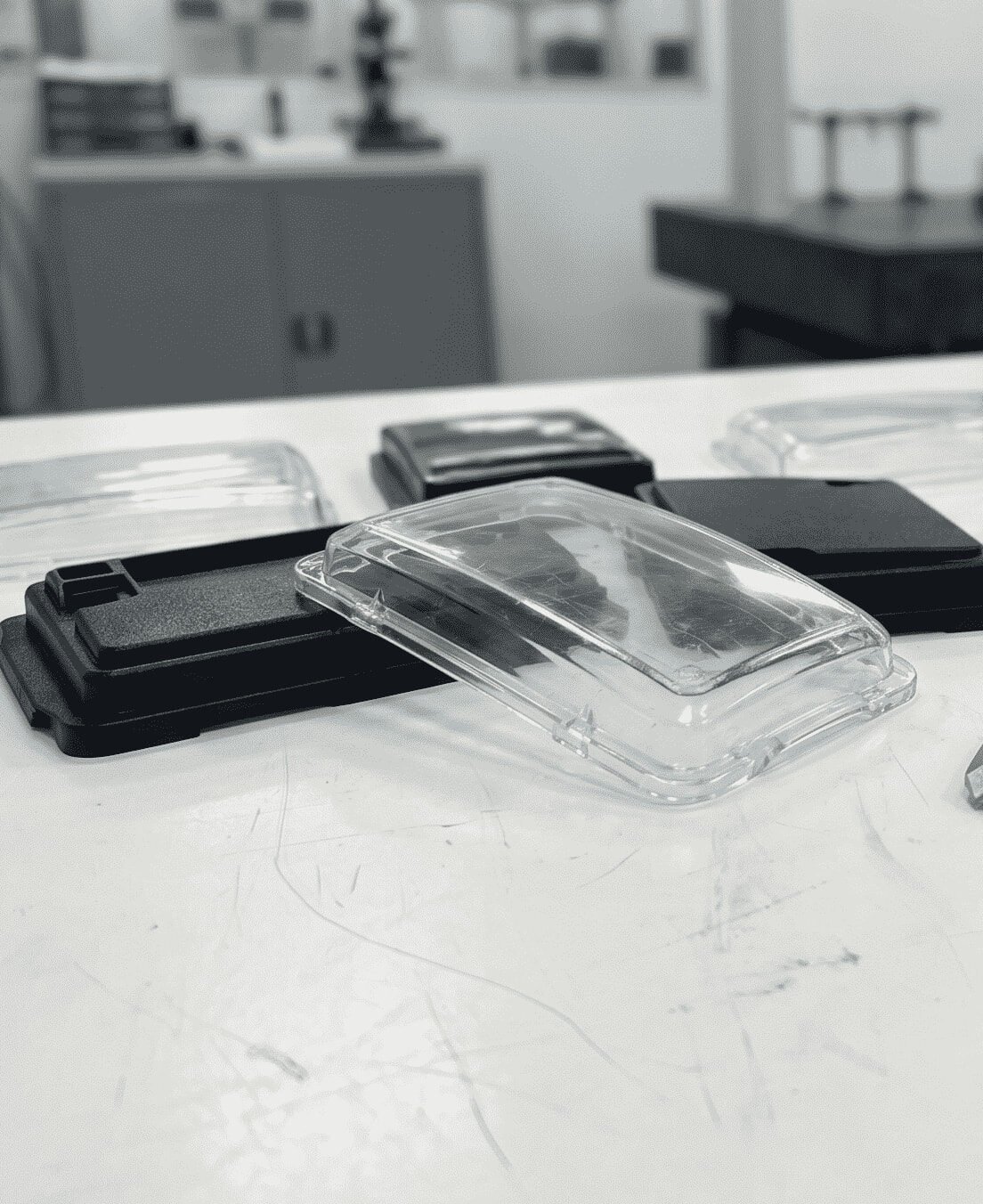
We can provide mold drawings, spare parts lists, maintenance notes, packing photos, and secure export packaging.
PC vs ABS vs PC/ABS vs PMMA
| Material | Main Strength | Best For |
|---|---|---|
| PC | Impact resistance, heat resistance, transparency | Durable parts, transparent covers, protective housings |
| ABS | Easy molding, lower cost, good appearance | General housings and consumer parts |
| PC/ABS | Balance of toughness and processability | Electronics enclosures, automotive interior parts |
| PMMA | Excellent optical clarity | Transparent covers, lenses, display parts |
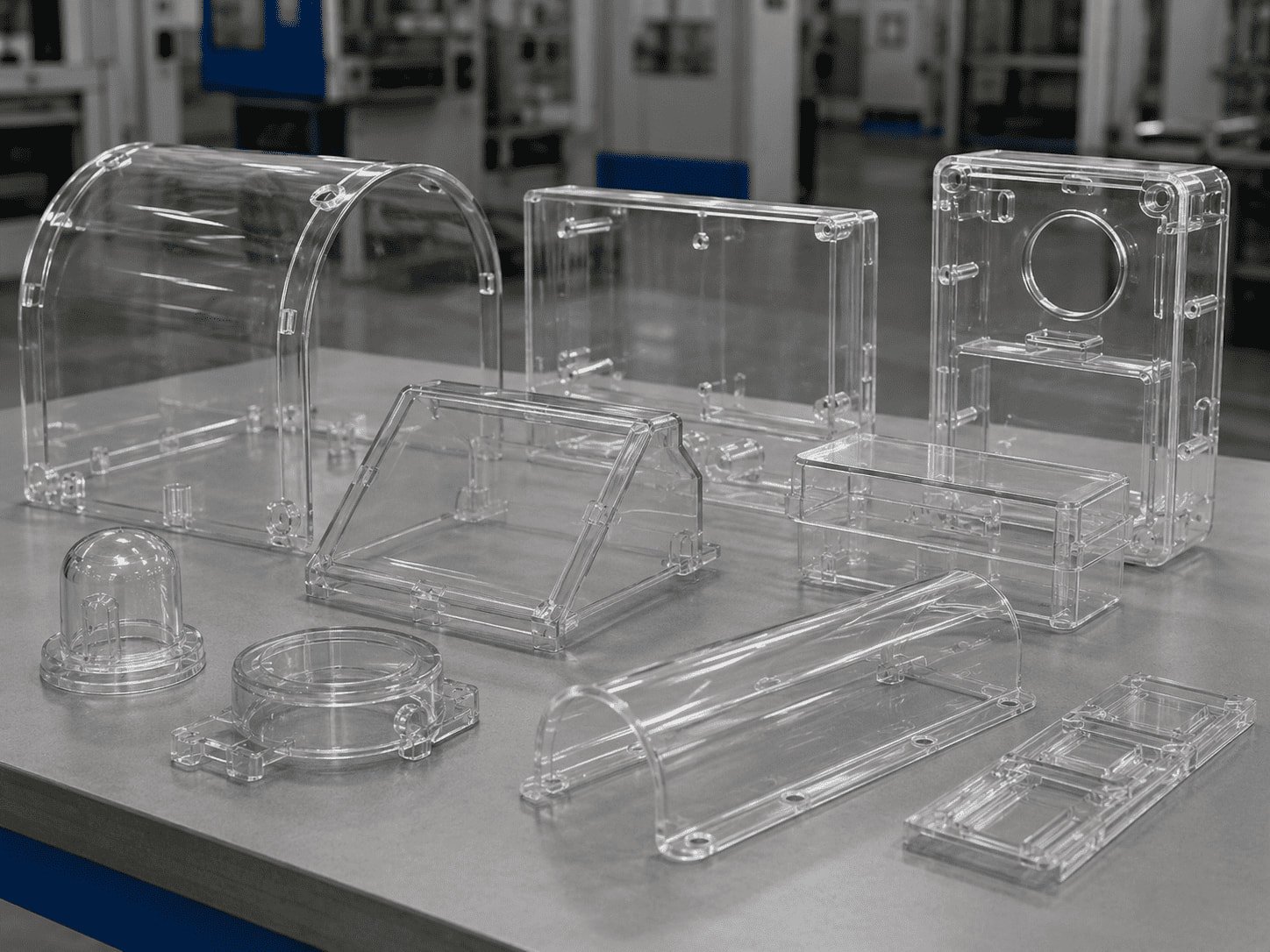
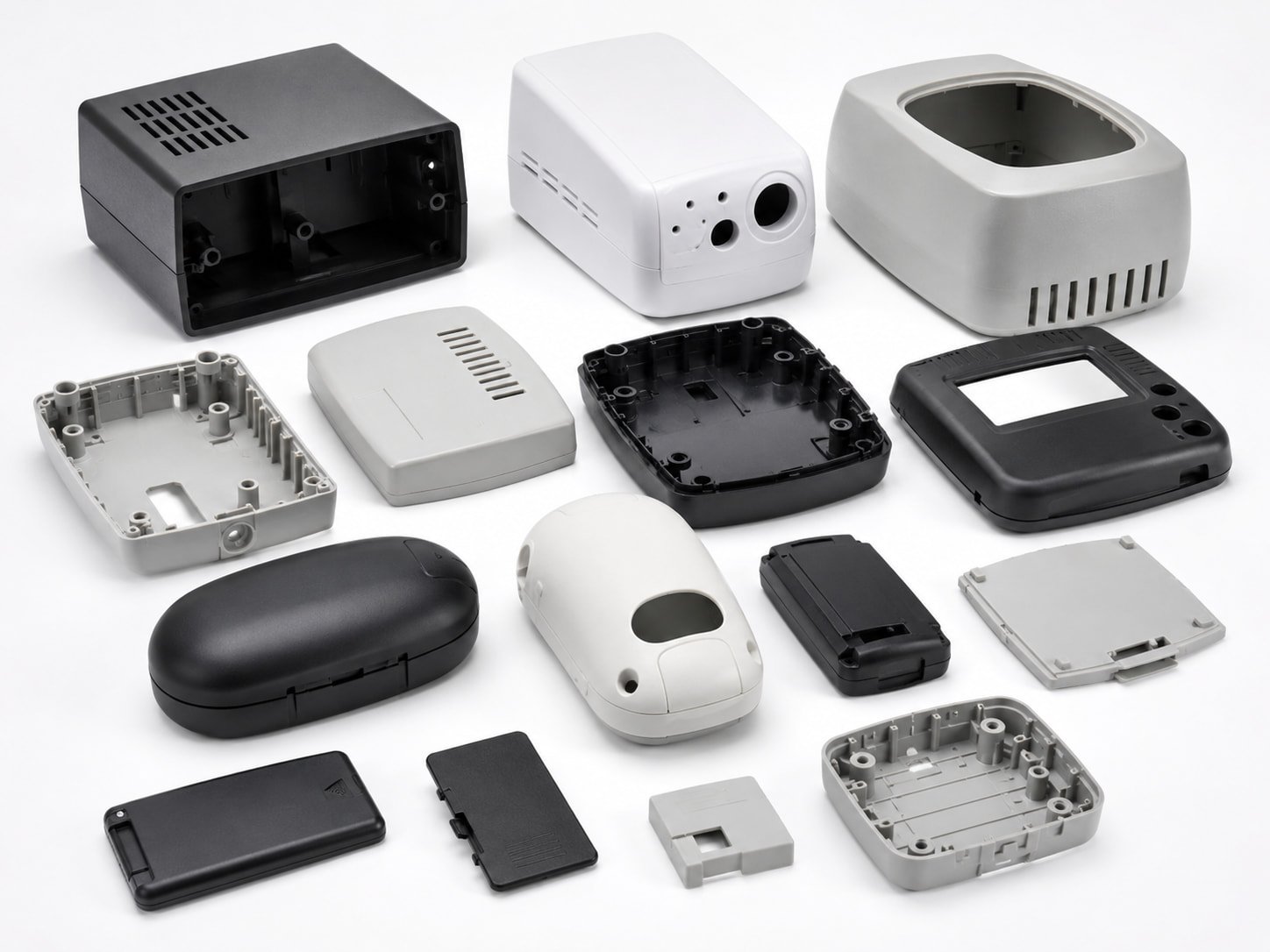
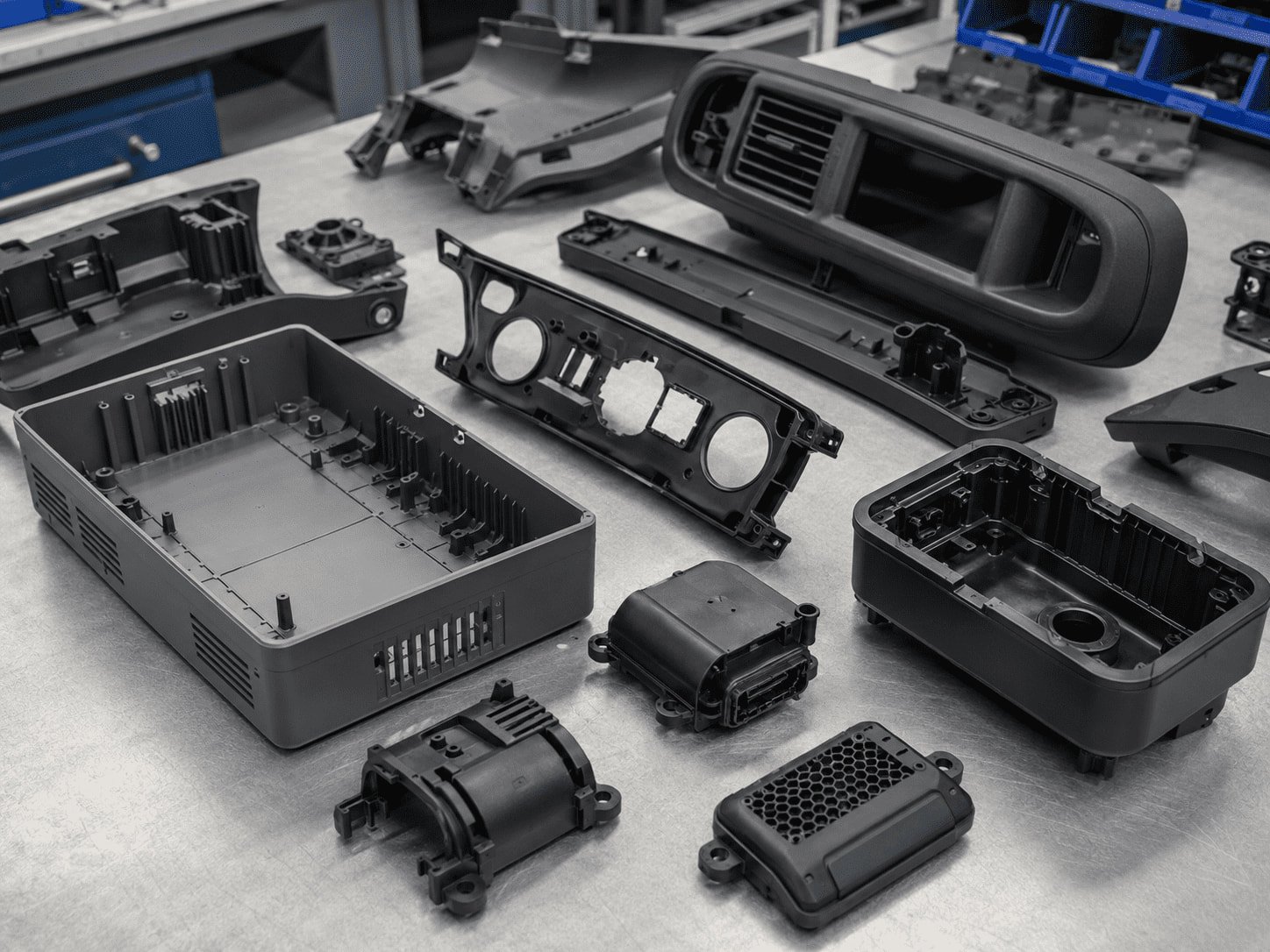
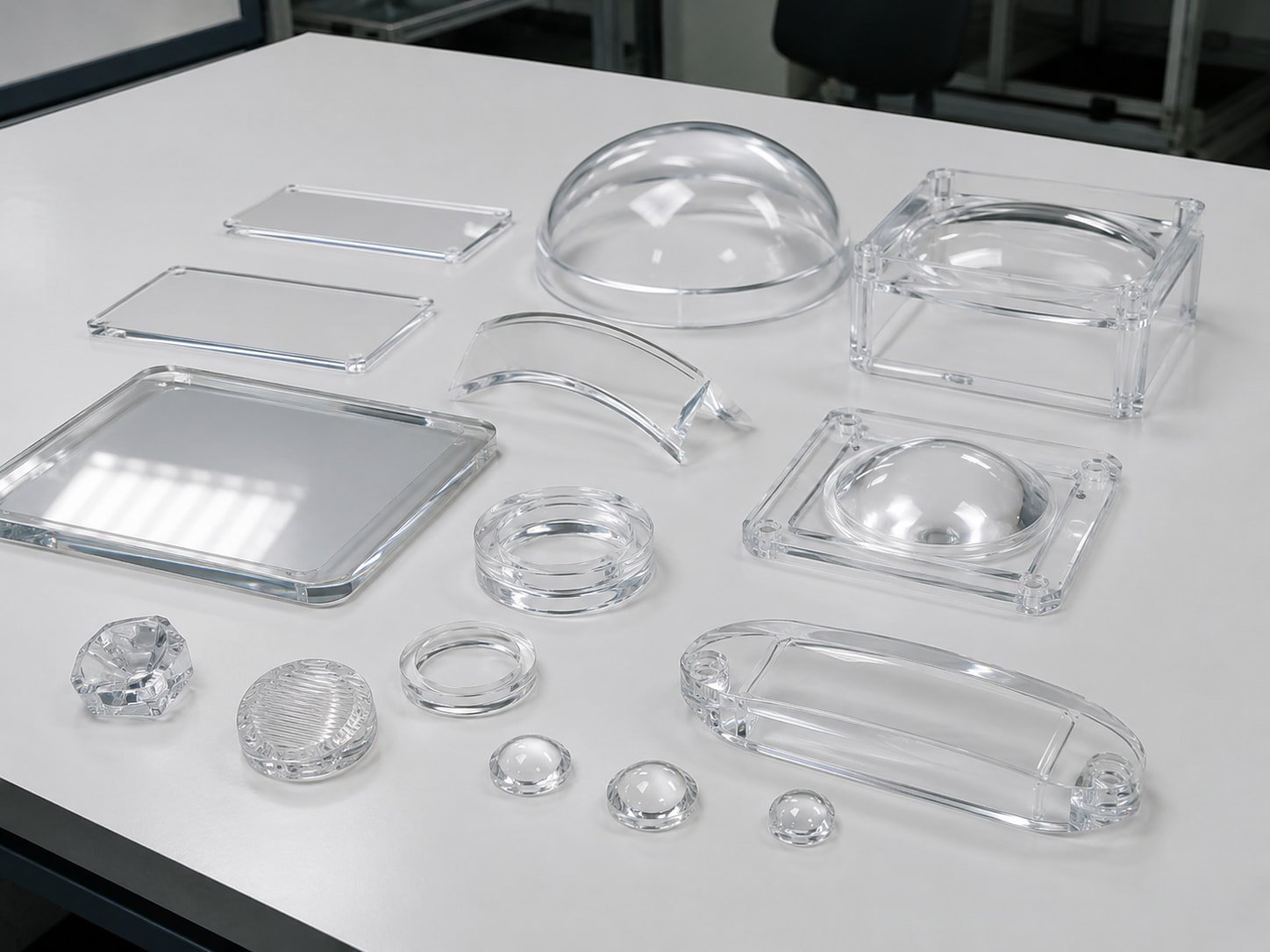
If you are not sure whether PC, PC/ABS, ABS, or PMMA is better for your part, GBM can review your drawings, application, and quality requirements before quotation.
How to Choose a Polycarbonate Injection Molding Supplier
Selecting the right manufacturing partner ensures high-quality parts, reduced defect rates, and a smoother production process.
| Buyer Checkpoint | Why It Matters for PC Parts | What GBM Provides |
|---|---|---|
| PC Material Experience | PC has high viscosity and stress risk | PC, PC/ABS, transparent PC, optical-grade PC review |
| DFM Before Tooling | PC defects often start from wall, gate and flow design | DFM review before mold cutting |
| Mold Temperature Control | PC needs stable mold temperature for stress and surface | Cooling and temperature review during mold design |
| T1 Trial Feedback | PC issues need trial correction | T1 samples, photos, videos, engineering feedback |
| QC Documentation | OEM buyers need dimensional and visual proof | CMM, sample QC, FAI/CPK on request |
| Export Communication | Overseas buyers need remote confirmation | Drawings, packing photos, WhatsApp/email support |
Send your PC part drawing for DFM review before choosing a molding supplier.
Quality Control for PC Injection Molded Parts
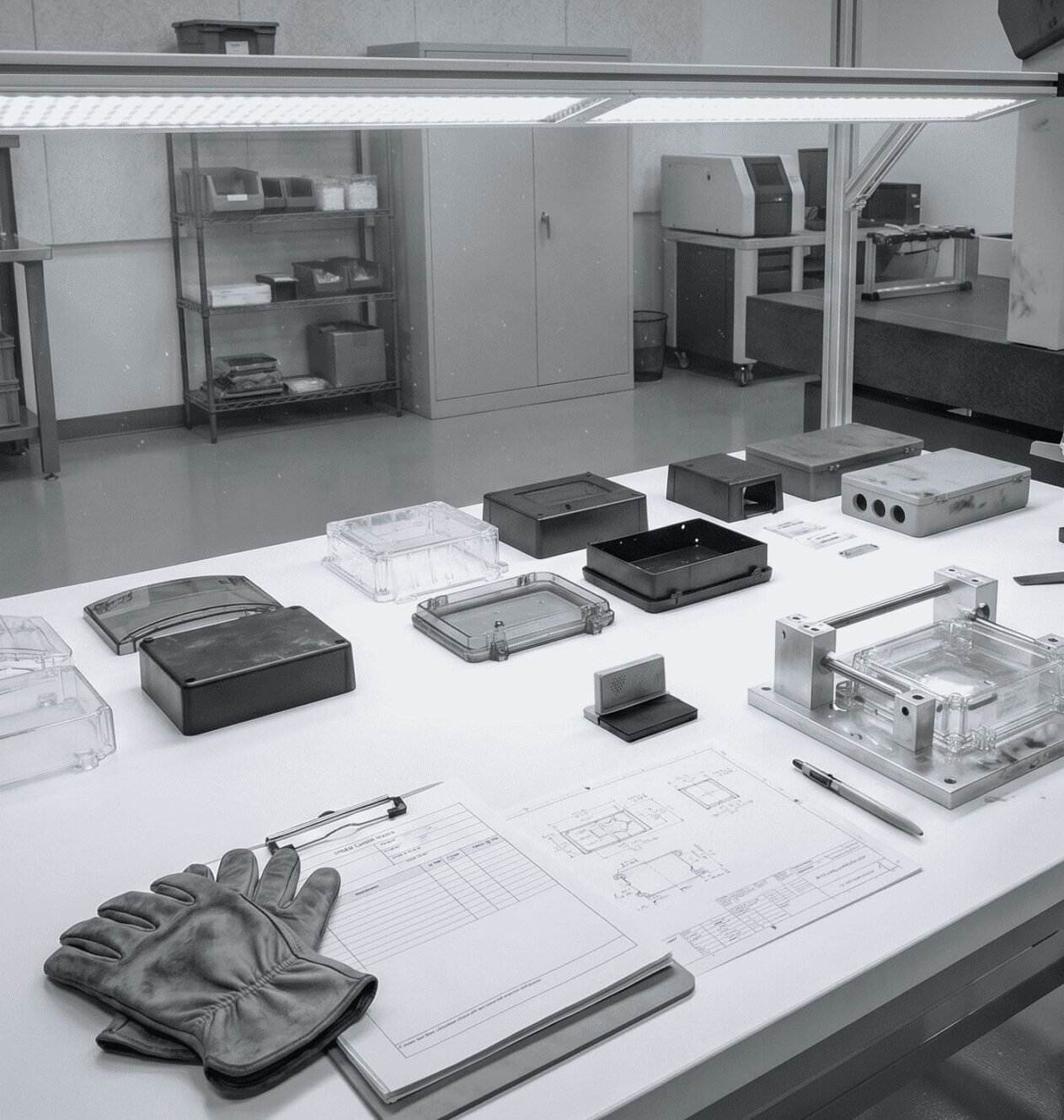
Rigorous Inspection Process
- Incoming material and steel checking
- Mold component inspection during machining
- Mold assembly and water testing
- T1 sample inspection
- CMM dimension inspection
- Final fit / form / function review
Reports Available
T1 Mold Trial for PC Projects
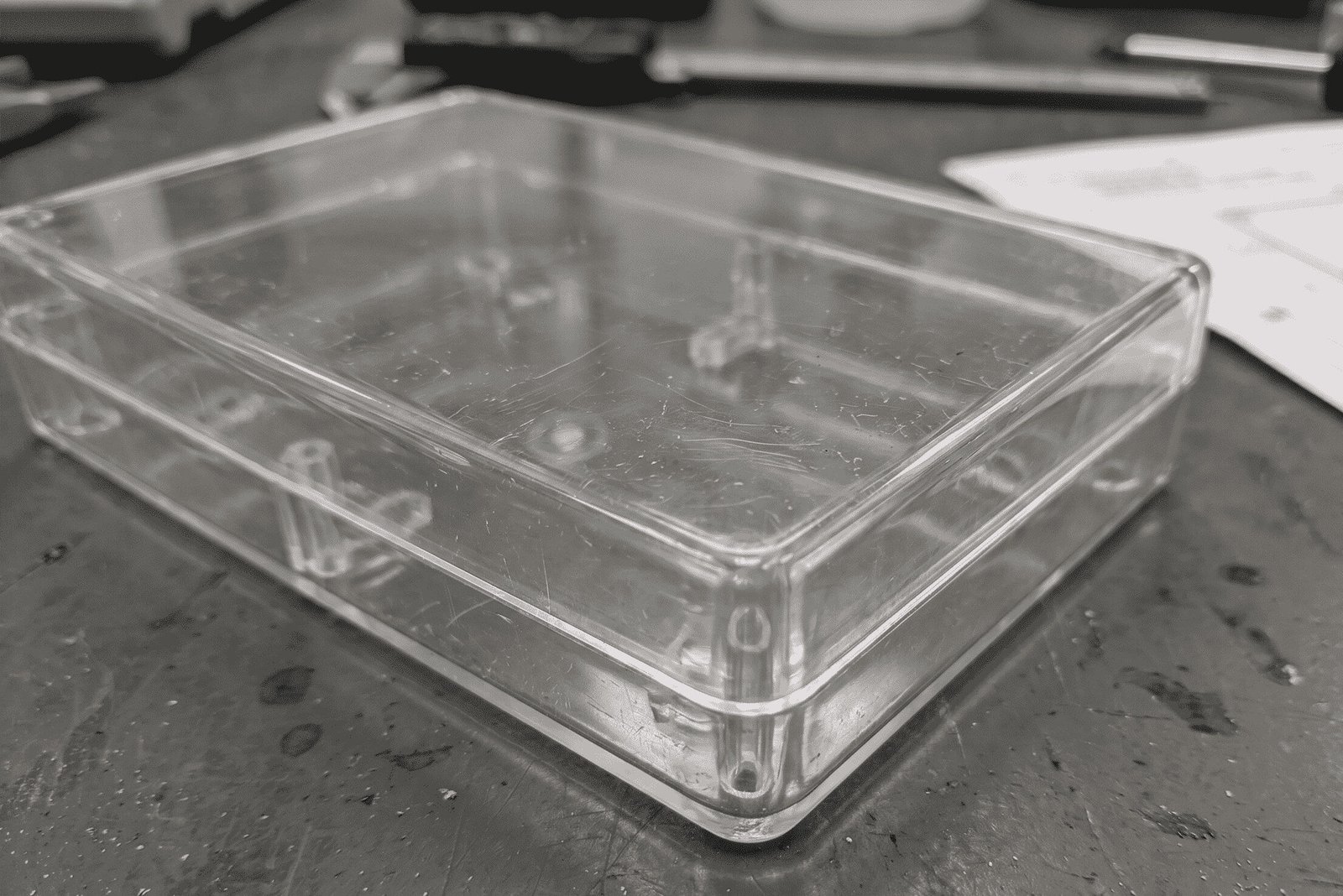
For PC injection molding, T1 trial helps verify flow marks, bubbles, sink marks, warpage, gate marks, stress risk, dimensions, and assembly performance before mold approval.
GBM Checks
- • Filling status & Flow marks
- • Bubbles, voids, and Sink marks
- • Warpage & Gate marks
- • Dimensions & Appearance
- • Assembly fit
Buyer Receives
- • Physical T1 samples
- • Trial pictures & video
- • Sample QC report
- • CMM report (if required)
- • Engineering feedback
Export-Ready PC Injection Mold Packaging
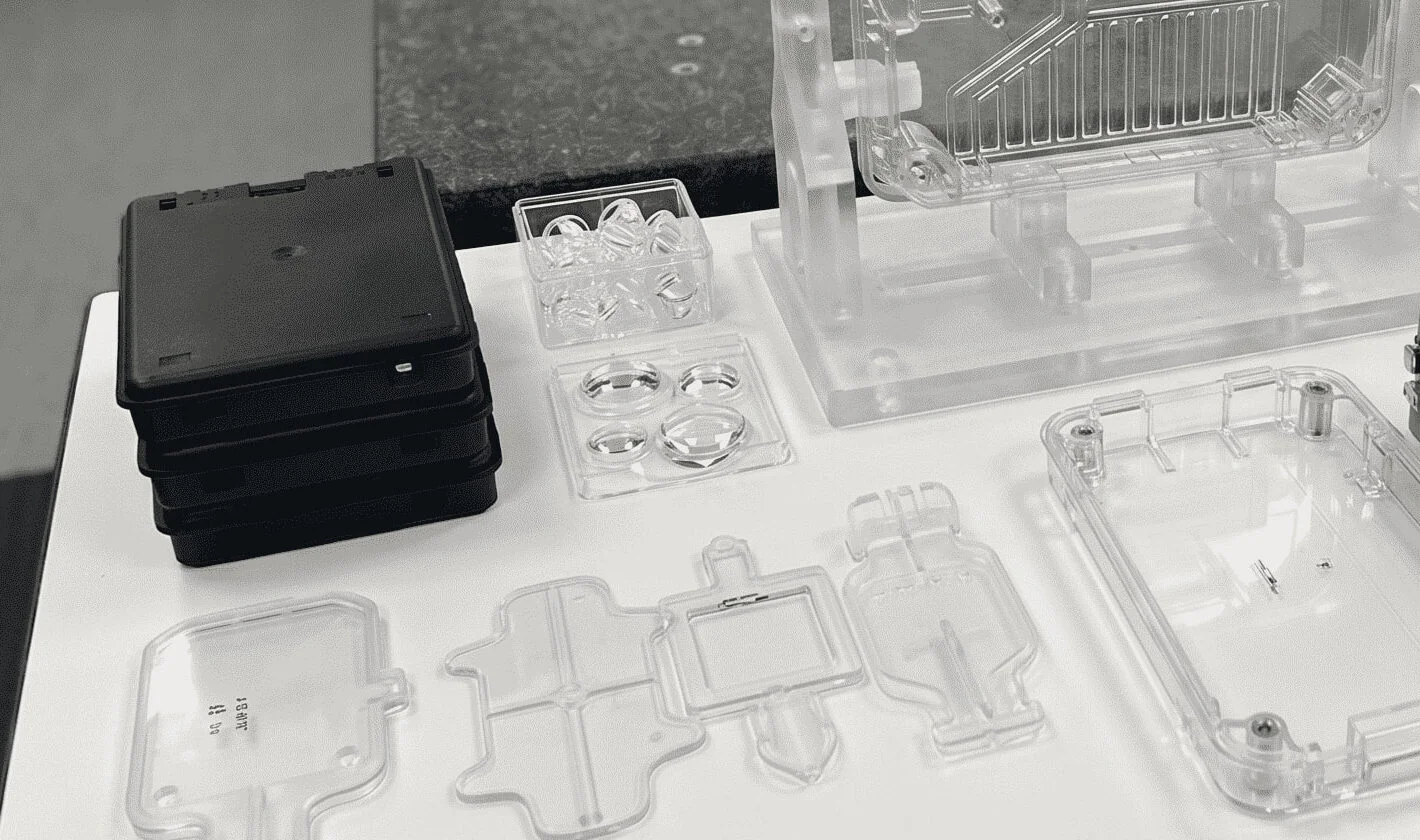
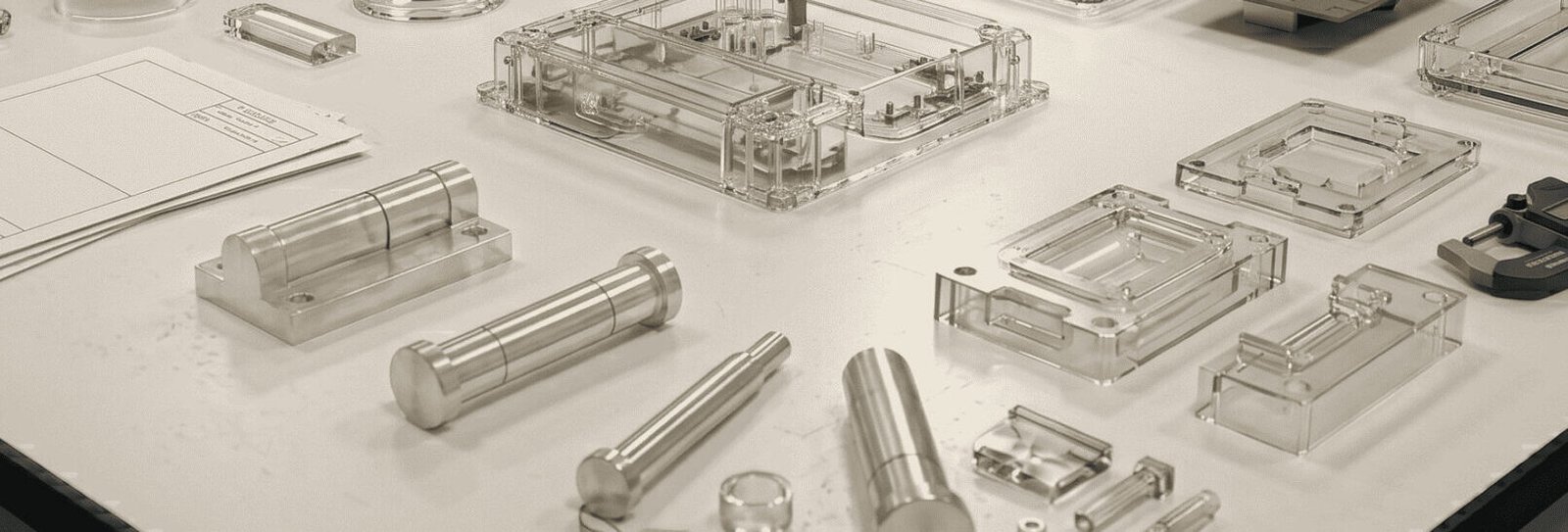
Need an export-ready PC mold?
Send us your machine data and mold standard requirements for a precise evaluation.
Related PC Molding Solutions
FAQ About Polycarbonate Injection Molding
What is polycarbonate injection molding?
What is PC molding used for?
What temperature is used for polycarbonate injection molding?
Does polycarbonate need drying before injection molding?
What are the common defects in PC injection molding?
How can flow marks and bubbles be reduced in transparent PC parts?
How do you reduce internal stress in polycarbonate molded parts?
Is PC better than ABS for injection molded parts?
What is the difference between PC and PC/ABS injection molding?
Is polycarbonate better than PMMA for transparent molded parts?
Can you produce optical-grade polycarbonate parts?
Can you support flame-retardant PC or glass-filled PC parts?
What should I provide for a PC injection molding quote?
Do you support low-volume polycarbonate injection molding?
Are you a polycarbonate injection moulding supplier for US and European buyers?
Can GBM provide both PC mold tooling and molded part production?
Get a Polycarbonate (PC) Injection Molding Quote with DFM Review
Send your 2D/3D drawings, resin grade, annual quantity, surface finish, and tolerance requirements. GBM engineers will review your PC part design and recommend a suitable molding solution.
Email Us
Annie@gbminjection.com
WhatsApp / Call
+86 13632611848
Factory Address
Room 101, Jiumo Technology Park, Gangsheng Road, Yabian Village, Shajing Street, Baoan District, Shenzhen City