Custom TPU Injection Molding Manufacturer
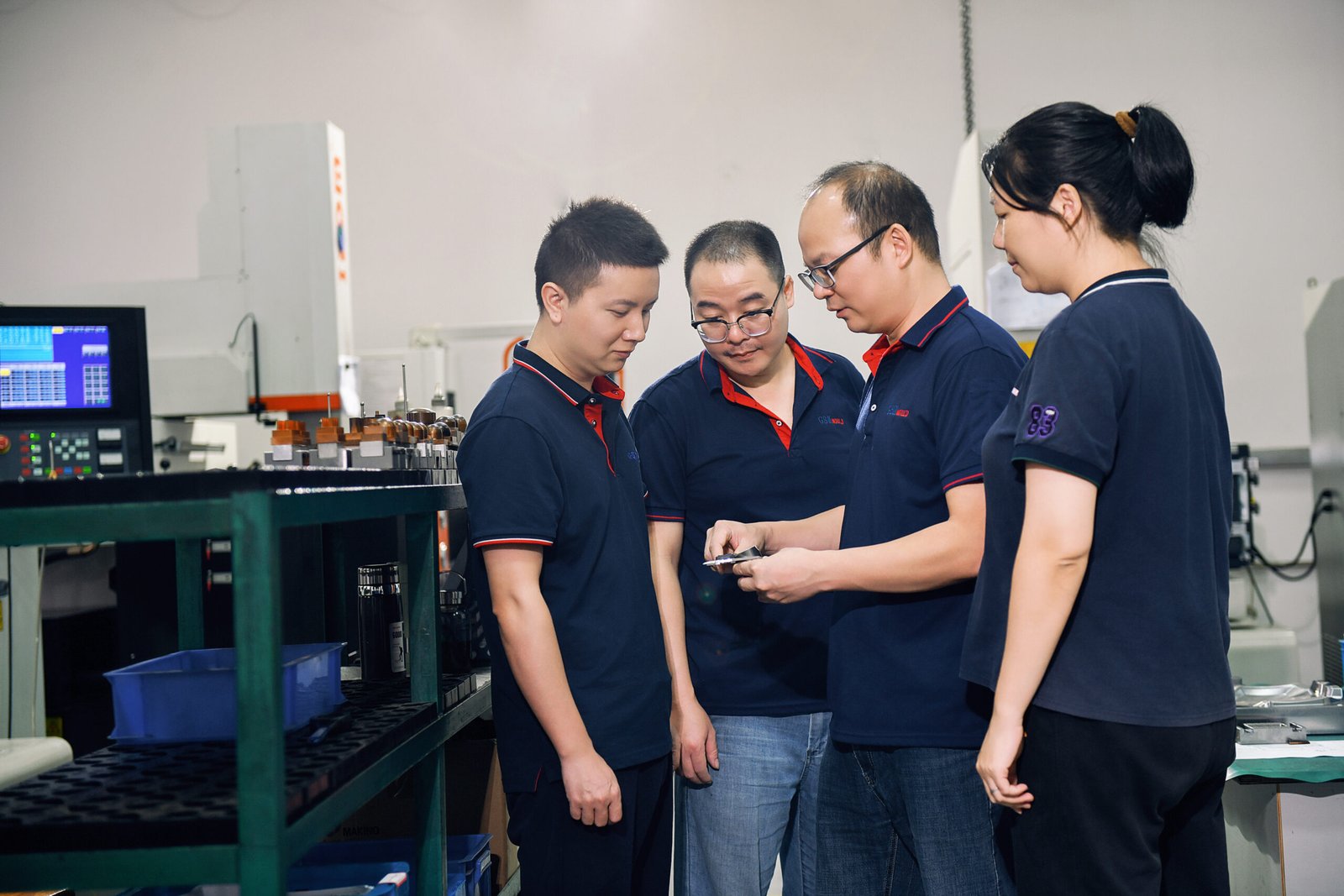
GBM Mold manufactures custom injection molded TPU parts for flexible, abrasion-resistant, soft-touch, sealing and overmolded applications. We support TPU material selection, DFM review, mold design, T1 trial, injection molding, inspection and export delivery.
Procurement Reminder: Send us your 3D drawing, TPU grade or Shore hardness requirement, annual quantity and application environment. Our engineer will review mold feasibility, gate location and demolding risks before quotation.
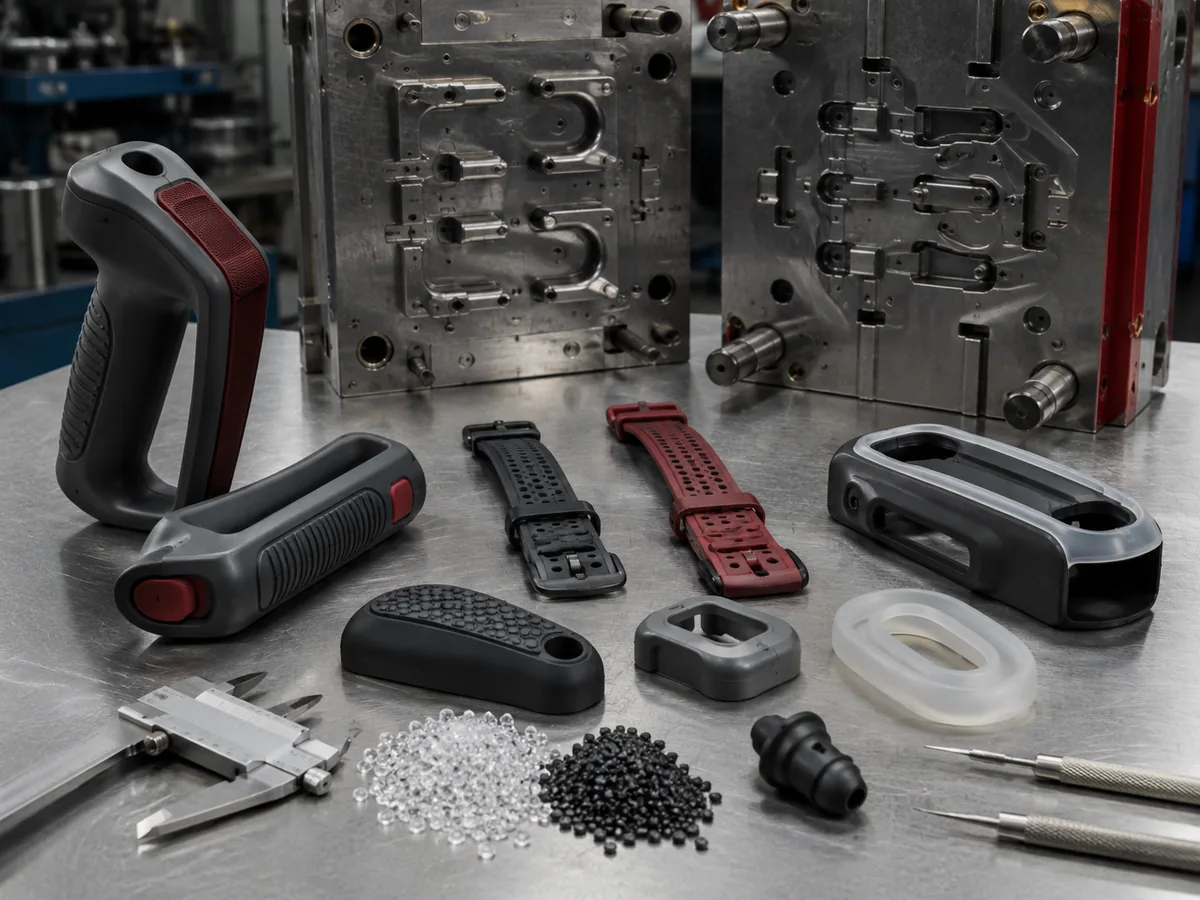
Flexible TPU Parts
Shore hardness, soft-touch surface, sealing and cushioning parts.
TPU Mold Design
Gate, venting, draft angle, ejection and parting line review before tooling.
TPU Overmolding
TPU over PC, ABS, PA, inserts or rigid plastic substrates.
T1 Samples & QC
Trial samples, inspection photos, dimensional checks and packing confirm.
What Is TPU Injection Molding?
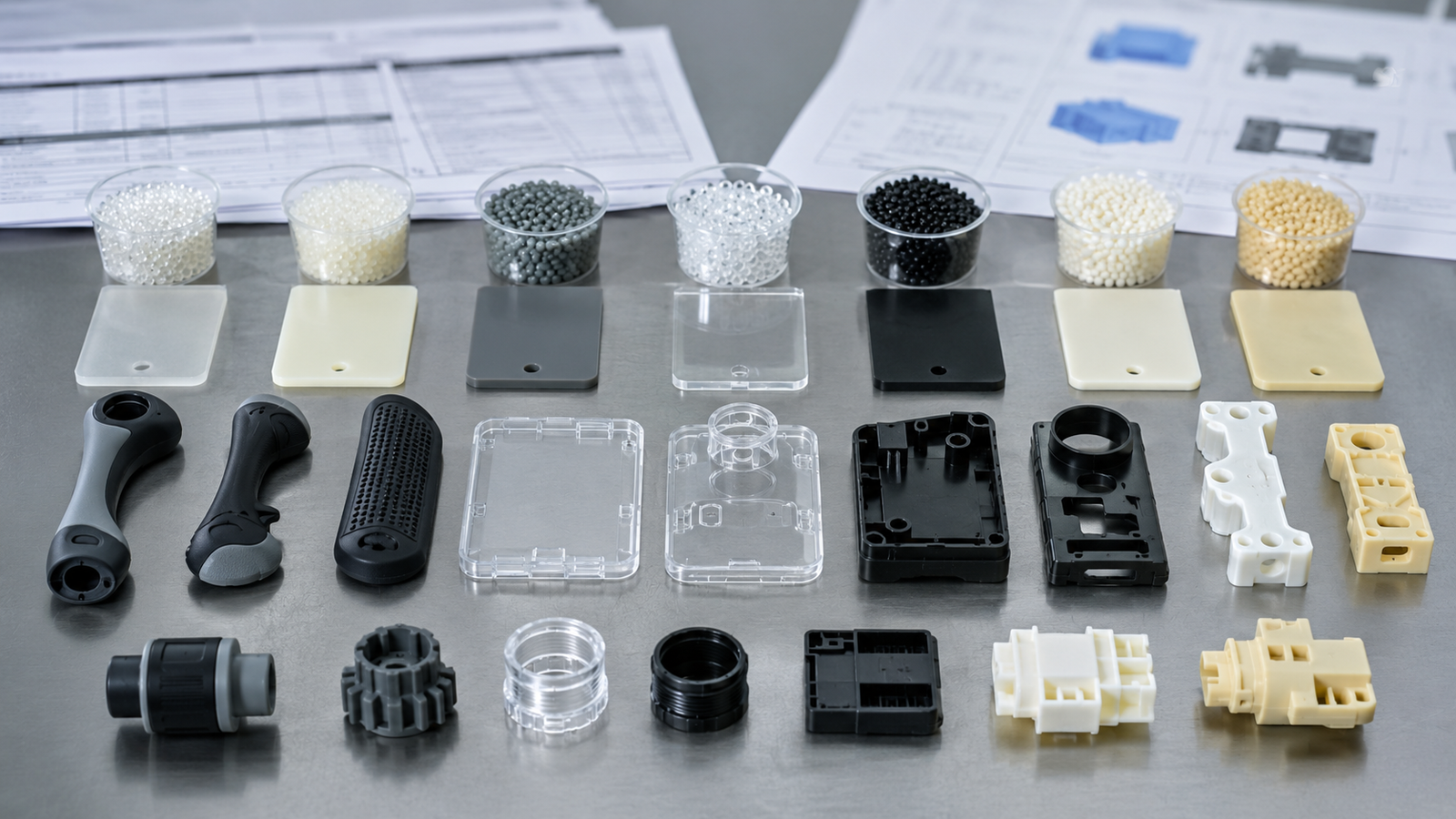
TPU injection molding is a manufacturing process used to produce flexible thermoplastic polyurethane parts by melting TPU pellets and injecting the material into a precision mold cavity. TPU combines rubber-like elasticity with thermoplastic processing, making it suitable for soft-touch grips, seals, protective covers, cable strain reliefs, wear-resistant wheels, gaskets and overmolded components.
As a melt-processable thermoplastic elastomer, TPU bridges the gap between plastics and rubber. It offers outstanding durability, flexibility, and tensile strength. Because it can be processed on standard thermoplastic equipment, it is widely utilized not just in injection molding, but also in extrusion and blow molding for various high-performance applications.
Related service: custom injection molding services
Why Choose TPU for Injection Molded Parts?
Different TPU grades offer varying properties. We help you confirm hardness, environment resistance, and assembly requirements before DFM and quotation.
Flexibility
Ideal for soft-touch grips, protective sleeves, cushioning pads, and sealing lips that require elastic recovery.
Abrasion Resistance
Perfect for heavy-duty applications like rollers, foot pads, sliding components, and wear-resistant protective covers.
Tear Strength
Ensures durability for thin-edged seals, highly stretched components, and bendable connectors.
Oil & Chemical Resistance
Crucial for industrial protective parts and automotive components exposed to oils, greases, and harsh environments.
Low-Temperature Flexibility
Maintains performance in outdoor equipment, sporting goods, and electronics used in cold climates.
Overmolding Compatibility
Bonds excellently with rigid substrates like PC, ABS, PA, and metal inserts for multi-material part designs.
Need help choosing TPU for your part?
Send us your drawing and application requirements. Our engineers will recommend the optimal grade based on your specific needs.
Ask GBM for TPU Grade AdviceTPU Material Options for Injection Molding
We work with various TPU pellets for injection molding to match your exact application requirements, from industrial seals to medical devices.
| TPU Type | Typical Use | Selection Notes |
|---|---|---|
| Polyester TPU | Wear-resistant parts, industrial seals, footwear, automotive components | Good abrasion and oil resistance, but hydrolysis risk needs review in wet environments. |
| Polyether TPU | Medical parts, wet environments, sporting goods, flexible covers | Better hydrolysis resistance and low-temperature flexibility compared to polyester types. |
| Polycaprolactone TPU | Outdoor equipment, electronics, footwear, automotive interior/exterior | Offers balanced toughness, along with excellent oxidation and weathering resistance. |
| Aliphatic / Transparent TPU | Clear covers, aesthetic parts, UV-exposed parts | Provides superior color stability and clarity, though material cost is usually higher. |
| Reinforced TPU | Functional parts needing higher stiffness | Glass or mineral-filled TPU requires careful mold wear and material flow review. |
| Flame-Retardant TPU | Cable jackets, electronics, electrical components | Must confirm specific UL/flame requirements and review resin data sheet thoroughly. |
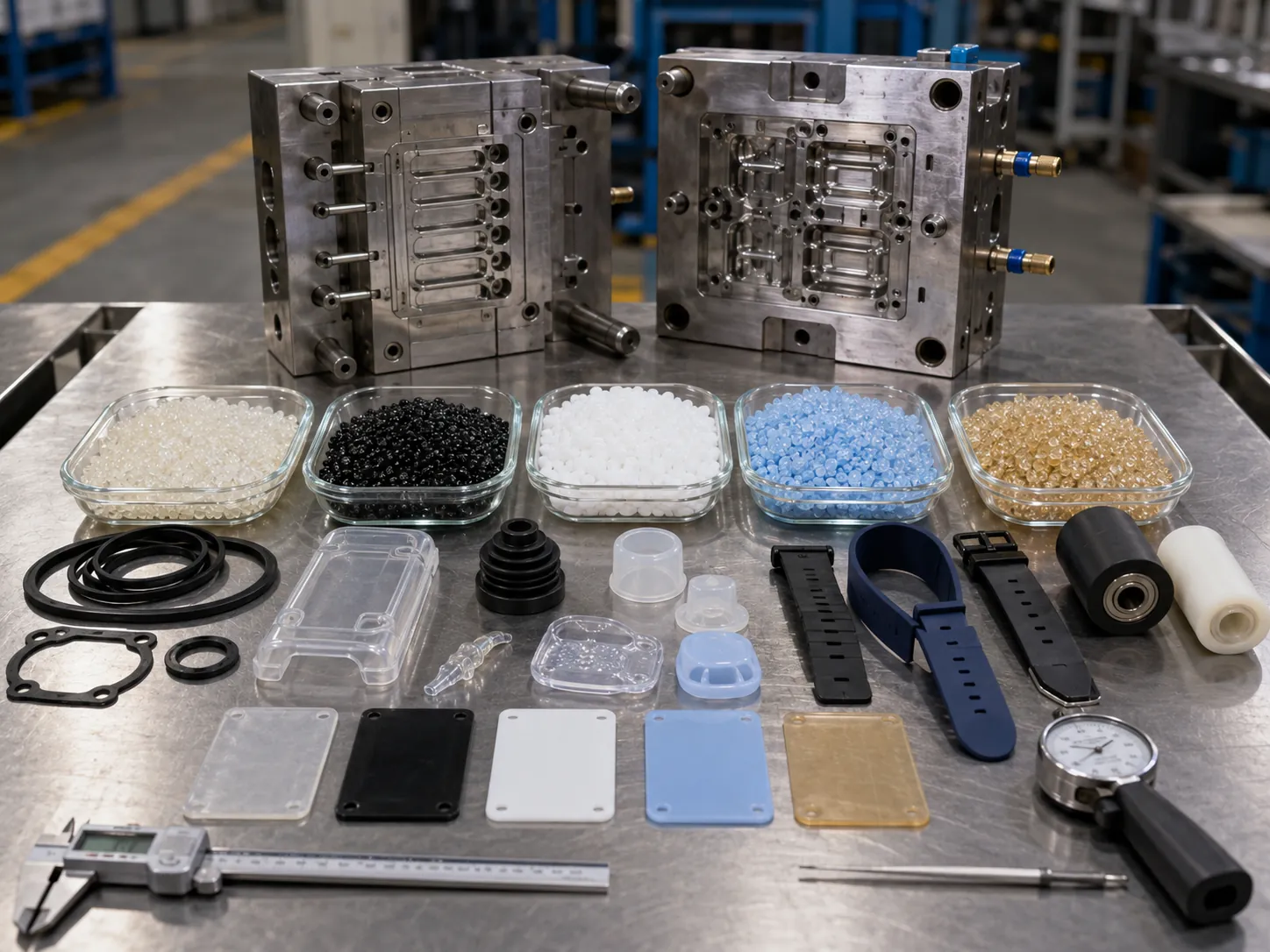
If your TPU part needs a rigid substrate, see our TPU overmolding mold manufacturer service.
Our TPU Injection Molding Capabilities
GBM Mold provides comprehensive tooling and molding services tailored for soft plastics. We ensure every parameter is optimized for your specific TPU grade to deliver consistent, high-quality production runs.
Send 3D Drawing for TPU Mold Review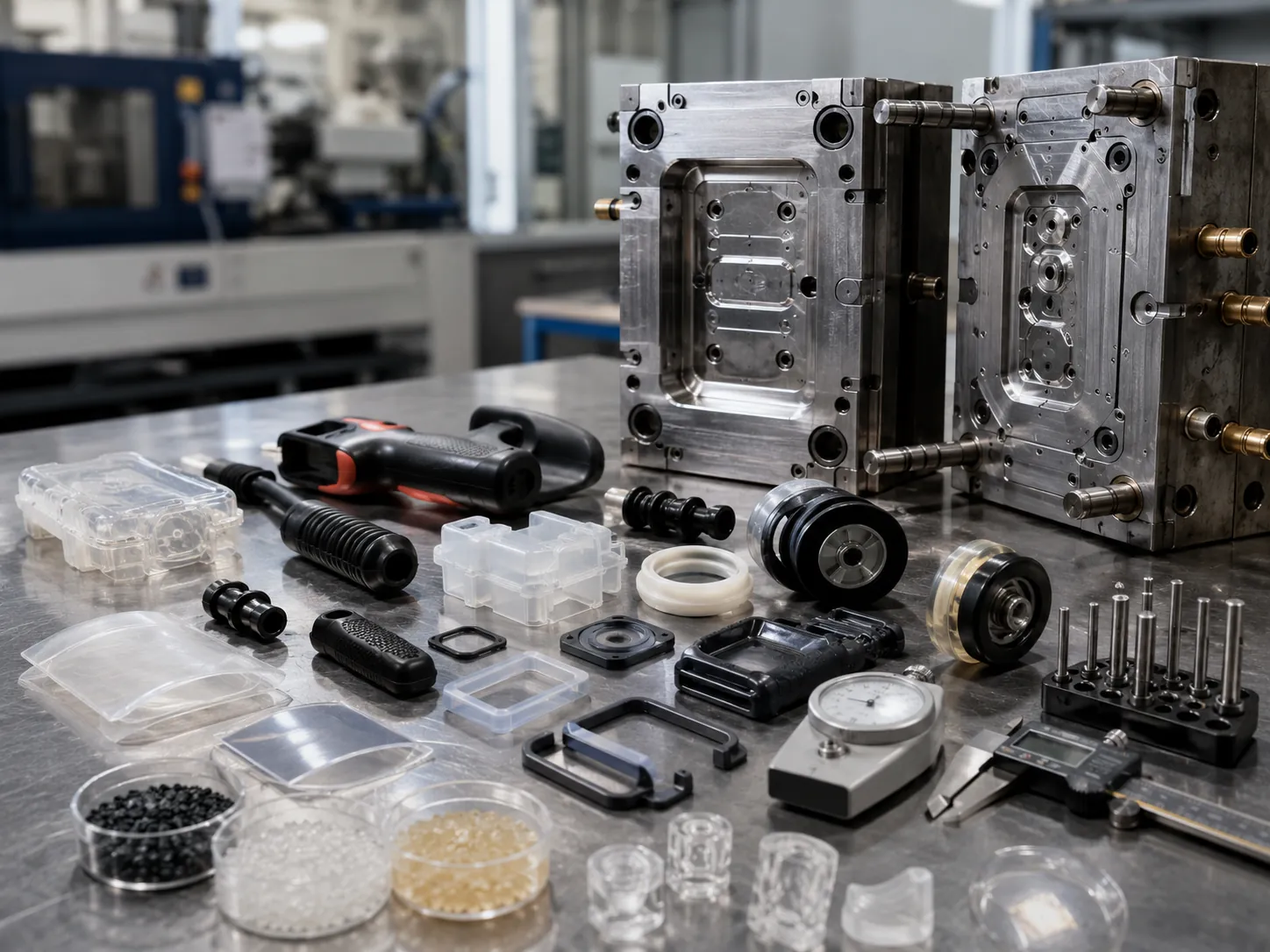
- Material Polyester TPU, polyether TPU, transparent TPU, flame-retardant TPU, reinforced TPU, customer-specified TPU
- Part Type Seals, gaskets, grips, covers, cable strain reliefs, wheels, rollers, soft-touch parts, overmolded parts
- Mold Type Single-cavity, multi-cavity, insert mold, overmolding mold, 2K mold depending on project
- Tooling Review DFM, gate location, venting, parting line, draft angle, ejection and shrinkage review
- Trial T1 sample molding, parameter adjustment, sample photos/video if needed
- Inspection Dimension check, appearance check, fitting review, hardness confirmation if required
- Delivery Export mold packing, molded part packing, spare parts, trial records and shipping photos
TPU Mold Design Guidelines Before Tooling
Key considerations for designing molds for TPU materials. Proper design is critical to prevent defects in flexible and soft components.
Uniformity is Key
TPU is elastic, but thick-walled parts suffer from slow cooling, shrinkage, bubbles, or warpage. During DFM, we review wall thickness transitions, thick ribs, radii, and local mass accumulation.
Preventing Sticking
Soft TPU is prone to sticking, especially in deep cavities, textured surfaces, and lower hardness grades. Generous draft angles are mandatory, and vertical deep textures must be avoided.
Strategic Placement
Gate location affects filling, appearance, flow marks, weld lines, and demolding. For soft-touch aesthetic parts, gates should never be placed in highly visible or touch-sensitive areas.
Crucial for Soft Plastics
TPU is highly sensitive to venting. Poor venting causes burn marks, short shots, trapped air, and surface blemishes. We plan aggressive venting at parting lines and end-of-fill areas.
Large Area Support
Soft materials deform easily, so ejection areas cannot be too small. We evaluate ejector pins, stripper plates, or large-area ejection methods to prevent stress marks, deformation, and sticking.
Grade-Specific Planning
Shrinkage varies drastically based on TPU grade, Shore hardness, wall thickness, and packing pressure. We adjust mold dimensions based on specific resin data and empirical trial results.
Managing Finish vs. Release
TPU can achieve matte, fine, or soft-touch textures, but deep textures increase demolding risks. For transparent or aesthetic TPU parts, careful control of polishing, venting, and flow marks is required.
TPU Injection Molding Process
From initial review to final delivery, our systematic approach ensures your flexible TPU parts meet exact specifications.
1. Project Review
Review 3D drawings, TPU hardness, application environment, tolerance, color and surface finish.
2. Material Confirmation
Confirm polyester TPU, polyether TPU, transparent TPU, reinforced TPU or customer-specified resin.
3. DFM and Mold Design
Review wall thickness, gate, venting, draft, ejection, shrinkage and overmolding structure.
4. Mold Manufacturing
CNC machining, EDM, polishing, fitting, mold assembly and pre-trial inspection.
5. Drying & Machine Setup
Dry TPU pellets according to supplier data sheet before molding to prevent moisture defects.
6. T1 Trial & Adjustment
Adjust injection speed, pressure, holding, cooling and demolding parameters.
7. Inspection & Approval
Check dimensions, appearance, flash, short shot, surface marks, hardness and assembly fit.
8. Production & Delivery
Molded part production, QC, packing, export delivery and comprehensive after-sales support.
TPU Drying, Temperature and Processing Control
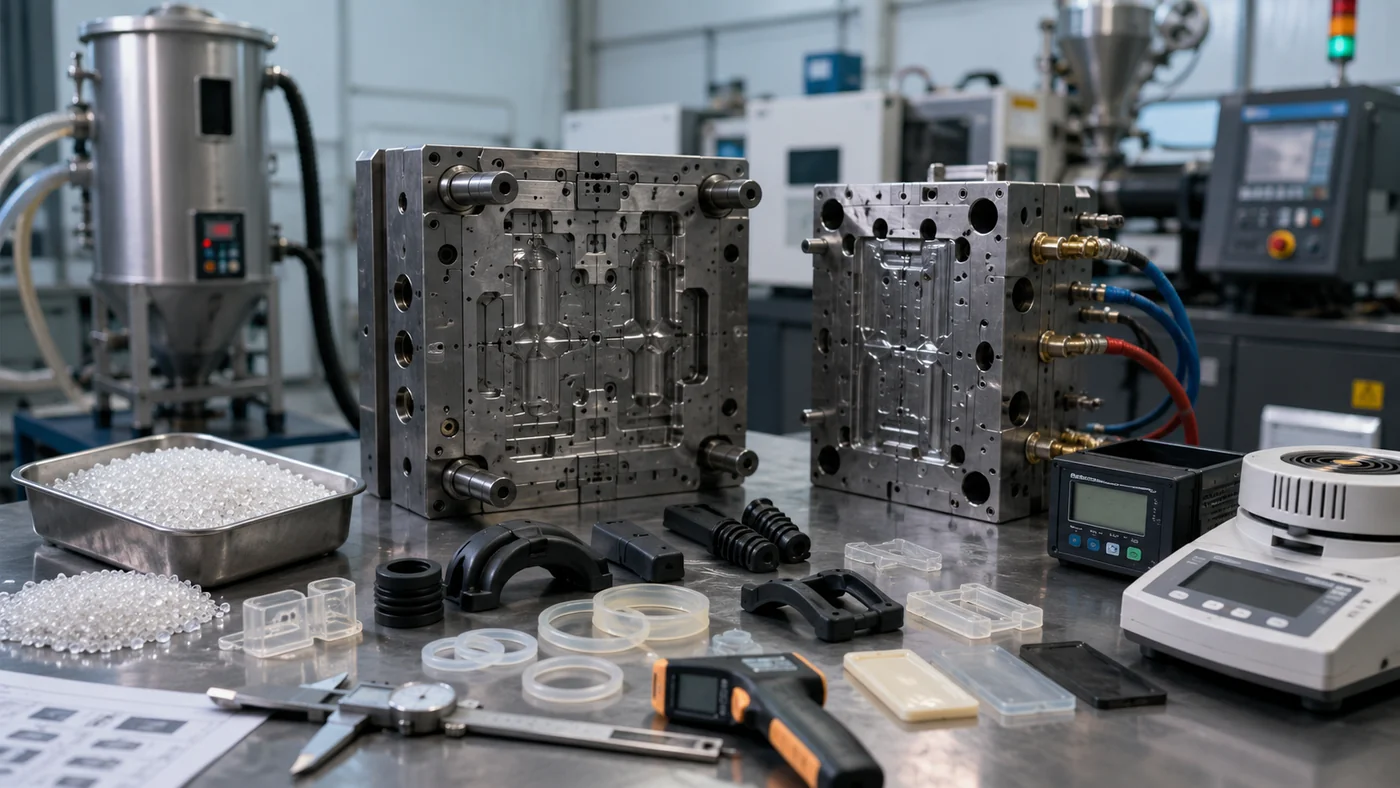
TPU is highly hygroscopic, making proper drying absolutely critical before molding. The actual drying temperature, drying time, melt temperature, and mold temperature must strictly follow the TPU supplier's data sheet.
During T1 trials, GBM Mold fine-tunes injection speed, holding pressure, cooling time, and ejection methods according to part thickness, hardness, and surface requirements. Typical TPU processing parameters vary by grade, hardness, supplier, and part design. We validate final settings empirically during T1 molding to ensure stability.
| Process Item | What GBM Reviews & Controls |
|---|---|
| TPU Drying | Resin drying condition, hopper exposure time, preventing moisture-sensitive defects (bubbles/splay). |
| Barrel Temperature | Grade-dependent melting behavior, avoiding degradation while ensuring flow stability. |
| Mold Temperature | Surface quality (gloss/matte), cooling balance, ease of demolding, and overall cycle time. |
| Injection Speed | Minimizing flow marks, burn marks (via sheer heating), short shots, and flash risks. |
| Holding Pressure | Preventing sink marks, managing internal stress, preventing flash, and ensuring dimensional recovery. |
| Cooling Time | Critical for soft parts to avoid deformation, sticking, excessive shrinkage, and cycle instability. |
| Demolding Strategy | Validating draft angles, ejector layout functionality, mold texture release, and automated stability. |
Injection Molded TPU Parts and Applications
TPU's versatility makes it the material of choice across diverse industries requiring flexibility, durability, and soft-touch aesthetics.
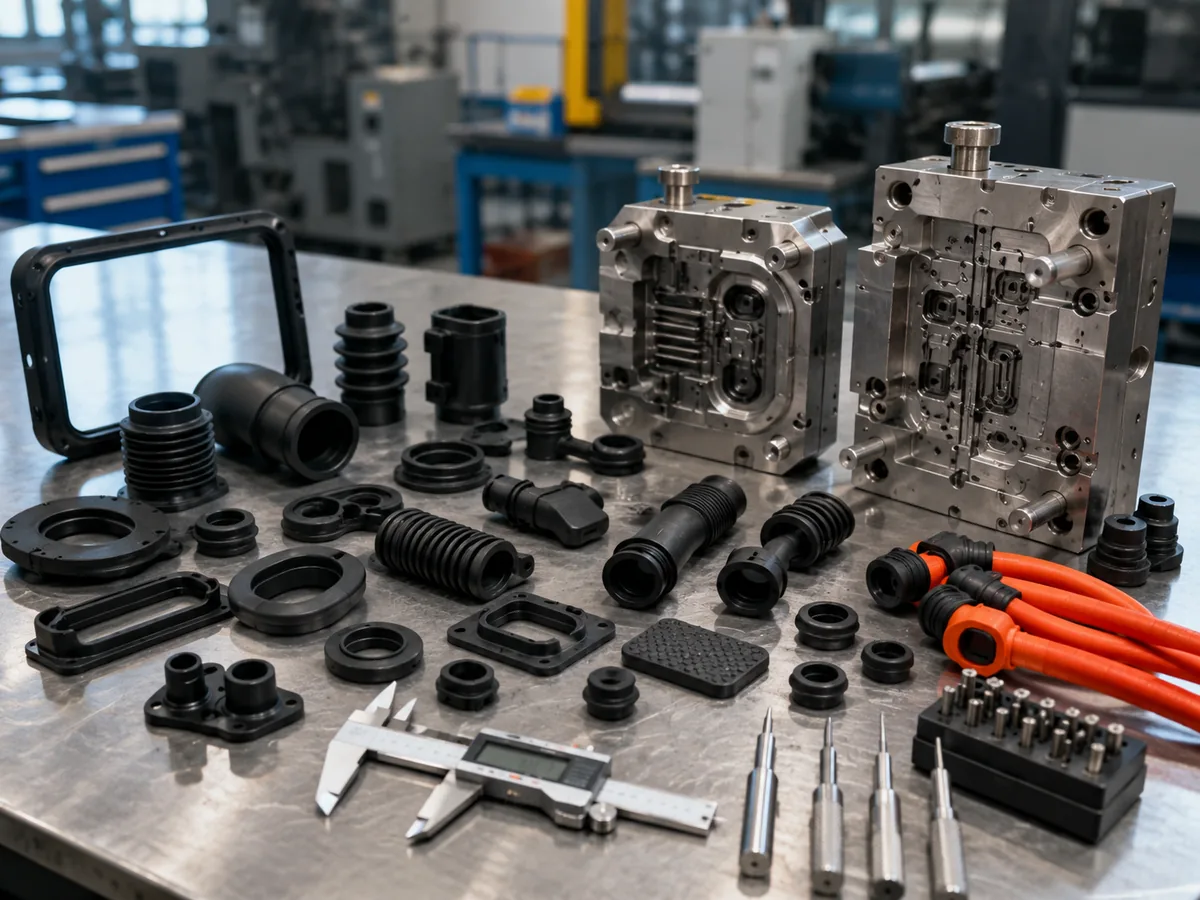
Automotive & EV
Seals, gaskets, protective covers, cable boots, soft-touch trims, vibration dampers.
See automotive injection mold →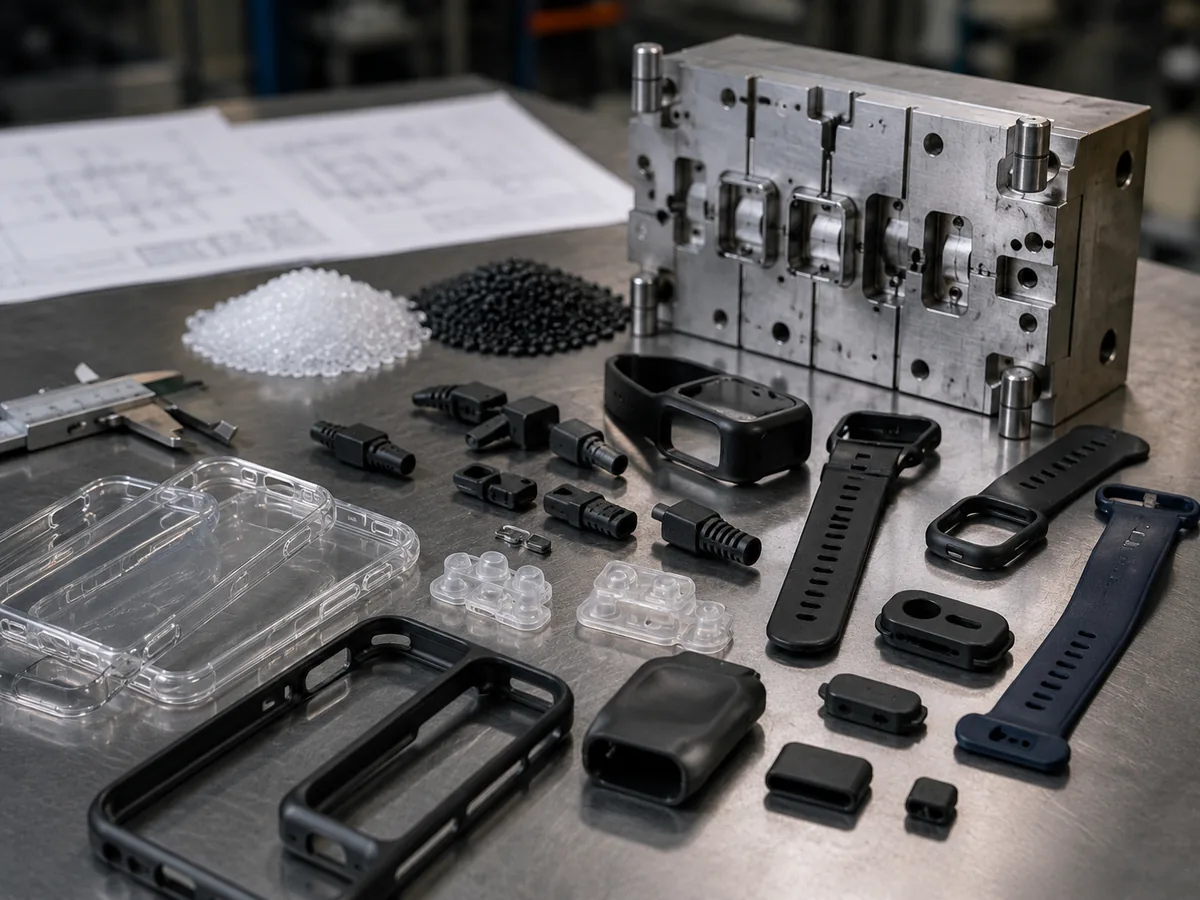
Electronics
Phone cases, cable strain reliefs, connector covers, wearable straps, protective housings.
See PC and TPU molded parts →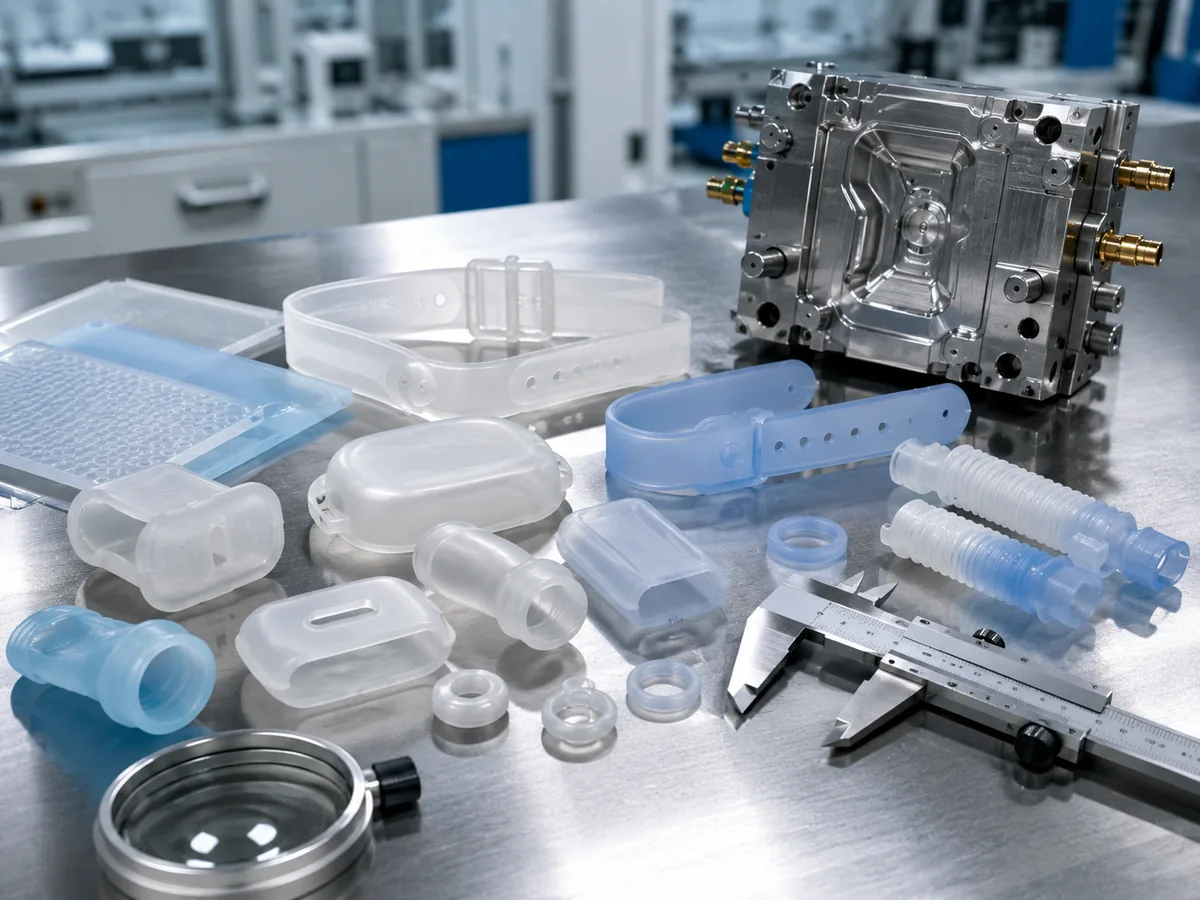
Medical & Healthcare
Flexible covers, tubing-related components, device protection parts, wearable parts.
Industrial
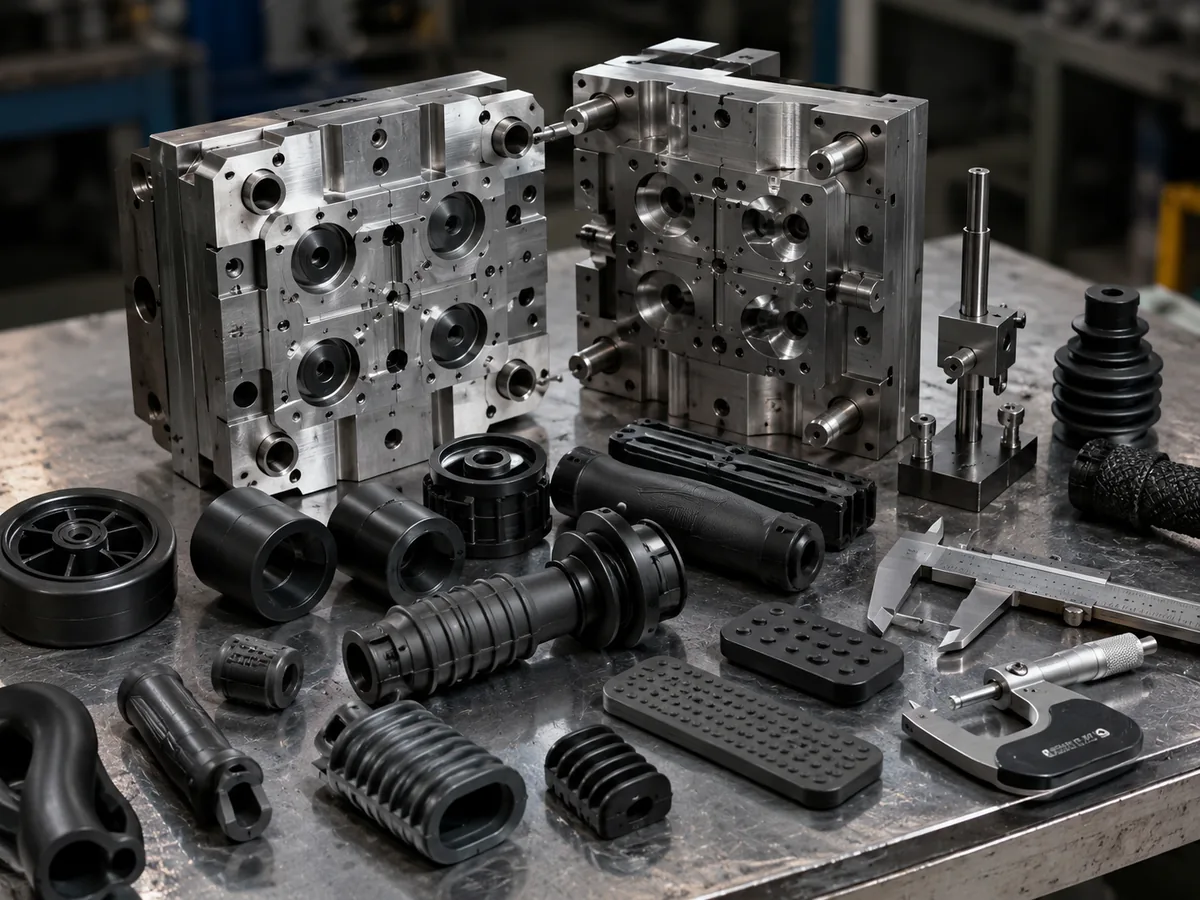
Wheels, rollers, wear pads, tool grips, flexible connectors, oil-resistant covers.
See PA and TPU functional molded parts →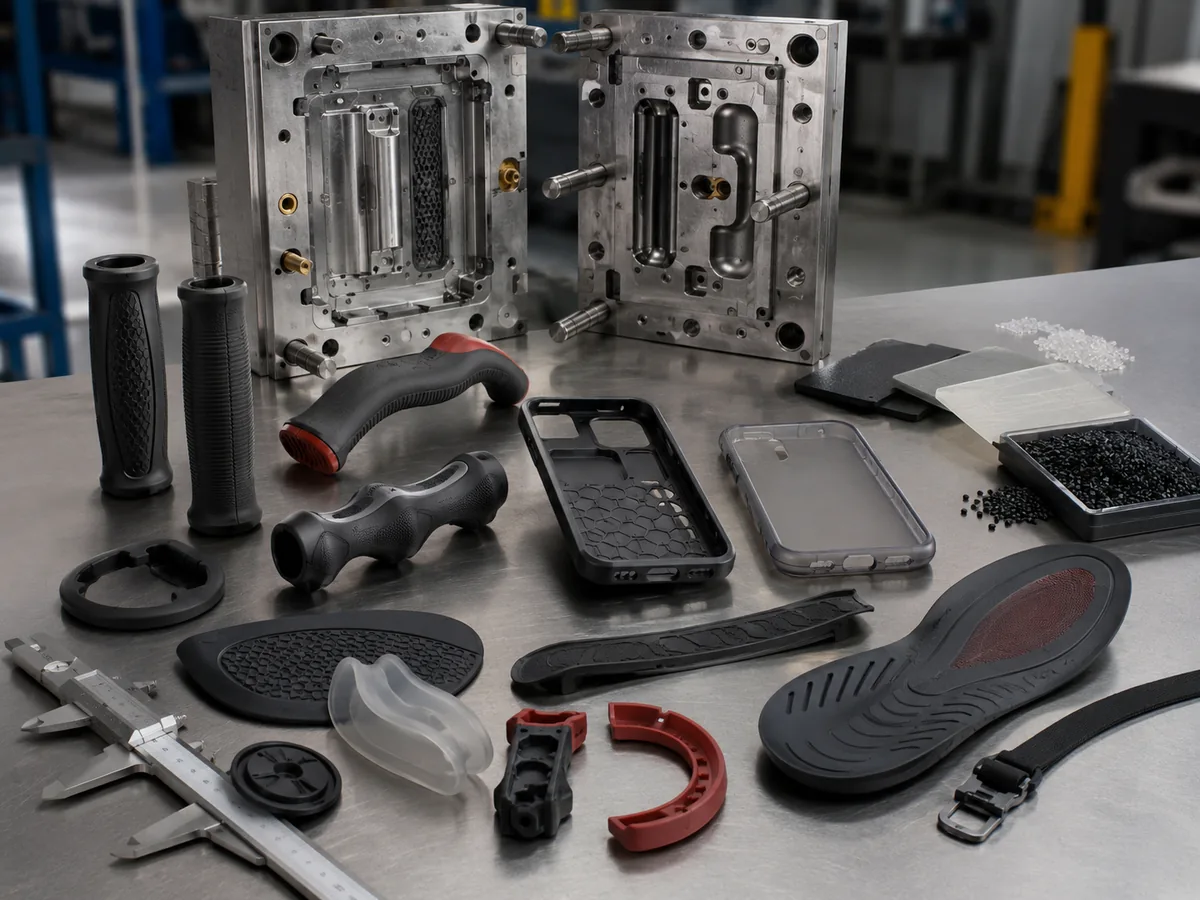
Consumer Products
Soft-touch grips, handles, protective cases, sports accessories, footwear components.
Sealing & Protection
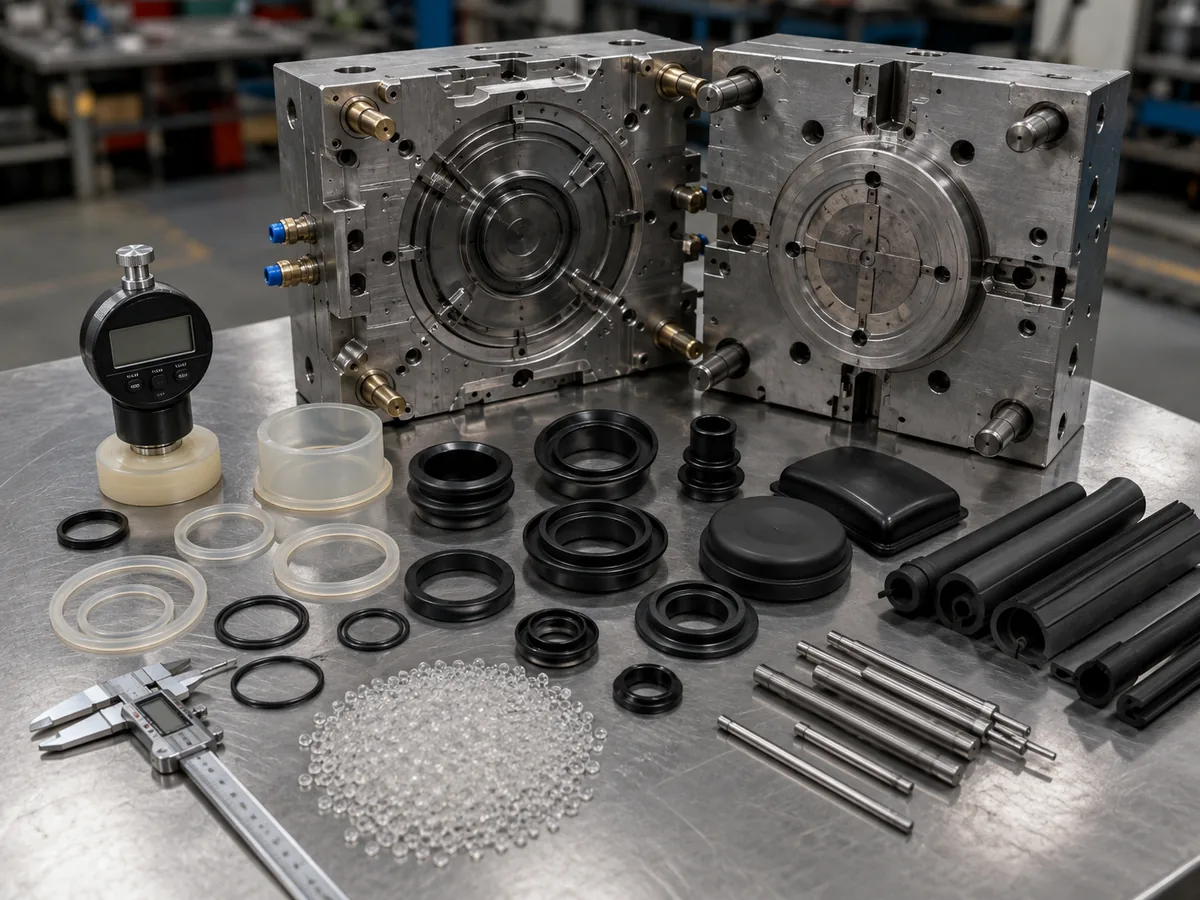
O-rings, gaskets, dust covers, caps, edge protectors, impact-resistant covers.
TPU Overmolding and 2K Injection Molding
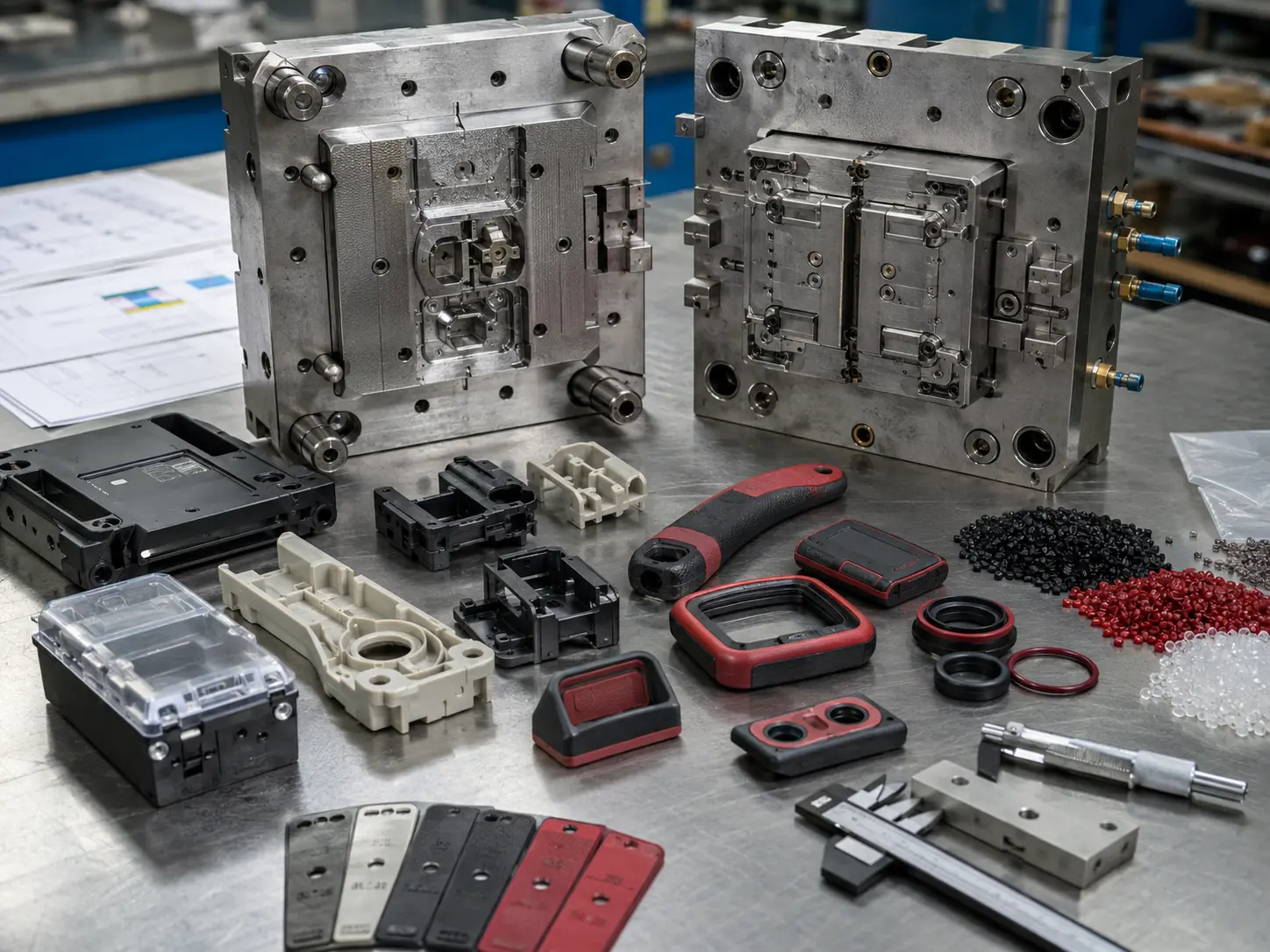
TPU is commonly used as the soft layer in overmolding and 2K injection molding projects. It can provide cushioning, sealing, grip, vibration reduction, and surface protection for rigid plastic or metal substrates.
Before tooling, GBM Mold thoroughly reviews substrate material, TPU hardness compatibility, chemical bonding requirements, mechanical lock design, gate positions, shrinkage differences, and parting lines to ensure seamless integration.
| Structure | Typical Use | Design Review Focus |
|---|---|---|
| TPU over PC | Protective covers, transparent rigid + soft edge parts | Chemical adhesion, shrinkage mismatch, surface marks at transition. |
| TPU over ABS | Tool grips, consumer products, soft-touch shells | Bonding strength, texture continuity, gate vestige placement. |
| TPU over PA | Automotive and functional engineering parts | Moisture control (both hygroscopic), necessitating mechanical locks. |
| TPU over Metal Inserts | Anti-slip feet, sealing rings, shock absorption mounts | Insert positioning, preheating requirements, pull-out force resistance. |
| 2K TPU Molding | High-volume soft + hard integrated parts | Rotary mold precision, material injection sequence, mold alignment. |
TPU vs TPE Injection Molding: Which Material Should You Choose?
While TPU is a specific type within the broader TPE (Thermoplastic Elastomer) family, they have distinct performance and processing differences.
| Factor | TPU (Thermoplastic Polyurethane) | General TPE |
|---|---|---|
| Wear Resistance | Usually much stronger for abrasion and high-friction parts. | Suitable for general soft-touch parts with lower friction demands. |
| Elastic Recovery | Excellent, though highly dependent on the specific grade. | Good, and often easier to achieve consistent processing. |
| Cost | Usually higher raw material cost. | Usually more cost-effective for large volume consumer goods. |
| Processing Difficulty | More sensitive to moisture (drying), temp control, and demolding. | Generally easier and more forgiving during injection molding. |
| Oil / Chemical Exposure | Better performance in many harsh industrial applications. | Varies widely depending on the specific TPE blend (e.g., TPR, TPV). |
| Typical Applications | Wheels, heavy-duty rollers, seals, cable boots, protective covers. | Toothbrush grips, soft-touch handles, basic consumer goods. |
| Selection Advice | Choose TPU when durability, tear strength, and wear resistance matter most. | Choose TPE when cost reduction and simple soft-touch feel are the main goals. |
Common TPU Injection Molding Defects and How We Prevent Them
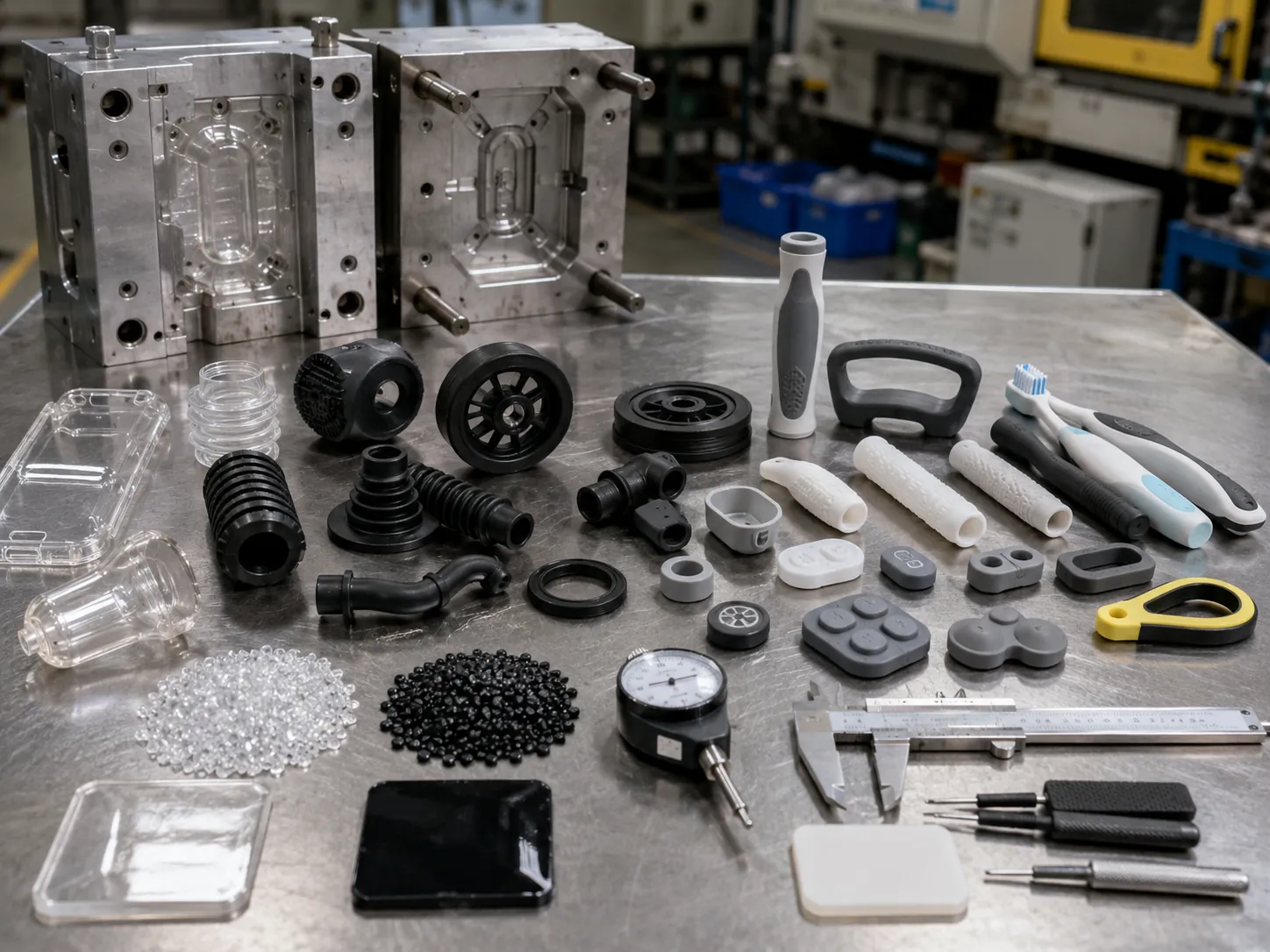
We don't just promise defect-free parts; we engineer them. TPU defects are controlled through rigorous DFM review, strict material drying, mold venting, gate design, cooling balance, ejection layout, and precise T1 parameter adjustments.
Bubbles / Splay
Cause: Moisture, overheating, trapped air.
GBM Review: Strict resin drying protocols, enhanced venting, melt temperature control, screw back pressure tuning.
Flash
Cause: Low viscosity, high injection pressure, poor parting line fit.
GBM Review: High-precision mold fitting, adequate clamping force, pressure adjustment, parting line protection.
Short Shot
Cause: Poor flow, thin walls, bad gate location, poor venting.
GBM Review: Optimizing gate size/location, adding flow-end venting, reviewing wall thickness, adjusting injection speed.
Sink Marks
Cause: Thick walls, poor holding pressure, uneven cooling.
GBM Review: Coring out thick sections during DFM, optimizing cooling channel layout, maintaining adequate holding pressure.
Sticking to Mold
Cause: Insufficient draft, very soft grade, deep textures.
GBM Review: Enforcing larger draft angles, optimizing ejector layout, managing surface texture depth.
Warpage
Cause: Uneven cooling, shrinkage difference, part geometry.
GBM Review: Achieving cooling balance across core/cavity, improving rib design, controlling mold temperature zones.
Burn Marks
Cause: Trapped air igniting, excessive speed, poor venting.
GBM Review: Strategic venting at flow ends and weld lines, injection speed profiling.
Flow Marks
Cause: Temperature fluctuation, restrictive gate, moisture.
GBM Review: Stable temperature control, enlarging gate design, confirming drying effectiveness.
Ejection Deformation
Cause: Soft part, small ejector area, insufficient cooling.
GBM Review: Designing larger ejection areas (stripper plates), extending cooling time, improving release structure.
What Affects the Cost of TPU Injection Molding?
Understanding these cost drivers helps procurement teams budget effectively for soft plastic projects.
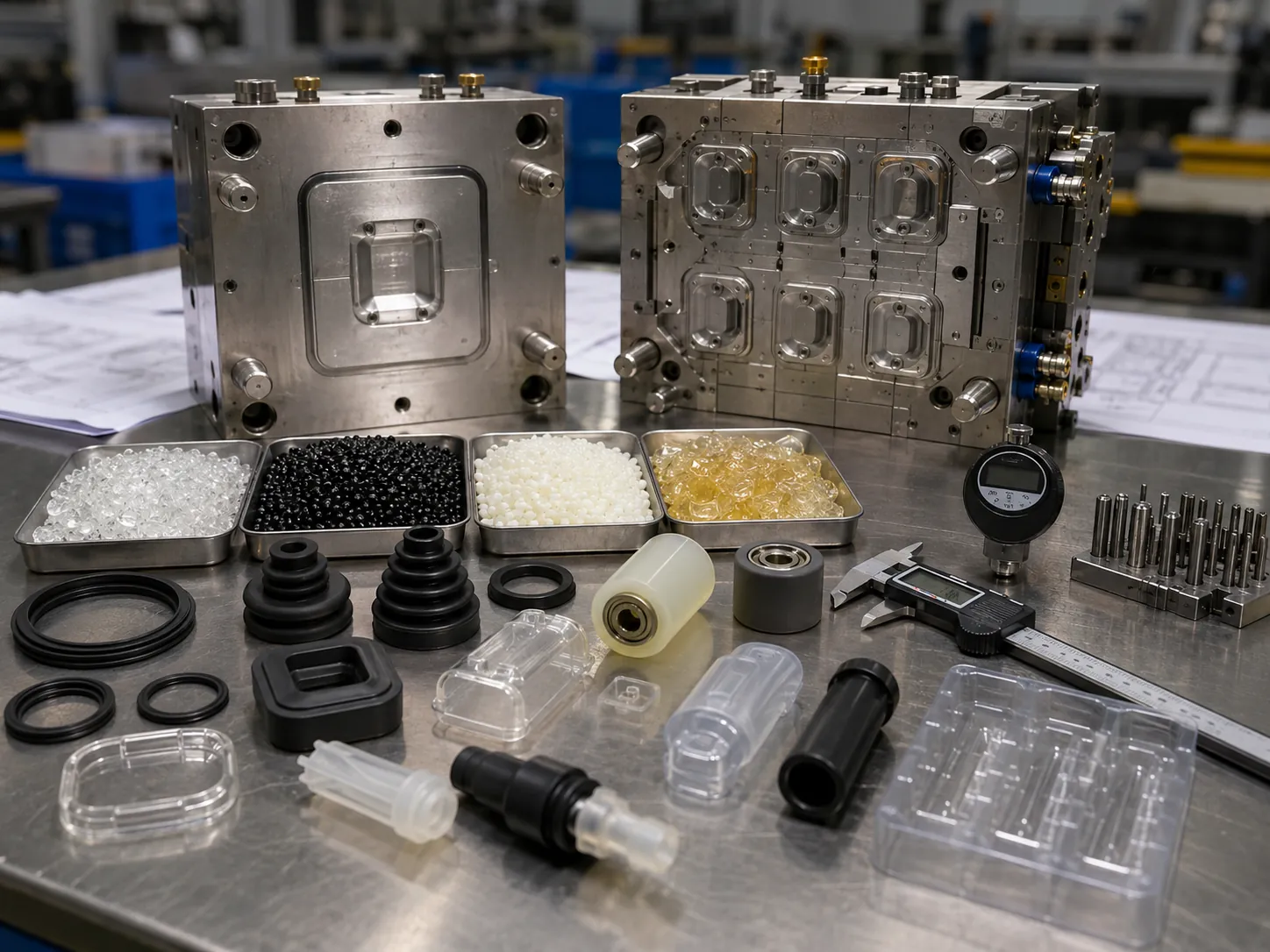
- TPU Grade Transparent, flame-retardant, medical, or reinforced TPU resins cost significantly more than standard commercial TPU.
- Shore Hardness Very soft TPU (e.g., Shore 60A) may require more complex demolding mechanisms and longer cooling cycles, impacting piece price.
- Part Geometry Deep ribs, undercuts, thin lips, and complex sealing edges increase mold machining difficulty and tooling cost.
- Mold Structure Costs vary between single-cavity, multi-cavity, insert molds, overmolding, or automated 2K molds.
- Production Quantity Prototype, low volume injection molding, and high volume injection molding runs utilize different tooling steel and automation strategies.
- Tolerance Soft TPU parts need realistic tolerance planning due to elastic recovery. Extremely tight tolerances increase mold tuning costs.
- Surface Finish Transparent, high-gloss optical finishes or fine textures require more labor-intensive mold surface control and polishing.
- QC Requirement Advanced CMM, FAI, specific hardness testing, functional assembly tests, and 100% full inspection add to labor costs.
- Packaging Soft, easily deformed parts may require specialized anti-deformation packaging, blister trays, or separated cavities for safe transport.
Why Choose GBM Mold for Custom TPU Injection Molding?
We address the specific pain points of sourcing soft plastic components, ensuring technical feasibility before cutting steel.
1. TPU DFM Before Tooling
We review soft material risks before mold manufacturing, including wall thickness, draft angle, gate location, venting, ejection and shrinkage. This helps reduce sticking, flash, short shot and deformation during T1 trials.
2. Mold Design for Soft and Flexible Parts
TPU parts need different mold thinking from rigid ABS or PC parts. GBM Mold considers part elasticity, demolding direction, ejector marks, surface texture and sealing edge protection during mold design.
3. TPU Overmolding & Insert Support
For soft-touch or sealing parts, we can review TPU overmolding structures, mechanical locks, insert positioning and substrate compatibility before tooling to ensure strong adhesion.
4. T1 Samples, Inspection & Delivery
We provide T1 molded samples, sample photos, detailed inspection feedback, packing confirmation and seamless export delivery support for overseas B2B buyers.
Frequently Asked Questions
Technical insights into TPU molding capabilities and processes.
FAQ 1. Can TPU be injection molded?
FAQ 2. Can you injection mold soft TPU?
FAQ 3. What is TPU injection molding used for?
FAQ 4. Does TPU need drying before injection molding?
FAQ 5. What temperature is used for TPU injection molding?
FAQ 6. What TPU pellets are used for injection molding?
FAQ 7. What is the TPU injection molding process?
FAQ 8. What are the common defects in TPU injection molding?
FAQ 9. How do you prevent TPU parts from sticking to the mold?
FAQ 10. What draft angle is needed for TPU injection molding?
FAQ 11. Is TPU better than TPE for injection molding?
FAQ 12. Can TPU be used for overmolding?
FAQ 13. Can TPU be used for 2K injection molding?
FAQ 14. Do you sell TPU injection molding machines?
Start Your TPU Injection Molding Project
Send us your 3D CAD files, TPU hardness requirement, application details and estimated annual volume. Our engineering team will review mold feasibility, material selection, DFM risks and provide a detailed quotation.
Email Us
Call Us
Visit Factory
Room 101, Jiumo Technology Park, Gangsheng Road, Yabian Village, Shajing Street, Baoan District, Shenzhen City