What Is a Hot Runner Mold?
Design, Benefits, and Selection
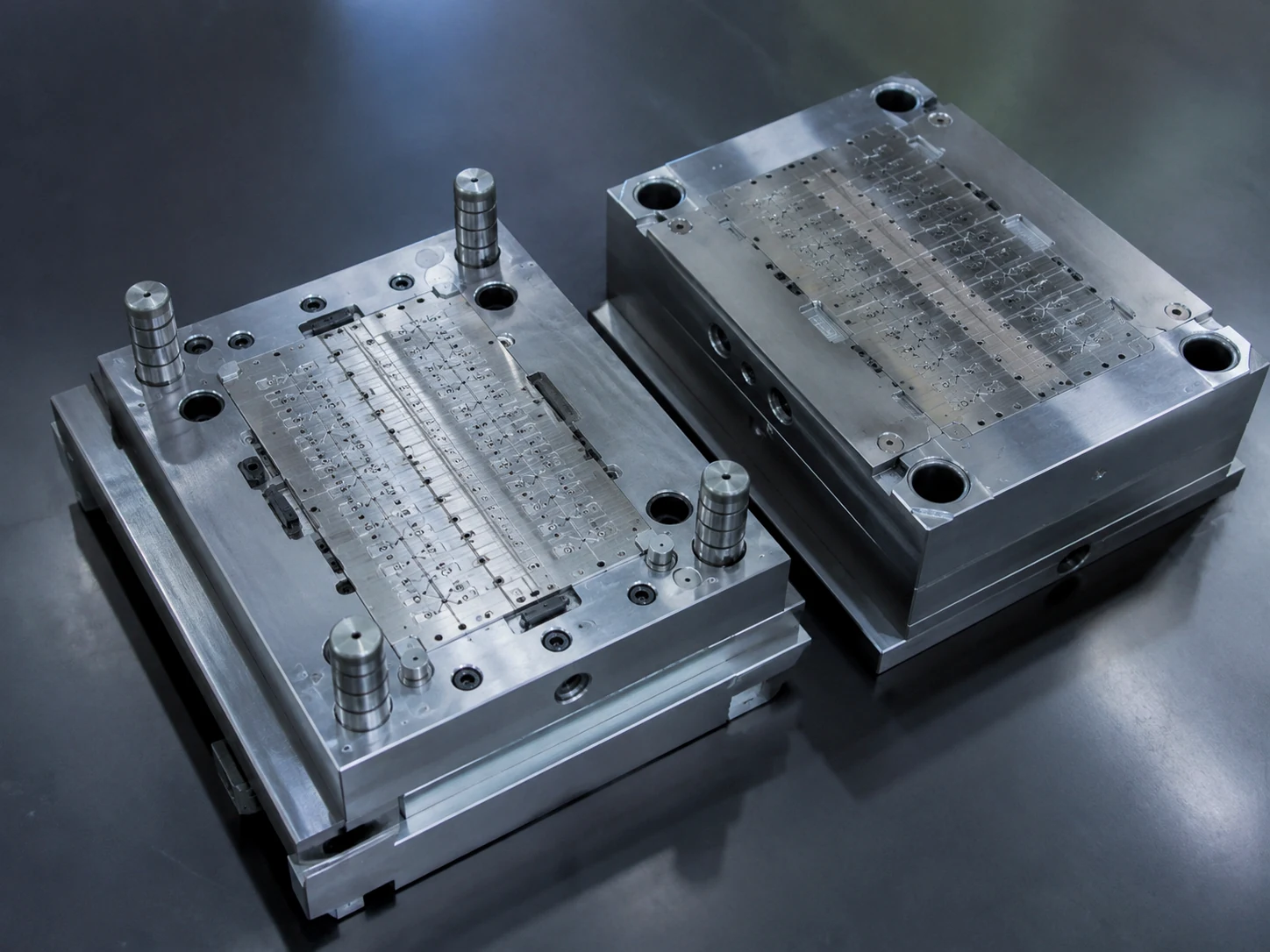
A hot runner mold is an injection mold with a thermally controlled feed system that keeps plastic molten from the molding-machine nozzle to the mold gates. The molded parts cool and are ejected, but the material inside the manifold and nozzles remains ready for the next shot. This avoids ejecting a solid cold runner on every cycle.
That simple definition does not mean the whole mold is hot. The cavity and core still need controlled cooling. The hot runner must be thermally isolated where necessary, while heaters, thermocouples, cooling circuits, gates, and flow channels work as one melt-delivery system.
A Strategic Tooling Choice
A hot runner can reduce runner handling and give engineers more control over gate location and cavity filling. It also adds tooling cost, controls, startup discipline, maintenance, and material-residence-time risk. The correct choice depends on the part, resin, annual volume, cavity layout, gate requirements, molding machine, and the owner's ability to operate and maintain the system.
How Does a Hot Runner Mold Work?
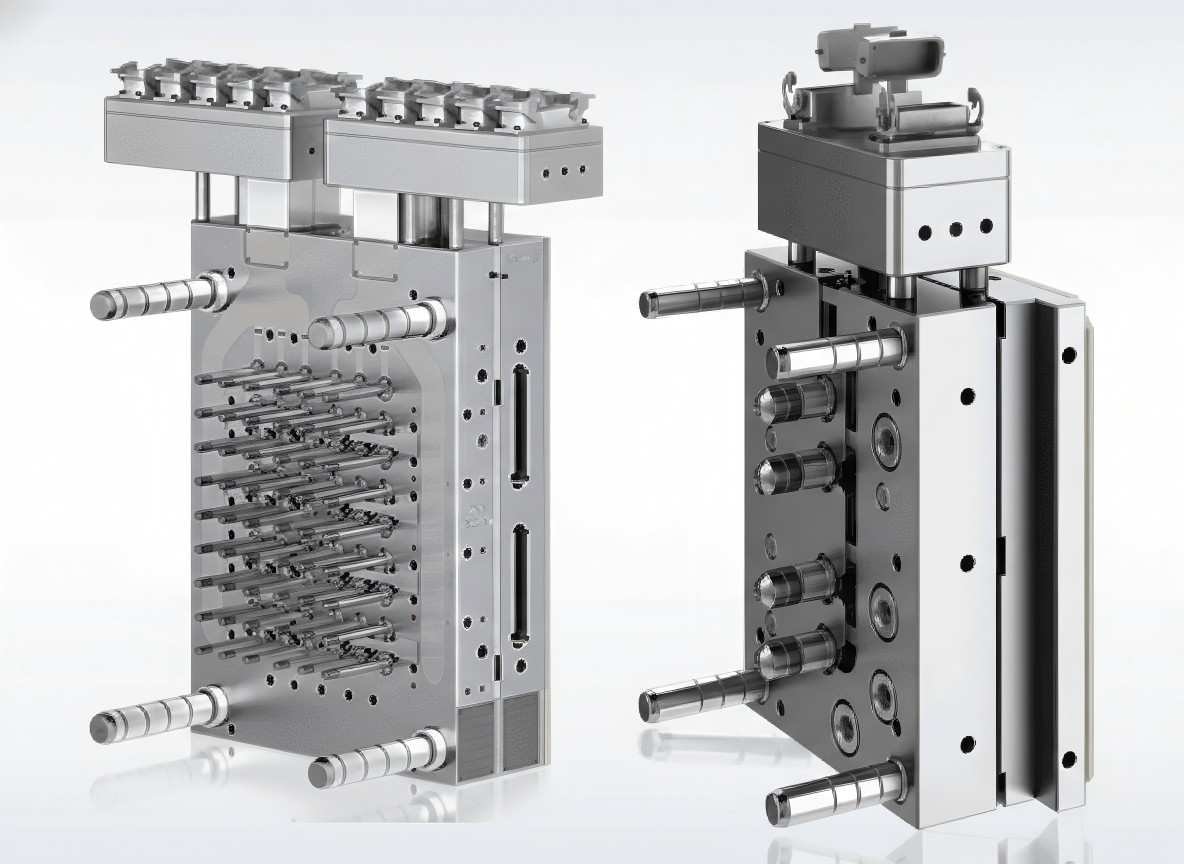
The system transfers resin through heated channels while the molded part cools in the cavity. A typical cycle follows this sequence:
Machine Connection
The molding-machine nozzle seats against the hot runner's inlet component or sprue interface, connecting to the mold inlet.
Temperature Zones Readied
Heaters bring the manifold and nozzles to required setpoints. Thermocouples provide feedback to the controller, matching specified resin grades.
Melt Distribution
Resin flows from the inlet through balanced manifold channels to one or more nozzles, also commonly called drops.
Nozzles Feed Gates
A thermal gate controls flow through local temperature freeze. A valve gate uses a moving pin to open and close the gate mechanically.
Cooling & Ejection
The cavity side removes heat. When stable, parts eject. Feed material inside the hot runner remains molten instead of leaving as a solid runner.
Engineering Note: The operating principle depends on more than adding heaters. The design must balance melt temperature, pressure drop, flow path, residence time, gate behavior, thermal expansion, and cooling. Startup and shutdown procedures also matter, particularly for resins that can degrade after extended exposure to heat.
Main Components
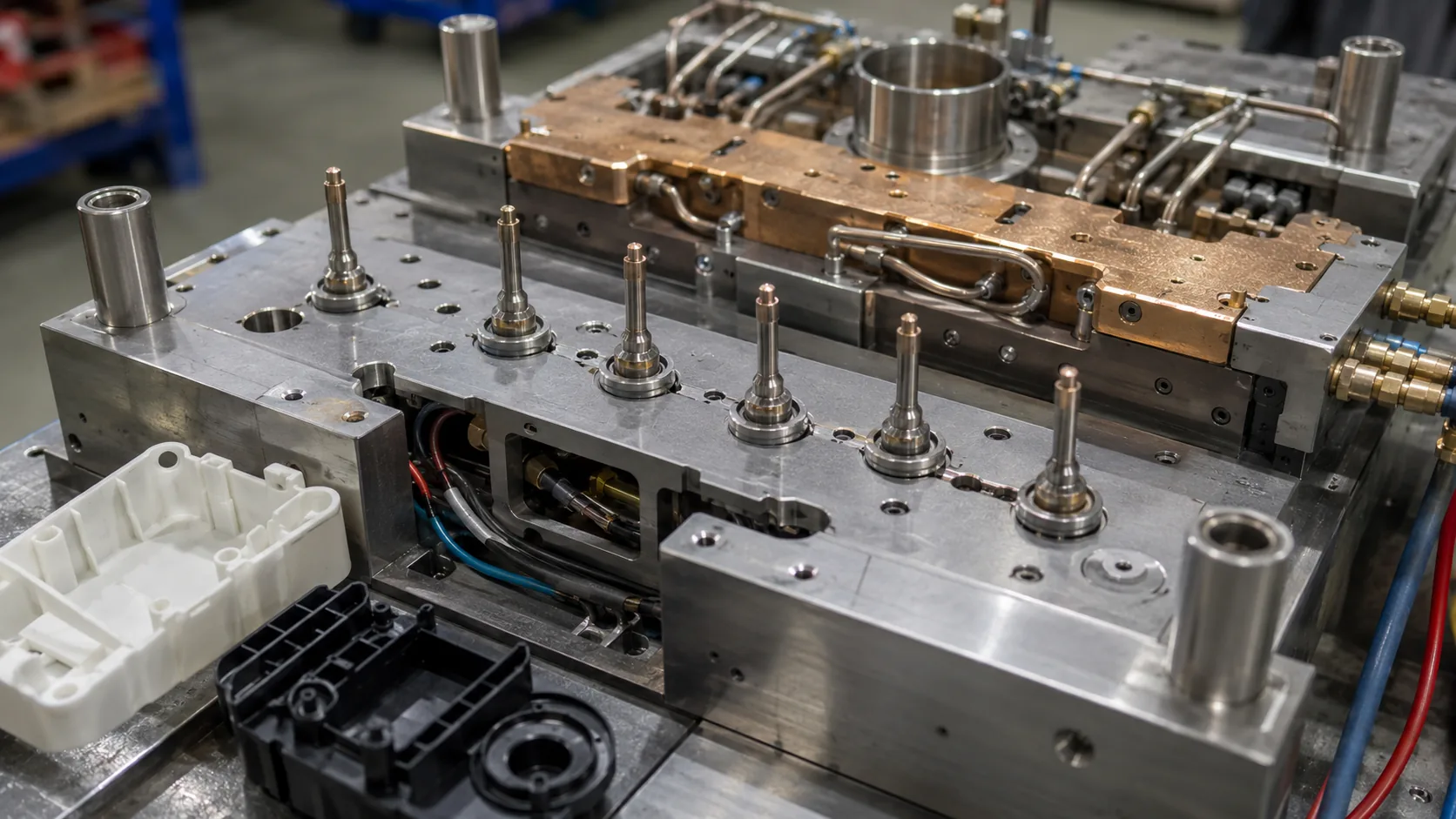
Supplier terminology varies, but a typical assembly contains specific functional elements. The component list alone does not prove suitability; melt channels and gates must be sized appropriately.
| Component | Function | What to confirm in spec |
|---|---|---|
| Machine interface & inlet | Connects the molding-machine nozzle to the hot runner | Nozzle radius, bore, alignment, sealing, and press compatibility |
| Manifold | Divides and carries melt to the nozzles | Flow balance, channel size, pressure drop, residence time, steel, and heater layout |
| Nozzles or drops | Deliver melt from the manifold to each gate | Length, flow capacity, tip style, resin compatibility, access, and replacement method |
| Gate tip & gate seal | Forms the final melt path and seals against mold steel | Gate type, diameter, cooling, vestige, wear, and sealing geometry |
| Heaters | Supply heat to manifold and nozzle zones | Wattage, zone layout, replaceability, wiring, and spare strategy |
| Thermocouples | Measure temperature for controller feedback | Type, position, response, routing, and replacement access |
| Temperature controller | Regulates the heating zones | Zone count, alarm functions, connector standard, diagnostics, compatibility |
| Valve pins & actuators | Mechanically open and close valve gates | Actuation method, pin guidance, timing, cooling, maintenance, control sequence |
| Hot-half & support plates | Locate and support the system inside the mold | Thermal expansion, preload, insulation, plate strength, service access, cooling |
Core Technology Comparisons
Understanding the structural and functional differences between gating methods and runner systems is crucial for mold specification.
Thermal Gate vs. Valve Gate
| Decision Area | Thermal Gate | Valve Gate |
|---|---|---|
| Shutoff principle | Controlled cooling creates frozen seal | Pin closes mechanically |
| Moving components | None | Valve pin + actuators |
| Tool complexity | Lower | Higher |
| Gate appearance | Small vestige/mark | Small ring, mechanical shutoff |
| Process control | Depends on tip temp & cooling | Supports sequential filling |
| Main concerns | Drool, stringing, freeze-off | Pin alignment, timing, wear |
| When to consider | Simple, robust gating acceptable | Surface-sensitive, tight shutoff |
Hot Runner vs. Cold Runner
| Factor | Hot Runner | Cold Runner |
|---|---|---|
| Feed-channel state | Molten between shots | Solidifies with each shot |
| Ejected runner | None (in fully hot layout) | Ejects, must be separated/discarded |
| Initial tooling | More components, wiring, zones | Simpler feed system |
| Material exposure | Longer residence time | Cools each cycle; easier for sensitive resin |
| Color changes | Purging can be demanding | Runner removal makes it easier |
| Maintenance | Heaters, sensors, actuators | Fewer heated components |
| Economics | Benefits stable, high volume | Suits low volume, simple parts |
Benefits of a Hot Runner
Removes the Solid Runner
Reduces runner separation, conveying, granulation, regrind control, and storage. Value is greatest when runner weight is high relative to part weight.
Improves Gate Placement
Delivers melt closer to required locations without a large solid runner network, shortening flow paths and supporting multi-cavity layouts.
Balanced Cavity Filling
A properly designed manifold distributes melt through thermally and geometrically balanced flow paths.
Simplifies Automation
Parts eject without an attached runner, requiring fewer separation steps for automated handling.
Gate-Level Process Control
Valve gates can be opened sequentially to manage long flow paths, family parts, or weld-line positions.
Disadvantages & Engineering Risks
Higher Tooling & Control Complexity
Adds manifolds, nozzles, heaters, sensors, wiring, and requires accurate mold pockets and thermal expansion allowances.
Material Degradation Risk
Resin stays hot between shots. Excessive residence time or stagnant areas can degrade sensitive materials.
Demanding Color/Material Changes
Requires controlled purging through complex channels. Dead spots can extend changeovers and cause contamination.
Maintenance & Downtime
Heaters, seals, and tips are service items. Poor access may require large disassembly for simple repairs.
Thermal Expansion & Leakage
Incorrect pocket dimensions, preload, or assembly can cause leakage as the system expands during heating.
Common Symptoms and First Checks
| Symptom | Areas to investigate first | Evidence to collect |
|---|---|---|
| Drool or stringing | Nozzle temp, gate cooling, gate size, decompression, tip wear | Zone trends, gate photos, cycle settings, tip inspection |
| Gate freeze-off / non-fill | Heater/thermocouple function, tip position, local cooling | Electrical test, actual temp, short-shot study, gate dims |
| Burns or discoloration | Residence time, trapped material, shear, contamination | Purge condition, material lot, shutdown history |
| Cavity imbalance | Manifold flow/thermal balance, nozzle condition, venting | Individual cavity weights, fill pattern, zone data |
| Leakage inside hot half | Pocket dimensions, preload, thermal expansion, assembly | Assembly record, hot/cold dimensions, torque record |
* Diagnostic starting points, not universal fixes. Follow resin and hot runner manufacturer procedures.
When Is a Hot Runner Worth Considering?
A hot runner deserves evaluation when several of these conditions are present:
- Stable, repeat production volume.
- Cold runner would be large relative to molded parts.
- Runner separation/regrind is operationally difficult.
- Multiple cavities need balanced filling.
- Gate appearance or automatic degating is important.
Consider Cold/Semi-Hot when:
- Production volume is low or uncertain.
- Color or resin changes are highly frequent.
- Material has a very narrow thermal-processing window.
- Local team lacks hot-runner maintenance capability.
What Determines Cost?
There is no universal price. The economic comparison should include total ownership cost:
Tooling + Material + Machine Time + Labor + Changeover Loss + Rejects + Maintenance + Spare Parts
Number & spacing of drops
Changes manifold routing, heaters, wiring, and machining.
Gate Type (Thermal/Valve)
Valve gates add pins, actuators, controls, and service.
Resin & Additives
Corrosion/wear changes steel, coatings, and tip selection.
Validation Package
Flow analysis, trials, cavity balancing require engineering time.
Service Strategy
Front-access components and spare parts affect ownership cost.
How to Evaluate a Supplier
A factory photo or low quote isn't enough. Compare suppliers using this technical checklist:
- Application review: Identifies exact resin, part weight, wall thickness, flow length, machine?
- System design: Shows manifold, nozzles, cooling, thermal expansion strategy?
- Analysis boundary: Explains flow/thermal assumptions, pressure loss?
- Component spec: Identifies materials, heater types, controller requirements?
- Trial plan: Includes fill balance, gate appearance, color change criteria?
- Maintenance support: Provides manuals, test records, spare-part numbers?
- Manufacturing location: Verifies where it is actually machined and assembled.
- Change control: States process if resin or machine changes.
Information for Your RFQ
Provide enough information for the supplier to select and size the system accurately:
- • 3D part model and controlled 2D drawing
- • Resin manufacturer, exact grade, color, filler, additives
- • Part weight, dimensions, wall thickness, longest flow path
- • Annual volume, batch size, program life, planned cavities
- • Critical dimensions, appearance surfaces, allowed vestige
- • Molding-machine model, clamp layout, shot capacity
- • Required mold standard, connectors, water connections
If some inputs are unknown, label them as open decisions rather than letting suppliers guess.
Frequently Asked Questions
Does a hot runner eliminate all plastic waste?
Can heat-sensitive materials use a hot runner?
Is a valve gate always better than a thermal gate?
Can a supplier quote a hot runner mold from cavity count alone?
Prepare Your Project
The hot-runner decision should be made before the feed system is locked into the mold design. Define the resin, geometry, volume, cavities, gate appearance, and machine interface to compare concepts accurately.

GBM's documented workflow covers mold design, manufacturing, trials, and injection molding. Submit your drawing and requirements for a project-specific review.
Annie@gbminjection.com
+86 13632611848
Room 101, Jiumo Technology Park, Gangsheng Road, Yabian Village, Shajing Street, Baoan District, Shenzhen City